AI
Aug 12, 2026

AI-Generated Patterns Shown to Evade Flock Camera Detection in Def Con Demo

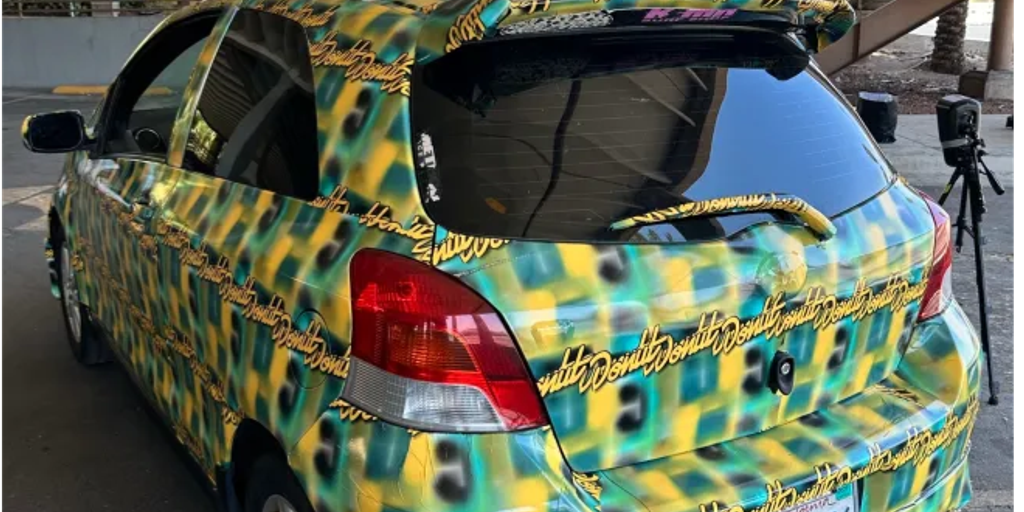
Security researcher Bill Swearingen says he has spent the past year running roughly 31 million tests to build AI-generated patterns that can prevent Flock camera software from recognizing whatever the pattern covers. In a public demo at Def Con, Swearingen worked with YouTube channel Donut Media to wrap a 2009 Toyota Yaris in one of the latest designs and drive it past a Flock camera. The camera still recorded normal footage, but the object-detection layer on top of the video was the part that failed, meaning the system may not classify the vehicle or log its plate. Swearingen said the project, called noRecognition, was built with a reinforcement learning model that keeps adjusting patterns after each failed attempt. He framed the work as a privacy tool for people who want to avoid automated tracking, while also saying the strongest patterns are being kept offline so camera vendors cannot train against them. The project is now running a crowdfunding campaign for merchandise, starting with T-shirts and hoodies and later moving to vehicle wraps.

2650
AI-Generated Patterns Shown to Evade Flock Camera Detection in Def Con Demo
FLock.io
Aug 12, 2026

FLock.io partners with Chainlink as FLOCK adopts CCT for cross-chain transfers

Decentralized AI platform FLock.io said it has entered an official partnership with Chainlink, with its native token FLOCK now using Chainlink’s Cross-Chain Token, or CCT, standard. Under the arrangement, Base serves as FLOCK’s primary issuance network, while the token is connected across Ethereum, BNB Chain, Hyperliquid HyperEVM, and Robinhood Chain. FLock said developers, node operators, and FLOCK holders can move the token between supported networks through Transporter using Chainlink’s Cross-Chain Interoperability Protocol, or CCIP. The company framed the integration as part of a broader plan to build liquidity setups tailored to the asset structure and trading characteristics of different blockchain ecosystems. It also said FOMO, short for FLock Open Model Offering, will support issuance, trading, and liquidity expansion for its Model Token across multiple chains. That effort is set to extend gradually to additional AI assets and tokenized stocks, giving users on different networks a wider range of liquidity and trading options.

2810
FLock.io partners with Chainlink as FLOCK adopts CCT for cross-chain transfers
FLOCK
Jul 26, 2026

FLOCK spot ticker purchased for 594.99 HYPE, worth $34,700

FLOCK’s spot ticker has been purchased for 594.99 HYPE, with the transaction valued at about $34,700, according to monitoring cited by Odaily. The update, attributed to HyperliquidNews, was published as a brief market item and did not include additional details such as the buyer’s identity or any follow-up information on the purchase. The report only stated that the FLOCK spot code had been bought and gave the price in HYPE along with its approximate dollar value. No further context was provided in the source item.

2430
FLOCK spot ticker purchased for 594.99 HYPE, worth $34,700
FLock
Jul 24, 2026

FLock to unlock about 168.04 million FLOCK on July 31

FLock (FLOCK) is set to unlock about 168.04 million tokens at 00:00 Beijing time on July 31, according to token unlock data from Web3 asset data platform RootData. The unlocked tokens are valued at about $5.65 million based on the figures cited in the update. The item was published by ChainCatcher as a 7x24 news flash. No additional details were provided in the source beyond the scheduled unlock time, token amount, and estimated value.

1480
FLock to unlock about 168.04 million FLOCK on July 31
AI
Jul 13, 2026

AI found a 15-year Linux flaw, while another system wrongly flagged a reporter as a car thief

Two AI-driven incidents published in the same discussion show opposite outcomes from the same basic process: pattern recognition, automated judgment, and action. Security firm Nebula Security said its AI-assisted bug hunting tool, VEGA, uncovered GhostLock, a Linux kernel vulnerability tracked as CVE-2026-43499. According to the company’s July 7, 2026 technical report, the flaw dates back to 2011 and affects nearly all major Linux distributions. Nebula said it built a privilege-escalation chain with a 97% success rate and could move from a normal user account to root in about five seconds on a test machine. Google’s KernelCTF awarded the team $92,337. The other case involved auto journalist Joel Feder, who was surrounded by four police vehicles after an entry mistake in the U.S. stolen vehicle database was compounded by AI-powered license plate recognition from Flock. A stolen plate entered as “34 DTM” instead of “34 03 DTM” was matched against Feder’s dealer plate, “34 10 DTM,” because the system failed to read the small middle digits. The article argues the contrast is not about AI being good or bad on its own. In one case, the input was accurate code and the system exposed a real problem. In the other, bad source data traveled through a nationwide network and was acted on at machine speed.

1500
AI found a 15-year Linux flaw, while another system wrongly flagged a reporter as a car thief
Total 13 items
Go topage