Ethereum
Nov 13, 2026

Ethereum Foundation Tests Dedicated Signer on Passport Prime

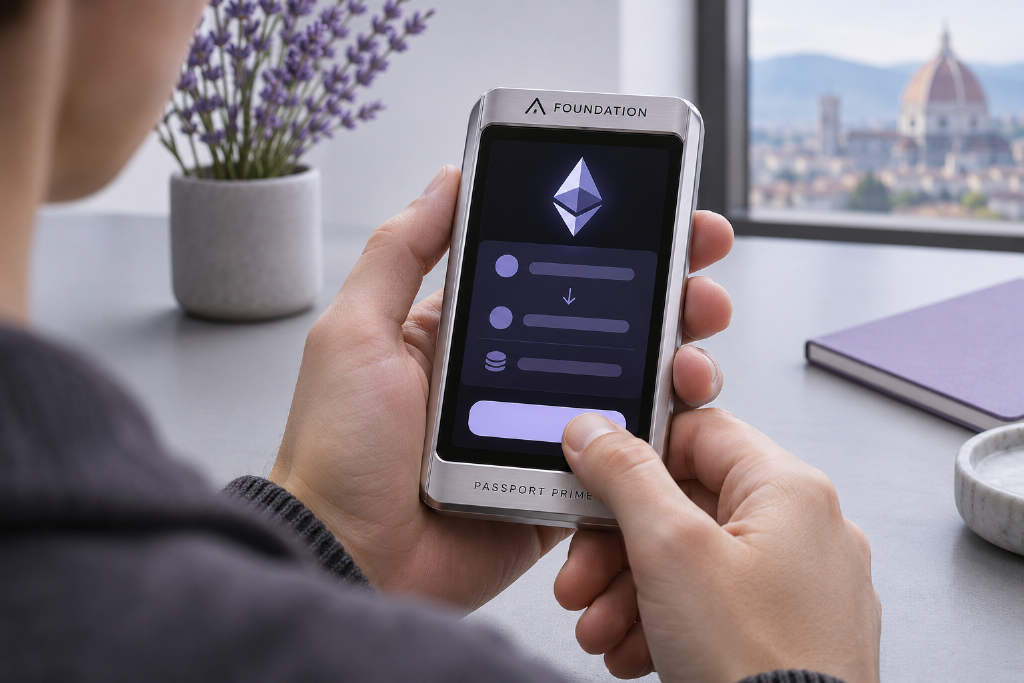
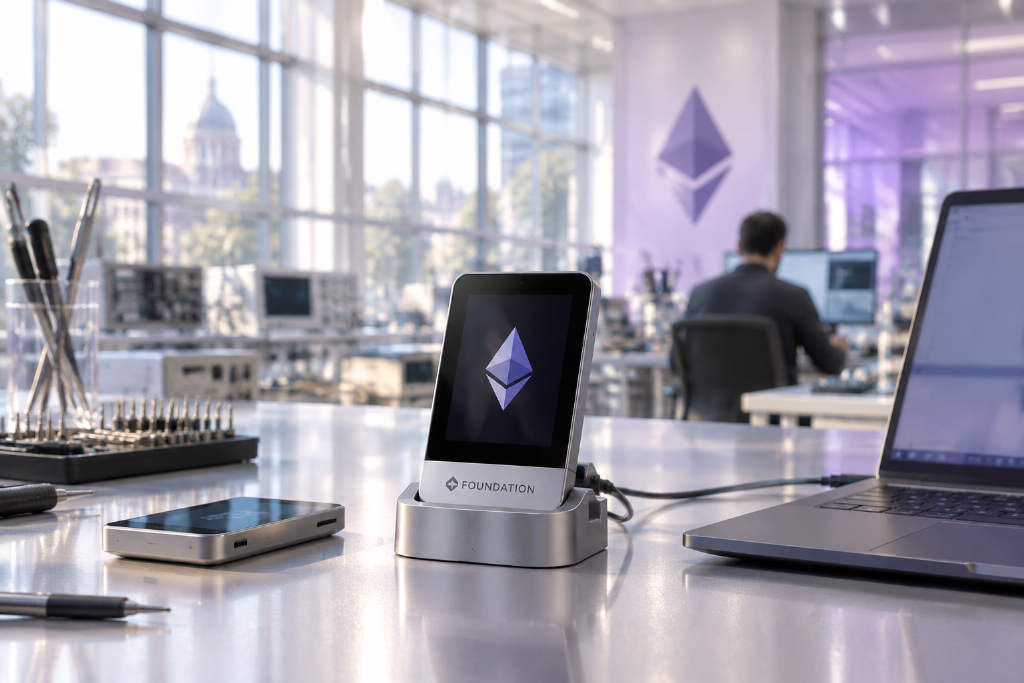
The Ethereum Foundation is rolling out Universal Ethereum Signer on Foundation’s Passport Prime hardware device. The application runs on KeyOS and remains in testing. Funded by the Ethereum Foundation, it was developed by Nicolas Bacca, a Ledger co-founder who is now chief executive of ZKnox. Universal Ethereum Signer lets users review and sign Ethereum transactions on separate, isolated hardware, without handing private-key processing to a phone or computer. For Passport Prime owners, the app is the device’s first third-party application designed to serve as a dedicated signer for Ethereum transactions. Users currently have to sideload it manually. Foundation chief executive Zach Herbert said a future application directory will let trusted groups push updates directly to users. Foundation expects to launch that directory in winter 2026. ChainCatcher reported the development, citing Crypto Briefing. The current rollout is limited to a test-stage application on Passport Prime; the account does not specify a broader release date for the signer itself.
10
Ethereum Foundation Tests Dedicated Signer on Passport Prime
Ethereum Foundation
Nov 12, 2026

Foundation CEO Reveals Ethereum Foundation Launching Signing App for Passport Prime

Zach Herbert, co-founder and CEO of Foundation, disclosed in an October 22 Unchained Premium interview that the Ethereum Foundation is partnering with Ledger co-founder Nicolas Bacca to launch the Universal Ethereum Signer app on KeyOS, the OS powering Foundation's Passport Prime hardware. The app's code is public on GitHub under the Ethereum organization but remains unaudited with no releases yet. Foundation plans an app catalog and has distributed over 200 developer units. Post-interview, the company faced a backend breach leading to phishing emails, though user funds and hardware stayed secure.

10
Foundation CEO Reveals Ethereum Foundation Launching Signing App for Passport Prime
Kamino
Nov 2, 2026

Kamino CEO says foundation holds project IP, with at least $20 million planned for expansion over two years

Kamino CEO Michael Weisz said in a community letter that the Kamino Foundation holds the project’s intellectual property and receives all revenue, including income from institutional partnerships. He also said KMNO is the project’s only token, with returns for the founders, investors, team members and Weisz himself tied to that token rather than to a separate equity allocation. In the same disclosure, Weisz said Kamino has committed to investing at least $20 million over the next two years to broaden the range of assets supported on the platform and to bring its credit and liquidity infrastructure to more platforms. He added that most of his personal KMNO allocation will vest only after a series of valuation milestones are reached and maintained.

1150
Kamino CEO says foundation holds project IP, with at least $20 million planned for expansion over two years
Foundation
Oct 31, 2026

Foundation warns of a new phishing email campaign

Foundation has warned that attackers are sending a new wave of phishing emails through the domains of other companies that have been compromised, according to a post by Bitcoin News on X. The organization said the emails are not being sent from Foundation’s official domain. The alert was carried by Odaily and categorized under market analysis. No additional details on the scope of the campaign, affected users, or technical indicators were disclosed in the source. The notice centers on the origin of the emails and the fact that the messages should not be treated as official Foundation communications.

740
Foundation warns of a new phishing email campaign
Foundation
Oct 31, 2026

Foundation says latest phishing emails are not from its official domain

Bitcoin News said in a post on X that Foundation warned of a new wave of phishing emails being sent by attackers through the compromised domains of other companies. According to Foundation, the emails are not being sent from any official Foundation domain. The update was cited by ChainCatcher in a brief market analysis item published on Oct. 31. No additional details on the phishing campaign, affected companies, or the content of the emails were disclosed in the source text. The notice centers on the origin of the messages and Foundation’s statement that its own official domain is not the source.

650
Foundation says latest phishing emails are not from its official domain
Recall
Oct 30, 2026

Recall Foundation to Shut Down, Burn About 35.86% of Token Supply

Recall said its foundation board has decided to shut down the Recall Foundation and proceed with liquidation. The foundation said the move followed a review of protocol adoption, operating costs, and growth prospects, concluding that continued development was no longer commercially viable. It also said the decision was not caused by a hack or any security incident. As part of the process, the foundation plans to burn about 359 million RECALL tokens under its control, equal to roughly 35.86% of total supply. Token holders will not receive any distribution, redemption, or buyback. The foundation’s remaining funds, about $3.7 million, will be used to repay creditors and cover liquidation expenses. It added that app.recall.network will switch to read-only mode starting Nov. 30, with liquidation expected to be completed in the first quarter of 2027.

1150
Recall Foundation to Shut Down, Burn About 35.86% of Token Supply
Keystone
Oct 27, 2026

Keystone to destroy 18,835 unsold hardware wallets after breach exposed authentication key

Hardware wallet maker Keystone said it will destroy 18,835 unsold devices and suspend shipments after a website breach exposed both customer data and an authentication key embedded in wallets during production. According to the company, the attacker accessed its website on Oct. 20 through a flaw in a third-party data monitoring tool. The incident exposed 25,964 buyer records from 2024 through 2026, including names, contact details, shipping addresses and order information, while another 12,873 unpaid checkout records may also have been affected. Keystone said the stolen key could allow counterfeit devices to pass online authenticity checks because the key is built into devices during manufacturing and cannot be changed afterward. The company said recovery phrases, private keys and wallet credentials were not exposed. It also disclosed that some customer records had been retained beyond its 180-day deletion policy because an automated deletion tool failed without the company noticing. The update came a day after Foundation disclosed a separate breach involving phishing emails sent from addresses that appeared to come from its official domains. Keystone said devices delivered before Oct. 20 remain safe to use if they pass authentication, while devices received after that date using the old key should undergo additional checks. The company plans to replace the authentication key in new devices, move website sales to preorders and reduce customer data retention to 90 days.

1350
Keystone to destroy 18,835 unsold hardware wallets after breach exposed authentication key
FOUNDATION
Oct 27, 2026

FOUNDATION says over 23,000 phishing email attempts were recorded, with some order data possibly exposed

FOUNDATION, the developer of the Passport Bitcoin hardware wallet, said its investigation found more than 23,000 phishing email sending attempts recorded in its mail systems. Of those, 19,057 were sent through Mailgun and another 1,503 through Google Workspace. The company said it still cannot determine how many people were actually affected because some inboxes received multiple messages, while some sending attempts failed or were blocked. FOUNDATION also said that during a database migration involving its former WooCommerce store, old data tables still retained some customer personal information even though the backend showed that related orders had been redacted. In addition, some refund records, abandoned carts, and order information created after the company migrated to Shopify in May this year may also have been affected. The exact scope of the exposure remains under investigation. FOUNDATION added that it has found no evidence that the incident affected Passport hardware devices or the private keys stored on them.

1330
FOUNDATION says over 23,000 phishing email attempts were recorded, with some order data possibly exposed
Total 40 items
Go topage