Federal Reserve
Oct 16, 2026

Kevin Warsh says G20 economies have shown stronger-than-expected resilience

Federal Reserve Chair Kevin Warsh said G20 economies have held up better than expected despite geopolitical shocks and tighter monetary policy, according to ChainCatcher. Speaking at the IMF and World Bank annual meetings in Bangkok, Warsh said the U.S. economy is expected to become stronger and stand on a firmer footing. The remarks focused on the resilience of major economies under external pressure and on his outlook for the United States.

1060

Kevin Warsh says G20 economies have shown stronger-than-expected resilience
Japan Ministry of Finance
Oct 15, 2026

Japan finance ministry official says G7 and G20 see no financial stability risk from AI sell-off

A Japanese finance ministry official said the G7 and G20 do not view the current sell-off in artificial intelligence-related assets as a threat to financial stability. The official said the episode instead highlighted the need for international regulatory coordination on AI’s role in finance. According to the official, policymakers should keep their attention on cybersecurity rather than short-term market moves. The remarks frame the recent decline in AI-linked assets less as a systemic risk event and more as a signal that cross-border oversight discussions need to catch up with the growing use of AI in financial markets. The comments were cited by Crypto Briefing and relayed by Techub News.

860
Japan finance ministry official says G7 and G20 see no financial stability risk from AI sell-off
FSB
Oct 12, 2026

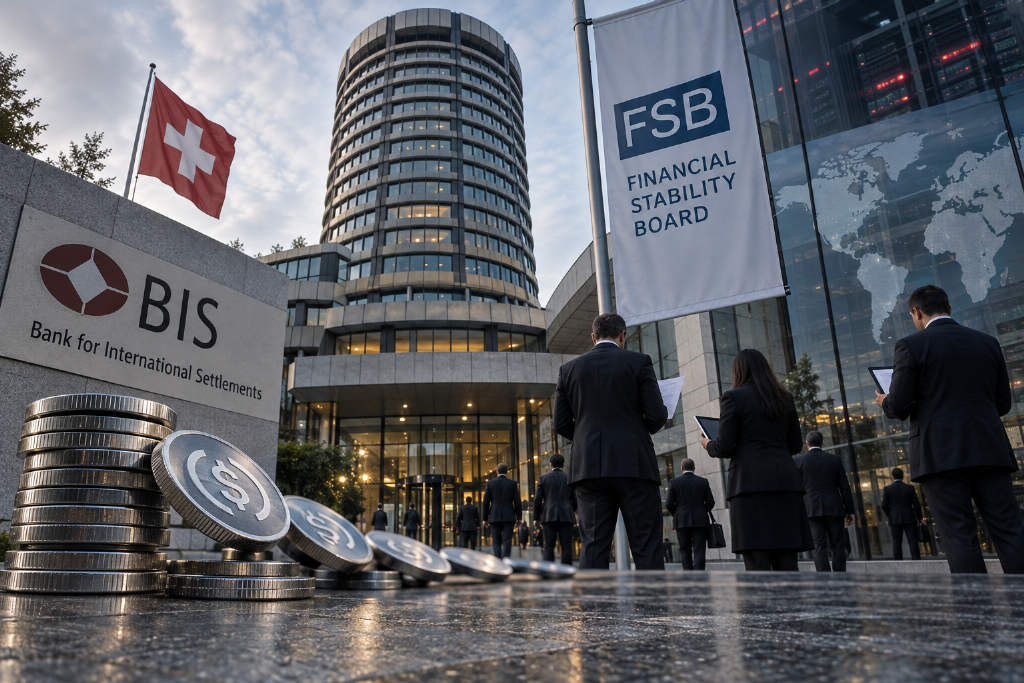
FSB says global stablecoins remain untested in crisis, urges cross-border failure planning

The Financial Stability Board said in a report released on Oct. 12 that global stablecoins and the regulatory frameworks built around them have not yet been tested by severe stress or bankruptcy scenarios. The report, prepared for the Group of 20, will be submitted to the Oct. 15 meeting of G20 finance ministers and central bank governors. According to the FSB, total stablecoin market capitalization stood at about $300 billion in mid-2026, roughly flat from a year earlier, with 99% of the market by value pegged to the U.S. dollar. The body said stablecoins are still used mainly to move in and out of crypto assets and to trade them, though in some emerging market and developing economies they also serve as an alternative store of value. The report highlights risks tied to cross-border issuance structures, reserve location mismatches, uncertain creditor claims in distress, and the difficulty of coordinating regulation across jurisdictions. It recommends stronger monitoring of cross-border risks, deeper information sharing among authorities, and advance planning for how stablecoin distress or failure would be handled across borders. The FSB also noted that its recommendations are not legally binding.

1060
FSB says global stablecoins remain untested in crisis, urges cross-border failure planning
FSB
Oct 12, 2026

FSB warns G20 of cross-border stablecoin gaps and AI cyber risks

The Financial Stability Board warned ahead of a G20 finance meeting that stablecoins and artificial intelligence remain two active sources of financial stability concern. In a letter published Monday, FSB Chair Andrew Bailey said cross-border arrangements for stablecoin oversight and crisis management are still immature or have yet to be built. The watchdog’s 2025 review found that 11 out of 28 surveyed jurisdictions had finalized stablecoin regulatory frameworks. The FSB also asked G20 members to back its newly finalized practices for responsible AI use in finance. Bailey said AI requires continued close attention and careful management by financial institutions. In an accompanying report, the FSB said a run on stablecoins could spread stress into traditional markets through reserve asset sales and bank deposit withdrawals. It also pointed to redemption risks in multi-issuer stablecoin structures where demand could cluster around one issuer while reserves sit across different jurisdictions. The AI guidance covers governance, model development and deployment, cybersecurity, and third-party service risks.

1080
FSB warns G20 of cross-border stablecoin gaps and AI cyber risks
FSB
Oct 12, 2026

FSB says cross-border stablecoin oversight remains incomplete, flags AI cyber risks

The Financial Stability Board said regulatory and crisis-management arrangements for cross-border stablecoins remain underdeveloped or, in some cases, are not yet in place. FSB Chair Andrew Bailey said the body’s 2025 review found that only 11 of 28 surveyed jurisdictions had completed stablecoin regulatory frameworks. The board warned that a stablecoin run could spill into traditional finance through forced sales of reserve assets and withdrawals of bank deposits. It also highlighted risks tied to multi-issuer stablecoins, where redemption demand could concentrate on a single issuer while reserves are spread across different jurisdictions, a concern previously raised by European Central Bank President Christine Lagarde. Separately, the FSB said it has finalized practices for the responsible use of AI in finance, covering governance, AI development and deployment, cybersecurity, and third-party service risk. Bailey said increasingly sophisticated AI-driven cyberattacks could weaken the resilience of key financial institutions and market infrastructure, and said the FSB has submitted a related letter to the meeting of G20 finance ministers and central bank governors.

960
FSB says cross-border stablecoin oversight remains incomplete, flags AI cyber risks
FSB
Oct 12, 2026

FSB warns cross-border stablecoin oversight and crisis tools remain underdeveloped

The Financial Stability Board, in a document submitted to G20 finance ministers and central bank governors, warned that cross-border regulation for stablecoins, crisis management arrangements, and cybersecurity risks tied to artificial intelligence still need work, according to Cointelegraph. FSB Chair Andrew Bailey said current cross-border supervisory and crisis-management mechanisms for stablecoins remain immature, and in some cases have yet to be established. The warning puts the focus on gaps in international coordination as policymakers continue to assess how stablecoins should be monitored across jurisdictions. It also highlights that AI-related cybersecurity risks remain part of the broader financial stability discussion in the FSB’s communication to G20 officials.

980
FSB warns cross-border stablecoin oversight and crisis tools remain underdeveloped
G20
Sep 3, 2026

G20 begins work on a regulatory framework for digital assets and stablecoins

G20 finance ministers and central bank governors have started work on a regulatory framework for digital assets and stablecoins, according to Techub News, citing CoinDesk. The group also committed to building a clearer regulatory system for both digital assets and stablecoins. The reported consensus points to closer coordination among the world’s major economies on crypto-asset oversight. It also suggests movement toward more unified international regulatory standards in this area. No additional details on the framework, timeline, or specific policy measures were disclosed in the brief update.

800
G20 begins work on a regulatory framework for digital assets and stablecoins
G20
Sep 2, 2026

G20 backs digital assets as a driver of growth, with cross-border payments and stablecoin rules next

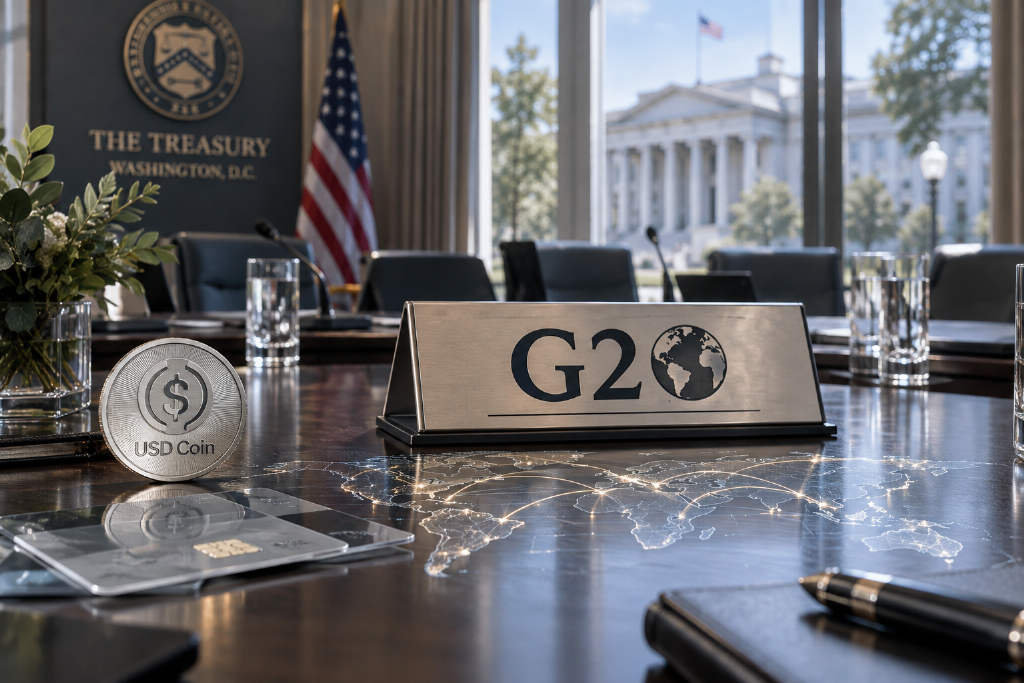
The Group of Twenty has formally endorsed digital assets as a source of broader economic growth in a joint statement released by the U.S. Treasury on Sept. 2, with all member countries agreeing to the language. The statement describes digital asset innovation as having a “transformative role” and pairs that recognition with a commitment to build responsible and effective regulatory and supervisory frameworks. The document also lays out the next policy priorities. G20 members said they want clearer pathways for digital finance and digital asset innovation, better efficiency in cross-border payments, and stronger support for cross-border data flows tied to financial services. Stablecoins stand out as a central issue, with the group awaiting updated work from the Financial Stability Board on global stablecoin arrangements, data sources and availability, and possible systemic risks. The statement comes as major jurisdictions have already moved ahead with domestic legislation, including the U.S. GENIUS Act and the European Union’s MiCA framework. While the declaration does not mention specific assets such as Bitcoin or Ether, it signals a coordinated focus on the broader digital asset framework and on how these products should be supervised across borders.

1160
G20 backs digital assets as a driver of growth, with cross-border payments and stablecoin rules next
Total 43 items
Go topage