Stablecoins
Oct 21, 2026

Why Tether Backed Kem and Its Four Gen-Z Founders in the GCC Stablecoin Push

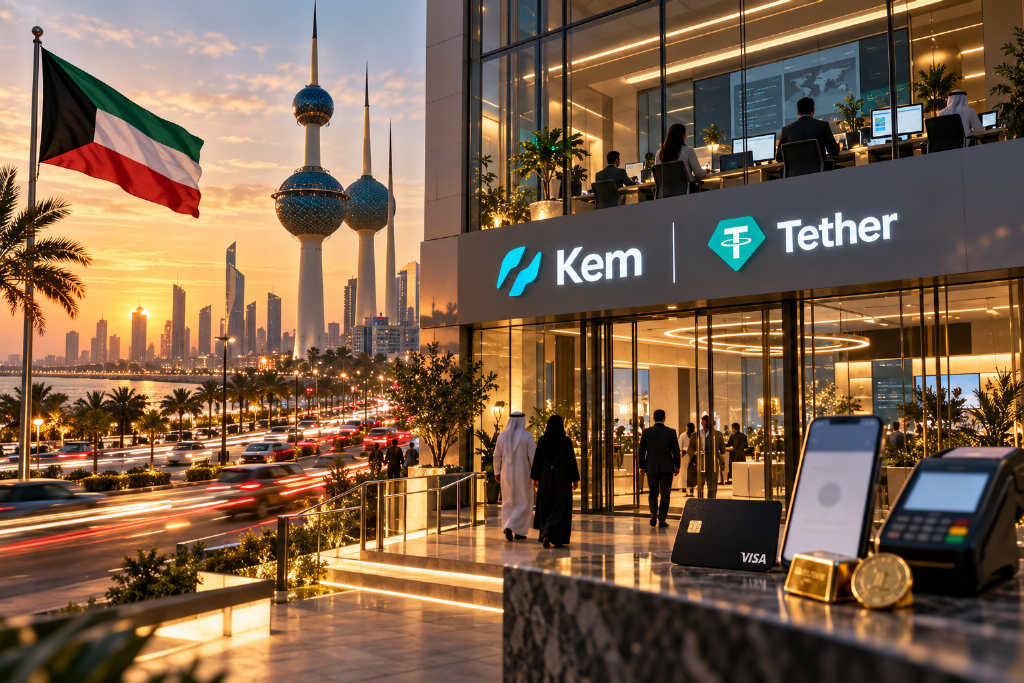
Tether’s $3 million investment in Kuwait-based fintech Kem has drawn attention not because of the check size, but because of what it says about the next stage of stablecoin adoption. Founded in 2021 by four founders born in the 2000s, Kem started with local money transfers in the Gulf and has since expanded into a broader financial super app serving both consumers and businesses across the GCC market. The company now offers fiat and crypto on- and off-ramps, USDT conversion, Tether Gold (XAUT) allocation, savings features, Visa card spending, and lifestyle services such as eSIM purchases and airport lounge access. On the business side, Kem Business supports USDT acceptance through checkout, payment links, and APIs, while also covering payroll, refunds, VAT, invoicing, reconciliation, and fund analytics. According to information provided by the Kem team, the platform has surpassed 600,000 downloads and created more than 200,000 XAUT wallets. The article argues that Tether’s interest in Kem reflects a broader shift: stablecoins are moving beyond issuance and trading into everyday use cases such as remittances, payroll, consumer payments, and business settlement. In the GCC, where expatriate populations are large and cross-border money movement is a daily need, Kem’s local infrastructure, regulatory progress, and mix of crypto and traditional finance capabilities make it a notable vehicle for that strategy.
1360
Why Tether Backed Kem and Its Four Gen-Z Founders in the GCC Stablecoin Push
PayMore
Oct 19, 2026

PayMore says its Android app is coming to Google Play

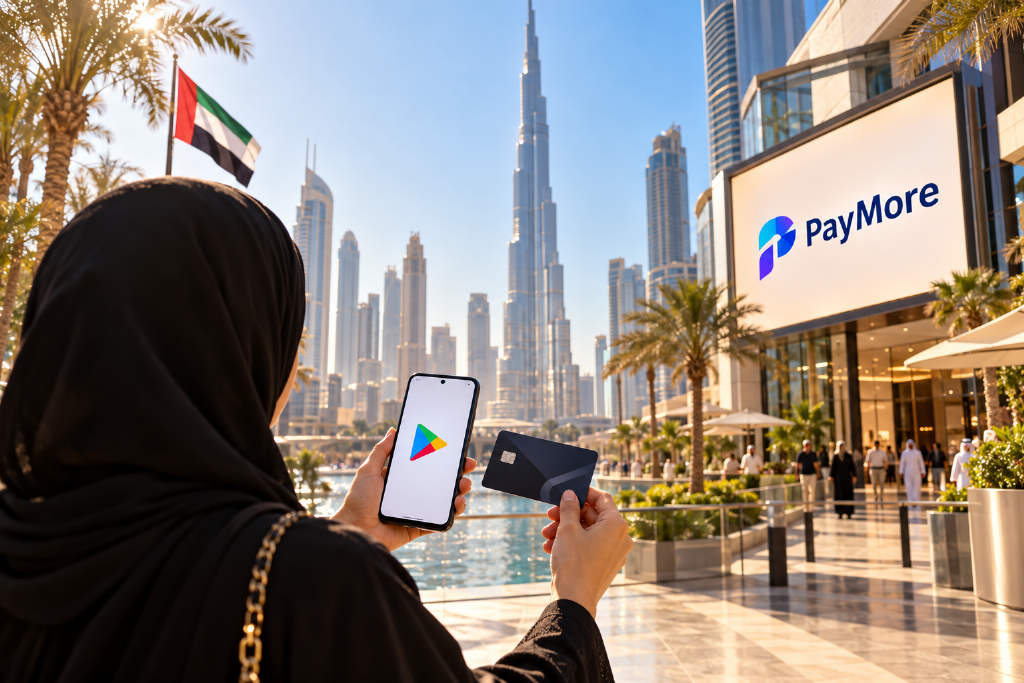
PayMore said its Android application will soon be available on Google Play, according to a Techub News brief citing Finextra. The company describes PayMore as a consumer mobile app built for users in the Gulf Cooperation Council region. Its core offering is prepaid virtual cards that can be used for online shopping, subscriptions, and digital services. No launch date or additional rollout details were disclosed in the brief. The update points to PayMore’s planned expansion on Android distribution through Google Play for its target market in the GCC.

1010
PayMore says its Android app is coming to Google Play
Policy Regulation
Oct 7, 2026

U.S. Senate report flags USDT as key channel in Iran shadow banking, raising compliance pressure on GCC VASPs

A report from the U.S. Senate Permanent Subcommittee on Investigations said stablecoins, especially USDT, serve as a key liquidity channel supporting Iran’s shadow banking system. The finding puts licensed virtual asset service providers in the Gulf Cooperation Council region under heavier sanctions-compliance pressure, with closer focus on wallet attribution and counterparty checks. Septten partner Soham Jethani said merchants do not avoid sanctions exposure simply by settling crypto into local fiat. He said liability can arise from providing funds or economic resources to designated parties, or from handling assets within a transaction chain, even before a bank completes final settlement. Jethani also said the name of a stablecoin or its denomination does not determine legal ownership, which depends instead on contractual arrangements and the actual payment flow. In regulated markets such as the UAE, licensed exchange wallets remain under ongoing monitoring, funds can be frozen before consumer settlement, and merchants must complete KYC. Regulated VASPs handling deposits and withdrawals bear responsibility for counterparty review, sanctions-risk assessment, and related controls.

960
U.S. Senate report flags USDT as key channel in Iran shadow banking, raising compliance pressure on GCC VASPs
U.S. Senate
Oct 7, 2026

U.S. Senate inquiry identifies USDT as a key liquidity channel for Iran’s shadow banking network

A report from the U.S. Senate Permanent Subcommittee on Investigations identified stablecoins, particularly Tether’s USDT, as a key liquidity channel supporting Iran’s shadow banking system. The finding raises sanctions compliance pressure for licensed virtual asset service providers, or VASPs, operating across the Gulf Cooperation Council region. According to the report’s framing, firms in those markets need tighter wallet attribution checks and stronger counterparty reviews. Soham Jethani, a partner at law firm Septten, said merchants do not avoid sanctions risk simply by converting crypto proceeds into local fiat currency. He said liability can arise from providing funds or economic resources to designated parties, or from handling assets within a transaction chain, and that exposure may emerge before a bank completes final settlement. Jethani also said the name of a stablecoin or its denomination currency does not determine legal ownership, which instead depends on contractual arrangements and the actual payment flow. He added that globally circulating stablecoins can also create secondary sanctions risk. At the same time, indirect or historical wallet links do not automatically amount to a violation and must be assessed against the applicable regime, the parties involved, and the specific facts. In regulated markets such as the United Arab Emirates, licensed exchange wallets remain under ongoing monitoring, funds can be frozen before consumer settlement, and merchants must complete KYC.

780
U.S. Senate inquiry identifies USDT as a key liquidity channel for Iran’s shadow banking network
Tether
Sep 28, 2026

Tether partners with Shiga to roll out self-custody products in Africa and the GCC

Tether has partnered with fintech company Shiga to launch self-custody financial products for users and institutions in Africa and the Gulf Cooperation Council, according to an official announcement cited by ChainCatcher. The collaboration will use Tether’s open-source Wallet Development Kit, or WDK, as the technical base for the rollout. The two companies plan to introduce two flagship offerings. The first is ENTA, a self-custody wallet for individuals and businesses that supports funding with fiat currency or Bitcoin and allows users to hold and transfer Tether (USDT), Bitcoin, and Tether Gold (XAUT). The second is Pulse, an infrastructure product for banks and financial institutions designed to help them tailor digital asset services to specific payment rails and settlement workflows while keeping key control through private deployments. Shiga is also in the final approval stage for a Nigerian digital asset intermediary license. Once approved, the company plans to operate compliant digital asset trading, brokerage, and custody services in the country.

1950
Tether partners with Shiga to roll out self-custody products in Africa and the GCC
Zamanat
Sep 10, 2026

Zamanat backs $100 million tokenized private credit fund in DIFC

Zamanat said on Sept. 10 that it is sponsoring Zamanat Fund CEIC Limited, a tokenized private credit fund registered in the Dubai International Financial Centre with a target size of up to $100 million. The fund will focus on private credit opportunities across the Gulf Cooperation Council region, where the company said small and medium-sized enterprises face an estimated $250 billion financing gap and only about 11% can access credit. The vehicle is structured as a closed-ended exempt fund regulated by the Dubai Financial Services Authority, with Truleum Venture Partners serving as manager and Apex Group providing fund administration services. Fund interests will be issued as ZM1 investment tokens on ZIGChain and offered in a regulated, whitelisted environment to eligible professional investors only. Zamanat said the launch is its first live case of bringing GCC private credit into a regulated digital structure. The company also said the fund is not an Islamic fund and is not being marketed as Shariah-compliant, adding that digital Islamic assets sit within its broader business strategy.

2600
Zamanat backs $100 million tokenized private credit fund in DIFC
Tether
Jul 27, 2026

Tether’s Gold-Backed Token XAUT Receives Shariah Certification

Tether said on July 27 that its gold-backed digital asset XAUT has received Shariah compliance certification from Amanah Advisors, a move the company says opens a compliant digital gold investment route for Muslim users, Islamic banks, and institutional investors worldwide. According to Tether, the certification confirms that XAUT aligns with core Islamic finance principles and lets users hold physical gold in digital form through blockchain infrastructure. Each XAUT token represents direct ownership of physical gold stored in a Swiss vault, and the structure does not include interest, leverage, or speculative derivatives. Amanah Advisors said issuer TG Commodities, S.A. de C.V. meets Islamic finance requirements, including actual ownership of physical gold, transparent and verifiable reserves, no interest-based mechanism, and no use of leverage or speculative derivatives. Tether added that gold has long held an important role in Islamic finance and said the certification is expected to support XAUT adoption across GCC countries, South Asia, parts of Africa, and global Islamic finance centers.

2320
Tether’s Gold-Backed Token XAUT Receives Shariah Certification