Micro Silicon Electronics
Nov 4, 2026

Micro Silicon Electronics posts EPS of NT$1.36 for the first three quarters, plans cash raise ahead of main board transfer

Micro Silicon Electronics said its earnings per share for the first three quarters of 2026 reached NT$1.36, alongside cumulative consolidated revenue of NT$986 million. To meet shareholder dispersion requirements tied to a planned transfer from the innovation board to the general board, the company’s board approved a cash capital increase of 4.912 million new shares at a tentative price of NT$45 per share. Based on that price, the company expects to raise about NT$221 million, with all proceeds earmarked for working capital. Existing shareholders have waived preemptive subscription rights, with 10% of the new shares reserved for employee subscription and the remaining 90% to be sold through a public underwriting process. Micro Silicon Electronics said it aims to complete the board transfer by the end of 2026. The company, which focuses on backend semiconductor processes including testing, wafer thinning and packaging, said orders for its third-generation semiconductor backend business have remained stable as end-market demand grows. It also said demand from AI data centers and electric vehicles has supported orders related to power management chips and gallium nitride, or GaN, processes. After the transfer, trading restrictions tied to qualified investor status would be lifted, allowing retail investors to participate.

390
Micro Silicon Electronics posts EPS of NT$1.36 for the first three quarters, plans cash raise ahead of main board transfer
Win Semiconductors
Oct 28, 2026

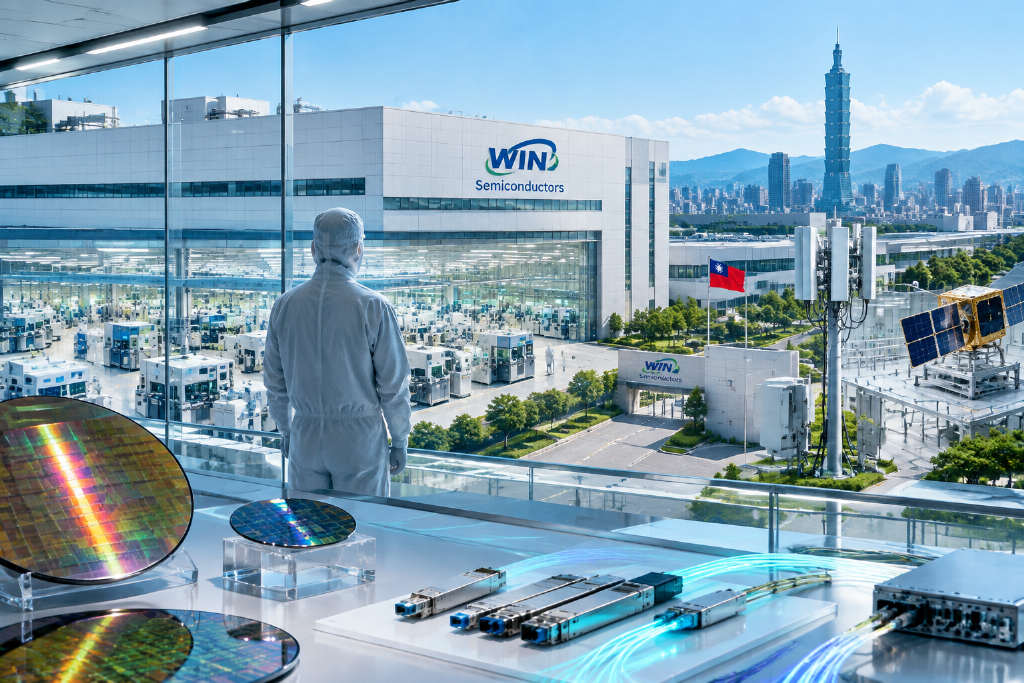
Win Semiconductors posts NT$4.55 Q3 EPS as AI optical demand lifts shares limit-up

Win Semiconductors, a major compound semiconductor foundry, reported self-filed financial results for the third quarter of year 115, showing a sharp jump in profitability. The company posted NT$5.859 billion in consolidated revenue, NT$2.191 billion in gross profit, a gross margin of about 37.39%, and operating income of NT$1.416 billion. Quarterly EPS reached NT$4.55, lifting cumulative EPS for the first three quarters to NT$8.12. According to the report, the improvement was driven by higher capacity utilization and a better product mix. The article said the market is also focusing on Win Semiconductors’ exposure to AI data center optical communications and infrastructure applications. It highlighted PD photodetectors and VCSEL laser components used in optical modules, as well as the company’s GaN process technology for 5G base stations and low Earth orbit satellite communications equipment. The report also noted growing attention on the company’s InP platform, which is used in key components for 800G and 1.6T optical modules. Following the earnings release, the stock hit limit-up during intraday trading.

400
Win Semiconductors posts NT$4.55 Q3 EPS as AI optical demand lifts shares limit-up
AMEC
Oct 19, 2026

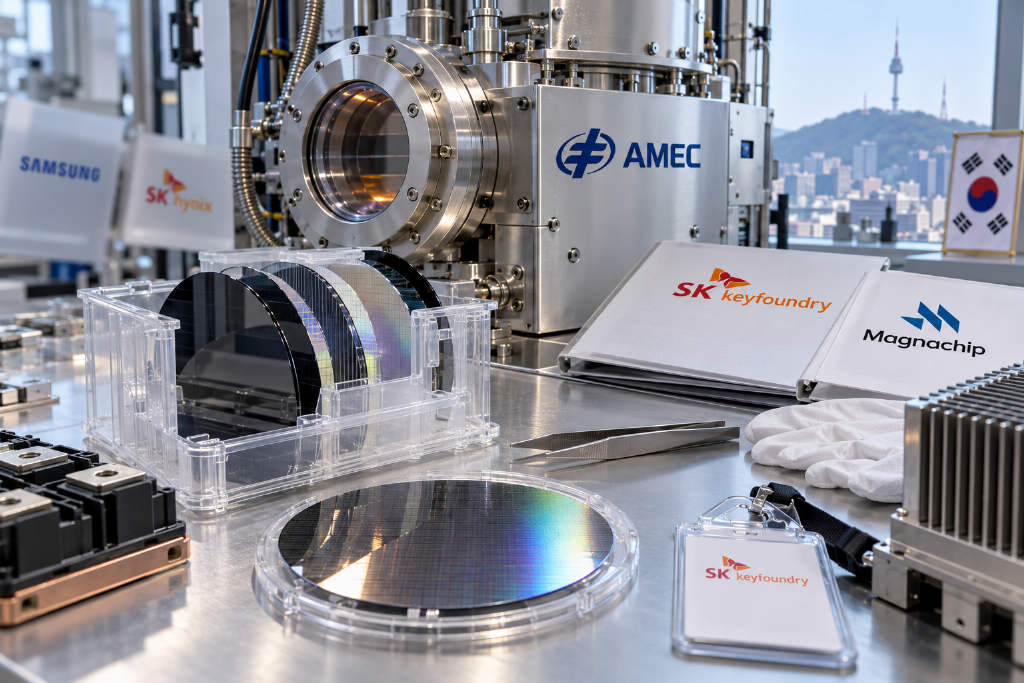
AMEC tests MOCVD tools with SK keyfoundry and Magnachip in South Korea

Chinese semiconductor equipment maker Advanced Micro-Fabrication Equipment Inc. China, or AMEC, has begun testing metal-organic chemical vapor deposition, or MOCVD, tools with South Korean chip companies including SK keyfoundry and Magnachip, according to a report by ZDNet Korea on Oct. 16. The company is seeking follow-on supply deals as demand rises for next-generation power semiconductors built on silicon carbide (SiC) and gallium nitride (GaN). The report said AMEC has struggled to enter fabrication lines run by Samsung Electronics and SK hynix in South Korea because of geopolitical factors, leaving second-tier foundries and power chip makers as a possible entry point. MOCVD equipment is widely used in semiconductor manufacturing and is seen as especially important in compound semiconductor epitaxy, including GaN. The report also noted that SK keyfoundry and Magnachip are both pushing into the power semiconductor segment, with SK keyfoundry having secured a 1200V SiC MOSFET development order from a new customer in the first half of this year. While AMEC holds a relatively high share of China’s MOCVD market, its footprint in South Korea remains limited.

690
AMEC tests MOCVD tools with SK keyfoundry and Magnachip in South Korea