Bitcoin
Sep 9, 2026

Bitcoin and Ethereum face a 2029 quantum timetable as U.S. backs $300 million hardware push

CoinDesk reports that the quantum threat to crypto is not here yet, but the timelines are getting harder to ignore. Progress toward fault-tolerant quantum machines is starting to line up with the migration plans being discussed across the crypto sector, with both tracks converging on roughly the same 2029 window. That puts Bitcoin and Ethereum in a race against a clock that is becoming more concrete, even if the immediate risk has not arrived. The report also points to U.S. support for a $300 million hardware push. In that setting, the issue is no longer framed as a distant theoretical problem alone. Instead, it is becoming a scheduling challenge for major blockchain networks whose future security planning may need to keep pace with advances in quantum hardware.

1240
Bitcoin and Ethereum face a 2029 quantum timetable as U.S. backs $300 million hardware push
Apple
Sep 2, 2026

Apple reshuffles top leadership as John Ternus takes CEO role and Tim Cook becomes executive chair

Apple is making a major leadership change, with Tim Cook stepping aside after 15 years as chief executive and moving into the role of executive chair of the board, while longtime hardware chief John Ternus takes over as CEO. According to ABMedia, citing CNBC analysis, the move points to a shift in Apple’s operating priorities: away from the Tim Cook era’s focus on China and global supply chains and back toward a model centered on product design, hardware development, and device-led innovation. Ternus has spent 25 years at Apple and has long overseen hardware engineering. He is described externally as a product-focused executive whose career has concentrated on hardware and chip integration. The report says he previously led development work tied to MacBook Neo, iMac Pro, and Mac Pro. Under his leadership, Apple is expected to put more weight on hardware R&D while pushing new device categories such as a foldable iPhone, next-generation wearables, and robotics. The management split leaves Cook focused on external affairs, administration, and international supply-chain matters, while Ternus takes charge of Apple’s product roadmap, AI integration, and hardware innovation. He also inherits unresolved issues around Apple Intelligence and Siri, especially regulatory friction in Europe and localization demands in China.

1540
Apple reshuffles top leadership as John Ternus takes CEO role and Tim Cook becomes executive chair
OpenAI
Sep 1, 2026

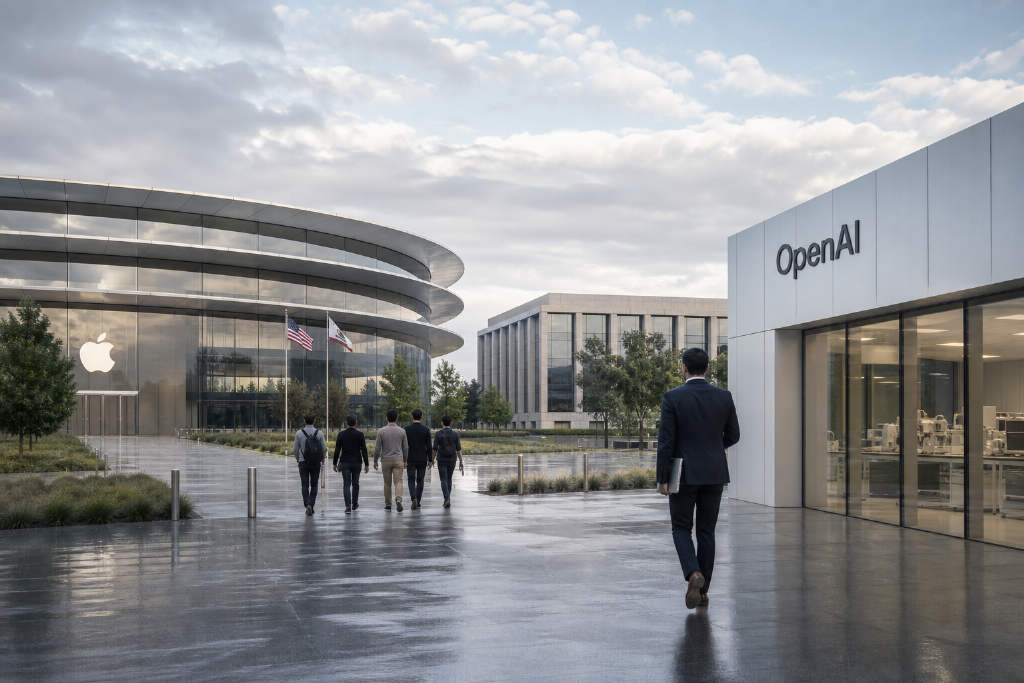
OpenAI Rejects Apple’s Trade-Secret Suit, Says Next 400 Departures Can’t Be Stopped

OpenAI responded to Apple’s trade-secret lawsuit by blaming Apple itself for the dispute. It said Apple’s real motive is to slow a hardware competitor and discourage employee departures. Apple had submitted new evidence a day earlier, accusing former senior systems electrical engineer Chang Liu of accessing a power-conversion circuit diagram and using proprietary information to train an AI agent after moving to OpenAI. The alleged evidence came from a MacBook OpenAI handed to Apple during the litigation. OpenAI countered that Liu accessed Apple files only because former colleagues kept asking him for help locating documents and answering work questions. Apple hardware chief Tang Tan also denied taking confidential material, saying he returned prototype units and kept only non-confidential documents. OpenAI said about 400 former Apple employees have joined its hardware unit, and that lawsuits will not stop “the next 400” from leaving. It added that its debut hardware will be a new consumer device “substantially different” from existing Apple products.

1460
OpenAI Rejects Apple’s Trade-Secret Suit, Says Next 400 Departures Can’t Be Stopped
CXMT
Aug 31, 2026

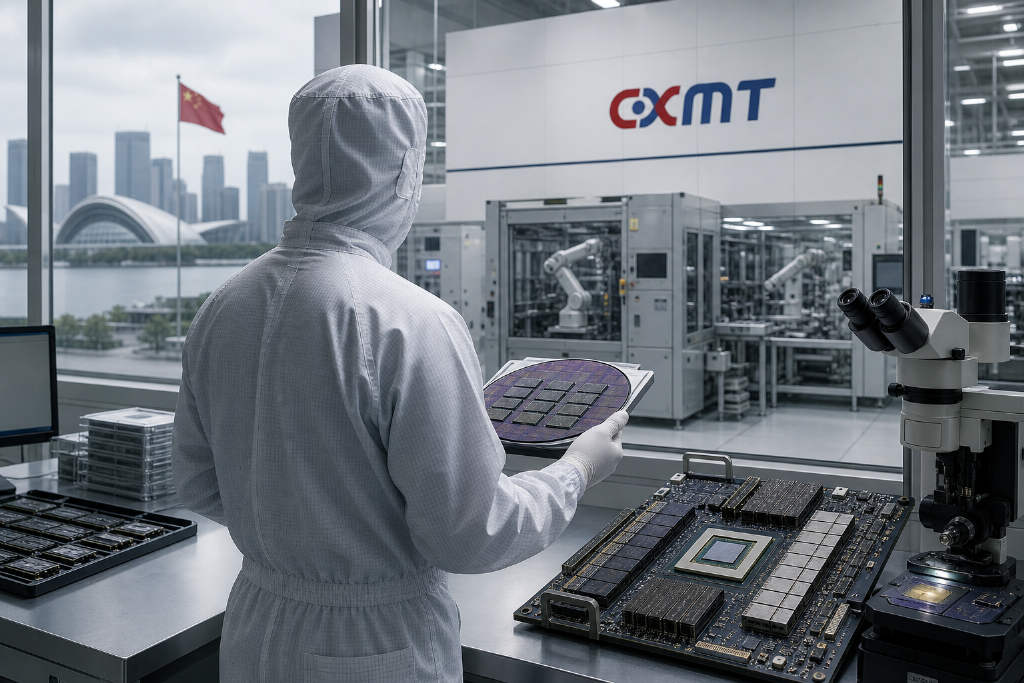
CXMT develops HBM3 memory chip for AI processors

Chinese memory chipmaker ChangXin Memory Technologies, or CXMT, has developed an HBM3 memory chip for AI processors, according to Techub News, which cited Crypto Briefing. The brief report points to a potentially meaningful shift in China’s AI hardware market if the product moves into broader use. The development was described as one that could challenge the current oligopolistic structure in the domestic market. It could also affect pricing inside China, according to the cited report. No additional technical specifications, production timeline, customer names, shipment details, or pricing data were disclosed in the source item. The report focused on the strategic implication of CXMT entering the HBM3 segment, which is closely tied to AI processor performance and memory bandwidth requirements.

1520
CXMT develops HBM3 memory chip for AI processors
MAGNE.AI
Aug 26, 2026

MAGNE.AI pushes beyond a Web3 phone into edge AI and agent infrastructure

MAGNE.AI is no longer being framed only as a Web3 smartphone project. Public materials reviewed from RootData, regulatory filings and the company’s own disclosures show a broader buildout across devices, edge AI, identity rails and machine payments. On the hardware side, MAGNE Phone Gen1 is listed at the PVT P2 stage after Pre-EVT and EVT P1, with first-batch manufacturing targeted for the third quarter of 2026. The company has also published FCC-linked materials, a 3D phone structure viewer and staged production updates. On the enterprise side, MAGNE AI BOX is being positioned for private AI and edge-compute deployments, with a Release Gate framework, one local run validation for a Qwen3.6-35B-A3B Q4_K_M artifact, and a Gate 1 plan to build three prototypes for performance, thermal, offline and recovery testing. Agent Pay, meanwhile, has shown a local contract demo and testnet evidence, but end-to-end HTTP 402 flows are still under development and production payments are not open. MAGNE.AI disclosed a $2.64 million strategic follow-on round on Aug. 5, 2026, bringing cumulative public financing to $12.64 million by its own account. Even so, the article argues the key questions now are delivery, prototype validation, public testnet payment proof and whether community participation can convert into actual device users.

2920
MAGNE.AI pushes beyond a Web3 phone into edge AI and agent infrastructure
AI Servers
Aug 18, 2026

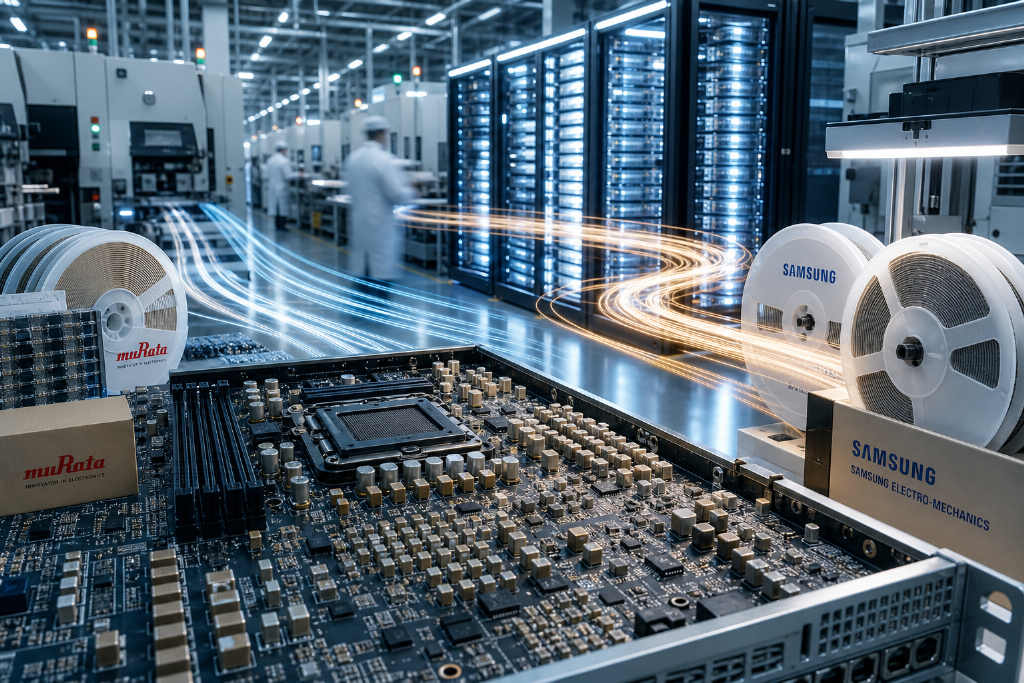
Citrini says AI server demand is splitting MLCC lead times, with top-end parts nearing 10 months

Citrini analyst Jukan said MLCC lead times are diverging sharply by product type as demand tied to AI servers and data centers keeps rising. General-purpose MLCCs are still holding at 14 to 18 weeks, while high-capacitance and high-voltage parts are running at roughly four to five months. The tightest conditions are in high-end server-grade components used in AI systems. According to Jukan, server-grade MLCC lead times at Murata and Samsung Electro-Mechanics have moved beyond 20 weeks. Some high-capacitance products from Samsung Electro-Mechanics are averaging around 40 weeks. For Murata, lead times on products above 1 microfarad rose to 30 weeks in July from 24 weeks in June, and some channel quotes have reached 36 weeks, or close to 10 months. Jukan expects the split in lead times to last through the second half of 2026. He said AI servers require five to 13 times as many high-capacitance, miniaturized and high-reliability MLCCs as traditional servers. He also noted that new capacity expansion has been pushed back from Q4 2026 to 2027, leaving the supply-demand imbalance intact in the near term as major suppliers raise prices and expand long-term supply agreements.

2710
Citrini says AI server demand is splitting MLCC lead times, with top-end parts nearing 10 months
Total 21 items
Go topage