Bitcoin
Nov 1, 2026

Bitcoin miners brought in $1.215 billion in October, the highest level in 11 months

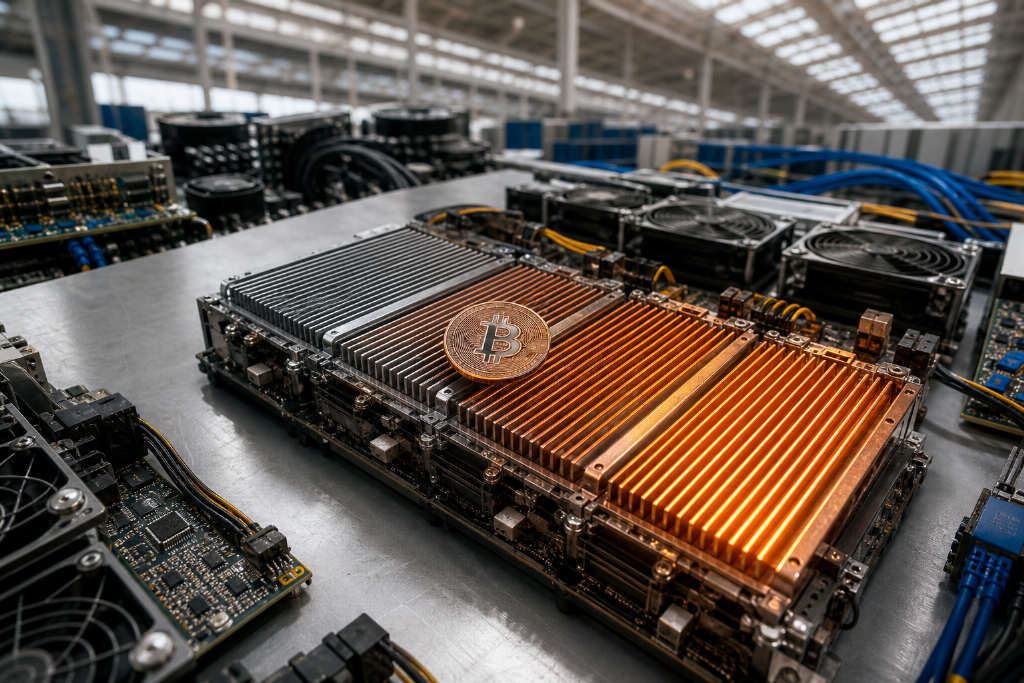
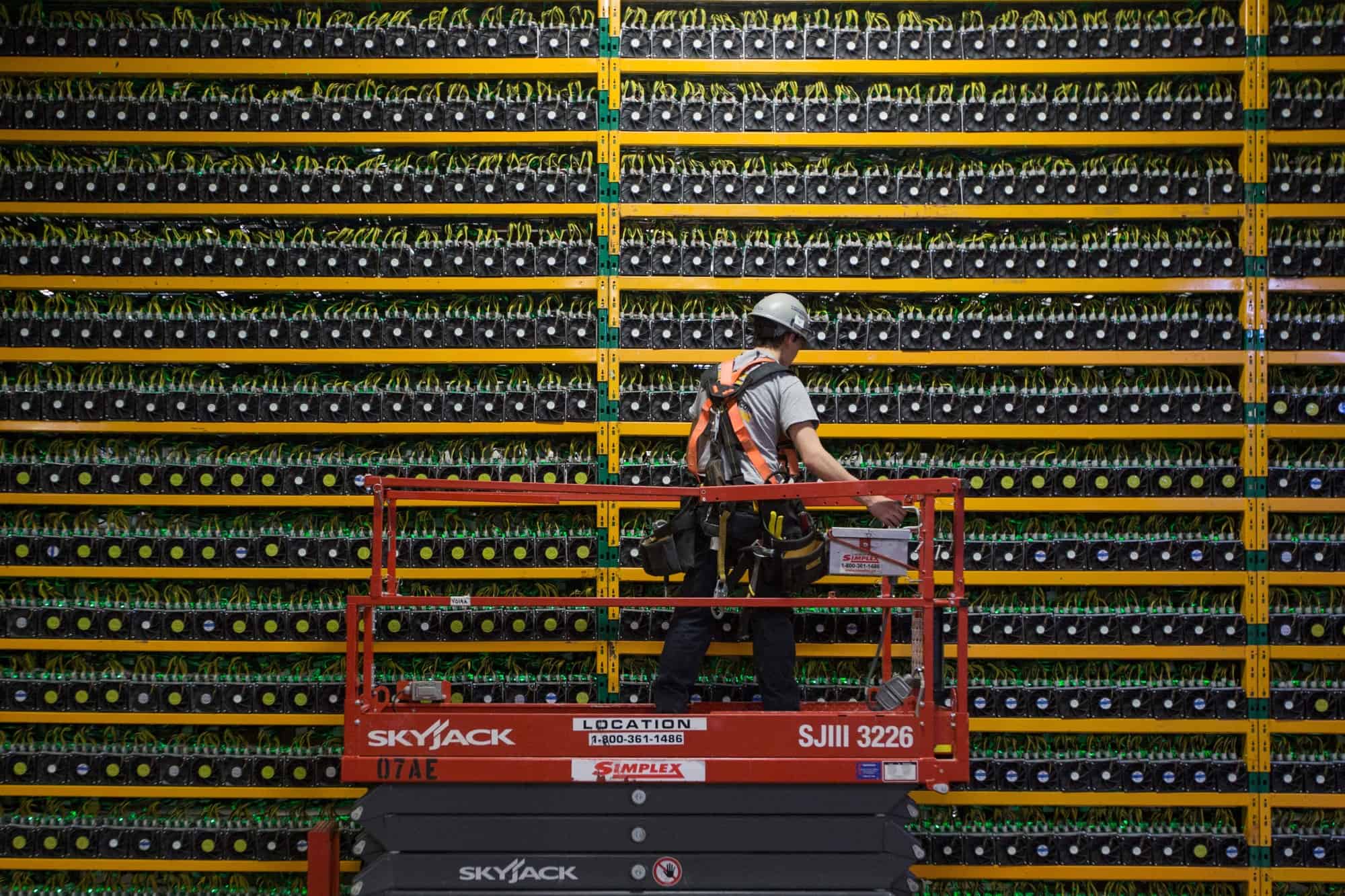
Bitcoin miners generated $1.215 billion in revenue in October, marking the strongest monthly total since November 2025. The figure came even as Bitcoin’s price fell 7.3% during the month, leaving miner revenue still slightly above the roughly $1.2 billion recorded in December 2025. Data cited by Bitcoin.com News also showed that hashprice, a metric used to estimate daily income per unit of computing power, declined over the period. As of Nov. 1, hashprice stood at $33.18 per PH/s per day, down 17.54% from $40.24 on Oct. 1. At the same time, the Bitcoin network’s total hashrate was 1082.24 EH/s, while average block time was about 9 minutes and 52 seconds. For comparison, miner revenue in November 2025 was reported at $1.26 billion. The update points to a month in which miner income rose to an 11-month high despite weaker Bitcoin pricing and lower hashprice.
840
Bitcoin miners brought in $1.215 billion in October, the highest level in 11 months
Bitcoin mining
Oct 14, 2026

Bitcoin mining math tightens as daily revenue for a 270 TH/s rig sits near $10.5 and power costs decide profitability

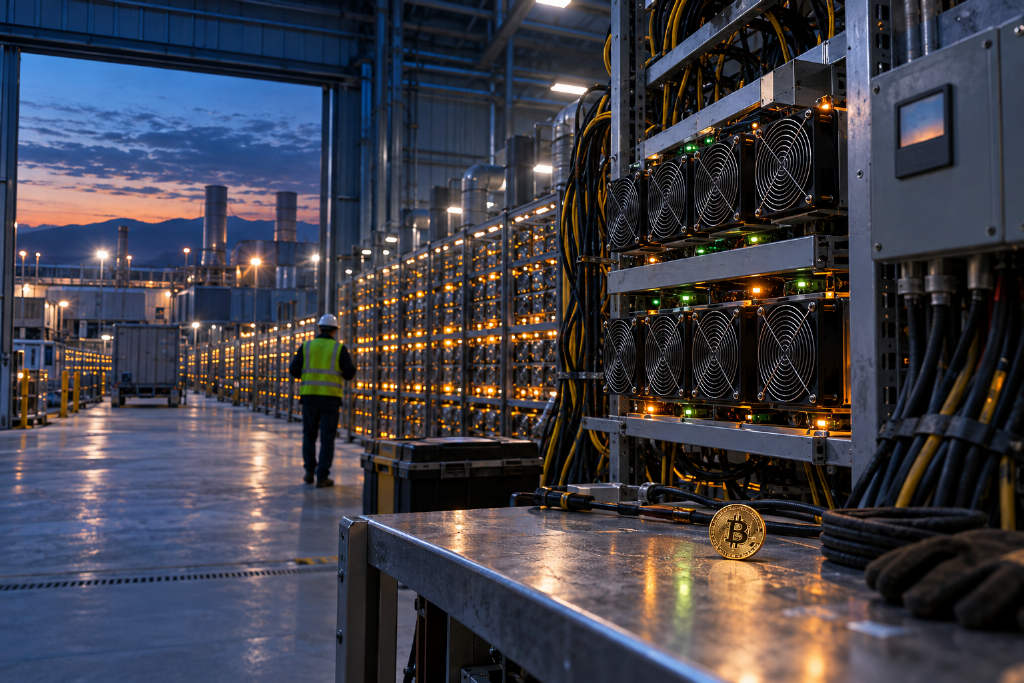
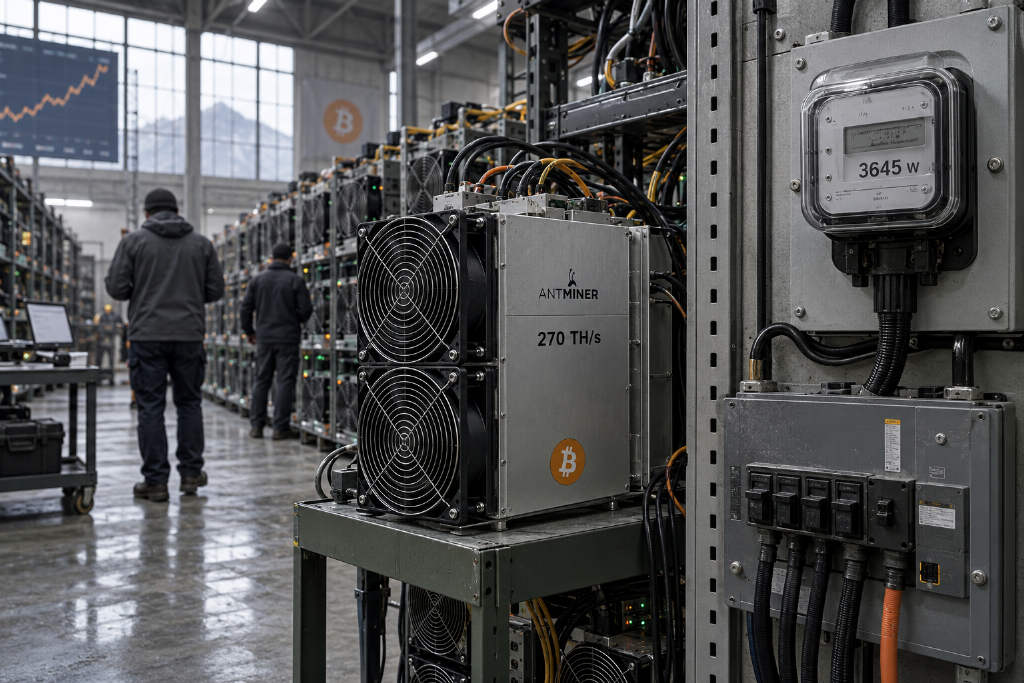
Bitcoin miners are working with far thinner margins than the spot price alone suggests. Data cited from Luxor’s Hashrate Index puts current Hashprice at $39.05 per PH/s per day, which translates into roughly $10.54 in daily gross revenue for a 270 TH/s machine. Using the example of Bitmain’s Antminer S21 XP, the article walks through the full calculation: 3,645 W of power draw means 87.48 kWh of daily electricity use, and after a 2% pool fee, the machine’s break-even power price is about $0.118 per kWh. At $0.12 power, the implied shutdown price for Bitcoin rises to about $82,900, above the market price cited in the piece. The report also places single-machine economics next to public miner financials. CoinShares said listed miners’ weighted average cash cost in the second quarter of 2026 was about $75,500 per BTC, while full-cost figures were far higher for companies including Riot Platforms, CleanSpark, IREN, and MARA Holdings. The article argues that mining economics are now shaped less by headline BTC price moves and more by the interaction of network hashrate, difficulty, machine efficiency, electricity contracts, and capital costs. It also notes that some miners are redirecting capacity toward AI workloads, where CoinShares estimated annual revenue per megawatt at roughly $1.5 million versus about $500,000 for mining.

1120
Bitcoin mining math tightens as daily revenue for a 270 TH/s rig sits near $10.5 and power costs decide profitability
Bitcoin
Aug 26, 2026

Hashprice rebounds 20%, but Bitcoin miners are still far from comfortable

Bitcoin miners have seen a short-term improvement in economics as hashprice, a key measure of daily mining revenue per unit of computing power, climbed roughly 20% in mid-to-late August. The metric rose from about $32 to around $38.33 after Bitcoin posted an approximately 20% gain in a single week. That rebound has given parts of the sector some breathing room, especially operators running more efficient machines. The relief follows a brutal stretch after the 2024 halving. In the first quarter of 2026, hashprice fell to about $28 to $30 per PH/s per day, the lowest level since the halving, according to the article. CoinShares estimated that roughly 15% to 20% of older mining rigs, including Antminer S19 units, were no longer covering electricity costs at that point. Publicly listed miners responded by selling reserves, with on-chain data showing listed mining firms have sold about 28,000 BTC this year while overall holdings continued to decline. Even with the recovery, the sector remains under pressure. CoinShares said the weighted average cash cost for listed miners to produce one Bitcoin in the fourth quarter of 2025 was about $79,995. The report also pointed to growing debt tied to miners’ push into AI and high-performance computing, where contracts have exceeded $70 billion. The latest rebound has eased stress, but it has not resolved the industry’s structural cost and financing problems.

1930
Hashprice rebounds 20%, but Bitcoin miners are still far from comfortable
Bitcoin
Aug 23, 2026

Bitcoin hashprice climbs 20.41% in four days, lifting miner revenue to $38.29 per PH/s

Bitcoin hashprice rose 20.41% over the four days from Aug. 18 to Aug. 22, increasing from $31.80 per PH/s to $38.29 per PH/s, according to a report cited by Odaily. Hashprice is used to measure mining revenue generated by a given amount of computational power, and the move translated into higher miner income. As of Aug. 22, the Bitcoin network had 133 large, medium-sized, and small mining pools and individual mining operations contributing hashrate. Foundry USA led with 214.73 EH/s, followed by Antpool at 156.17 EH/s, F2pool at 110.62 EH/s, and ViaBTC at 91.02 EH/s. Total network hashrate had climbed to about 922 EH/s, close to 1 ZH/s. So far in August, miners have earned $682.69 million from block subsidies and transaction fees combined. Of that total, transaction fee revenue accounted for $5.14 million, below July’s $875 million. On Aug. 22, the average Bitcoin block interval stood at 10 minutes and 5 seconds, while current data showed the day’s difficulty adjustment was expected to decline by about 1%. At an electricity cost of $0.10 per kilowatt-hour, Bitmain’s Antminer S23 Hydro 3U was estimated to generate $17.86 in daily profit.

2390
Bitcoin hashprice climbs 20.41% in four days, lifting miner revenue to $38.29 per PH/s
Bitcoin mining
Aug 18, 2026

Bitcoin miners tied to AI and HPC are winning higher valuations than pure-play mining firms

Bitcoin mining companies that have moved into artificial intelligence and high-performance computing are drawing richer valuations as pressure on mining economics continues. According to BlockBeats, falling bitcoin prices and weaker mining profitability have pushed more listed miners to look for steadier revenue streams through AI and HPC contracts. Over the past year, TerraWulf, IREN and Cipher Digital more than doubled in share price, while MARA Holdings, which shifted to AI later than peers, fell about 40% over the same period. Mining economics also deteriorated sharply: hashprice dropped from about $63 per PH/s in July last year to roughly $31.8 per PH/s, while Bitcoin network hashrate declined from 1.14 ZH/s to around 900 EH/s, a drop of about 21%. CoinShares said that, as of the first quarter of 2026, miners with AI/HPC contracts traded at an average enterprise value multiple of about 12.3x, compared with 5.9x for pure bitcoin miners. The industry had also signed roughly $70 billion in cumulative AI/HPC contracts. Riot Platforms added to that trend last week by signing a 20-year lease agreement with Anthropic valued at about $9.1 billion. CoinShares also said a recovery in pure bitcoin mining remains possible if bitcoin returns to its roughly $126,000 record high from last October.

2090
Bitcoin miners tied to AI and HPC are winning higher valuations than pure-play mining firms
Bitcoin
Aug 3, 2026

Bitcoin mining difficulty falls about 14% from this year’s high as AI pulls power and capital

Bitcoin’s mining network is going through a notable pullback in hashrate, with mining difficulty now about 14% below this year’s high, according to Blockcast. After a 0.74% downward adjustment, network difficulty stands at 126.23 T, down 1.1% from 127.62 T a year earlier and 19.1% below the all-time high of 155.97 T set in November 2025. The report says this is only the second time in Bitcoin’s history that mining difficulty has fallen below the level seen in the same period of the prior year. Unlike the 2021 drop tied to China’s nationwide mining ban, the current decline is being linked to weaker mining economics. Hashrate Index, operated by mining data platform Luxor, said soft Bitcoin prices and compressed mining revenue have pushed miners to shift capital, electricity and operating focus toward artificial intelligence and high-performance computing infrastructure. Summer curtailment in Texas and power disruptions in other major mining regions have also weighed on total hashrate. Miner profitability remains under pressure. Hashprice, a metric tracking expected daily revenue per unit of hashrate, fell to $27.66 per PH/s per day in late June, just $0.01 above this year’s February low. It has since recovered to about $31.7, while Luxor forward market pricing points to an average of roughly $31.85 by the end of December.

2920
Bitcoin mining difficulty falls about 14% from this year’s high as AI pulls power and capital
EMCD
Jul 27, 2026

EMCD launches miner support program with up to $30 million in backing

Bitcoin mining pool and crypto finance platform EMCD said on July 27 that it has rolled out a Miner Support Program offering up to $30 million for eligible miners. The package includes financing, fee reductions, and discounts tied to hardware and infrastructure partnerships. The announcement comes as Bitcoin miners continue to face sharp profitability pressure after the halving. CoinShares Q1 2026 data showed hashprice had fallen to about $28 per PH per day, down 50% from its October 2025 peak and marking a post-halving low. Hashrate Index data also showed roughly 252 EH/s had left the market as weaker economics forced many older machines offline. EMCD said its program includes collateralized liquidity at a 3.9% annualized rate for miners under cash pressure, a 60-day mining pool fee waiver, Vnish firmware discounts for older or less efficient rigs, and procurement and data center support for capacity expansion and hashrate migration through partner networks. Founded in 2017, EMCD said it operates a Bitcoin mining pool across more than 120 markets, manages over 30 EH/s of hashrate, and ranks among the world’s top 10 Bitcoin mining pools.

2260
EMCD launches miner support program with up to $30 million in backing
Bitcoin
Jul 26, 2026

Bitcoin mining difficulty falls 0.74% in 15th adjustment of 2026

Bitcoin’s network completed its 15th mining difficulty adjustment of 2026 at block height 959616, with difficulty reduced by about 0.74%. So far this year, the network has recorded nine downward adjustments and six upward moves. Since the start of 2026, mining difficulty has dropped from 146.47 trillion to 126.23 trillion, a decline of 13.82%. Over the same period, Bitcoin’s price has fallen 26% from Jan. 1, while estimated daily hashprice per PH/s slid from $37.39 to $32.21. The report also said some large mining companies have been redirecting power resources toward AI infrastructure and cloud service clients. The figures were cited by Odaily, which referenced News Bitcoin.

2280
Bitcoin mining difficulty falls 0.74% in 15th adjustment of 2026
Total 34 items
Go topage