AI
Aug 16, 2026

California Bill Moves Ahead to Restrict AI Chatbots in Mental Health Care

California lawmakers have advanced Senate Bill 903, a measure that would restrict how artificial intelligence can be used in psychotherapy and mental health decision-making. The bill cleared the Assembly Appropriations Committee on Thursday in a 13-0 vote and now heads to a third reading, though no Assembly floor vote has been scheduled. Introduced on January 21, the proposal would bar AI chatbots from presenting themselves as therapists, limit AI use in psychotherapy to support functions, and require clinician oversight as well as patient consent. It also includes protections for therapy data, while carving out exemptions for peer support, religious counseling, research, and federally approved medical tools. The California Senate previously passed the bill 39-0 in May, and two Assembly policy committees later approved it by 17-0 and 14-1. Critics, including TechNet executive director Robert Boykin, argue that requiring clinician involvement could slow access to care at a time when every county in California faces a shortage of behavioral healthcare workers. The legislative push arrives as concern grows over AI’s role in mental health, with a June American Psychological Association survey finding that 77% of psychologists had patients using AI for mental health purposes.


1270
California Bill Moves Ahead to Restrict AI Chatbots in Mental Health Care
JPMorgan
Aug 4, 2026

JPMorgan Keeps Favoring Tech and Cyclicals, Adds Healthcare as a Risk Buffer

JPMorgan said in its latest report that it still favors a “technology plus cyclicals” equity allocation, while recommending healthcare as a third pillar to reduce a portfolio’s correlation with macro factors. The bank said the technology sector now offers a rebound opportunity after a sharp pullback. According to the report, the forward price-to-earnings ratio of the U.S. “Magnificent Seven,” excluding semiconductor companies, has fallen to two standard deviations below its average since 2018. A move back to the historical mean could imply roughly 56% upside. The report also argued that concerns over returns on AI investment have become excessive. JPMorgan said backlog growth at hyperscale cloud companies is about 150%, ahead of capital expenditure growth of around 80%, and it continues to favor mean reversion trades tied to AI assets, with particular attention on AI names in Asia-Pacific markets such as South Korea. In cyclicals, the bank recommended shifting from financials and consumer stocks into industrials, saying industrial companies stand to benefit from improving global growth, earnings recovery, and AI-driven valuation re-rating. It also took a tactical bullish stance on Hong Kong stocks in China, while advising investors to take some profits on crowded AI supply chain names that have already posted large gains.

2420
JPMorgan Keeps Favoring Tech and Cyclicals, Adds Healthcare as a Risk Buffer
Citi
Jul 27, 2026

Citi warns rising Fed hike odds could put small caps in the firing line

Citi’s strategy team said growing expectations for a Federal Reserve rate hike could leave small-cap stocks especially exposed in a broader market pullback. The bank said investors are shifting away from relying on forward guidance and paying closer attention to incoming economic data, partly because new Fed Chair Kevin Warsh is seen as more hawkish. Citi’s head of U.S. equity trading strategy, Stuart Kaiser, said markets are now pricing in more than a 30% chance of a hike this week, and that the probability of a September increase remains as high as 70% even if rates stay unchanged for now. Citi recommended using put options on the iShares Russell 2000 ETF (IWM) as a hedge, arguing that small caps are more sensitive than large technology stocks to interest rates, growth conditions, and credit. Separately, Goldman Sachs data showed hedge funds have been increasing exposure to healthcare, with specialized healthcare hedge funds posting average returns of nearly 40% from August 2025 to April 2026.

2490
Citi warns rising Fed hike odds could put small caps in the firing line
Bank of America
Jul 24, 2026

BofA strategist warns markets are ignoring risk and urges shift to defensive stocks

Bank of America strategist Sebastian Raedler has warned that equity markets are being priced for a near-perfect outcome, leaving investors exposed as valuations stay elevated. Raedler, BofA’s head of European equity strategy, said expectations for key measures including profit margins and five-year forward earnings growth have climbed to historic highs, even as the equity risk premium — a gauge of risk aversion — has fallen to its lowest level in 20 years. In his view, that gap points to a market that is no longer properly accounting for downside risk. Raedler advised investors to move away from cyclical sectors where valuations are high and the investment case is fragile, and instead look at defensive names that the market has overlooked for an extended period. He specifically highlighted healthcare and consumer staples as preferred sectors.

1950
BofA strategist warns markets are ignoring risk and urges shift to defensive stocks
US stocks
Jul 15, 2026

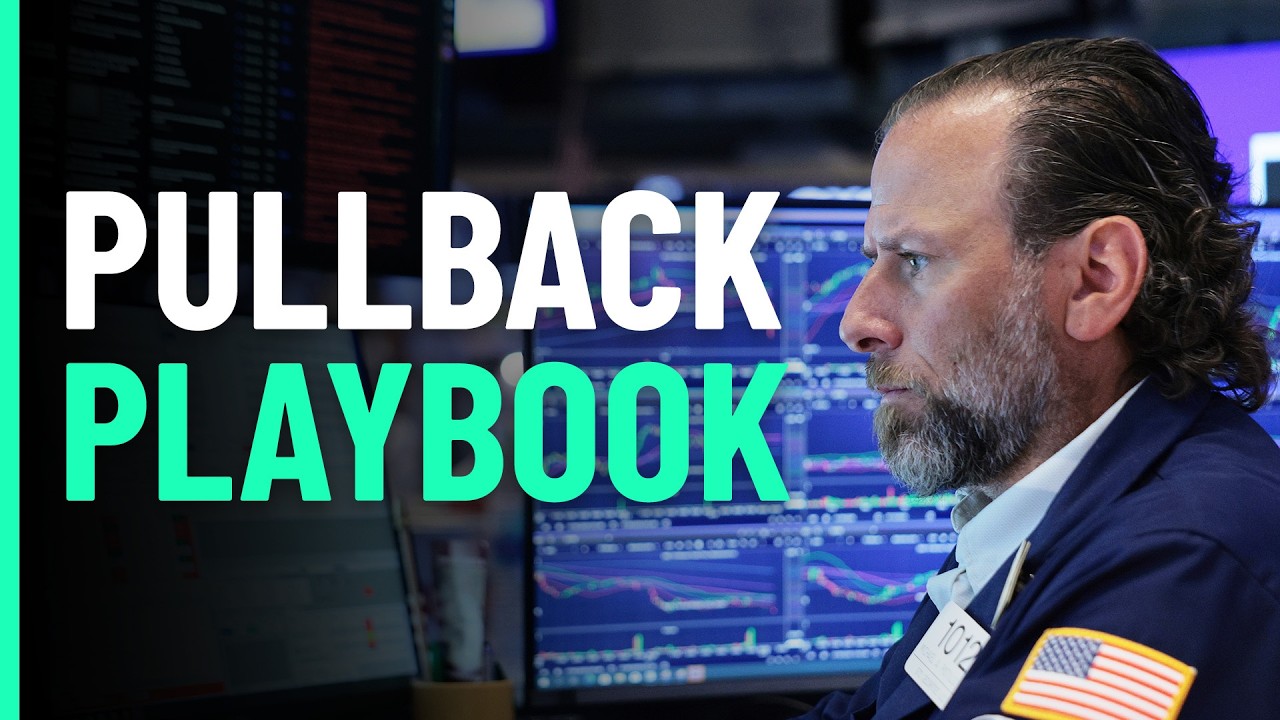
Art Hogan’s barbell trade for U.S. stocks: stay with Apple, Nvidia and Microsoft, add financials, industrials and healthcare

Art Hogan, chief market strategist at B. Riley Wealth, used a recent TheStreet podcast to lay out what he sees as the right playbook for the next pullback in U.S. equities. His answer was not to abandon technology, but to rebalance it. Hogan said investors whose Nvidia positions have grown sharply should consider trimming oversized tech exposure and shifting part of those gains into three sectors he believes are set up to outperform: industrials, financials and healthcare. He said the second quarter could mark the first time in five quarters that all 11 S&P 500 sectors post positive earnings growth. Hogan kept his official year-end target for the S&P 500 at 7,800 and said the index could reach 8,000 if this earnings season brings broad guidance upgrades and higher full-year EPS expectations. On the tech side, he named Apple, Microsoft and Nvidia as his top picks, while warning against trying to predict the ultimate winners in large language models. In his view, the better trade is to own the companies selling the tools. He also pointed to the biggest downside risk: a prolonged Iran conflict that keeps WTI crude in the $75-$80 range into Labor Day, pushes gasoline toward $5, lifts inflation pressure and cuts into earnings growth. In that scenario, Hogan said S&P 500 earnings growth could slow sharply in the third quarter.

2040
Art Hogan’s barbell trade for U.S. stocks: stay with Apple, Nvidia and Microsoft, add financials, industrials and healthcare
Total 29 items
Go topage