Iran
Sep 8, 2026

Iran says it seized a U.S. unmanned underwater vehicle at the Strait of Hormuz entrance

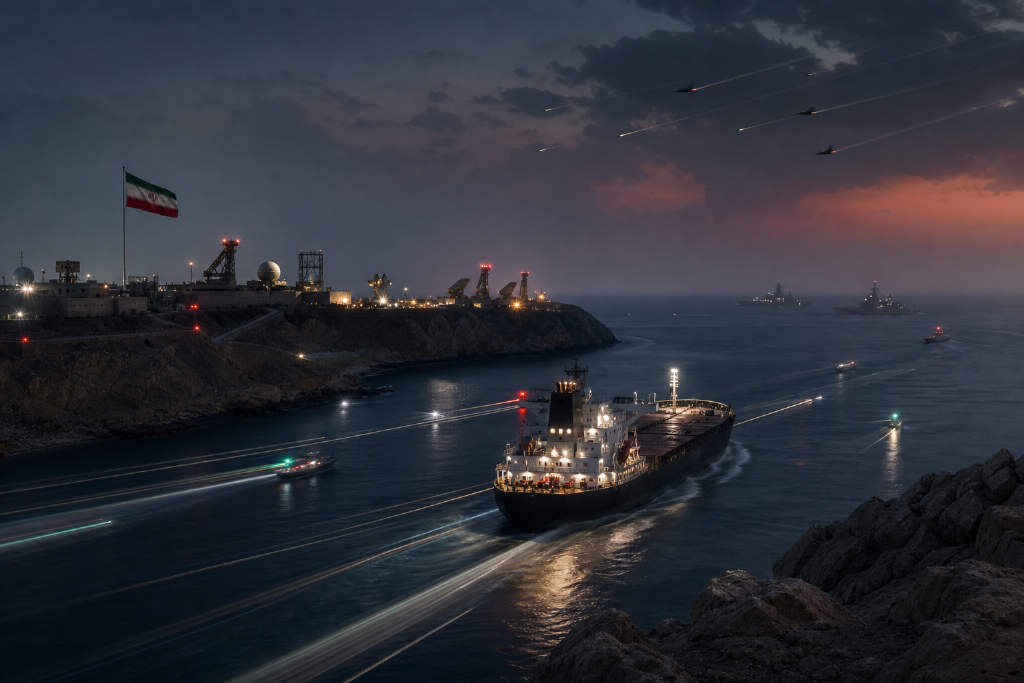
Iran’s Islamic Revolutionary Guard Corps Navy said it captured a U.S. unmanned underwater vehicle, or UUV, at the entrance to the Strait of Hormuz early local time on Sept. 8, according to Iran’s Tasnim News Agency. The force said the vehicle was taken back into Iran after the operation. The IRGC Navy described the craft as 「one of the world’s most advanced intelligent unmanned submarines」 and said it had been delivered to the U.S. Navy in 2025. It also said the vehicle was seized from what it called 「a complex」 facility. Iranian officials added that photos of the vehicle would be released within hours. The claim had not been confirmed by the U.S. side at the time of publication. The report was cited by BlockBeats in a 7x24 flash update.

1310
Iran says it seized a U.S. unmanned underwater vehicle at the Strait of Hormuz entrance
Middle East conflict
Sep 5, 2026

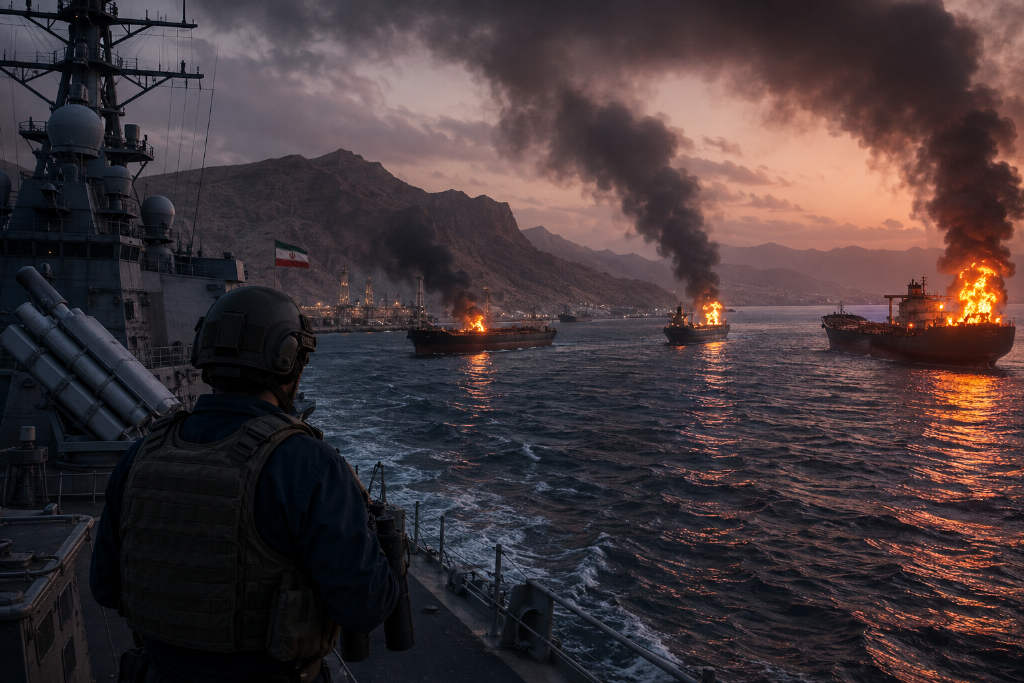
US Strikes Three Iranian Oil Tankers in Retaliation for IRGC Ballistic Missile Attack

The US military hit three Iranian oil tankers on Saturday, permanently disabling two and destroying a third empty vessel. The strikes came in retaliation for Iran's Islamic Revolutionary Guard Corps launching ballistic missiles at US Navy ships in the region. The attacks occurred near critical oil export chokepoints, raising concerns over oil prices and shipping risks. President Trump had downplayed the conflict as "small potatoes" the day before.

860
US Strikes Three Iranian Oil Tankers in Retaliation for IRGC Ballistic Missile Attack
US
Sep 1, 2026

US Military Strikes IRGC Targets Inside Iran in Retaliation for Strait of Hormuz Attacks

The U.S. Central Command (CENTCOM) announced on September 1, 2026, that U.S. forces had begun striking Islamic Revolutionary Guard Corps (IRGC) targets inside Iran at 12 p.m. ET, in response to recent IRGC attempts to attack commercial ships in the Strait of Hormuz and threaten U.S. service members. The rare direct strike on Iranian soil represents a significant escalation in U.S.-Iran tensions. The conflict has seen prior incidents, including a U.S. airstrike on a small island in the Strait of Hormuz and an Iranian retaliation on a U.S. base in Jordan. Additionally, Iranian state media reportedly threatened the life of former President Trump's son, Barron Trump, prompting a U.S. Secret Service investigation. Related developments include Trump's announcement of severe sanctions on Iran, the delay of the Trump family's WLFI token sale due to the conflict, Trump's proposal to claim the Strait of Hormuz as U.S. territory, and a U.S. helicopter attack on a vessel in the Gulf of Oman. The global economy and financial markets may face increased volatility amid the rising geopolitical tensions.

1690
US Military Strikes IRGC Targets Inside Iran in Retaliation for Strait of Hormuz Attacks
Iran
Aug 31, 2026

IRGC commander says deterrence, not war or talks, is Iran's top priority

Senior Islamic Revolutionary Guard Corps commander Mohammad Reza Naqdi said Iran's primary strategy in its ongoing confrontation with the United States is to build maximum deterrence rather than restart military conflict or negotiate with its enemies, according to Iran's Press TV. Naqdi said that after roughly six months of war, Iran is considering a shift toward a more offensive phase of military confrontation targeting the United States and Israel. He also said the fighting so far has remained within the bounds of conventional warfare and has not entered what he described as the stage of asymmetric warfare. In remarks cited by Press TV, Naqdi said asymmetric war would mean fighting in places such as Wall Street and Manhattan, at any place and any time, and added that most current Iranian commanders favor offensive thinking. He also stated that all weapons production facilities damaged in the recent war have been rebuilt in highly secure locations and are now operating with new advanced technology at higher productivity.

1370
IRGC commander says deterrence, not war or talks, is Iran's top priority
Iran
Aug 26, 2026

Iranian Rial Hits Record Low as New US Sanctions Add Digital Assets to Targets

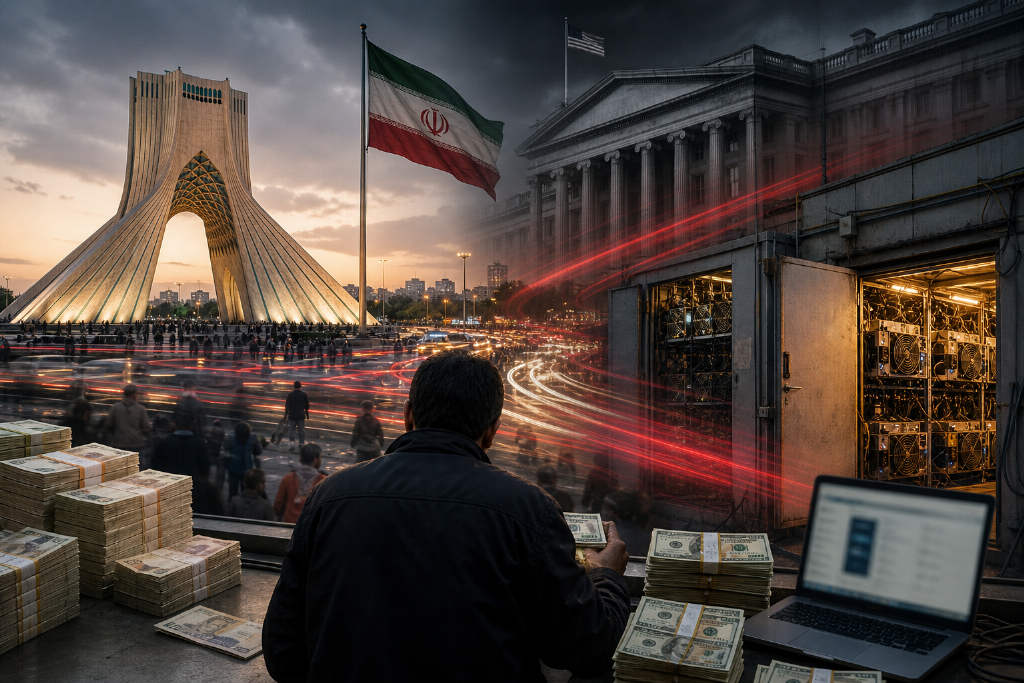
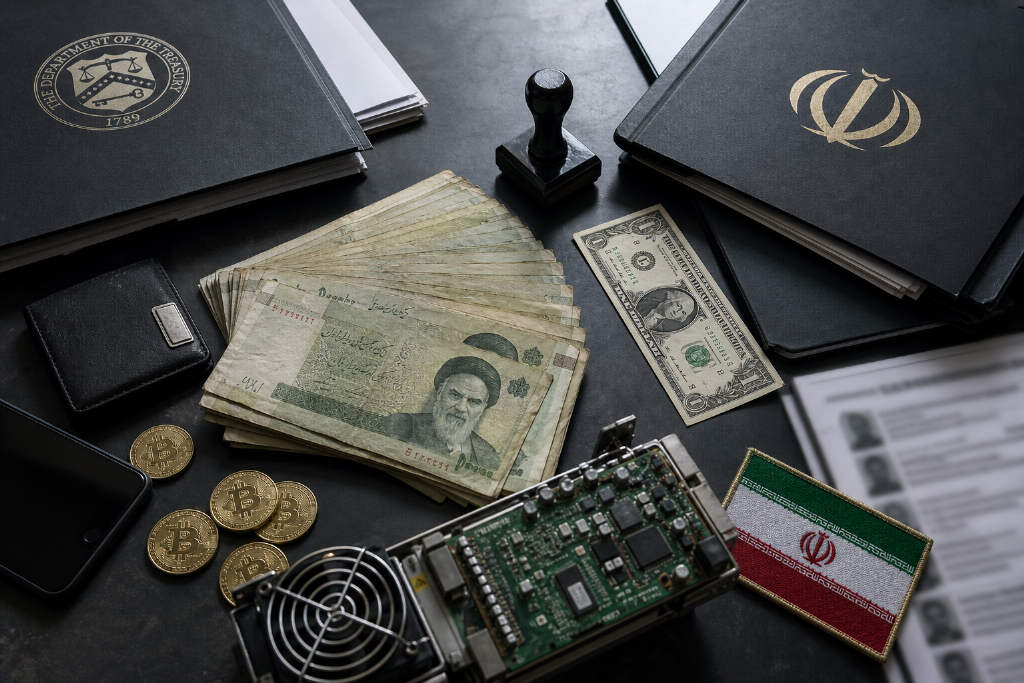
Iran’s rial fell to a record low this week, with the open-market exchange rate reaching about 2.02 million rials per U.S. dollar on Aug. 24, compared with roughly 1.53 million in the first quarter. At the same time, the U.S. government launched what the report called “Operation Economic Outcast,” adding more than 60 entities to the Treasury blacklist and, for the first time, treating digital assets as a sanctionable area. The report also tied Iran’s crypto infrastructure to state-linked actors, saying farms connected to the Islamic Revolutionary Guard Corps, or IRGC, control about 65% of the country’s bitcoin mining capacity. Iranian miners have accounted for about 3% to 7% of global Bitcoin hash rate since 2019, with mined bitcoin valued at roughly $1.35 billion to $3.15 billion at different stages. Chainalysis estimated that wallets linked to the IRGC received more than $3 billion in the fourth quarter of 2025, while Elliptic said the Central Bank of Iran holds at least $507 million in USDT.

1440
Iranian Rial Hits Record Low as New US Sanctions Add Digital Assets to Targets
Iran
Aug 26, 2026

Iranian Rial Hits Record Low as U.S. Expands Iran-Related Digital Asset Sanctions

Iran’s rial fell to a record low this week, with the open-market exchange rate slipping to about 2.02 million rials per U.S. dollar, versus roughly 1.53 million in the first quarter. At the same time, the U.S. government launched what the source described as an "economic outcast" action, adding more than 60 entities to the Treasury blacklist and, for the first time, treating digital assets as a sanctionable area. The report said state-run farms linked to Iran’s Islamic Revolutionary Guard Corps, or IRGC, control about 65% of Iran’s Bitcoin mining capacity. Since 2019, Iranian miners have accounted for around 3% to 7% of global Bitcoin hash rate, with mined BTC valued at about $1.35 billion to $3.15 billion at different points. Iran legalized Bitcoin mining in 2019, allowing licensed operators to use industrial electricity priced at about $0.004 per kilowatt-hour and to sell mined tokens to the Central Bank of Iran. Chainalysis estimated that wallets linked to the IRGC received more than $3 billion in the fourth quarter of 2025, while Elliptic said the Central Bank of Iran holds at least $507 million in USDT. The U.S. Treasury sanctioned Nobitex, Wallex, Bitpin and Ramzinex in June. Nobitex previously handled more than half of Iran’s digital asset inflows, and in April the Treasury seized nearly $500 million in crypto assets tied to Iran.

1560
Iranian Rial Hits Record Low as U.S. Expands Iran-Related Digital Asset Sanctions
United States
Aug 16, 2026

US reportedly bypassed Iranian negotiators to reach IRGC leadership during talks

According to ChainCatcher, citing three people familiar with the matter, US negotiators ran into a key problem in mid-May while trying to secure an agreement with Iran to end the war: they could not tell whether the Iranian officials across the table actually spoke for the Islamic Revolutionary Guard Corps, one of the country’s most powerful forces. The report says Trump administration officials then used an unusual channel, bypassing Iran’s negotiators and making direct contact with senior IRGC figures. The person chosen to handle that secret line was Nechirvan Barzani, president of Iraq’s Kurdistan Region, who was described as enjoying the trust of both Washington and the IRGC leadership. The episode, the report said, highlighted a core obstacle in US-Iran diplomacy: Washington could not clearly determine who held real decision-making power in Iran. The two sides did eventually reach a memorandum of understanding, but it soon collapsed.

1830
US reportedly bypassed Iranian negotiators to reach IRGC leadership during talks
Trump administration
Aug 16, 2026

Axios says Trump officials bypassed Iranian negotiators to contact IRGC directly

Axios, citing three people familiar with the matter, reported that U.S. negotiators ran into a basic problem in mid-May while trying to reach an agreement with Iran to end the war: they could not tell whether the Iranian officials across the table actually spoke for the Islamic Revolutionary Guard Corps, a power center with major influence inside the country. According to the report, that uncertainty led Trump administration officials to take an unusual step and open direct contact with senior IRGC figures instead of relying only on Iran’s formal negotiators. The person chosen to handle the secret backchannel was Nechirvan Barzani, president of Iraq’s Kurdistan Region, who the report said was trusted by both Washington and the IRGC leadership. Axios said the episode highlighted a core obstacle in U.S.-Iran diplomacy, namely Washington’s inability to determine who truly holds decision-making power in Iran. The two sides eventually reached a memorandum of understanding, but the arrangement quickly fell apart.

1920
Axios says Trump officials bypassed Iranian negotiators to contact IRGC directly
Total 54 items
Go topage