Zcash
Oct 15, 2026

Zcash Q3 report says Zakura is live as Ironwood takes over layer-1 scaling work

A brief item cited by Foresight says Zcash’s third-quarter report noted that Zakura has gone live and that supply in the privacy pool has returned to 29%. The same summary also says the project’s layer-1 scaling effort has moved on from the Orchard incident, with Ironwood taking over. No additional figures, timeline details, or technical explanation were provided in the source material. Because the original item was a short news brief, the available information is limited to those points. The report reference centers on three elements: Zakura’s launch status, the privacy-pool supply ratio returning to 29%, and Ironwood stepping in after the Orchard event as part of Zcash’s layer-1 scaling track.

1430

Zcash Q3 report says Zakura is live as Ironwood takes over layer-1 scaling work
Bitget
Oct 1, 2026

Bitget-linked addresses move about 2,700 ZEC into Ironwood shielded pool

Addresses tied to the Sept. 24 Bitget security incident have started moving roughly 2,700 Zcash tokens into Ironwood, Zcash’s newest shielded pool, according to on-chain investigator ZachXBT. At a ZEC price of about $1,407, the amount is worth roughly $3.8 million to $3.9 million. Based on currently disclosed figures, the transfer accounts for around 14% to 15% of the approximately 18,900 ZEC moved in the incident, which was valued at about $28.3 million at the time. Bitget said on Sept. 25 that total affected assets in the attack were about $387.5 million, revised up from an initial $351.6 million after adding assets such as Zcash and Tron that had not been fully counted earlier. The exchange also disclosed a main attacker ZEC address, t1WgMdtND8NF7NDUuYmq8MpMj1NTCXkMDVG, which matches the source of funds tracked by ZachXBT. The move matters because transfers into Ironwood break the public transaction trail that analysts can follow on transparent addresses. While deposits from transparent addresses into the pool remain visible, activity inside the pool does not directly reveal sender, recipient, or amount. ZachXBT said the attacker had only “begun” shielding, leaving open the question of whether the remaining roughly 16,000 ZEC will also move into the privacy pool.

1230
Bitget-linked addresses move about 2,700 ZEC into Ironwood shielded pool
Zcash
Sep 11, 2026

Pine Analytics says Zcash shielded share rebounded in Q3 as ETF assets reached $346 million

Pine Analytics has released its third-quarter 2026 report on Zcash, outlining changes in shielded supply, price performance, mining activity and the network’s upcoming governance decision. The report said Ironwood was activated on July 28 at block 3,428,143. Over the following five weeks, holders moved 87% of Orchard balances out, leaving the new pool with 3.84 million ZEC as of Aug. 31. Shielded supply rose 9.9% to 4.86 million ZEC, and the share of shielded coins recovered from 26.3% to 28.7%. The report also said 440,000 ZEC had returned from the 745,000 de-shielded in June, while 470,000 ZEC remained in Orchard. ZEC climbed from $407 on June 30 to $836 on Aug. 31, a gain of 106%. On the investment product side, Grayscale ZCSH converted into a spot ETF, with assets increasing from $155 million to $346 million. Mining difficulty rose 35% to a record high, and two corporate miners committed about $65 million in hashpower. Pine Analytics added that NU7 still does not have a mainnet activation height, and tokenholder voting runs through Sept. 14 to decide whether the upgrade should go live by Sept. 30 with 25-second block times and smooth issuance.

3020
Pine Analytics says Zcash shielded share rebounded in Q3 as ETF assets reached $346 million
Grayscale
Aug 25, 2026

Grayscale launches Zcash ETF on NYSE Arca after patched flaw put privacy coin under scrutiny

Grayscale’s Zcash exchange-traded fund started trading Tuesday on NYSE Arca under the ticker ZCSH, bringing the first exchange-traded product with spot Zcash exposure to the public market. The listing comes months after developers disclosed and patched a critical vulnerability in Zcash’s shielded transaction system. The fund began life as the Grayscale Zcash Trust in October 2017 and was later filed with the U.S. Securities and Exchange Commission for conversion into an ETF in November. Investors in the product do not hold ZEC directly. Instead, they own shares designed to track the value of the fund’s ZEC holdings through standard brokerage accounts. Grayscale’s head of index, Steve Vanourny, told Decrypt the firm sees demand for digital-asset exposure beyond Bitcoin and Ether, and said Zcash stands out because of its nearly decade-long network history, proof-of-work design, 21 million supply cap, and optional privacy features. He described ZCSH as a higher-risk satellite allocation rather than a replacement for Bitcoin. The listing also arrives after Zcash activated its Ironwood upgrade in July. That change replaced the Orchard shielded pool and added accounting rules intended to contain any counterfeit coins that might have been created through the flaw discovered in May by security researcher Taylor Hornby using Anthropic’s Claude Opus 4.8.

1610
Grayscale launches Zcash ETF on NYSE Arca after patched flaw put privacy coin under scrutiny
ZEC
Aug 22, 2026

ZEC Hits a Record Above $833 as Privacy-Coin Catalysts Stack Up

ZEC briefly climbed above $833 on Aug. 22, setting a new all-time high, according to HTX market data. The token is up 67% over the past 7 days, 230% over the past 180 days and 1,970% over the past year. Recent catalysts include Grayscale’s fourth S-3 amendment for a Zcash Trust conversion into a spot ETF, Cypherpunk Technologies’ ZEC mining cluster, and the Ironwood network upgrade. BlockBeats also said the market is seeing a stronger privacy narrative and a short squeeze. The report noted that ZEC remains highly volatile.

1580
ZEC Hits a Record Above $833 as Privacy-Coin Catalysts Stack Up
Cypherpunk
Aug 18, 2026

Cypherpunk buys Winklevoss Capital mining fleet, says it controls 18% of Zcash hashrate

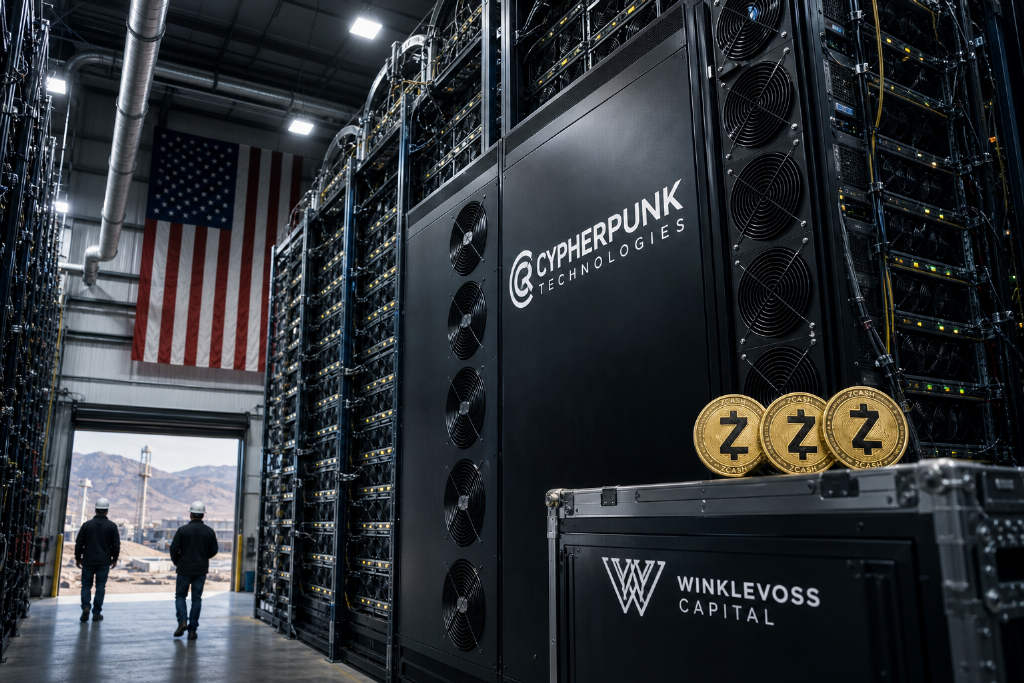
Cypherpunk Technologies said it acquired a Zcash mining fleet from Winklevoss Capital in an equity deal valued at $33.33 million, expanding its push into ZEC. The company says the fleet is already running at U.S. facilities and is producing about 4.2 GSol/s, or roughly 18% of Zcash’s current network hashrate. Cypherpunk also said it holds 323,394 ZEC, about 1.9% of circulating supply, and aims to reach 5% ownership. The move comes after ZEC surged in the second half of 2025 and after Zcash’s Ironwood upgrade went live on July 28.

1330
Cypherpunk buys Winklevoss Capital mining fleet, says it controls 18% of Zcash hashrate
Zcash
Jul 29, 2026

Zcash Explained: How the Privacy Coin Works, What Changed in 2026, and Why It Still Matters

Zcash is a privacy-focused cryptocurrency that launched in October 2016 with a design intended to hide the sender, recipient, and amount of a transaction while still allowing the network to verify that the payment is valid. Built by the Electric Coin Company and rooted in academic cryptography research, Zcash uses zk-SNARKs to enable shielded transfers, while also supporting transparent transactions similar to Bitcoin. Like Bitcoin, it has a capped supply of 21 million coins and follows a four-year halving cycle. The project has gone through several major technical milestones, including Sapling, Blossom, Network Upgrade 5, Orchard, and most recently Ironwood. In 2026, Zcash faced one of the most serious episodes in its history after a critical counterfeiting vulnerability was discovered in the Orchard shielded pool. Developers coordinated a confidential emergency response, disclosed the issue in June, and later activated Ironwood in July to retire Orchard, contain any possible counterfeit coins, and add new supply-verification and quantum-resistant features. Zcash also remains at the center of debates over privacy, regulation, and exchange listings. Regulators have long scrutinized privacy coins, yet Zcash’s optional transparent mode has helped it remain listed on more major platforms than some rivals. At the same time, the network is navigating leadership turnover, funding debates, software migration, and its next halving, all of which will shape its next phase.

3240
Zcash Explained: How the Privacy Coin Works, What Changed in 2026, and Why It Still Matters
Total 20 items
Go topage