Kast
Sep 1, 2026

Kast Launches Stablecoin Business Platform After $80M Funding

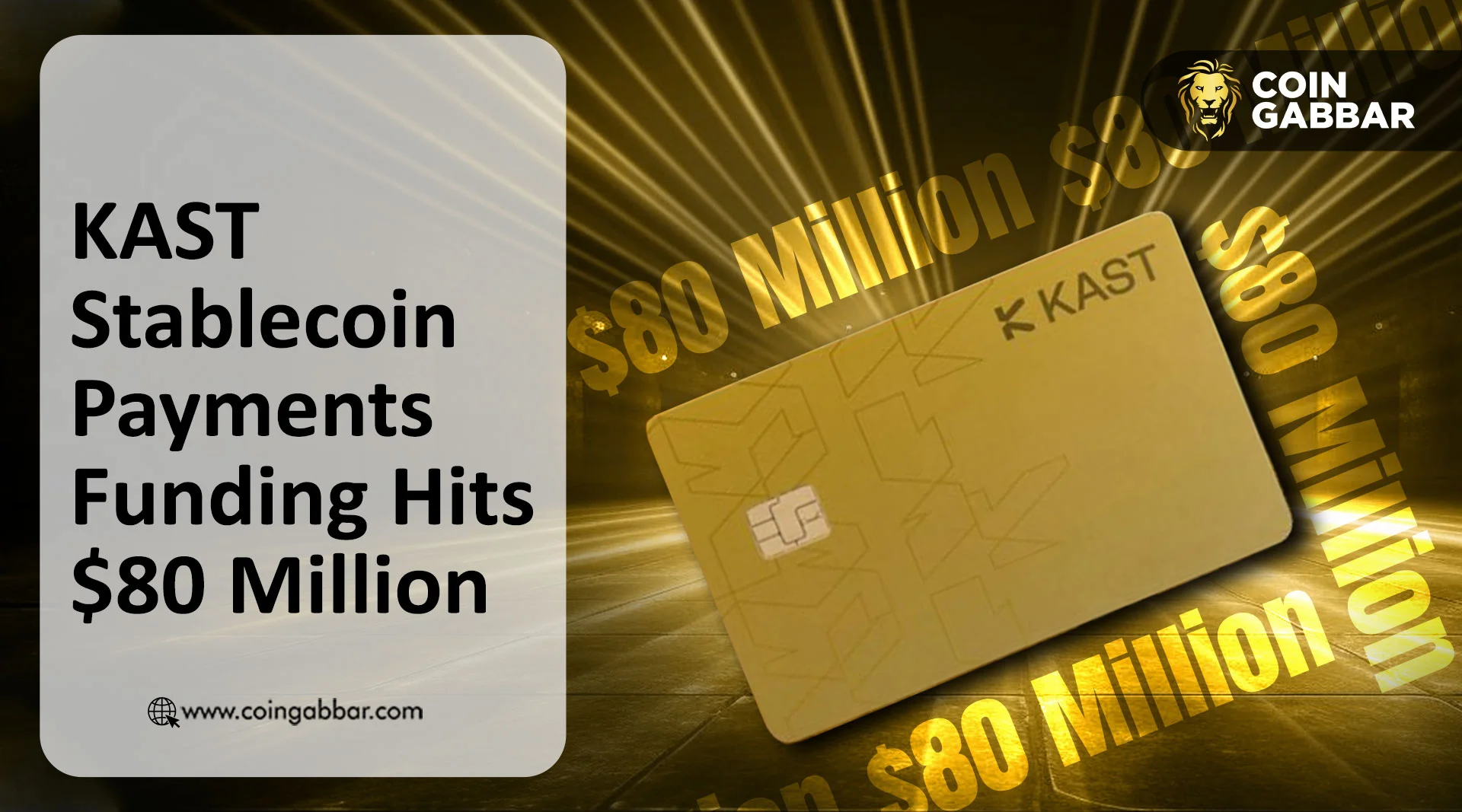
Stablecoin payment company Kast has launched KAST Business, a platform integrating corporate accounts, payment cards, cross-border transfers, and stablecoin yield-bearing balances. The service is available in over 170 countries, offering up to 8% annualized yield on idle balances and 3% cashback on spending. Kast raised $80 million in March at a $600 million valuation, aiming to expand in North America, Latin America, and the Middle East.

1990
Kast Launches Stablecoin Business Platform After $80M Funding
a16z crypto
Aug 8, 2026

Crypto Payment Card Spending Climbs to $759M Monthly, a16z Data Shows

Monthly spending on crypto payment cards has reached $759 million, according to fresh data from a16z crypto. The figure marks a jump from the niche-scale volume recorded in earlier periods. These cards let users spend cryptocurrency wherever traditional card networks are accepted; at the point of sale, the stablecoin is converted into local currency, so the transaction looks like an ordinary card payment to the merchant. As of July 31, RedotPay accounted for the vast majority of spending across card programs, while EtherFi, KAST and Karta have been gradually expanding their share since late 2025. a16z crypto also said cardholders don't need a traditional bank account: they can deposit stablecoins with the issuer or hold tokens in self-custody. That, the firm says, broadens access to dollar-denominated accounts for global users and gives stablecoin holders a convenient way to spend.

3300
Crypto Payment Card Spending Climbs to $759M Monthly, a16z Data Shows
crypto cards
Aug 3, 2026

Crypto card spending reached $748.7 million in July, extending monthly gains to five

Spending on crypto payment cards climbed to a record $748.7 million in July, according to onchain analytics tracker Paymentscan, marking the fifth straight month of increases. The figure was up 19.1% from June’s $628.7 million and 144.7% from $306 million a year earlier. Paymentscan, which tracks card transactions across roughly 20 chains, also recorded all-time highs in user activity, with 8.77 million transactions and 158,857 active addresses in July. February was the last month to show a decline, and every month since March has set a fresh record. At the card-provider level, RedotPay handled $395.1 million in July, accounting for more than half of the tracked volume. Ether.fi’s Cash card ranked second with $100.3 million, followed by KAST at $89.6 million. Smaller programs posted the fastest month-over-month growth, including Avalanche Card, Plasma One, and Exa. The sector also set a single-day record of $36.8 million on July 20, when KAST’s daily volume exceeded RedotPay’s for the first time during a points promotion tied to its planned fourth-quarter token generation event. Paymentscan said cumulative deposits into crypto cards crossed $10 billion around July 1.

1620
Crypto card spending reached $748.7 million in July, extending monthly gains to five
Policy and Regulation
Jul 21, 2026

Stablecoins Reopen the Question of Who Owns a Dollar Account as KAST Terms Spark Regulatory Debate

A dispute over KAST’s terms of service has brought a basic but increasingly urgent question to the surface: who owns a next-generation dollar account once dollars move outside the banking system? The article argues that stablecoins have done more than speed up transfers or lower costs. By letting dollars exist as on-chain assets such as USDT and USDC, they split apart three functions that banks historically bundled together — account asset custody, settlement, and payments. That structural change has forced fintechs, wallet providers, card issuers, and regulators to confront an issue that the banking era largely settled by default. KAST sits at the center of that debate because its terms reportedly defined user top-ups of USDC as a “sale” rather than a “deposit.” In the article’s reading, that distinction shifts users from asset owners to creditors, while giving the company a lighter compliance route and access to reserve-style income if the pooled funds are deployed into short-dated U.S. Treasuries or money market funds. Other products, including Ether.fi Cash, Plasma, Avici, and Bitget Wallet, are presented as taking the opposite route: reducing or avoiding direct ownership of client assets by splitting wallet, funding, and card-payment responsibilities across separate regulated or user-controlled layers. Across the U.S., Europe, Brazil, India, Singapore, and Hong Kong, the article says the same regulatory principle keeps showing up in different forms: regulators care less about the software wrapper than about who controls the money and on whose balance sheet it sits.


2360
Stablecoins Reopen the Question of Who Owns a Dollar Account as KAST Terms Spark Regulatory Debate
Policy & Regulation
Jul 21, 2026

Who Holds the Funds, Who Bears the Rules: The Regulatory Fight Over Stablecoin Dollar Accounts

A TechFlowPost opinion article by Bitget Wallet researcher Emily Sun argues that the real battle in next-generation dollar accounts is no longer about app design or payment convenience, but about legal ownership of user funds once dollars move outside the banking system. The piece uses the July 2026 controversy over KAST’s terms of service as a case study. Under the structure described in the article, a user’s USDC top-up was defined as a “sale” rather than a deposit, shifting ownership of the funds to the company and leaving users with a claim against KAST instead of direct ownership of assets. Sun says that distinction matters most in stress scenarios such as a liquidity event or bankruptcy, when users may rank as creditors rather than asset owners. The article contrasts that model with structures used by products including Ether.fi Cash, Plasma, Avici and Bitget Wallet, which aim to keep assets under user control while splitting wallet, card-account and payment-network functions across separate regulated entities. It also reviews how the U.S., Europe, Brazil, India, Singapore and Hong Kong approach stablecoin oversight. Across those regimes, Sun’s central claim is consistent: regulators care less about wallet software itself and more about who controls the money and whose balance sheet it sits on. As stablecoin supply expands, she argues, the defining question for digital dollar accounts will be who can aggregate many forms of on-chain dollars into one trusted user experience without quietly taking ownership of customer funds.

2470
Who Holds the Funds, Who Bears the Rules: The Regulatory Fight Over Stablecoin Dollar Accounts
Total 16 items
Go topage