DPRK
Oct 31, 2026

Specter says $38 million moved through Relay bridge in seven hours, with DPRK transfers still ongoing

On-chain investigator Specter said DPRK moved $38 million through the RelayProtocol Bridge within seven hours and that the bridging activity was still continuing at the time of the update. Specter said Relay had claimed to have a KYT system in place, but that system did not stop the transactions in question. Specter also argued that DPRK would not have been able to wash the funds through THORChain in such a short window, and said Relay instead opened a route for the transfer. The statement was cited by Odaily in a 7x24 newsflash. No additional details, including wallet addresses or transaction hashes, were provided in the brief.

1130

Specter says $38 million moved through Relay bridge in seven hours, with DPRK transfers still ongoing
Cobo
Oct 21, 2026

Cobo outlines how AI agents could reshape stablecoin payments and wallet security

Cobo says AI agents are moving beyond information processing and into autonomous execution, with payments becoming part of that shift. Speaking at the fourth Cross-border Digital Finance Compliance Conference hosted by Mobile Payment Network on Oct. 15, Cobo head of sales and solutions Lucas discussed how AI Agent use cases are changing payment patterns, why stablecoins and low-cost blockchains are being tested for high-frequency micropayments, and what security controls are needed when software starts initiating transactions on its own. The presentation covered several layers. On the demand side, Lucas pointed to AI-driven API calls, data purchases and compute spending, where transaction frequency may rise while ticket sizes shrink to just a few cents or less than $0.01. On the security side, he said AI wallets need more than private key protection, highlighting MPC-based key management, policy constraints and pre-signature verification as ways to separate autonomous execution from control over funds. He also described the infrastructure needed to bring stablecoin payments into enterprise workflows, including collection, KYT-based screening, bookkeeping, payouts and settlement. For traditional payment firms, Cobo presented a modular middle path between relying fully on third-party providers and building a full on-chain stack from scratch.

880
Cobo outlines how AI agents could reshape stablecoin payments and wallet security
WIDTH
Oct 14, 2026

WIDTH launches limited-time KYC offer for digital asset firms at $0.50 per check

WIDTH, a global compliance technology company, has rolled out a limited-time KYC promotion for the digital asset sector, offering identity verification in about 30 seconds at a discounted price of $0.50 per check. The package also includes KYA wallet address screening and KYT transaction screening. The offer runs through Dec. 31, 2026, and detailed terms can be requested through WIDTH’s official email, marketing@width.com. The company said the program combines document verification, 1:1 facial matching, passive liveness detection, and device and IP risk analysis to help digital asset institutions improve onboarding efficiency and detect risks such as identity misuse and abnormal registrations. By adding KYA and KYT, WIDTH extends risk controls to wallet access, deposits, and withdrawals. WIDTH describes itself as an AI-driven, one-stop compliance and risk decision platform serving financial institutions and digital asset companies. It said it has served more than 500 regulated institutions across over 180 jurisdictions.

1050
WIDTH launches limited-time KYC offer for digital asset firms at $0.50 per check
CoinW
Sep 28, 2026

CoinW security chief says exchange has logged nine years with no security incidents

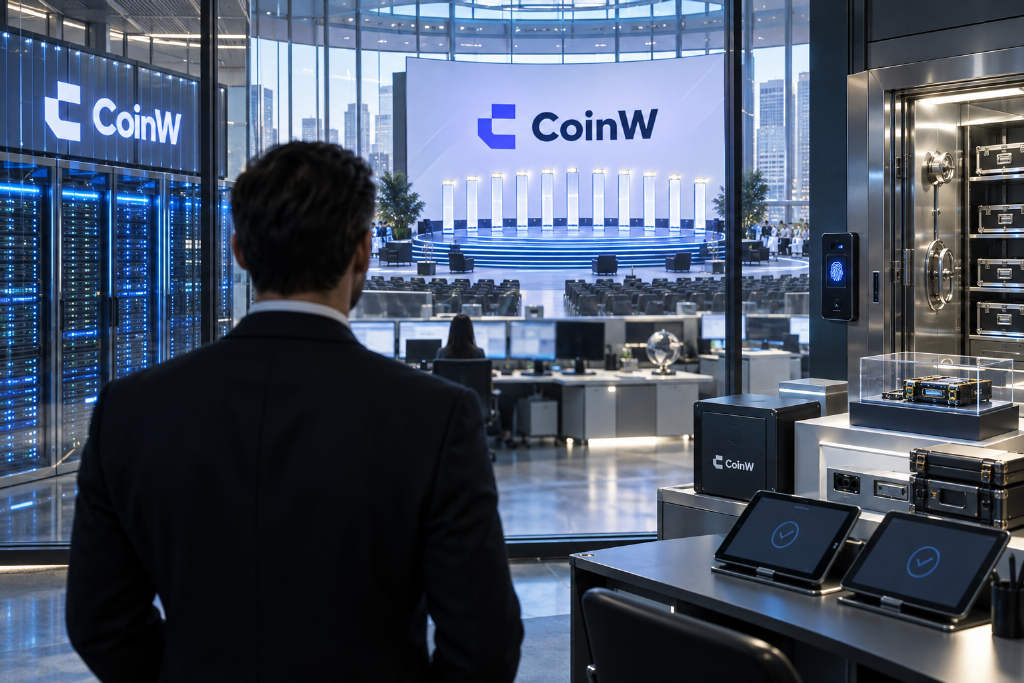
Digital asset exchange CoinW highlighted its security framework at its ninth anniversary summit, where chief security advisor Dr. Michael Liu said the platform has recorded nine years with no security incidents. According to Liu, CoinW treats security as a core part of its corporate culture and has built a defense system that spans endpoints, networks, systems, applications, identity, data, operations, and compliance. The company said security controls are also embedded in code development and its CI/CD process. For exchange-specific risks, CoinW uses technologies including Multi-Party Computation (MPC), Key Management System (KMS), and Trusted Execution Environment (TEE), alongside hot and cold wallet separation, multi-signature approvals, multi-person review, and freeze-and-recovery mechanisms. On the identity side, it uses SSO, MFA, IAM, and separation of duties. CoinW also said its SOC integrates alerts, threat intelligence, and red-blue exercises, and that it works with multiple on-chain asset security firms to run real-time KYT scans on blockchain transactions. The company added that it is rolling out AI-driven Agentic Security across code security, attack surface management, intrusion testing, drills, alert triage, intelligence summaries, and response recommendations.

1130
CoinW security chief says exchange has logged nine years with no security incidents