Bitget
Oct 12, 2026

Bitget lists five stock perpetual futures tied to KIA, LG Energy, Samsung Biologics, KBFG and Kakao

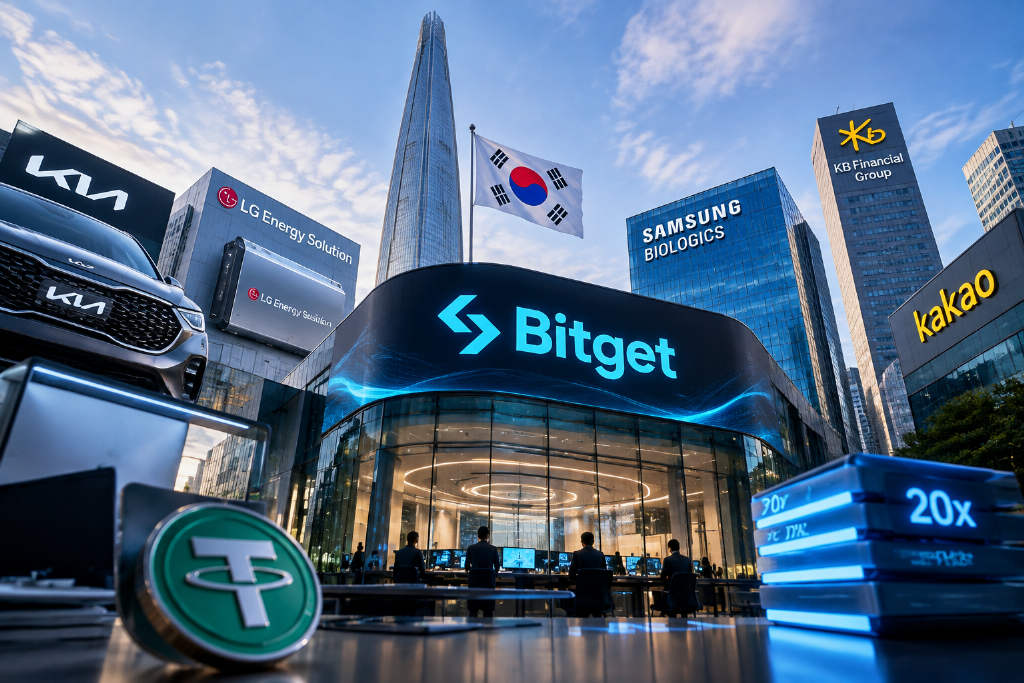
Bitget has listed five stock perpetual futures contracts, according to an official announcement cited by ChainCatcher. The newly added contracts are tied to KIA, LG Energy Solution, Samsung Biologics, KB Financial Group and Kakao. All five products are settled in USDT, offer leverage of up to 20x, and are available for trading around the clock on a 7x24 basis. With the latest additions, Bitget now supports a total of 346 futures trading pairs or underlying contract products on the platform. The update expands the exchange’s stock-linked perpetual futures lineup with exposure to several major South Korean listed companies.

920
Bitget lists five stock perpetual futures tied to KIA, LG Energy, Samsung Biologics, KBFG and Kakao
Google
Oct 8, 2026

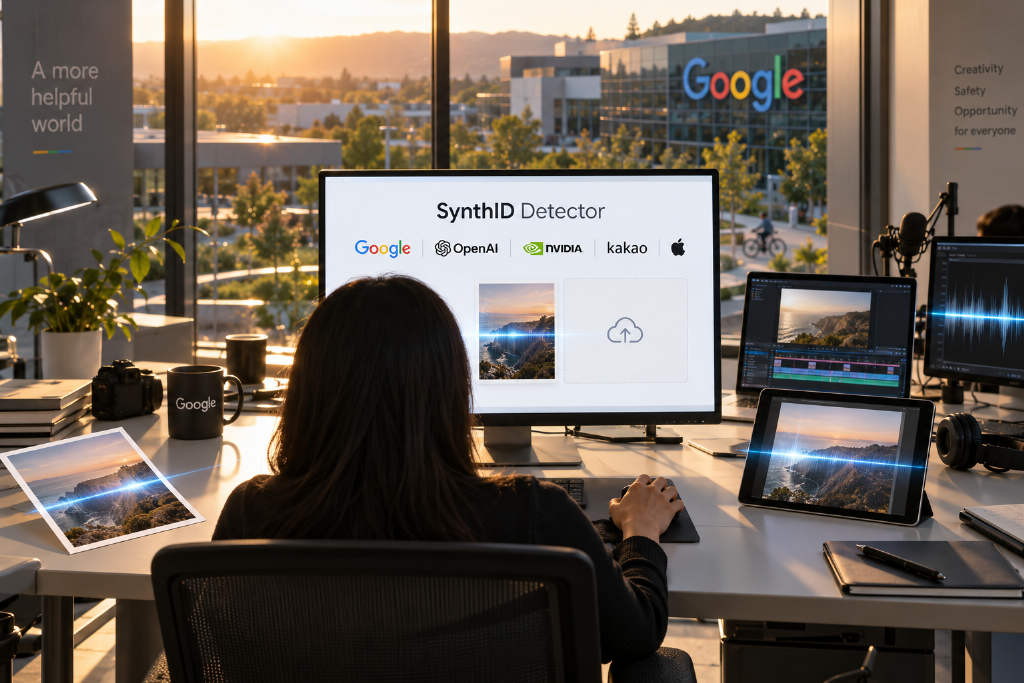
Google opens SynthID Detector globally, adding support for ChatGPT image watermark checks

Google has opened SynthID Detector to users worldwide, allowing people to upload images, video, or audio files to check whether they contain invisible watermarks embedded during AI generation. The tool had previously been tested mainly with media professionals. The updated detector no longer stops at Google-made content. It now supports SynthID watermark detection for material from OpenAI, Nvidia, and Kakao, with Apple set to join as well. That is a notable change from the earlier version, which could only identify Google’s own watermarks. Under that setup, even if an image generated by ChatGPT carried a SynthID mark, Google’s detector would not flag it. Google also makes clear that the tool has limits. It can only identify supported SynthID watermarks rather than all AI-generated content. A file that returns no watermark result should not be treated as proof that it was made by a human. The website requires login access, and each user gets roughly 10 detection attempts per day. The detector is available at synthid.com.

1050
Google opens SynthID Detector globally, adding support for ChatGPT image watermark checks
XRP Asia
Oct 3, 2026

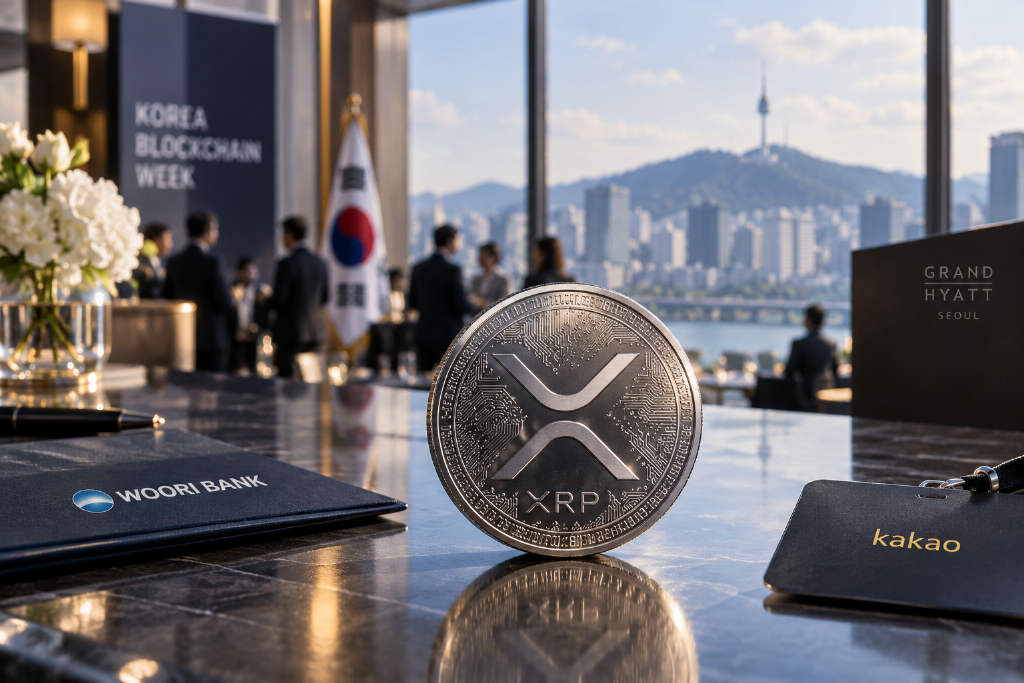
XRP Asia launches in Seoul to push XRPL adoption across Asia

XRP Asia officially launched in Seoul on Oct. 3 and held an in-person event at the Grand Hyatt Seoul during Korea Blockchain Week. The regional organization said it aims to speed up adoption of the XRP Ledger across Asia, support developers, and bring banks onto the network. Woori Bank and Kakao took part in the event, according to the report cited by Techub News from CoinGape. The launch puts the group’s focus on three stated priorities in the region: expanding XRPL usage, backing developer activity, and attracting banking participation.

1370
XRP Asia launches in Seoul to push XRPL adoption across Asia
South Korea
Sep 27, 2026

South Korea pushes universal AI plan as deputy prime minister calls AI a utility like electricity

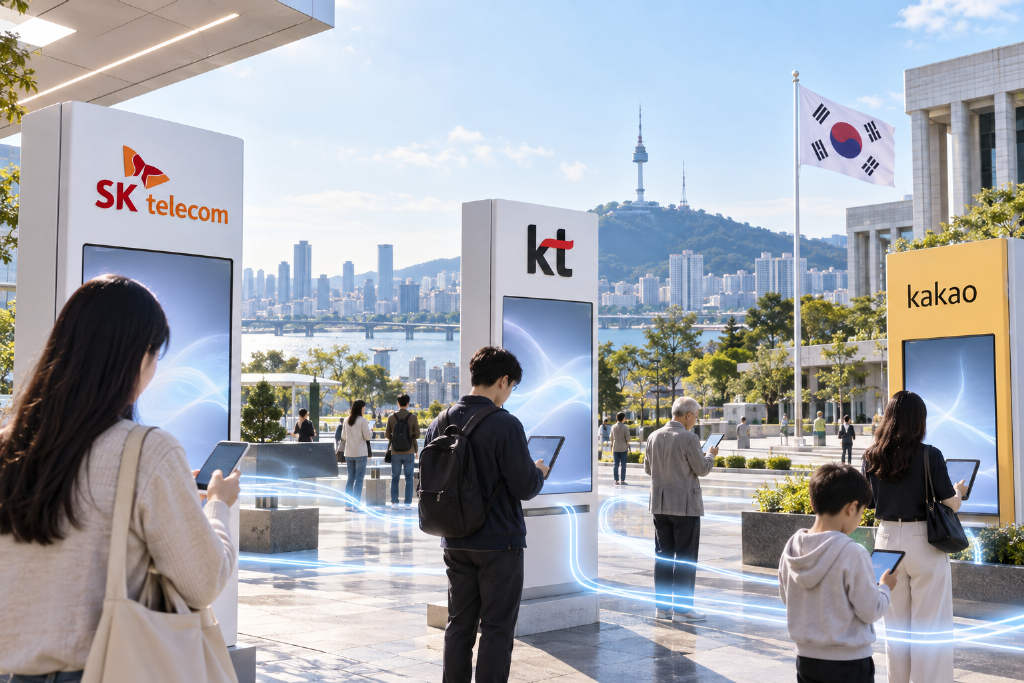
South Korea is moving ahead with a nationwide artificial intelligence push, according to a report cited by ChainCatcher from the Financial Times. The country’s deputy prime minister said AI should be treated as basic infrastructure, comparable to electricity, and that every citizen should be able to access it at an affordable cost without worrying about the price. The remarks add to a broader policy line from Seoul that frames AI as a strategic national priority rather than a premium service for a limited group of users. Last year, President Lee Jae-myung described the technology as placing South Korea at a major historical turning point and asked whether the country would remain a follower that risks falling behind or become a leader able to seize what he called unlimited opportunities. In line with that goal, the government last month selected SK Telecom, KT and Kakao to lead a “universal AI” initiative designed to provide South Korea’s 51.6 million people with free access to ChatGPT-like services and personal AI assistants. The deputy prime minister also said on social media that South Korea still aims to become one of the world’s top three AI powers, adding that the country has no room to slow AI development and will move faster while doing so more safely.

750
South Korea pushes universal AI plan as deputy prime minister calls AI a utility like electricity
South Korea
Sep 9, 2026

South Korea pushes nationwide free AI service, tying public rollout to domestic model development

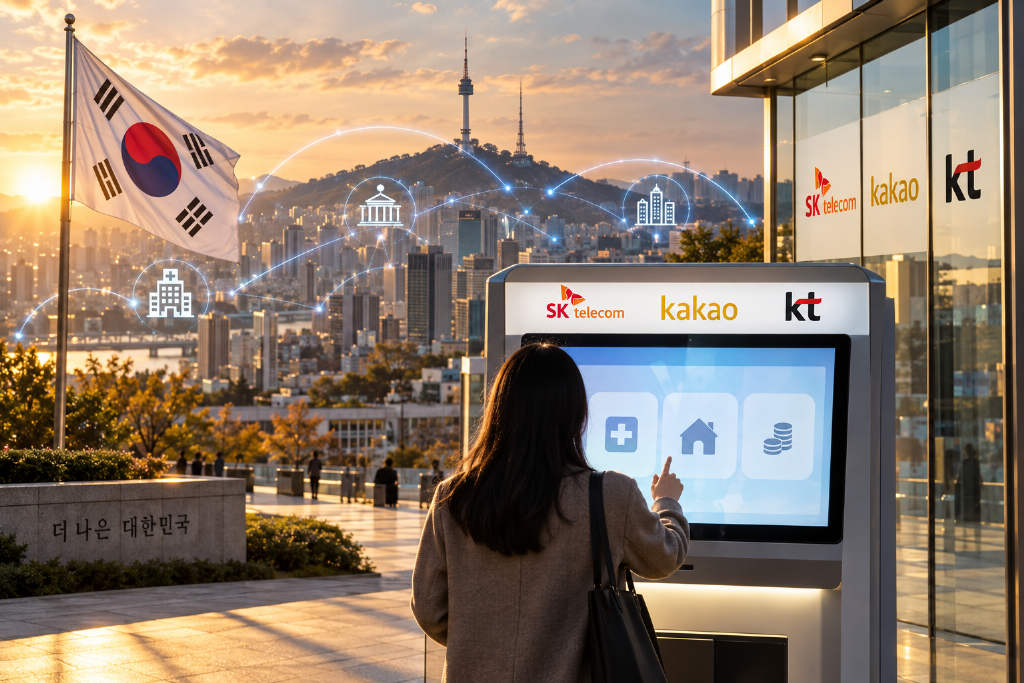
South Korea is moving ahead with a nationwide AI public-service plan that would offer free, uncapped generative AI access to roughly 51 million citizens and connect the service to practical systems such as medical appointments, public rental housing applications and tax filing. The project has moved beyond policy language: on Aug. 28, three consortiums led by SK Telecom, Kakao and KT were selected, and the government held a kickoff meeting on Sept. 4 with a goal of launching the service for the public before year-end. At the center of the plan is not only welfare-style access, but industrial policy. The program requires that at least 50% of usage rely on Korean models that meet standards for sovereign foundation models, while at least 30% must come from other models built by Korean companies. Foreign models may be used only in limited cases where necessary functions are unavailable, and those portions would not receive government support. According to a Sept. 4 MoneyToday report citing a project document obtained by a lawmaker’s office, South Korea plans to allocate 250 billion won a year from 2027 to 2030, including 170 billion won for GPU rentals, 30 billion won for the three consortiums and 50 billion won to expand the AI agent ecosystem. The article argues that the experiment could lower barriers to AI adoption and give domestic developers a crucial early user base, but wider productivity gains will depend on organizational changes, training and how benefits are distributed across workers, platforms and service providers.

920
South Korea pushes nationwide free AI service, tying public rollout to domestic model development
South Korea
Sep 7, 2026

South Korea launches AI for All, offering free nationwide access with an 80% domestic-model rule

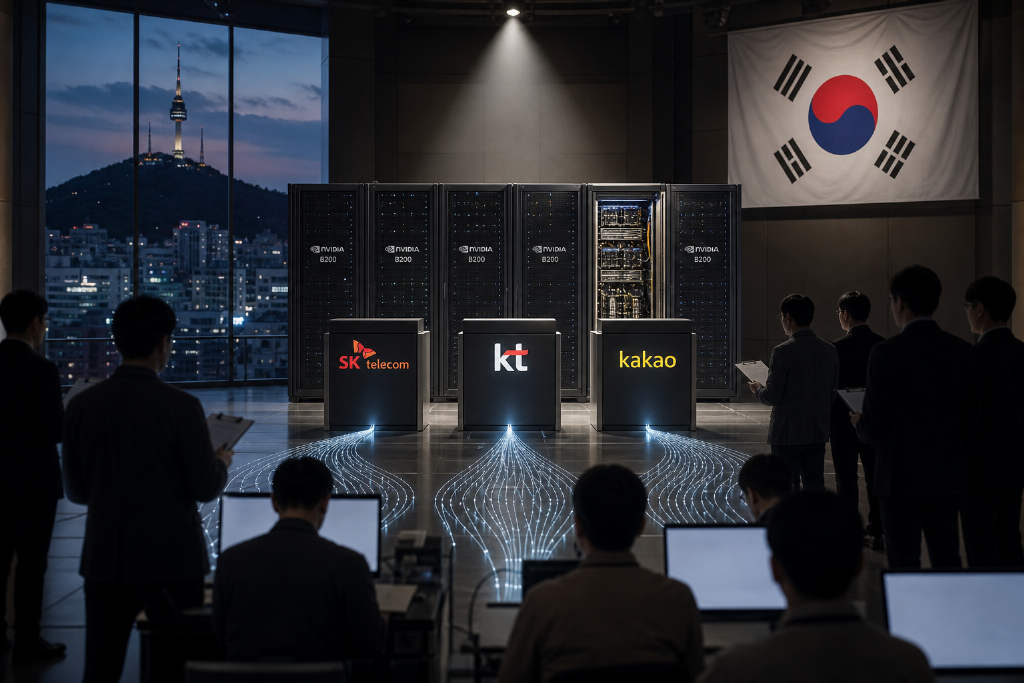
South Korea has kicked off a nationwide AI initiative that aims to give all 51 million residents free, unlimited access to AI services by the end of 2026. The Ministry of Science and ICT selected three consortiums led by SK Telecom, KT, and Kakao for the “AI for All” project, with a key requirement that 80% of the services must run on South Korean models. The policy rests on the country’s Basic AI Act, which took effect in January 2026, and the AI Action Plan 2026–2028 finalized a month later. The project comes as foreign products dominate consumer adoption in Korea. Wiseapp data for April 2026 showed ChatGPT at 23.45 million monthly active users in the country, followed by Gemini at 8.45 million and Claude at 2.41 million. Domestic models including LG EXAONE, SKT A.X K2, and Upstage Solar remain far behind in user scale. Seoul’s answer is to use public funding, compute, and distribution channels to build a protected user base for local AI providers rather than trying to outmatch U.S. and Chinese frontier models directly. The government has allocated 512 NVIDIA B200 GPUs to the three consortiums this year, with operating costs set to be covered by the national budget from 2027 and free access promised through at least 2028. Still, major questions remain over user retention, limited compute relative to global leaders, and the absence of major domestic players such as Naver and Samsung.

1770
South Korea launches AI for All, offering free nationwide access with an 80% domestic-model rule
South Korea
Aug 31, 2026

South Korea plans free, unlimited generative AI access for all citizens

South Korea plans to give every citizen free access to generative AI and integrate the tools into government services, according to a Wall Street Journal report cited by Decrypt. The program would cover practical tasks such as booking doctor appointments, getting help with housing searches, and seeking tax guidance. Small businesses would also be able to handle taxes and check eligibility for state support, while parents could receive suggested educational materials for their children. Seoul has selected three tech consortia to deliver the services, including the country’s two biggest telecom operators and the company behind Kakao. Each group is expected to launch a dedicated app and embed AI into products people already use. The government plans to allocate up to 512 Nvidia B200 chips across the three groups and cover part of their operating costs. Beta testing is scheduled to begin in September, with a wider rollout later this year. The policy is also designed to reduce reliance on AI systems built in the United States and China. Ministry tender documents show that foreign services dominate current usage in South Korea, with ChatGPT far ahead of Gemini and Claude. New rules would require at least 80% of user queries to be processed by Korean-built models, while foreign models would be allowed only when the ministry deems them necessary and would not receive subsidies.

1450
South Korea plans free, unlimited generative AI access for all citizens
South Korea
Aug 31, 2026

South Korea to test free nationwide AI service in September, backed by 512 Nvidia B200 GPUs

South Korea is preparing to begin testing a free nationwide AI service in September, with a full launch scheduled by year-end. Three consortiums led by SK Telecom, KT, and Kakao were selected for the program. According to the plan, South Korean residents will be able to use the service at no charge, with no token cap. The government will initially provide the three groups with a combined 512 Nvidia B200 GPUs this year. Based on an estimate of four queries per user per day and 500 tokens per response, that capacity could theoretically support about 18.4 million daily active users. Seoul also set model allocation rules: at least half of the AI services must be powered by South Korean domestic foundation models, while at least 30% must go to models from other Korean companies. One notable inclusion is Motif 3. The model was previously excluded from South Korea’s domestic foundation model “national team” review on Aug. 18, despite scoring 47 points on the Artificial Analysis Intelligence Index, the highest among participating Korean models. Ten days later, it was added to the model pools of both SK Telecom and KT under the nationwide AI project. The selection process appears to have prioritized distribution reach and user acquisition over benchmark scores, with those factors worth 50 points, compared with 30 points combined for model quality, stability, and safety.

1480
South Korea to test free nationwide AI service in September, backed by 512 Nvidia B200 GPUs
Total 10 items
Go topage