Bitcoin
Nov 7, 2026

Prediction Markets Put Bitcoin’s Odds of Reaching $70,000 Before 2027 at 52%

Polymarket data puts the implied probability of Bitcoin reaching $70,000 before 2027 at 52%. The contract gives Bitcoin a 24% chance of reaching $90,000 and a 9% chance of reaching $100,000. Bitcoin was trading at $75,723 as of Nov. 7, down 2.4% over the past seven days and 6.6% over the past month. Kalshi’s year-end price-range contracts assign a 17.6% probability to Bitcoin settling between $75,000 and $79,999.99, while the probability of a settlement between $70,000 and $74,999.99 is 17.5%. Combined, the two ranges account for 35.1%. The contracts measure different outcomes: Polymarket tracks whether Bitcoin reaches a specified price during the year, while Kalshi forecasts its settlement price at the end of 2026. The data was cited by Odaily, with Bitcoin.com News listed as the source.

370
Prediction Markets Put Bitcoin’s Odds of Reaching $70,000 Before 2027 at 52%
Polymarket
Nov 7, 2026

Polymarket Trader Made Over $77,000 After Nearly $200,000 Bet Before Poll

A Polymarket user placed nearly $200,000 on Pete Ricketts winning re-election as a U.S. senator from Nebraska shortly before a key poll showed him in the lead, according to researchers at Vanderbilt University. The user made the bet on Oct. 31 and, about an hour later, The New York Times and Siena College released a joint poll showing Ricketts ahead. The trade ultimately generated more than $77,000 in profit. The New York Times reported that the same user also made similar large trades on Kalshi and other prediction markets. It remains unclear whether the user had access to inside information before the poll was published. Brett Goldstein of the Vanderbilt University National Security Institute said the series of trades was difficult to regard as random and warranted further investigation. Polymarket said it had identified the trades and was investigating them. Kalshi declined to comment.

540
Polymarket Trader Made Over $77,000 After Nearly $200,000 Bet Before Poll
Prediction Markets
Nov 7, 2026

Suspicious Prediction Market Bets Emerged Before New York Times Poll Release

Large bets appeared on prediction markets shortly before two New York Times/Siena political polls were made public, according to a New York Times report. Vanderbilt University researchers said a Polymarket user wagered almost $200,000 on Oct. 31 that Nebraska Senator Pete Ricketts would win reelection. A Times/Siena poll released about an hour later showed Ricketts in the lead. The user earned more than $77,000, although the report said it was unclear whether the bettor had access to nonpublic information. Similar large bets were also placed on other markets, including Kalshi. Brett Goldstein of the Vanderbilt Institute of National Security said the circumstances were difficult to dismiss as random and required further investigation. Polymarket said it had identified the trades and was investigating, while Kalshi declined to comment. The report follows an earlier Cointelegraph account of a US Army soldier accused by the Justice Department of using nonpublic information linked to a US operation involving then Venezuelan President Nicolás Maduro to place related Polymarket bets and make more than $400,000.

390
Suspicious Prediction Market Bets Emerged Before New York Times Poll Release
Kalshi
Nov 7, 2026

Kalshi Reports More Than $2.5B in 2026 U.S. Midterm Election Trading

Prediction market operator Kalshi said trading tied to the 2026 U.S. midterm elections exceeded $2.5 billion, nearly twice the $1.3 billion recorded across the entire 2024 election cycle. Around election day, Kalshi’s platform-wide single-day notional volume reached $4.15 billion, including non-election contracts. Matt Huang, co-founder of Paradigm, said Kalshi’s election contracts traded $729 million on Nov. 3, compared with $244 million on the day of the 2024 U.S. presidential election. A single market on control of the House of Representatives generated more than $400 million. Before the election, estimates cited by The Washington Post and other organizations put combined Kalshi and Polymarket volume near $1.9 billion. Kalshi reported roughly 98% accuracy across 487 tracks with announced results, while Polymarket reported 98.4% among 426 settled tracks. Both platforms placed the probability of Democratic control of the House at about 94% and the Senate at about 75%, with both directional calls matching the outcome.

440
Kalshi Reports More Than $2.5B in 2026 U.S. Midterm Election Trading
Prediction Markets
Nov 7, 2026

Prediction Markets Draw More Than $3 Billion Into the U.S. Midterm Elections

Kalshi and Polymarket drew more than $3 billion in trading activity tied to the 2026 U.S. midterm elections, with both platforms often moving toward a decisive result before major television networks formally called races. Kalshi reported $729 million in election-contract volume on November 3 and later said midterm-related markets had exceeded $2.5 billion, nearly twice the $1.3 billion recorded across the full 2024 election cycle. Polymarket’s Michigan Senate market reached 99% certainty roughly four hours before mainstream media made its call. Both platforms reported direction accuracy above 98% across large groups of settled markets, though their estimates of the Republican House seat count missed the scale of the Democratic gains. Kalshi’s total open interest remained near $2.5 billion after election contracts settled, with sports contracts accounting for $1.5 billion and political contracts holding $679.2 million. The figures show how election markets can attract users and capital, while sports and parlay-style contracts support activity outside election periods.

470
Prediction Markets Draw More Than $3 Billion Into the U.S. Midterm Elections
CFTC
Nov 7, 2026

CFTC Gives Kalshi and Other Contract Markets 30 Days to Restore Nationwide Access

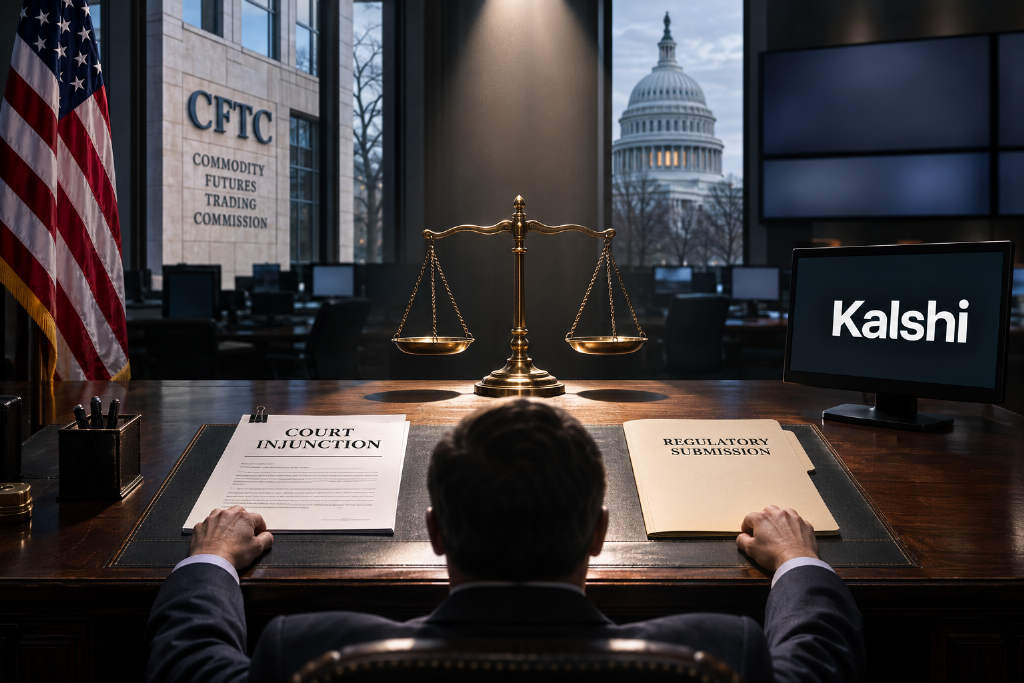
The U.S. Commodity Futures Trading Commission has issued an interpretation of its fair-access requirement that bars registered designated contract markets from restricting trading based on a customer’s state. The markets have 30 days to restore nationwide service or submit a written explanation to the CFTC’s Division of Market Oversight stating why compliance is not feasible. The directive applies to all DCMs, including event-contract platforms such as Kalshi and Polymarket. It also requires exchanges to ensure that intermediaries directing customers to their markets do not block access. The move puts the federal regulator on a collision course with several federal courts that have recently ordered Kalshi to restrict service in specific states and tribal jurisdictions. Kalshi has faced access restrictions in Nevada, Washington and Michigan, while Utah has pursued civil litigation and 14 criminal charges against the company and two co-founders. The dispute has also drawn criticism from Better Markets and Sen. Adam Schiff. CFTC Chairman Mike Selig says geographic restrictions undermine nationwide derivatives-market standards, liquidity and access to local information. The interpretation could face further legal challenges as the December deadline approaches.

470
CFTC Gives Kalshi and Other Contract Markets 30 Days to Restore Nationwide Access
US equities
Nov 5, 2026

CFTC Clears Single-Stock Perpetual Futures, Bringing a Crypto-Born Trading Model Into Regulated U.S. Markets

A major shift in U.S. market structure is taking shape after Commodity Futures Trading Commission Chairman Mike Selig said on Nov. 3 that single-stock perpetual futures can begin trading on regulated U.S. exchanges under a joint CFTC-SEC framework. The move brings a product long associated with crypto venues into the American regulatory perimeter and extends a trend that has been building across both digital-asset platforms and traditional finance. Perpetual futures removed the expiry date from conventional futures contracts and became one of crypto’s defining market innovations. According to figures cited in the source article, they accounted for about 75% of centralized crypto exchange volume in 2025, with nearly $49 trillion in annual trading, while TokenInsight said derivatives made up 83% of major exchange volume in Q3 2026. Over the past year, platforms including Binance, Coinbase, Kraken, Bitget, MSX and Ondo Finance have expanded stock-linked perpetual products, while ICE announced plans with Trade[XYZ] to bring a Hyperliquid-based perpetual market into the U.S. The article also traces how weekend price discovery is emerging around stock perpetuals. Even when Nasdaq and the NYSE are closed, traders can still price Nvidia, Apple and Tesla exposure through crypto-native venues using internal indexes, tokenized stock quotes, funding rates and cross-platform arbitrage. In that sense, stock perpetuals are no longer just a speculative side market. They are becoming an alternative channel for continuous price discovery outside traditional exchange hours.

1650
CFTC Clears Single-Stock Perpetual Futures, Bringing a Crypto-Born Trading Model Into Regulated U.S. Markets
Total 755 items
Go topage