CXMT
Oct 29, 2026

CXMT turns down Apple pricing requests twice as AI memory demand reshapes supplier leverage

ChangXin Memory Technologies, or CXMT, has twice declined to meet Apple’s pricing expectations for DRAM supply in less than three months, according to a MarsBit report citing Wccftech and supply-chain media. The latest episode involved CXMT refusing to provide a quotation for Apple’s DRAM demand, after an earlier August round in which Apple sought lower pricing for LPDDR5X mobile DRAM and the talks failed. The report says Apple wanted quotes below those offered by Samsung, SK hynix, and Micron, while CXMT replied in August that its pricing could not come in below Korean rivals and that some models built on in-house processes would be priced even higher. The article argues that the balance of power is shifting because AI servers are absorbing global DRAM capacity and pushing memory prices higher. It cites The Wall Street Journal as saying memory and storage chip prices have tripled since Google, Microsoft, Meta, and Amazon sharply increased capital spending budgets last year. Against that backdrop, CXMT’s current business is described as being driven mainly by domestic Chinese customers including Huawei, Xiaomi, and Lenovo, with roughly 90% of its capacity serving the local market. The report adds that future negotiations with Apple remain possible as CXMT expands output, while policy uncertainty in the United States and Apple’s own supply concerns could shape the next round.
1020
CXMT turns down Apple pricing requests twice as AI memory demand reshapes supplier leverage
Samsung Electronics
Oct 8, 2026

Samsung said to cut Q4 2026 smartphone output by as much as 30%

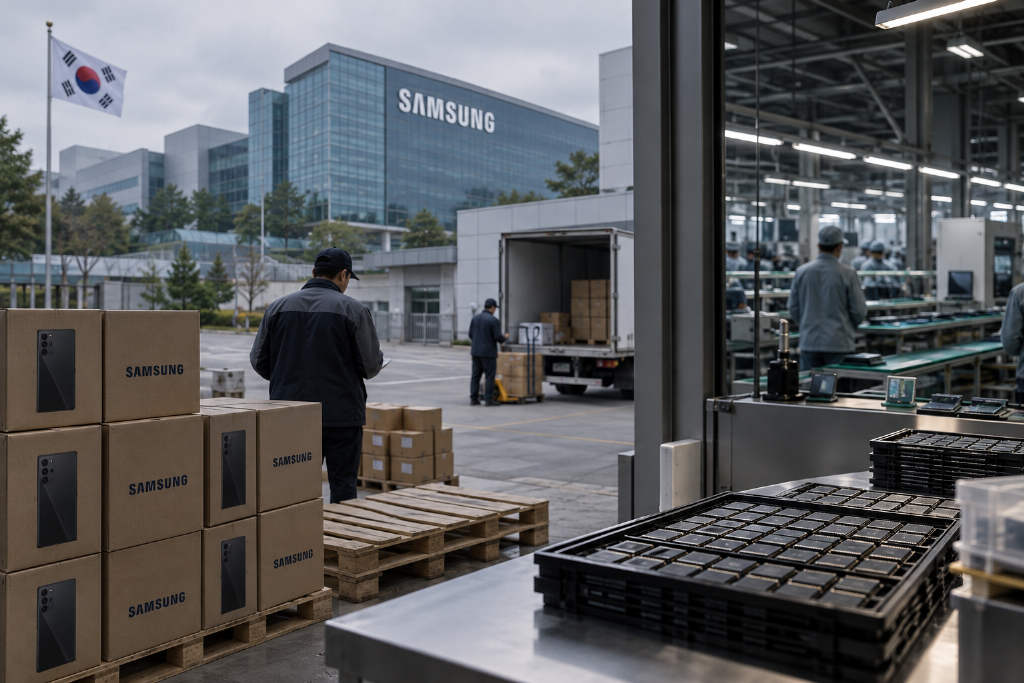
Samsung Electronics’ Mobile Experience (MX) division is planning to reduce smartphone production, with fourth-quarter 2026 output potentially falling by as much as 30%, according to an Oct. 8 report from Money Today cited by IT Home. People in the IT industry said Samsung’s MX unit has already told multiple partners to lower product supply volumes by 20% to 30%. IT Home noted that the original report did not specify whether the 30% figure refers to a quarter-over-quarter, year-over-year, or plan-versus-target comparison. The report said Samsung had originally aimed to produce as many as 270 million smartphones for the full year, supported by new products including the Galaxy Z Fold8. After the planned fourth-quarter cut, full-year output is now expected to fall to just above 200 million units, a decline that the report said is larger than the market had previously expected. IDC shipment data cited in the report showed 62.4 million units in the first quarter and 62.7 million in the second, with earlier forecasts of 59 million and 52 million for the third and fourth quarters. Money Today said rising memory prices are the main driver behind the production cut. TrendForce data showed second-quarter prices for 12GB LPDDR5X mobile DRAM at $145 to $146, up 175% from a year earlier. The report added that AI demand has pushed memory prices higher, with smartphone DRAM prices in the third quarter expected to rise another 20% to as much as $180.

1570
Samsung said to cut Q4 2026 smartphone output by as much as 30%
CXMT
Sep 20, 2026

CXMT says G5 DRAM platform has entered mass production, with economics still under scrutiny

Changxin Memory Technologies, or CXMT, said at the 2026 World Manufacturing Convention on Sept. 20 that its fifth-generation DRAM technology platform, G5, has entered mass production, alongside two 24Gb LPDDR5X products built on the node. The company highlighted four figures: an 11.95 nm active-area half-pitch, a capacitor aspect ratio of 45:1, a 6,762 nm core functional area height, and at least a 50% increase in dies per wafer versus the prior generation. The announcement matters less because of the “fifth-generation” label than because of how CXMT got there. The article argues that, without access to EUV lithography tools in mainland China, the company has pushed its process to roughly the industry’s 1c-class range using DUV multi-patterning and a broader stack of process modules, including HKMG and other structural changes. That said, node alignment does not mean cost alignment. The reported 50% gain refers to dies per wafer on an 8Gb-equivalent basis before yield screening, not to sellable output. CXMT did not disclose G5 yield or monthly production. The piece says the real questions now are how quickly yield improves, how fast cost per bit converges with the three global leaders, and whether HBM can move from reported trial production to an officially confirmed product line.

2400
CXMT says G5 DRAM platform has entered mass production, with economics still under scrutiny
CXMT
Sep 20, 2026

CXMT starts mass production on fifth-generation platform, with 24GB LPDDR5X already shipping in flagship phones

Chinese memory chipmaker ChangXin Memory Technologies, or CXMT, said at the 2026 World Manufacturing Convention that its fifth-generation technology platform has entered mass production. The company disclosed several process metrics for the platform, including an 11.95 nm half-pitch in the active area of the memory array, a 45:1 aspect ratio for memory capacitors, and a core power region height reduced to 6,762 nm. According to the company, the new process platform delivers a major increase in storage density, and wafer output under the same conditions is more than 50% higher than on the previous-generation platform. CXMT also said a 24GB LPDDR5X product built on the fifth-generation platform has moved into formal mass production and has already entered mainstream domestic flagship smartphones. The announcement was reported by ChainCatcher.

1100
CXMT starts mass production on fifth-generation platform, with 24GB LPDDR5X already shipping in flagship phones
CXMT
Sep 20, 2026

CXMT starts mass production on fifth-generation platform, 24GB LPDDR5X moves into volume output

Changxin Memory Technologies, or CXMT, said on Sept. 20 at the 2026 World Manufacturing Convention that its fifth-generation technology platform has officially entered mass production. The company said the platform brings the half-pitch of the active area in the memory array to 11.95 nanometers, raises the memory capacitor aspect ratio to 45:1, and lowers the height of the core dynamic area to 6,762 nanometers. CXMT also said storage density on the new process platform has increased sharply. Under the same conditions, output per wafer is more than 50% higher than on the previous-generation platform. Based on the new platform, the company’s 24GB LPDDR5X product has also entered formal mass production and is now being used across mainstream domestic flagship smartphones. The update was carried by BlockBeats, citing The Paper.

1150
CXMT starts mass production on fifth-generation platform, 24GB LPDDR5X moves into volume output
ZTE Nubia
Sep 7, 2026

ZTE Nubia Announces World's First AI Agent Phone NaviX Ultra, Launching September 16

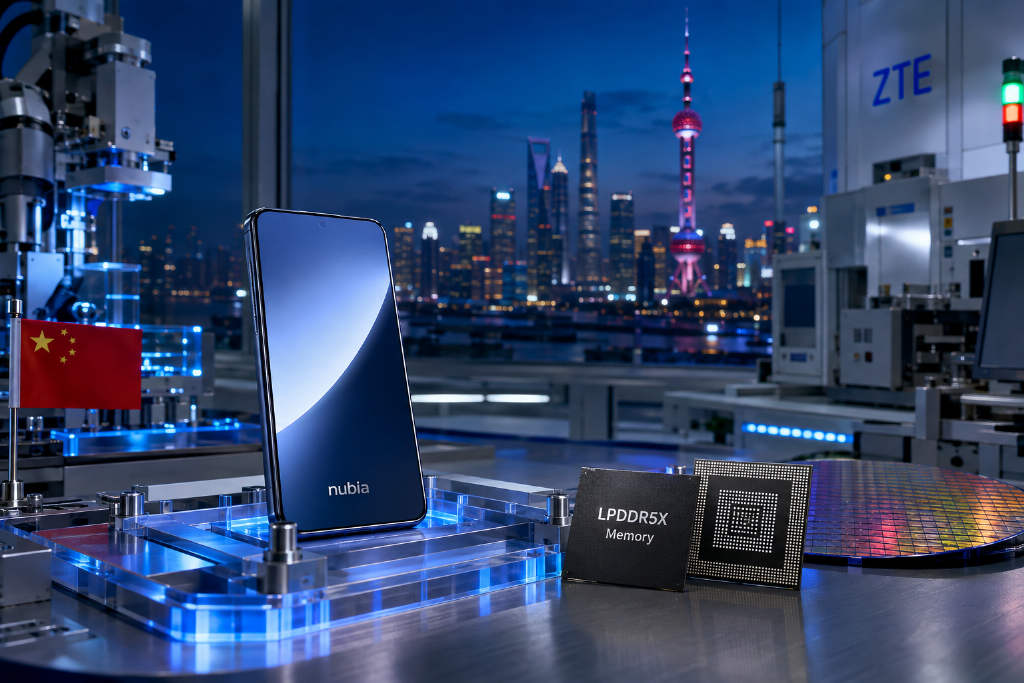
ZTE Nubia has officially announced the NaviX Ultra, which it calls the world's first AI agent smartphone. Powered by the Doubao assistant, the device can interpret a single spoken command and autonomously perform complex tasks, shifting from a manual tool to an intelligent helper. The phone will launch on September 16, with pre-orders now open on ZTE's official store, JD.com, Douyin, Tmall, and other authorized platforms. According to Nubia and memory maker CXMT (ChangXin Memory Technologies), the NaviX Ultra features CXMT's LPDDR5X memory running at 10667 Mbps, marking the first mass-produced application of a domestically developed high-speed memory chip at this speed.

1730
ZTE Nubia Announces World's First AI Agent Phone NaviX Ultra, Launching September 16
CXMT
Aug 1, 2026

CXMT's LPDDR6 is said to be nearing the end of validation

Changxin Memory Technologies, or CXMT, is nearing the final stage of research and validation for its LPDDR6 product, according to BlockBeats, which cited Yicai and unnamed industry sources on Aug. 1. The development is described as a key step before mass production. Earlier market chatter in March said Changxin Storage, under Changxin Technology, was pushing ahead with LPDDR6 commercialization and had already sent samples to core customers. That report said the product could be released and moved into mass-production introduction in the second half of 2026. The same information outlined the first LPDDR6 product's specifications: a design data rate of 12,800 Mbps, a base operating rate of 10,667 Mbps in coordination with the system-on-chip, 16Gb die capacity, and a 1295-ball package using package-on-package stacking. It also said the chip shows clear improvements over LPDDR5X in low-power design and RAS features, referring to reliability, availability and serviceability.

2930
CXMT's LPDDR6 is said to be nearing the end of validation