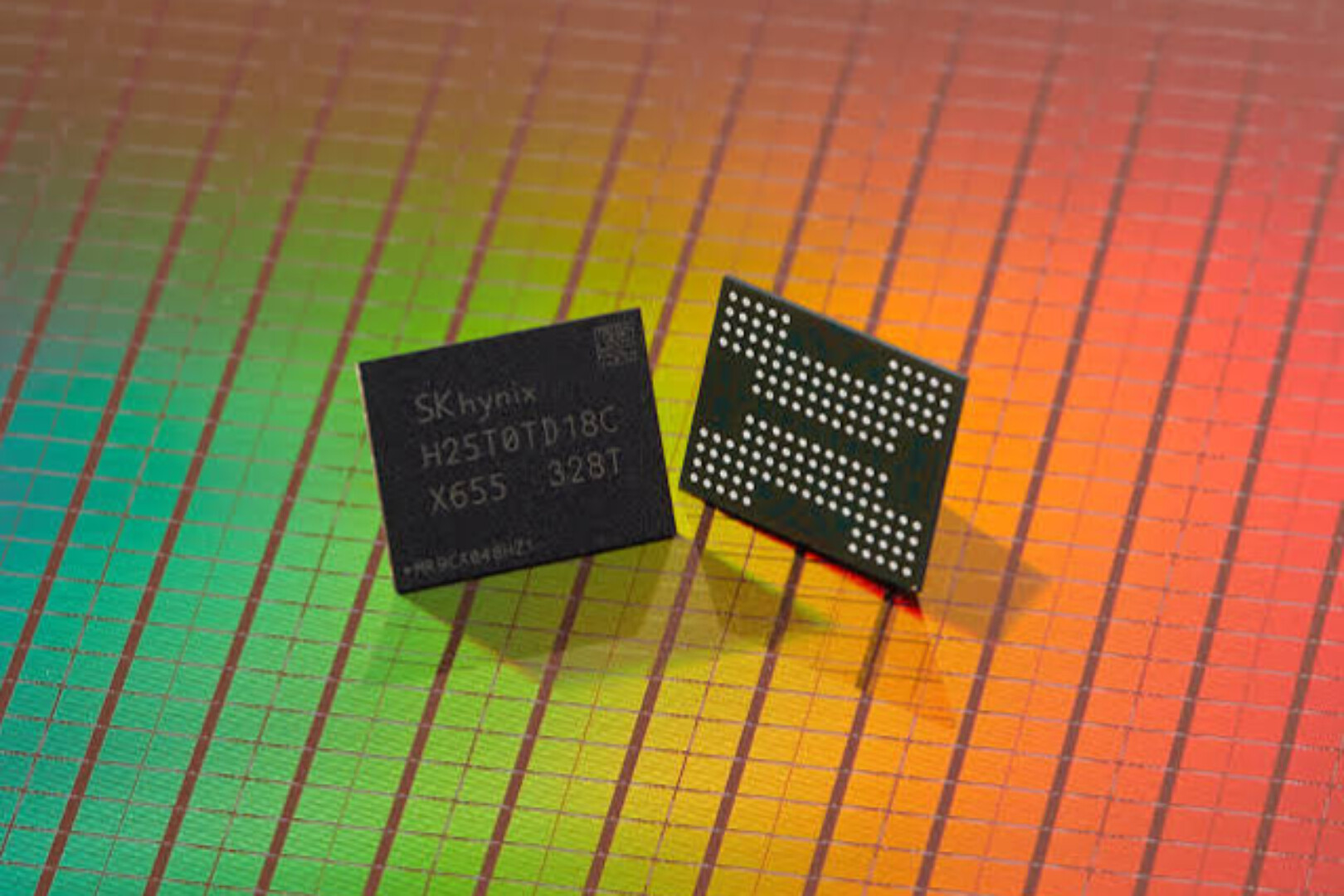
memory chips
Nov 2, 2026

Shenzhen memory suppliers post surging profits as higher chip prices fuel heavier stockpiling

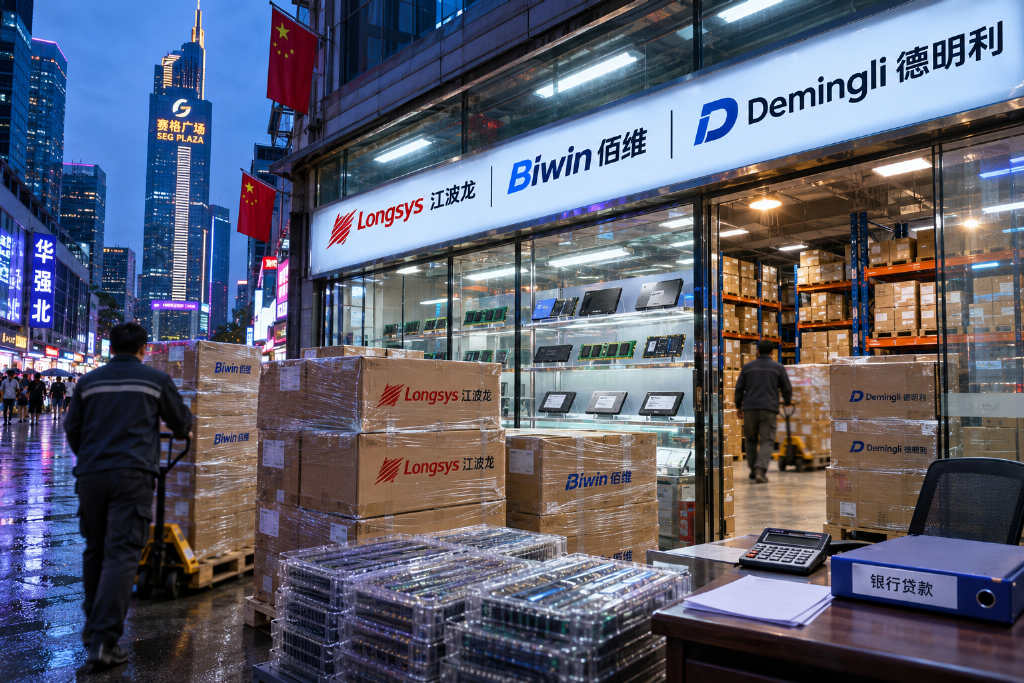
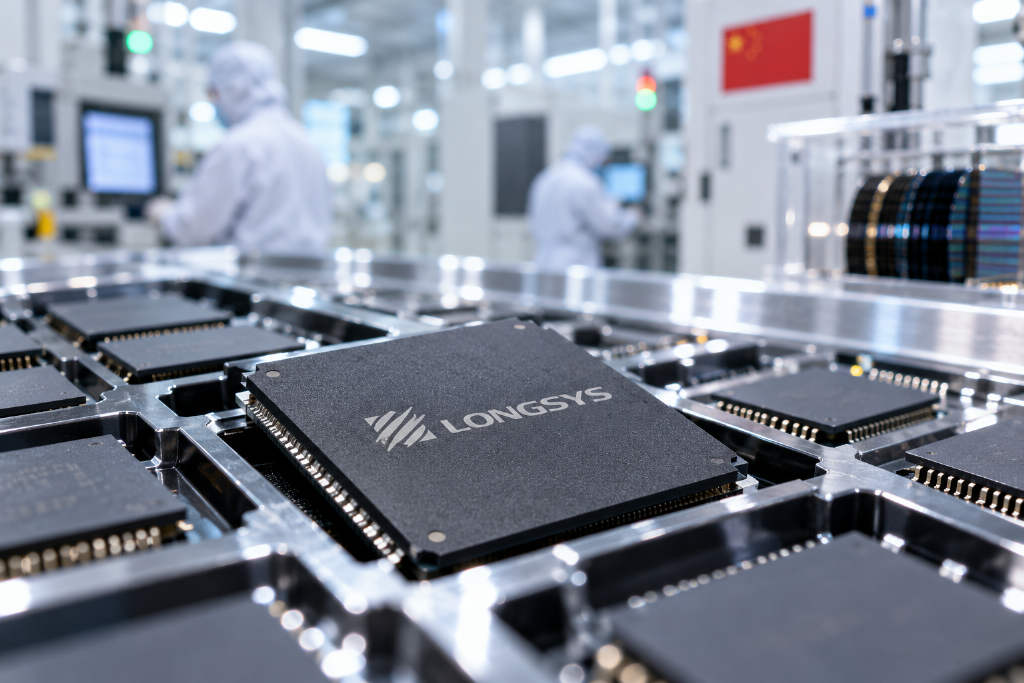
A new round of earnings from Shenzhen-listed memory companies shows how sharply the upcycle in storage pricing has lifted profits, while also exposing rising balance-sheet pressure. Delongli, Biwin Storage and Longsys each reported extraordinary year-on-year jumps in net profit, with the smallest increase still above 1,900%. The report ties that performance to strong demand for DRAM and NAND in the third quarter of 2026, even as price gains began to cool heading into October. The article also points to a split market. Bernstein data showed DRAM contract prices rose about 20% in the third quarter, while NAND pricing was more uneven after wafer spot prices surged in August and pulled back in September. Enterprise eSSD demand remained firm, but consumer demand stayed weak. Against that backdrop, Shenzhen’s so-called “storage five tigers” expanded raw-material purchases, lifted inventories and relied more heavily on borrowing. The result is a mixed picture: headline profit growth accelerated, but operating cash flow weakened at most of the companies discussed. The report argues that much of the gain reflects inventory revaluation and aggressive procurement rather than steady cash generation, leaving these firms more exposed if the current pricing cycle loses momentum.
1290
Shenzhen memory suppliers post surging profits as higher chip prices fuel heavier stockpiling
Longsys
Oct 30, 2026

Longsys posts 143.22 billion yuan net profit for the first three quarters as storage upcycle lifts margins

Longsys Electronics reported a sharp jump in earnings for the first three quarters, with revenue reaching 38.718 billion yuan, up 131.37% year over year, and net profit attributable to shareholders climbing to 14.322 billion yuan, up 1,909.68%. Based on cumulative filings cited in the source article, second-quarter net profit was about 6.715 billion yuan and third-quarter net profit came in at 3.745 billion yuan, down roughly 44.2% from the prior quarter. The report argues that the year-on-year surge and the quarter-on-quarter pullback describe different parts of the story: a low base last year amplified the annual comparison, while the second quarter remains the earnings peak so far this year. The article says non-recurring items had limited impact on cumulative profit, with first-three-quarter recurring net profit at 14.210 billion yuan, only about 112 million yuan below reported net profit. In the third quarter, recurring net profit of 4.162 billion yuan exceeded reported net profit because non-recurring gains and losses were negative, including about negative 494 million yuan tied to fair-value changes and disposals of financial assets and liabilities. Longsys also said DRAM and NAND Flash price increases narrowed in the third quarter, reducing the earnings boost from wafer price gains. From here, the focus shifts to high-end product commercialization, customer mix upgrades, inventory management, and whether profit can keep turning into cash after third-quarter operating cash flow turned positive at 877 million yuan.

910
Longsys posts 143.22 billion yuan net profit for the first three quarters as storage upcycle lifts margins
Longsys
Sep 8, 2026

Longsys lists in Hong Kong as first-half net profit jumps 71,528.66%

Longsys, a Shenzhen-based memory chip company, rang the bell for its Hong Kong listing on Sept. 8, pricing its shares at HK$236 each. The stock opened flat and was down 1.19% at HK$233.2 by 10:00 a.m., giving the company a market capitalization of HK$107.192 billion. The company said unaudited results for the first half of 2026 showed revenue of 24.088 billion yuan, up 136.3% year over year, and net profit attributable to shareholders of 10.577 billion yuan, up 71,528.66%. According to the prospectus, Longsys plans to use about HK$6.0202 billion in net proceeds from the global offering for research and development, strategic investments or acquisitions, and general working capital. The company brought in 14 cornerstone investors, including Transsion Holdings, Lenovo Group and Lens Technology, which subscribed for about $151 million worth of shares. Citing China Insights Consultancy data, the prospectus said Longsys ranked ninth among more than 100 global memory market participants by 2025 storage product revenue, third among more than 30 Chinese participants, and first among China’s independent memory makers, with a 1.2% share of the global semiconductor memory market.

1650
Longsys lists in Hong Kong as first-half net profit jumps 71,528.66%
Longsys
Sep 8, 2026

Longsys lists on HKEX main board, completing A+H share structure

Memory module maker Longsys today debuted on the main board of the Hong Kong Stock Exchange under stock code 09976.HK, with an offer price of HK$236 per share, completing an A+H dual-listing structure alongside its Shenzhen listing as 301308.SZ. The company offered 26.0778 million H shares globally, including 2.6078 million shares in the Hong Kong public offering and 23.47 million shares in the international tranche, with an over-allotment option also in place. Board lot size was set at 50 shares, putting the entry subscription cost at about HK$12,151.32. Based on the top offer price of HK$240.60, net proceeds are estimated at about HK$6.020 billion. Its prospectus showed that in the first half of 2026, Longsys posted revenue of RMB 24.088 billion, up 136.3% year over year. Gross margin rose from 11.0% in the same period a year earlier to 58.2%, while profit for the period reached RMB 10.718 billion, versus RMB 41 million a year earlier.

1450
Longsys lists on HKEX main board, completing A+H share structure
Longsys
Aug 31, 2026

Longsys seeks up to HK$6.28 billion in Hong Kong listing, with Lenovo among cornerstone investors

Chinese semiconductor company Shenzhen Longsys is seeking to raise as much as HK$6.28 billion, or about $800 million, through a Hong Kong share sale. The company plans to offer about 26 million shares at up to HK$240.60 each, a price that represents roughly a 45% discount to its Shenzhen closing price last Friday. The final offer price is expected to be set on Sept. 4, with H shares due to begin trading on Sept. 8. Around 78.3% of the proceeds are earmarked for research and development. Cornerstone investors have agreed to subscribe for 18.89% of the offering, including Lenovo, Transsion International, CITIC Securities Asset Management, and Lens Technology. Longsys said its first-half net profit jumped more than 71,000% as memory chip prices rose, while revenue climbed to RMB 24.1 billion. The listing comes as data center operators compete for supply and shortages in AI memory chips lift sector valuations. If the over-allotment option is exercised, total proceeds could rise to $1.06 billion, implying a market value of as much as $24.9 billion.

1480
Longsys seeks up to HK$6.28 billion in Hong Kong listing, with Lenovo among cornerstone investors
Phison
Aug 16, 2026

Phison CEO accuses Longsys of copying technology, says AI segment now makes up 38% of revenue

Phison Electronics CEO K.S. Pua used the company’s Aug. 13 second-quarter earnings call to make two points at once: to publicly accuse Chinese memory module leader Longsys of copying technology, and to argue that investors should stop viewing Phison as only a consumer-focused module company. Pua pointed to Longsys’ recent work with UNISOC on an Edge Device general DRAM offload solution and its HLC+ SPU technology collaboration with AMD, saying he had already confronted Longsys executives earlier this year at China’s FMS event with a blunt remark: 「You are a big company and also an innovative company, so why do you only know how to copy?」 He also pushed back on claims that AMD had chosen Longsys, saying the cooperation was limited to AMD’s China team, while adding that Phison has cooperation with Intel and MediaTek that is still covered by NDA. On operations, Pua said Phison’s newly defined AI Ecosystem Solutions segment accounted for about 38% of second-quarter revenue, up about 68% quarter over quarter. He also said NAND supply, not just pricing, is the bigger problem and could remain tight for many years.

3010
Phison CEO accuses Longsys of copying technology, says AI segment now makes up 38% of revenue
AI servers
Jul 3, 2026

Morgan Stanley Raises SIMO Target as AI Servers Reshape the NAND Cycle

Morgan Stanley’s latest report argues that the NAND market is entering a structurally different cycle, driven less by smartphones and PCs and increasingly by AI servers, enterprise SSDs, AI boot drives, and long-term cloud procurement. The bank raised Silicon Motion’s target price from $155 to $400, while also lifting targets for Longsys and Phison. However, it kept Equal Weight ratings on Longsys and Phison, signaling that not every module maker will benefit equally from the upcycle. The report forecasts global NAND moving from roughly 2% oversupply in 2025 to a 15% shortage in 2026 and a 9% shortage in 2027, with AI-related NAND demand expected to reach 609 EB in 2027, or 41% of total demand. Channel checks already show stronger pricing in data-center-linked products, especially TLC enterprise SSDs, than in consumer NAND. For SIMO, Morgan Stanley sees enterprise SSD controllers and AI boot drive modules as the key earnings drivers. The larger debate now is not simply whether SSD prices will rise, but whether AI demand can absorb future capacity additions through 2028, especially under different YMTC expansion scenarios.

1550
Morgan Stanley Raises SIMO Target as AI Servers Reshape the NAND Cycle
AI servers
Jul 3, 2026

Morgan Stanley Lifts SIMO to $400 as AI Servers Reshape the NAND Cycle

Morgan Stanley has sharply raised its price targets on key storage names, arguing that AI infrastructure is fundamentally changing the NAND demand cycle. The most aggressive move was on Silicon Motion, whose target was lifted from $155 to $400, based on 23x expected 2027 EPS and expectations that revenue will hit a record in 2026. Longsys and Phison also saw higher targets, though both remain rated Equal Weight, highlighting that the AI storage upcycle is unlikely to benefit all module vendors equally. The report’s main thesis is that AI-driven NAND demand will extend through 2027. Global NAND supply-demand is projected to remain about 2% oversupplied in 2025, then swing to a 15% shortage in 2026 and still show a 9% deficit in 2027. Total demand is estimated at 1,111 EB, 1,250 EB, and 1,484 EB for 2025-2027, versus supply of 1,128 EB, 1,058 EB, and 1,347 EB. The key driver is not a broad recovery in smartphones or PCs, but rising demand from AI servers, cloud SSD procurement, enterprise storage, and boot drives. Pricing data already reflects this divergence. Channel checks for 3Q26 show TLC enterprise SSD prices up about 30% quarter-on-quarter, server DRAM up 20%, and legacy DRAM such as DDR3/DDR4 up 30%-40%, while consumer NAND pricing remains more constrained. Morgan Stanley sees SIMO as especially well positioned through enterprise SSD controllers and AI boot drive modules, but also warns that the bullish outlook depends on successful ramp-up, customer adoption, and sustained AI server demand. Looking further out, 2028 remains the key risk window, with YMTC capacity expansion and AI demand growth determining whether shortages persist or the market swings back into oversupply.

1470
Morgan Stanley Lifts SIMO to $400 as AI Servers Reshape the NAND Cycle
Total 9 items
Go topage