Nexon
Sep 11, 2026

Nexon previews AI Connector beta for Mabinogi Mobile in Korea, with users paying their own AI bills

Nexon has unveiled an AI Connector beta for the Korean server of Mabinogi Mobile, letting players hook up AI tools installed on their own PCs, including Claude Code, Cursor, Gemini CLI, Windsurf, Cline, Roo Code, Kiro and OpenCode. The feature was announced on Sept. 9 and is limited to the PC version during testing. Players can use AI through chat to check character stats, location, currency, inventory weight, quests, nearby NPCs and players, as well as material and sheet music lists. They can also delegate gathering, processing and crafting tasks to AI. Nexon said the game does not provide the AI itself. Any fees generated by those tools must be paid by players directly to the AI providers. The company also drew a hard line around what AI cannot do. Seven categories are excluded, including exchange listings and purchases, character growth-related autoplay, payments and cash shop functions, guild management, private messages, item disposal and dismantling, and integrations with external communication or social platforms. The company added two limits to AI delegation: movement performed by AI will consume the in-game item Spirit Wings, and any continuous delegated use lasting one hour requires player confirmation before it can continue. AI cannot log in for players, and any draft public-channel message must be reviewed and approved before posting. Nexon said the Korean launch date has not been announced, and there is no word yet on whether the Taiwan, Hong Kong and Macau version will get the feature.


1780
Nexon previews AI Connector beta for Mabinogi Mobile in Korea, with users paying their own AI bills
Anthropic
Sep 8, 2026

Anthropic’s Labs team runs on two-week product reviews, a 20-person roster and a high failure rate

Anthropic’s internal Labs group, led by co-founder Ben Mann, has emerged as a small product incubator inside the AI company. According to a Business Insider report cited in the source material, the roughly 20-person team reviews prototypes about every two weeks and decides whether to keep building, change direction, merge the work into other efforts, or shut it down. Mann said only 20% to 30% of ideas succeed on their own, while the rest may still contribute features, technical lessons or product insight elsewhere. The team was created in 2024 to give new product ideas room to develop and has already produced Claude Code, Model Context Protocol, or MCP, and Claude Design. Mann described Labs as a true startup incubator, with projects “graduating” into independent teams once they usually grow beyond four people. That structure is designed to keep Labs small and mobile while mature products move into longer-term engineering and maintenance. The report also ties Labs’ role to Anthropic’s commercial push. Business Insider said the company is preparing for an IPO, raising the stakes for turning model advances into products people keep using. The source also notes a growing tension between Anthropic as a model platform and Anthropic as a product maker, especially as tools such as Claude Design move into categories occupied by software companies like Adobe and Figma.

1320
Anthropic’s Labs team runs on two-week product reviews, a 20-person roster and a high failure rate
X-Agent
Sep 4, 2026

X-Agent says the next step for OPCs is not building more products, but making capabilities callable by agents

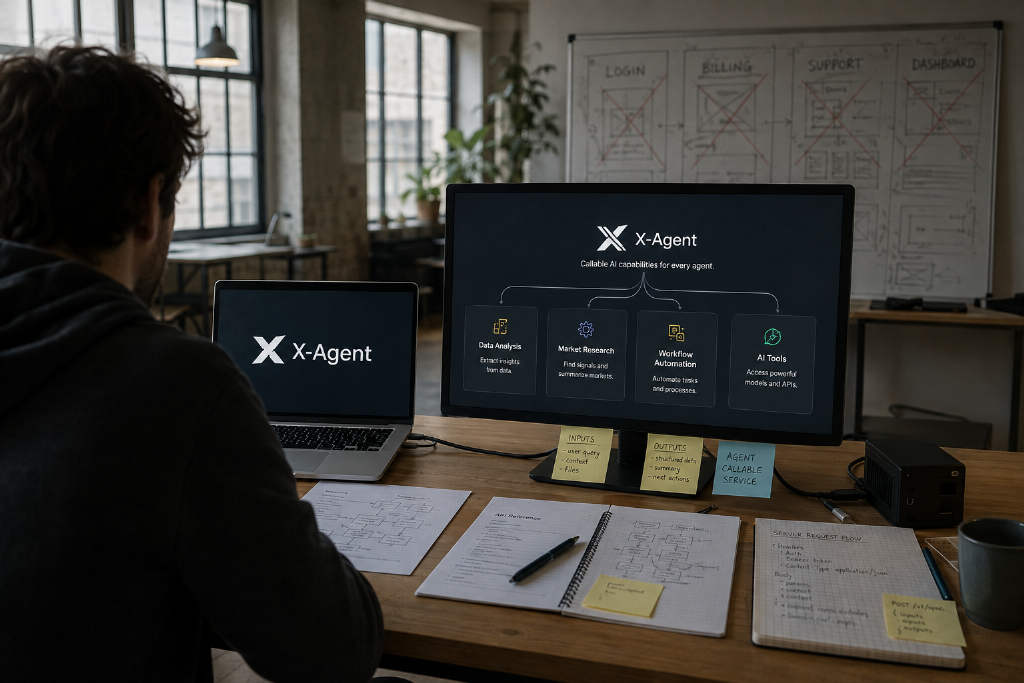
X-Agent argues that AI coding tools and the rise of "Vibe Coding" are rapidly lowering the barrier to software development, allowing a single developer to deliver work that once required a small product and engineering team. In its latest article, however, the firm says that for one-person companies, or OPCs, productivity is no longer the main constraint. The scarcer resources are demand, trust and distribution. The article says a fast-built demo does not automatically enter real workflows used by customers or other agents. Instead of starting with a full SaaS stack that includes a website, login system, backend, subscriptions and customer support, developers can begin with one clear, practical and callable capability. X-Agent suggests packaging data analysis, market research, automation processes or AI tools as MCP services so that agents can understand what the service does, when to call it, what inputs it needs and what results it will return. That idea also sits at the center of the X-Agent AI MCP Hackathon. According to X-Agent, the goal is not to reward the most complex MCP Server, but to help developers turn real APIs, tools or services into agent-native services with clear capability boundaries, stable interfaces, verifiable deployment and long-term product potential.

1600
X-Agent says the next step for OPCs is not building more products, but making capabilities callable by agents
MCP
Sep 1, 2026

MCP Servers Become New AI Attack Surface: 40% Found Vulnerable

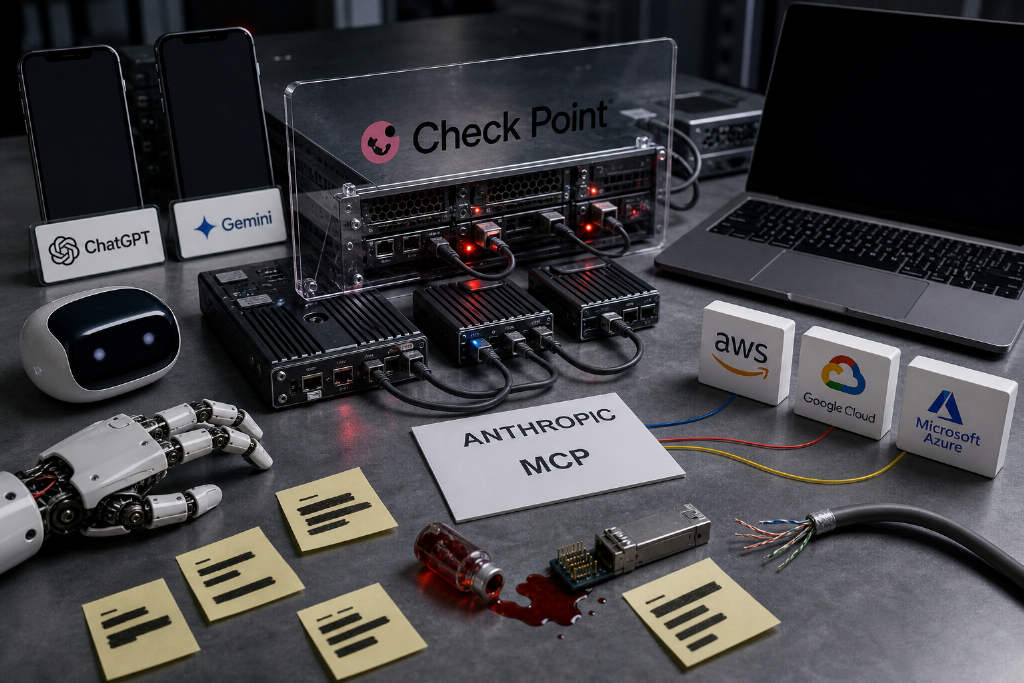
Security firm Lakera analyzed 10,000 MCP servers and found that roughly 40% have exploitable security weaknesses. Threats include tool poisoning and rug pull attacks, where attackers can manipulate AI agent behavior via malicious instructions. Check Point and other vendors are developing dedicated AI firewalls. MCP, released by Anthropic in November 2024 as an open standard, had over 10,000 active public servers by December 2025, with support from AWS, Google Cloud, and Azure. Major AI platforms like ChatGPT, Gemini, and Microsoft Copilot have adopted the protocol.

1530
MCP Servers Become New AI Attack Surface: 40% Found Vulnerable
X-Agent
Sep 1, 2026

X-Agent AI MCP Hackathon 2026 to open Sept. 2 with two tracks and prizes in USDT and X-Points

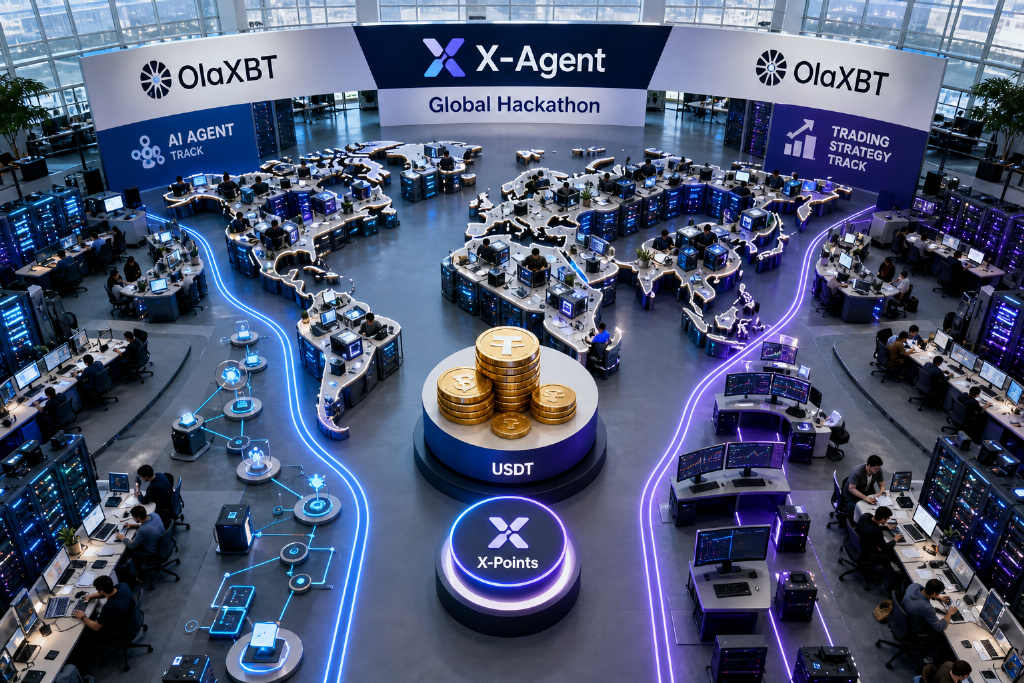
X-Agent said its X-Agent AI MCP Hackathon 2026 will officially begin on Sept. 2, inviting developers and teams worldwide to submit Agent and MCP applications with practical use cases and verifiable functionality. The online global event is supported by OlaXBT and includes two separate competition tracks. The open innovation track calls for practical API-driven Agent or MCP capabilities built around AI, crypto assets, data, automation, and Agent infrastructure. A second track, the OlaXBT × X-Agent Trading Challenge, gives participating teams access to OlaXBT Nexus MCP tools for strategy development, backtesting, performance analysis, and market data, allowing them to validate trading strategies and build related Agent or MCP applications. Prize pools include USDT and X-Points. The first-place team in each track will receive 500 USDT, while the top five teams in each track will share X-Points. According to the announcement, X-Points can be used to take part in the redemption for X-Agent airdrop token $XAGT. Registration and development run from Sept. 2 to Sept. 19, judging is scheduled for Sept. 20 through Oct. 1, and winners are expected to be announced between Oct. 2 and Oct. 4.

2490
X-Agent AI MCP Hackathon 2026 to open Sept. 2 with two tracks and prizes in USDT and X-Points
Robinhood
Aug 31, 2026

Robinhood’s AI account push puts agent trading closer to real money use

A PANews commentary by Yuki (Liu Yuqing) uses a friend’s experiment with an AI-managed Robinhood account to frame a broader shift in retail finance. The account, run by an agent for more than a month, showed returns above 20%, but the article argues that the performance figure alone says little without a benchmark, drawdown data, or a full trading record. The more important signal, it says, is that users are beginning to hand real accounts to AI systems rather than using them only for research or idea generation. The piece traces Robinhood’s AI buildout from its 2024 acquisition of Pluto, an AI investment research platform, to the 2025 launch of Cortex and then to Agentic Trading in May 2026. Under that setup, users can open a separate Agentic Account, move part of their funds into it, and connect third-party models such as Claude, ChatGPT, Codex, Cursor, Grok, or a custom-built agent through Robinhood’s Trading MCP. Robinhood later expanded Agentic Trading from stocks and options into crypto, and also introduced an Agentic Credit Card. The article’s core argument is that the biggest product question is not whether AI can always outperform, but how platforms define permissions, limits, audit trails, and human override once an agent is allowed to trade or spend.

1400
Robinhood’s AI account push puts agent trading closer to real money use
Etherscan
Aug 31, 2026

Etherscan rolls out Build with AI for access to data across 60-plus EVM chains

Etherscan said on X that it has launched a new toolkit called "Build with AI," aimed at giving AI agents direct access to on-chain data across more than 60 EVM-compatible chains. The release includes three components. Etherscan MCP connects agents such as Claude and Codex to real-time blockchain data. Etherscan CLI lets users query the API from a terminal and return results in JSON, table, or CSV format. Etherscan Skills adds installable modules including Orchestrator, Contract Review, Transaction Debugger, and Etherscan Flow through the Skills CLI. Etherscan also issued a security warning, saying the only official MCP server is mcp.etherscan.io/mcp and that other versions are third-party impersonations. The announcement points to a broader push to make blockchain data more accessible in AI-driven development workflows, while drawing a clear line around official infrastructure.

1520
Etherscan rolls out Build with AI for access to data across 60-plus EVM chains
Coinbase
Aug 28, 2026

Coinbase details internal AI agent CEEcil with long-term memory and Slack follow-up features

Coinbase has outlined the design and internal use of CEEcil, an in-house AI system built to act less like a standard chatbot and more like a teammate inside Slack. The company said CEEcil can be mentioned directly in conversations, retain long-term context, follow up on unresolved issues, and make limited judgments in day-to-day workflows. Its memory system is split into three layers: it continuously pulls decisions, blockers and owners from authorized channels, rolls short-term observations into longer-term summaries each night, and retrieves historical memory, recent chats and live data when answering questions. Coinbase also said CEEcil uses a tiered model setup, routing simpler requests through APIs or knowledge bases while reserving stronger AI models for complex multi-step tasks to reduce cost and latency. In one example cited by the company, the system refused to submit an operations document containing customer identity information to Git and instead suggested using a redacted version or compliant storage. Coinbase added that CEEcil runs on Go services and an AI agent runtime, connects to tools through MCP, and operates with safeguards including a real-time kill switch, call and spending caps, audit mechanisms, and mandatory human review before generated code is merged.

1580
Coinbase details internal AI agent CEEcil with long-term memory and Slack follow-up features
Total 76 items
Go topage