Ministry of Commerce
Oct 19, 2026

China’s commerce ministry and eight other departments call for deeper AI-manufacturing integration

China’s Ministry of Commerce and eight other government departments on Oct. 19 issued an opinion on accelerating technology-driven commercial development, laying out a set of measures aimed at upgrading the supply of goods. The document calls for the deeper implementation of a dedicated "AI + manufacturing" initiative and says artificial intelligence should be integrated more closely with product research and development, design, manufacturing, and marketing. It also says authorities will encourage the development and application of smart products built on secure and reliable open-source operating systems. Beyond AI-related measures, the opinion mentions accelerating the transformation and upgrading of traditional classic industries, developing premium signature products, building a lineup of Chinese consumer brands, advancing technology-driven agriculture, improving the quality and efficiency of specialty agricultural products, and supporting time-honored brands in using modern production technologies for product innovation.

1600
China’s commerce ministry and eight other departments call for deeper AI-manufacturing integration
Policy Regulation
Oct 12, 2026

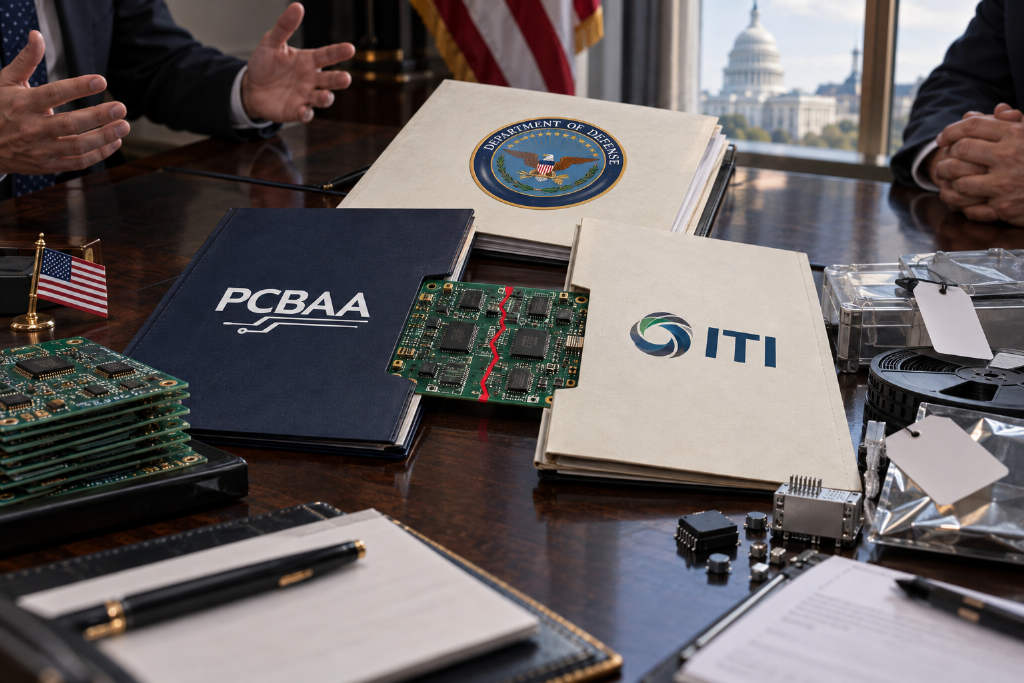
U.S. defense PCB restrictions target China, but American industry is split over the rollout

A U.S. defense procurement restriction set to take effect on Jan. 1, 2027 has renewed pressure on Chinese PCB suppliers, yet the sharpest disagreement is now inside the American supply chain itself. The Printed Circuit Board Association of America, or PCBAA, wants the Pentagon to move ahead with excluding Chinese PCBs on schedule, while the Information Technology Industry Council, which represents technology companies, has asked for a 36-month transition period after the final rule is issued for affected commercial products. Citi said in an Oct. 12 note that the global aerospace and defense PCB market is only about $1.4 billion, and estimated that the demand directly affected by the U.S. defense ban would account for less than 1% of China’s total PCB demand. The dispute reflects a basic divide: U.S. board makers see potential new orders, while downstream manufacturers see higher certification, traceability and production costs. The case also shows a broader constraint in rebuilding domestic manufacturing capacity. Washington can direct defense orders, but replacing China’s scale, cost structure, delivery capability and industrial coordination is a much harder task.

1560
U.S. defense PCB restrictions target China, but American industry is split over the rollout
Toyota
Sep 22, 2026

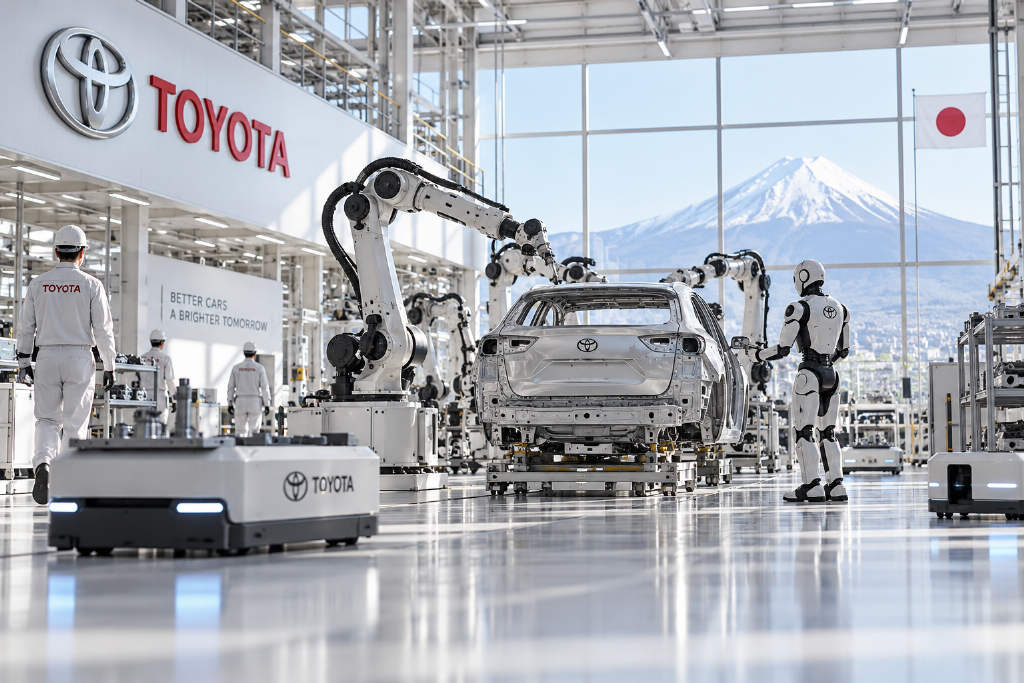
Toyota says factory automation push could require 400,000 robots by 2028

Toyota Motor said expanding automation across its factories, group companies and key suppliers could require about 400,000 robots by 2028, with annual spending of roughly 1 trillion yen, or about $6.4 billion. The company discussed the potential plan with investors in early September, though it has not confirmed whether it will commit the full amount or how many years that level of spending would continue. The estimate covers both replacement of existing equipment and new installations, including humanoid and non-humanoid systems. The potential scope spans industrial robots, automated logistics and human-robot collaboration on future factory floors. Toyota has already deployed and tested robotics in multiple manufacturing processes. The company uses the term "physical AI" for technology that lets robots sense their surroundings through sensors, learn from conditions or optimize movements, and operate autonomously. Its frontier research center is using robotics to address labor shortages and skills transfer, with the technology already applied in systems such as the KumiPro parts-picking robot, according to Reuters.

1240
Toyota says factory automation push could require 400,000 robots by 2028
Fed
Sep 2, 2026

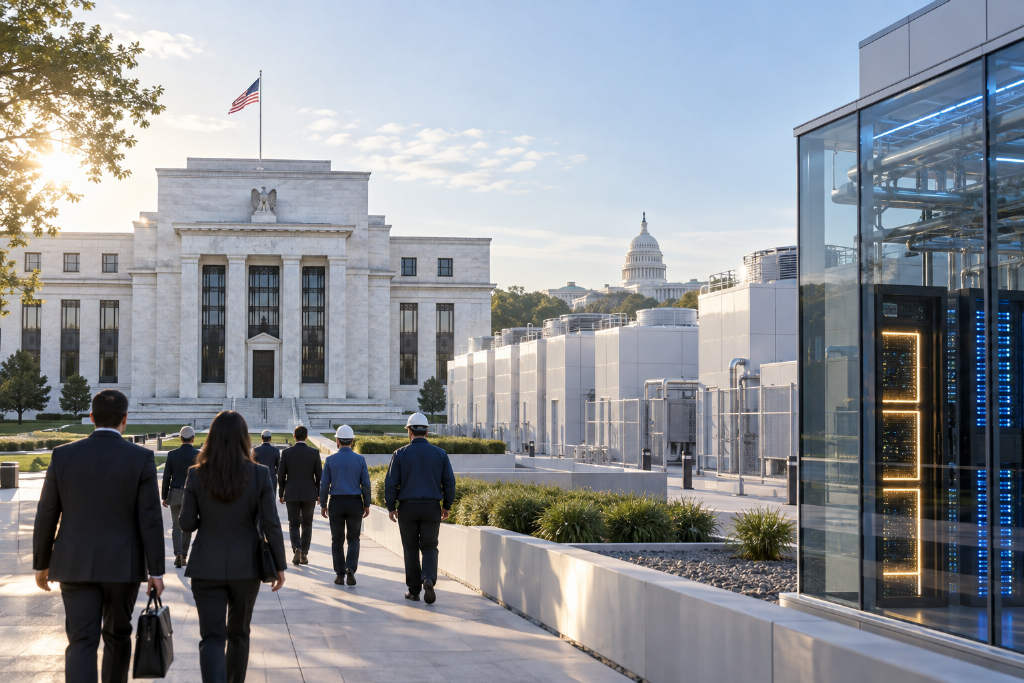
Fed's Beige Book: Moderate Economic Growth, AI and Data Center Investments Stand Out

The Federal Reserve's Beige Book released Wednesday showed moderate economic growth in the U.S. over the past two months, with particularly strong demand for data centers. While high-end consumer spending remained solid, price sensitivity limited firms' ability to pass on cost increases. Employment rose modestly but unevenly, with healthy demand in manufacturing, construction, and some services, while retail and hospitality saw declines. Manufacturing activity was boosted by defense and data center orders. The report mentioned artificial intelligence 19 times and data centers 25 times, highlighting their prominence in the economic landscape.

1080
Fed's Beige Book: Moderate Economic Growth, AI and Data Center Investments Stand Out
Federal Reserve
Sep 2, 2026

Fed Beige Book says U.S. economy grew modestly as uncertainty increased

The Federal Reserve’s Beige Book, released Wednesday local time and cited by BlockBeats, said U.S. economic activity expanded at a modest pace since early July. Ten of the 12 Federal Reserve districts reported slight to moderate growth, while two districts saw no change. Consumer spending edged higher, though households became more price sensitive, and higher-end spending remained solid. Auto sales were weak, with soft confidence, elevated fuel prices, and rising financing costs listed as key headwinds. Manufacturing activity improved across most districts, and some regions reported strong demand tied to defense and data center orders. Labor market growth slowed and increased only slightly overall. Demand for workers held up in manufacturing and construction, but weakened in retail and hospitality. Most districts also reported moderate price increases, with businesses still facing pressure from energy, transportation, raw materials, and tariffs. Companies said the overall economic outlook remained positive, but they continued to watch uncertainty around energy prices, policy, and international conflicts.

770
Fed Beige Book says U.S. economy grew modestly as uncertainty increased
AI infrastructure
Oct 6, 2026

Bloomberg: AI infrastructure boom is creating new billionaires in traditional manufacturing

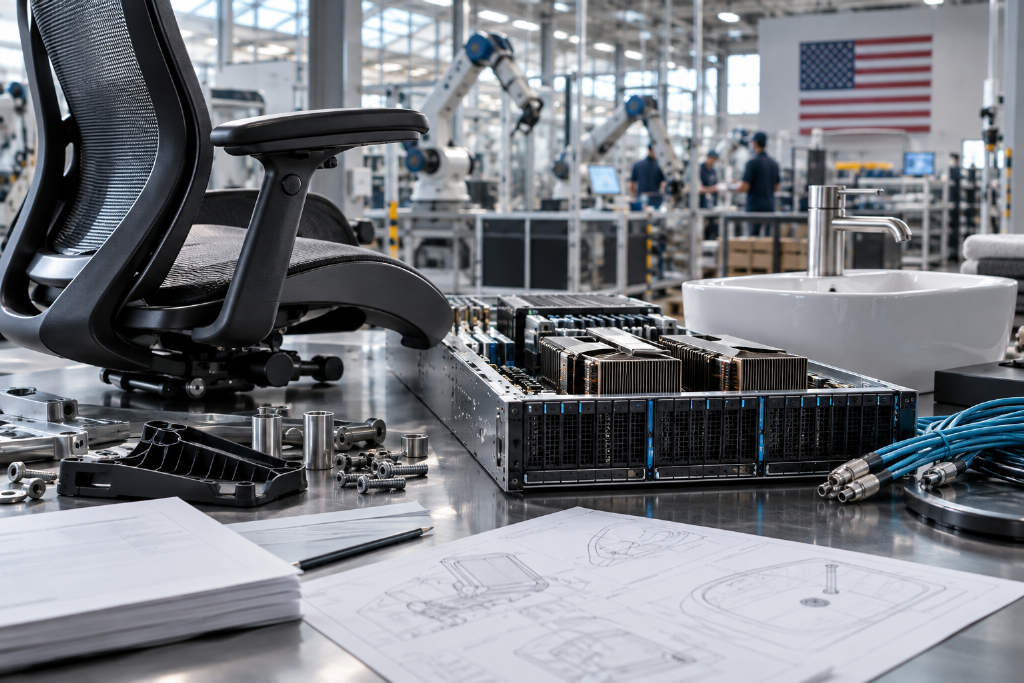
Bloomberg reported that the boom in AI infrastructure is producing an unexpected wave of new billionaires. Rather than coming mainly from Silicon Valley, some of the beneficiaries are tied to traditional industries, including furniture makers and sanitary ware manufacturers. The item was cited by Techub and attributed to Bloomberg Technology. The report points to how demand linked to AI infrastructure is extending beyond core software and chip circles into older manufacturing segments.

740
Bloomberg: AI infrastructure boom is creating new billionaires in traditional manufacturing
artificial intelligence
Oct 6, 2026

AI data center supply chain boom lifts valuations of traditional manufacturers

Techub News, citing Bloomberg Technology, reported that the boom in artificial intelligence infrastructure is pushing a group of traditional manufacturers to much higher valuations and creating a new class of billionaires in the process. The report said companies across the hardware supply chain that support AI data centers are seeing unusually strong market opportunities. That includes businesses not normally associated with cutting-edge technology, such as furniture makers and bathroom equipment manufacturers. The core theme is that demand tied to AI infrastructure is spilling far beyond chipmakers and software firms, reaching older industrial and manufacturing names that now play a supporting role in data center buildouts. As a result, investor attention and market value are rising for these suppliers as the AI buildout continues.

840
AI data center supply chain boom lifts valuations of traditional manufacturers
US economy
Oct 1, 2026

U.S. manufacturing picked up in September, reviving bets on another Fed rate hike

U.S. manufacturing growth accelerated in September, with the PMI reaching its highest level since May 2022, according to a newsflash cited by ChainCatcher. A surge in new orders pushed factories to raise output and add workers, while backlogs grew and suppliers became busier. Export orders declined, but higher safety inventories continued to support demand. With economic growth speeding up, hiring increasing and prices moving higher, the market has started to speculate that the Federal Reserve could raise interest rates again. The update points to stronger factory activity even as external demand softened, keeping monetary policy expectations in focus.

1080
U.S. manufacturing picked up in September, reviving bets on another Fed rate hike
Total 47 items
Go topage