AI inference
Oct 30, 2026

AI inference shifts demand toward CPUs, DDR5 and high-capacitance MLCCs, with Taiwanese suppliers set to pick up spillover orders

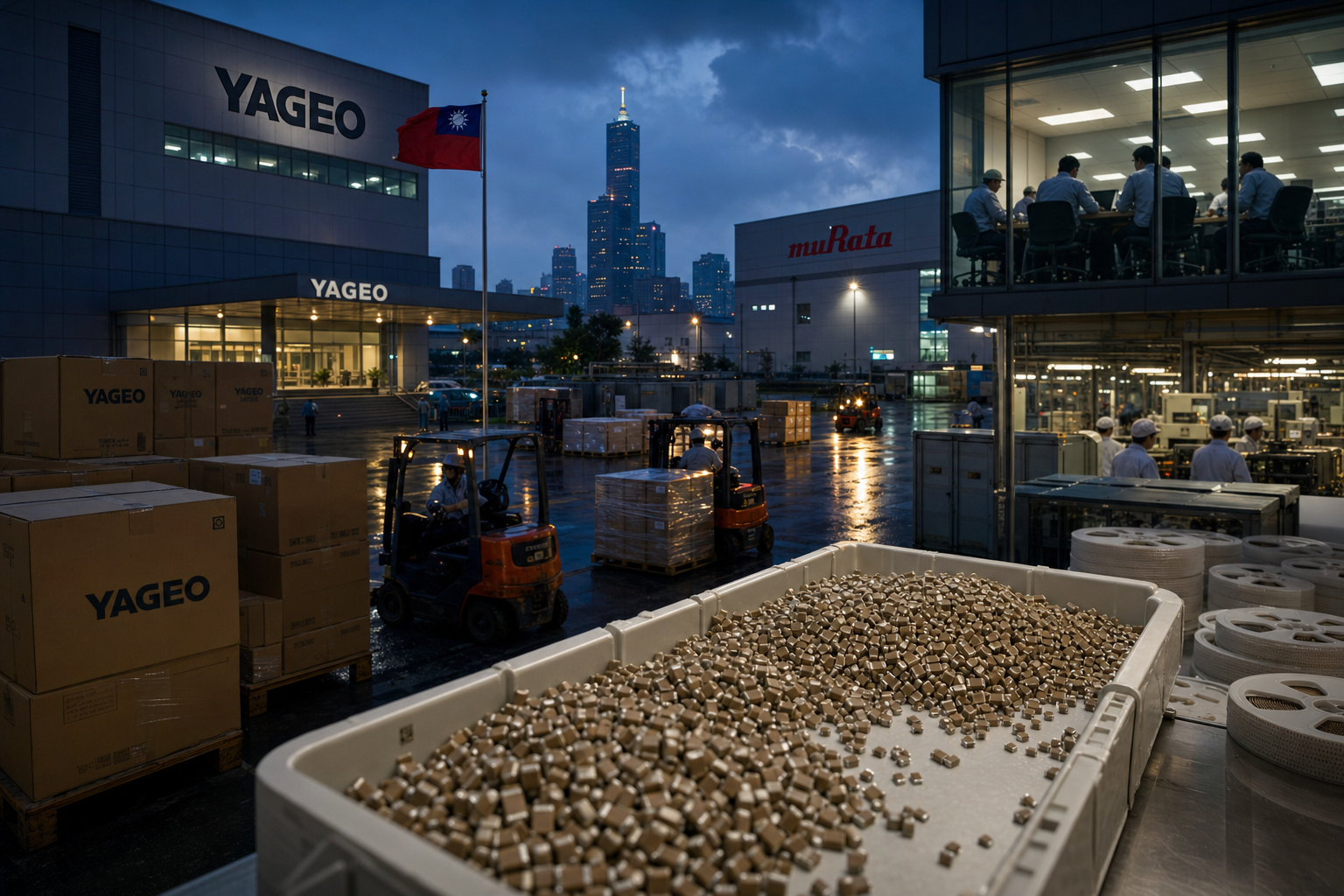
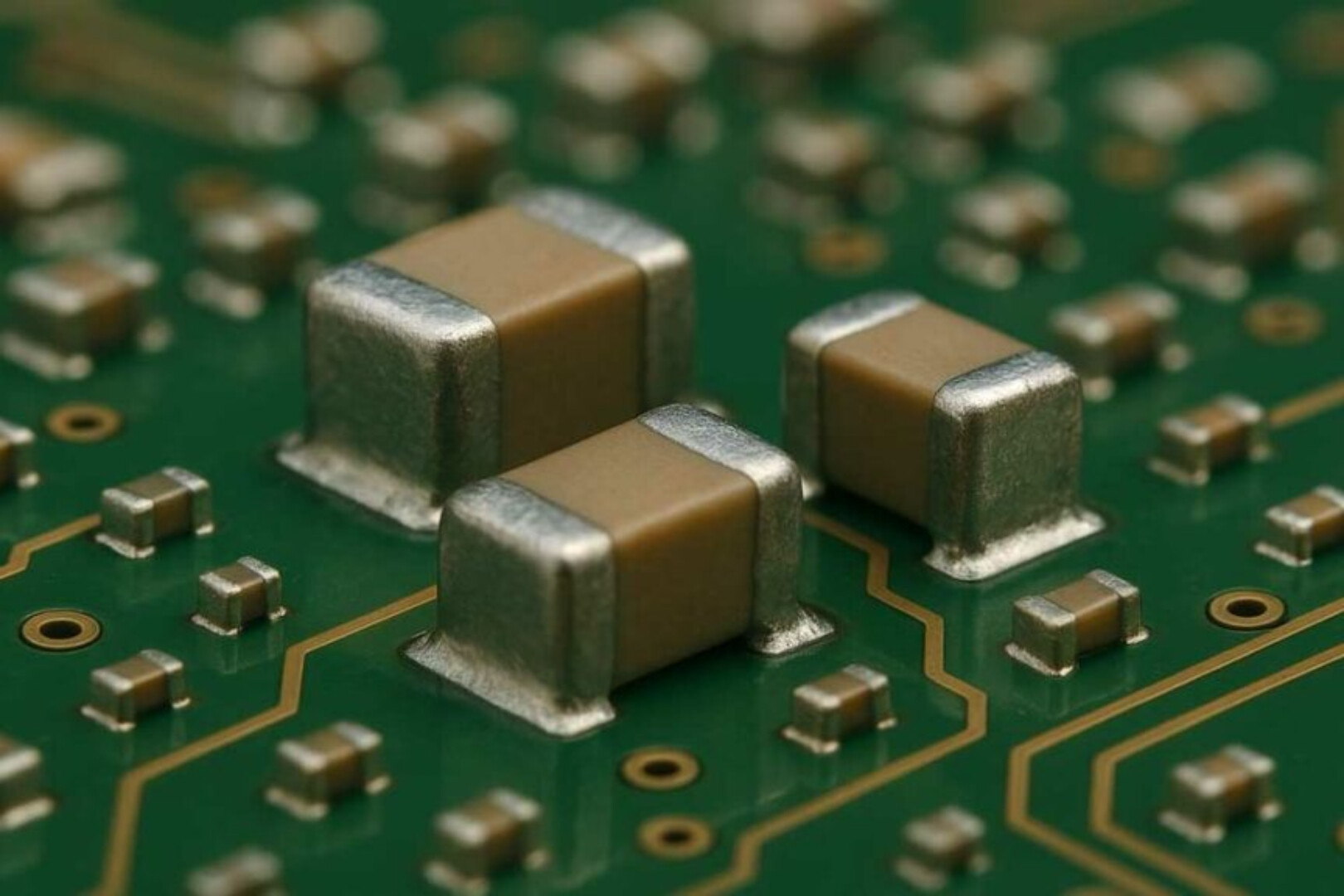
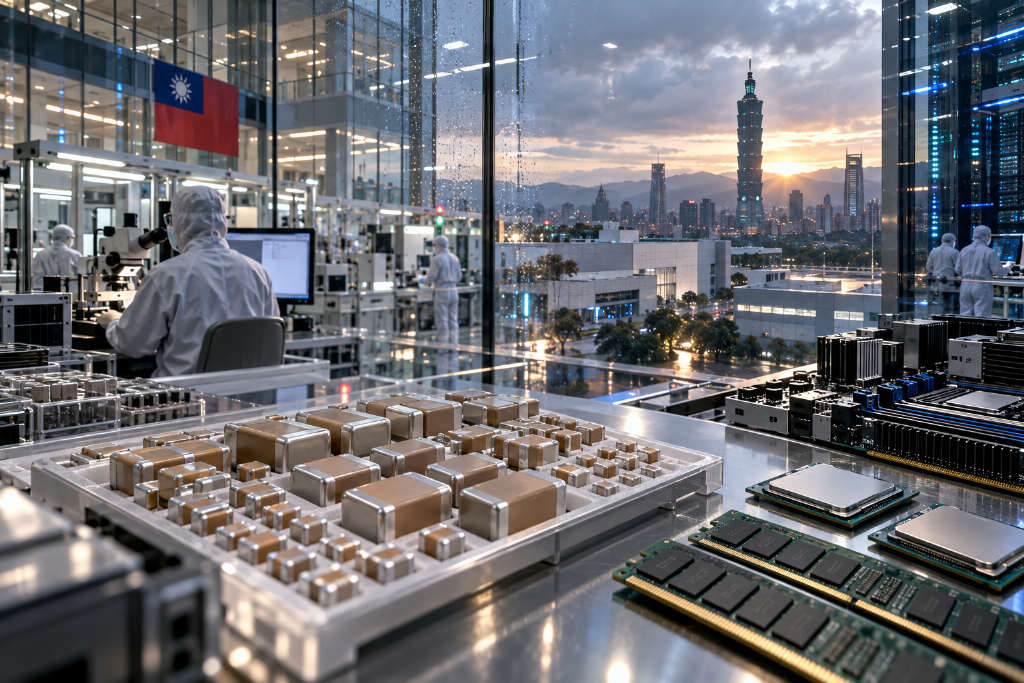
TrendForce said the center of AI demand is moving from model training to inference and AI agents, changing the component mix along the way. Instead of GPUs alone driving the supply chain, CPUs, DDR5 memory and high-capacitance multilayer ceramic capacitors, or MLCCs, are now seeing tighter demand. The firm expects shortages in high-end MLCCs to last through the first half of 2027, leaving pricing power with sellers. The report said each CPU requires a power module and DDR5 memory, which has doubled the use of high-capacitance MLCCs around CPU motherboards and memory modules. Memory demand is also rising. Nanya Technology executives had previously said memory capacity in AI PCs had jumped from 16GB to 128GB per unit, with annual shipments in the hundreds of millions expected to push DRAM demand into an exponential growth cycle. On the supply side, TrendForce said NVIDIA’s Vera Rubin shipments are set to ramp month by month in the fourth quarter of 2026, while AMD’s MI450 has also begun pulling in high-capacitance specialty parts. At the same time, consumer electronics remain weak. TrendForce said Taiwanese and Chinese manufacturers are likely to continue taking overflow orders for consumer-grade MLCC specifications as Japanese suppliers focus on tighter AI-related products.
1170
AI inference shifts demand toward CPUs, DDR5 and high-capacitance MLCCs, with Taiwanese suppliers set to pick up spillover orders
TFLN
Oct 23, 2026

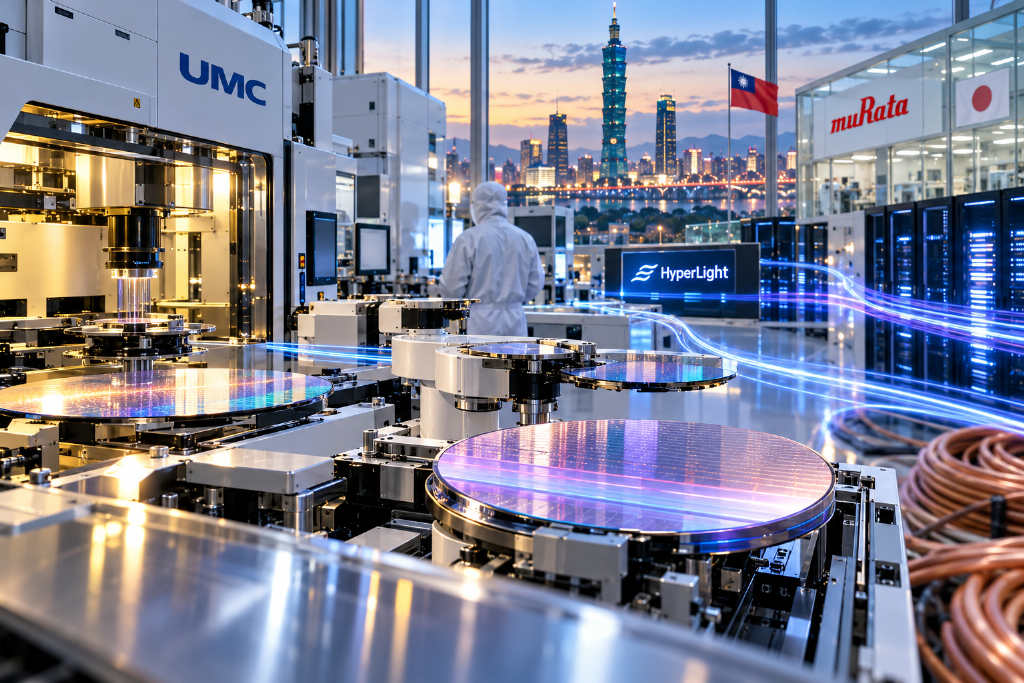
Murata and UMC step up TFLN push as AI optical interconnect demand rises

Thin-film lithium niobate, or TFLN, is moving closer to commercial production as AI infrastructure pushes data transmission requirements beyond what copper links and conventional silicon photonic modulators can easily handle. Murata Manufacturing has mapped out a TFLN optical modulator program with mass production targeted for 2028, while United Microelectronics Corp. (UMC) and its affiliate United Integrated Services-backed partner Lianying Photonics have already announced work with HyperLight to manufacture a TFLN platform on 6-inch and 8-inch wafers. The material is drawing attention because it can support higher bandwidth, lower drive voltage and lower optical loss, making it a candidate for 1.6T and 3.2T optical modules, coherent transmission and co-packaged optics. Even so, the path to scale remains difficult. Lithium niobate is hard to etch, thin-film production relies on precise ion-slicing techniques, and wafer supply is still a constraint. The next test for the technology will be whether it can be produced in standard foundry environments with stable yields and lower cost.

1090
Murata and UMC step up TFLN push as AI optical interconnect demand rises
Murata
Sep 11, 2026

Murata to phase out multiple MLCC products, with customer transition due by end-2027

Murata, a major supplier in the passive components market, has notified customers that it will gradually discontinue multiple multilayer ceramic capacitor, or MLCC, products. The notice covers parts from nine series: GRM, GRJ, GRT, GXM, GXT, GCM, GCJ, GCG, and ZRA. According to Murata, the adjustment targets older products and part numbers, including some general-purpose items and models that had already been placed on an update plan, as the company moves ahead with product renewal. The affected applications span consumer electronics, industrial equipment, and automotive markets. The notice also sets out a clear schedule: customers must complete alternative qualification and transition by Dec. 31, 2027, with the last order date set for March 31, 2028, and the final shipment date for March 31, 2029. ChainCatcher reported that market participants expect customers to activate alternative supplier mechanisms after some Murata part numbers are discontinued, which could channel orders to Taiwan-based manufacturers including Yageo, Walsin Technology, Holy Stone, and Synmax.

2740
Murata to phase out multiple MLCC products, with customer transition due by end-2027
AI Servers
Aug 18, 2026

Citrini says AI server demand is splitting MLCC lead times, with top-end parts nearing 10 months

Citrini analyst Jukan said MLCC lead times are diverging sharply by product type as demand tied to AI servers and data centers keeps rising. General-purpose MLCCs are still holding at 14 to 18 weeks, while high-capacitance and high-voltage parts are running at roughly four to five months. The tightest conditions are in high-end server-grade components used in AI systems. According to Jukan, server-grade MLCC lead times at Murata and Samsung Electro-Mechanics have moved beyond 20 weeks. Some high-capacitance products from Samsung Electro-Mechanics are averaging around 40 weeks. For Murata, lead times on products above 1 microfarad rose to 30 weeks in July from 24 weeks in June, and some channel quotes have reached 36 weeks, or close to 10 months. Jukan expects the split in lead times to last through the second half of 2026. He said AI servers require five to 13 times as many high-capacitance, miniaturized and high-reliability MLCCs as traditional servers. He also noted that new capacity expansion has been pushed back from Q4 2026 to 2027, leaving the supply-demand imbalance intact in the near term as major suppliers raise prices and expand long-term supply agreements.

2720
Citrini says AI server demand is splitting MLCC lead times, with top-end parts nearing 10 months
MLCC
Aug 10, 2026

AI Demand Triggers MLCC Supply Crunch, Buyers Pay Up to Triple Prices

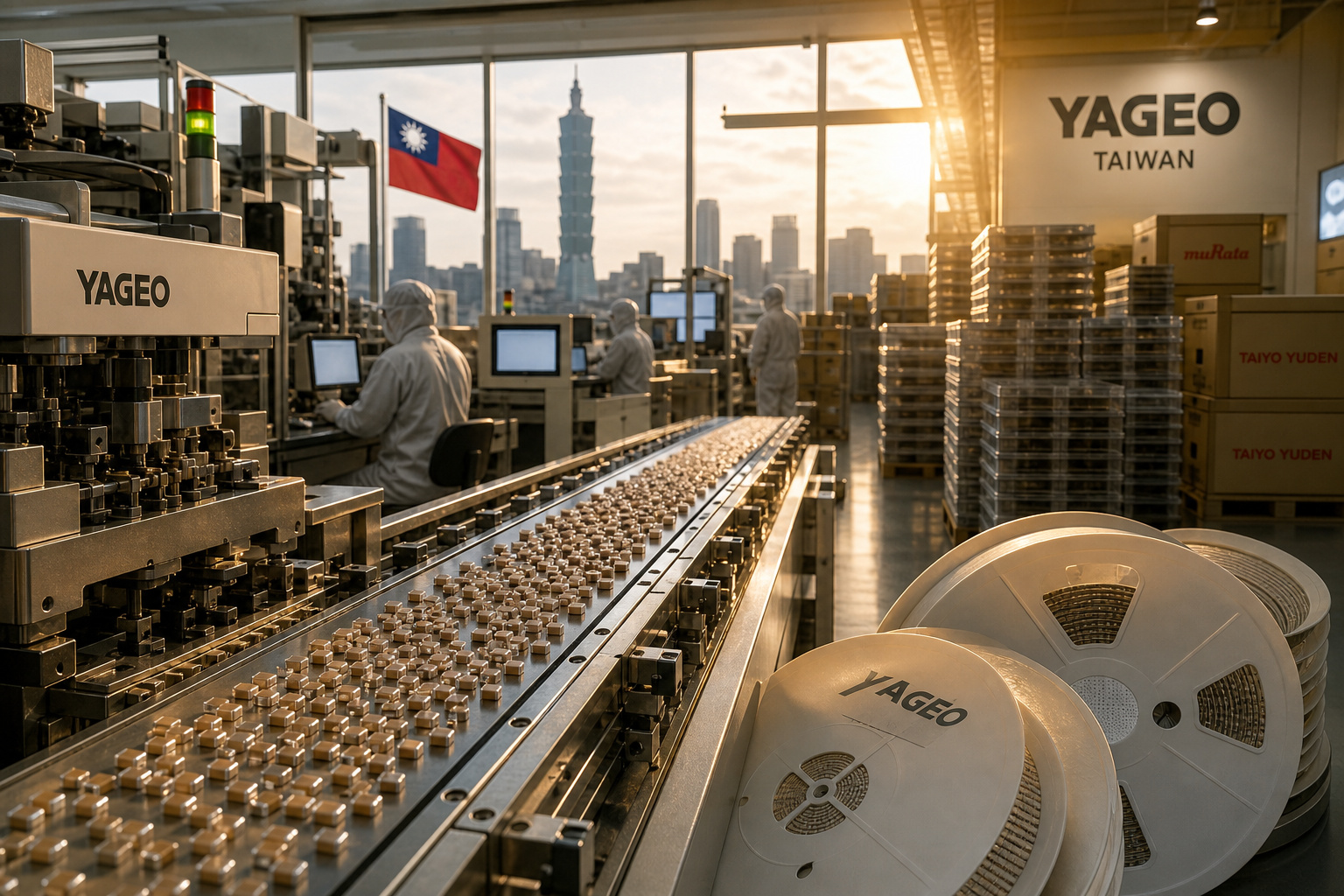
Strong AI demand is tightening the market for multilayer ceramic capacitors (MLCCs), with some customers paying two to three times normal prices to secure supply from major makers such as Yageo and Murata. Delivery lead times have now extended to 12–16 months. Yageo said capacity utilization is climbing, with standard products expected to hit above 90% this quarter from roughly 80% and specialty products staying high, pushing the company closer to full loading. A growing number of AI-related clients are seeking long-term agreements to lock in capacity for six months or even years. Yageo is expanding output in Kaohsiung, Suzhou, Vietnam and Mexico. Large MLCC makers are prioritizing big customers and long-standing partners, leaving smaller buyers with tighter supply and forcing them to scramble and pay premiums. Meanwhile, Japanese suppliers Murata and Taiyo Yuden have raised their outlooks, citing stronger-than-expected demand from AI servers and data centers that is boosting use of high-capacitance parts.

2680
AI Demand Triggers MLCC Supply Crunch, Buyers Pay Up to Triple Prices
MLCC
Aug 10, 2026

AI Demand Sparks MLCC Supply Scramble; Yageo Lead Times Stretch to 12-16 Months

Rising AI demand has triggered a scramble for multilayer ceramic capacitors (MLCCs), with some buyers paying two to three times the usual price to secure supply from Yageo and Murata. Industry sources say the market has turned into a highest-bidder-wins contest. Major manufacturers are running near full capacity, and lead times have stretched to 12–16 months. Yageo confirms that AI-related customers increasingly want to lock in capacity ahead of time to reduce supply risk. The company expects standard-product utilization to climb from around 80% in Q2 to above 90% this quarter, while specialty products stay above 90% as overall loading moves toward full. Yageo is also expanding capacity, with new output ramping up quarter by quarter. Japanese peers are equally bullish: Murata has sharply raised its full-year profit forecast, and Taiyo Yuden says AI server demand is surpassing expectations. Industry watchers note that large customers typically get higher capacity allocation priority, leaving smaller buyers to pay premiums for limited supply. Yageo adds that more clients are signing long-term agreements to lock in passive component supply for the next six months to several years, a shift aimed at reducing supply-chain risk.

3340
AI Demand Sparks MLCC Supply Scramble; Yageo Lead Times Stretch to 12-16 Months
JPMorgan
Jul 2, 2026

JPMorgan: Japan MLCC Stocks Enter Profit Validation Phase, Q4 2026 a Key Window; Murata Remains Long Core but Hedge Funds Target Shorts

摩根大通最新报告指出,日本MLCC(多层陶瓷电容)板块进入“利润验证期”,2026年10至12月将成为判断盈利趋势的关键窗口。当前对冲基金策略出现分化:多头仍以Murata为主要核心仓位,但同时已有资金开始寻找高估值个股的做空机会。这一信号值得关注,可能预示着板块短期波动加剧。

1350
JPMorgan: Japan MLCC Stocks Enter Profit Validation Phase, Q4 2026 a Key Window; Murata Remains Long Core but Hedge Funds Target Shorts