AI servers
Oct 7, 2026

Analyst says AI-era CCL orders will hinge on five factors, with Shengyi seen in the lead

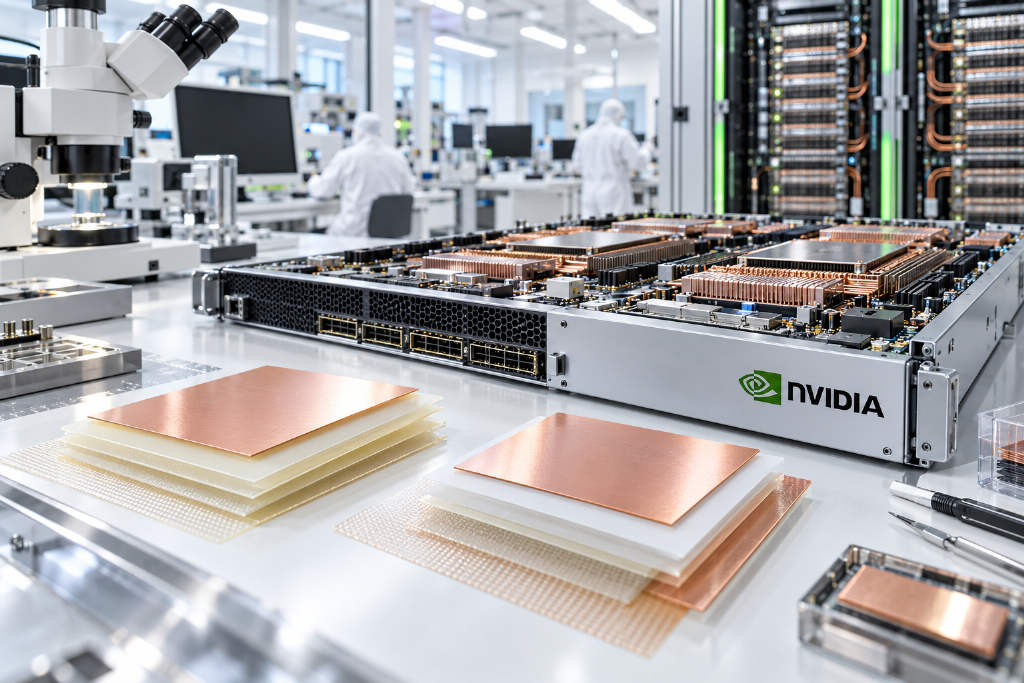
Competition among copper clad laminate, or CCL, suppliers is shifting as AI server demand keeps rising, according to PCB industry analyst kokycpcb. In a recent post on X, the Taiwan-based analyst argued that being a market leader or having stronger specifications is no longer enough to secure Nvidia orders. Instead, allocation decisions now depend on five factors: technology, lead time, sales execution, feedback from PCB makers, and end-customer satisfaction. By that measure, kokycpcb said China’s Shengyi Technology currently meets all five conditions. He added that among Taiwan’s four major CCL makers, the company with the strongest vertical integration stands out most, though he did not name it directly. Based on the industry structure described in the report, ABMedia said that company is most likely Nan Ya Plastics. The report also linked Shengyi’s position to a supply-chain check by TF International Securities analyst Ming-Chi Kuo, who said Shengyi is the current frontrunner in material evaluation for Nvidia’s NVL576 switch tray. Nvidia is expected to finalize its material choice by the end of 2026, with PTFE as the preferred option and hydrocarbon resin, or HC, treated as a transitional route. The next key points to watch are the final material decision, actual NVL576 allocation, and whether vertically integrated suppliers can turn supply advantages into orders and earnings.
1400
Analyst says AI-era CCL orders will hinge on five factors, with Shengyi seen in the lead
Nvidia
Oct 5, 2026

Jeff Pu says PTFE hybrid stack-up remains Nvidia’s leading PCB option for NVL576 switch boards

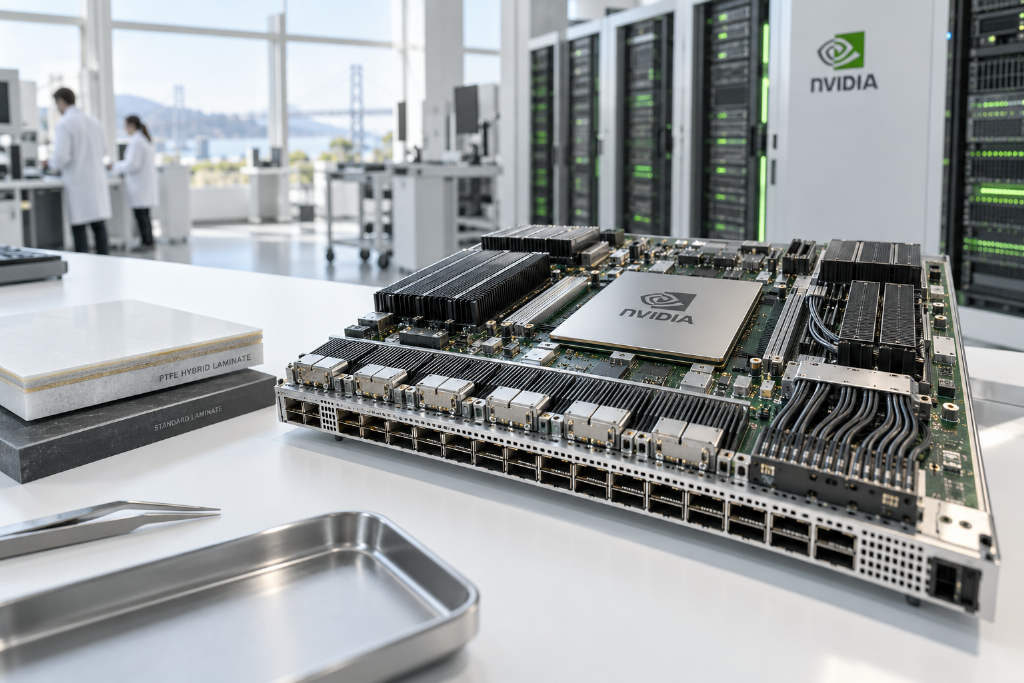
GF Securities Managing Director Jeff Pu said PTFE hybrid stack-up remains the most likely printed circuit board solution for Nvidia’s VR300 NVL576 switch board, even as hydrocarbon resin, or HC, continues to gain attention in supply-chain discussions. Pu said the HC hybrid approach has passed signal integrity testing, but its qualification process is still about three months behind PTFE and has not yet entered PCB mass-production testing. Nvidia is expected to make its final material selection by the end of 2026. Pu also said PTFE still holds a hard-to-displace position in high-end, high-speed AI PCB applications. In his view, even if some customers or projects adopt HC later on, it would more likely serve as a transitional option rather than a long-term replacement for PTFE. He added that a leading Chinese PCB maker has already achieved considerable yield results with PTFE hybrid stack-up, a point that could weaken one of HC’s main arguments in the market. The report comes as investors track earlier supply-chain checks from Ming-Chi Kuo, who said Nvidia had started testing glass-free HC CCL for Rubin Ultra NVL576 switch trays targeted for mass production in the second half of 2027.

1300
Jeff Pu says PTFE hybrid stack-up remains Nvidia’s leading PCB option for NVL576 switch boards
Nvidia
Sep 30, 2026

Kuo says Nvidia is testing glass-fiber-free hydrocarbon CCL for Rubin Ultra NVL576

TF International Securities analyst Ming-Chi Kuo said Nvidia has started testing a glass-fiber-free copper clad laminate based mainly on hydrocarbon resin, replacing the glass-fiber-free PTFE CCL it had tested earlier. The material is being paired with a glass-fiber-free hydrocarbon prepreg to determine whether the combination can meet the PCB requirements of the Rubin Ultra NVL576 switch tray. According to Kuo, NVL576 is an eight-rack interconnect system scheduled to enter mass production in the second half of 2027. Early tests aimed at improving PCB manufacturability show the glass-fiber-free hydrocarbon CCL has already met the switch tray’s high-frequency electrical requirements. He said its electrical performance trails the original PTFE option, but is better than the M9-grade solution and exceeds published M10 specifications. Kuo added that the result does not indicate a final material decision. Instead, it shows Nvidia is still trying to balance electrical performance with higher PCB yield and production efficiency. He also said Shengyi Technology is currently the leading supplier under evaluation for NVL576 switch tray materials, including SG5300N, SG1030N and SIF09.

2970
Kuo says Nvidia is testing glass-fiber-free hydrocarbon CCL for Rubin Ultra NVL576
Nvidia
Sep 3, 2026

J.P. Morgan says Nvidia’s NVL576 may use PTFE, but hybrid material designs remain the base case

J.P. Morgan said in its latest Asia-Pacific equity industry survey that Nvidia’s Rubin Ultra-generation NVL576 switch tray is reportedly set to use PTFE, or polytetrafluoroethylene. The bank said that point should not be read as a rejection of the broader high-speed CCL upgrade path. In its view, PTFE is part of a broader materials race rather than a single decisive winner. The report said Nvidia is testing a range of materials against electrical performance targets. PTFE is on the list because of its low-loss characteristics, but being a candidate does not mean the design is finalized. J.P. Morgan added that many M10 samples submitted by suppliers still fall short of target performance, leaving technical risk in place. Instead of a pure PTFE route, the bank said the industry is moving toward a hybrid structure. Under that approach, PTFE handles low-loss electrical performance while glass-less M10 improves manufacturability. It also outlined why pure PTFE remains difficult to scale, citing high-temperature lamination limits and drilling challenges. The bank expects the hybrid approach to appear first in the switch tray of Rubin Ultra NVL576 8-rack clusters, while broader PTFE adoption may have to wait until the Feynman generation, assuming process and capacity constraints are resolved.

2030
J.P. Morgan says Nvidia’s NVL576 may use PTFE, but hybrid material designs remain the base case