malware
Sep 2, 2026

Fake Claude Desktop App Distributes RevStealer Malware to Steal Crypto Wallets

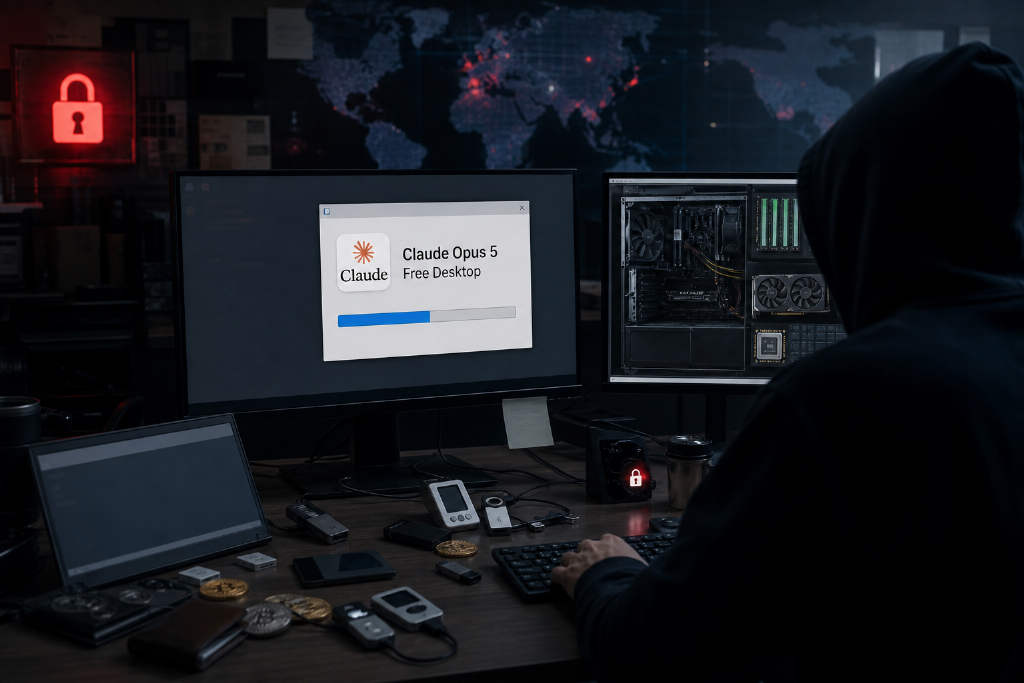
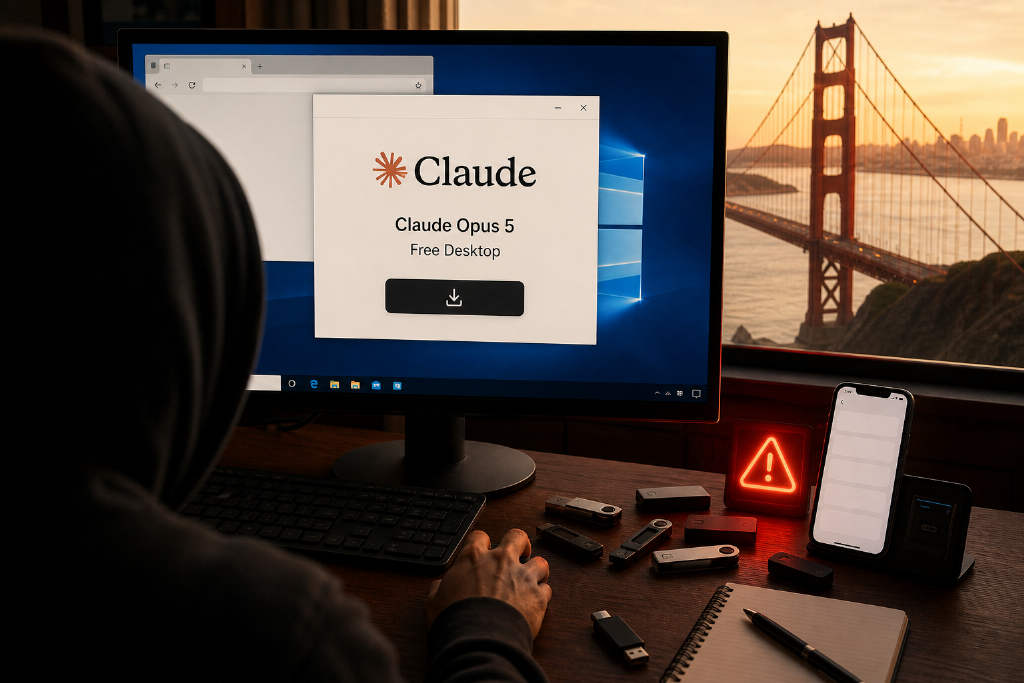
Cybersecurity firm Morphisec has uncovered a malware distribution campaign that abuses a fake desktop application bearing the name 'Claude Opus 5 Free Desktop' to spread a strain of malware known as RevStealer. According to a report by Cointelegraph, which was carried by Techub News, the stealer is capable of harvesting data from more than 50 different cryptocurrency wallet applications, along with passwords and cookies that are stored in web browsers. Before running its actual payload, the malware performs a series of environment checks on the host system, including inspecting memory, processor, and graphics card information, so that it can determine whether it is inside a security analysis environment such as a sandbox. If the checks go through successfully, the malicious program proceeds to execute its payload. The disclosure follows an earlier finding by Kaspersky, which identified a separate malware framework named OkoBot that was also designed to target cryptocurrency investors. Techub News reported the story in Chinese, citing Cointelegraph as its source.
1560
Fake Claude Desktop App Distributes RevStealer Malware to Steal Crypto Wallets
RevStealer
Sep 1, 2026

Fake Claude Desktop Apps Distribute RevStealer, Targeting 50+ Crypto Wallets

Fake Claude desktop apps are spreading RevStealer, a Windows malware that steals crypto assets, passwords and browser data while targeting more than 50 cryptocurrency wallets. According to security firm Morphisec, RevStealer previously circulated through GitHub repositories and gaming cheat-themed sites. In this campaign, the malware is disguised as a "Claude Opus 5 Free Desktop" project, impersonating AI developer Anthropic and promising free Claude access. The malware hunts for browser databases, cookies, password manager records, VPN and remote access settings, chat data, screenshots and specific documents. It also checks device memory, processor core count, hostname, username and graphics hardware, and monitors for debug delays typical of malware analysis environments. If it detects an anomaly, it stops the infection flow. If it passes checks, the payload is decrypted, stored under a random name and executed covertly. Separately, Russian security firm Kaspersky earlier found OkoBot, a malware framework aimed at crypto investors that can steal wallet files, browser data and user credentials. Cointelegraph reported the findings.

1670
Fake Claude Desktop Apps Distribute RevStealer, Targeting 50+ Crypto Wallets
Kaspersky
Jul 18, 2026

Kaspersky flags OkoBot malware framework targeting crypto investors and Web3 developers

Kaspersky said a new malware framework called OkoBot is targeting cryptocurrency investors through social engineering tactics and trojanized GitHub applications. The framework can steal crypto wallet files, browser data, and user credentials, then inject malicious extensions and capture wallet application windows to take assets. The cybersecurity firm said it has identified multiple attacks involving the malware family since January 2026. Kaspersky also said OkoBot evolved from TookPS, a malware strain first identified in 2025 that was previously distributed through fake software websites carrying trojan downloaders. In a separate disclosure, SlowMist said another wave of malicious activity is targeting Web3 developers through fake LinkedIn job opportunities. According to SlowMist, attackers pose as Web3 recruiters and send fraudulent GitHub repositories, luring developers into pulling code, installing dependencies, and running projects that can steal project keys, cloud credentials, or wallet extension data.

2480
Kaspersky flags OkoBot malware framework targeting crypto investors and Web3 developers
OkoBot
Jul 18, 2026

Kaspersky researchers spot OkoBot malware targeting crypto wallet seed phrases

Kaspersky security researchers said they have identified a new malware strain called OkoBot that is designed to steal cryptocurrency wallet seed phrases and credentials through roughly 20 separate modules. According to the researchers, the operators use the ClickFix social engineering technique to trick victims into running malicious commands, then distribute the malware through GitHub repositories disguised as legitimate tools such as SQL Server Management Studio. The report also outlines several named components inside the malware family. One module, SeedHunter, injects into hardware wallets including Trezor and Ledger and presents a fake interface during seed phrase recovery. Another, MC Keylogger, captures keyboard input and clipboard activity. A third module, OkoSpyware, tracks wallet passwords and records window video. The findings point to a multi-module malware operation focused on collecting highly sensitive wallet access data.

2490
Kaspersky researchers spot OkoBot malware targeting crypto wallet seed phrases
Kaspersky
Jul 18, 2026

Kaspersky researchers identify OkoBot malware targeting crypto wallet seed phrases and credentials

Kaspersky security researchers have identified a new malware strain called OkoBot that is designed to steal cryptocurrency wallet seed phrases and credentials, according to Bits.media. The malware reportedly uses roughly 20 modules and relies on ClickFix social engineering to trick users into running malicious commands on their own devices. Researchers said the campaign is also being distributed through GitHub repositories disguised as legitimate tools, including SQL Server Management Studio. Several modules were highlighted in the report. SeedHunter targets hardware wallets such as Trezor and Ledger by injecting itself into the recovery process and showing a fake interface when users enter seed phrases. MC Keylogger records keyboard input and clipboard activity, while OkoSpyware tracks wallet passwords and captures window video. Kaspersky said that once attackers obtain a victim’s seed phrase, they can take full control of the related crypto assets, leaving little chance of fund recovery. The company added that OkoBot has been active for more than a year. Most victims were located in Brazil, Vietnam, Canada, Mexico, and Turkey. The attackers also geofenced IP addresses from Russia and CIS countries.

2490
Kaspersky researchers identify OkoBot malware targeting crypto wallet seed phrases and credentials