OneKey2026-10-15 13:00:52OneKey founder says SafeOS is built on FreeRTOS, with broader wallet compatibility plannedOneKey founder Yishi said the company’s SafeOS is built on FreeRTOS and developed in-house by the team. In his post, Yishi said OneKey will remain focused on portable security devices and position them as an extra layer of offline hardware protection for real-world assets, crypto assets, FIDO keys, and two-factor authentication. He also said OneKey is intended to work as a general accessory for iPhone and Mac. According to the post, users can pair the device with wallets including BlueWallet, Sparrow, Rabby, OKX Wallet, MetaMask, and Electrum. Yishi added that the team will keep expanding compatibility coverage. The remarks outline both the technical base of SafeOS and OneKey’s product direction, with emphasis on offline security and broader support across wallet software.00
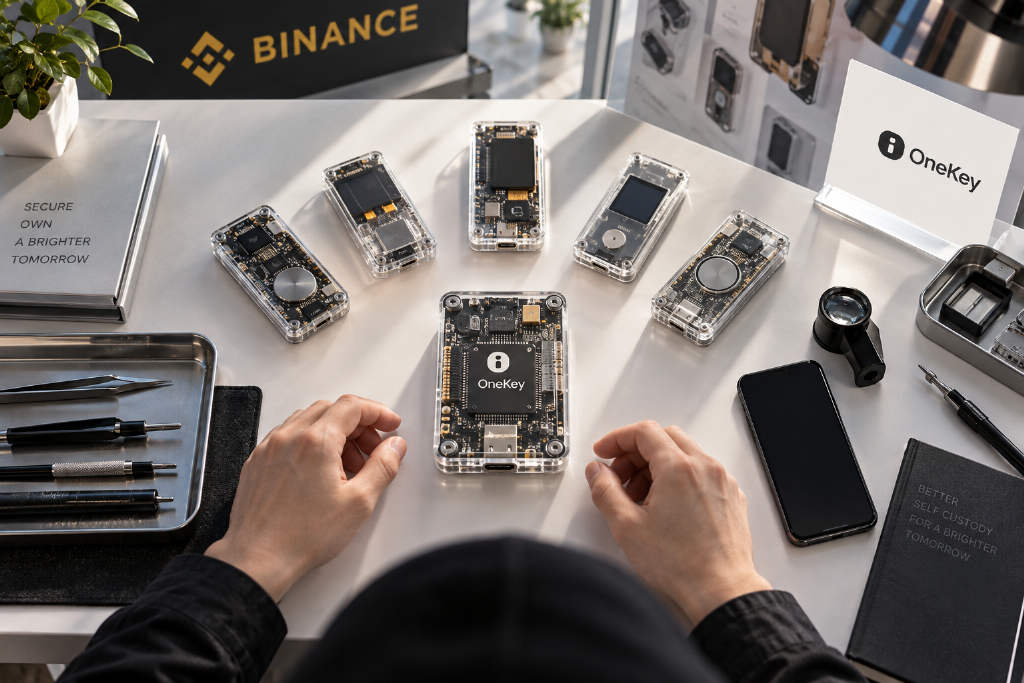
CZ2026-10-15 00:54:46CZ says all hardware wallets should use transparent casings in the futureBlockBeats reported on Oct. 15 that Binance founder Changpeng Zhao, better known as CZ, commented on OneKey’s newly launched hardware wallet self-check and verification website, called 「一石鉴包」, saying that all hardware wallets should use transparent casings in the future. The brief update centers on CZ’s view of future hardware wallet design in response to OneKey’s release. No additional product details, timeline, or technical specifications were provided in the source update. The report also did not include further remarks from OneKey or any broader industry response.00
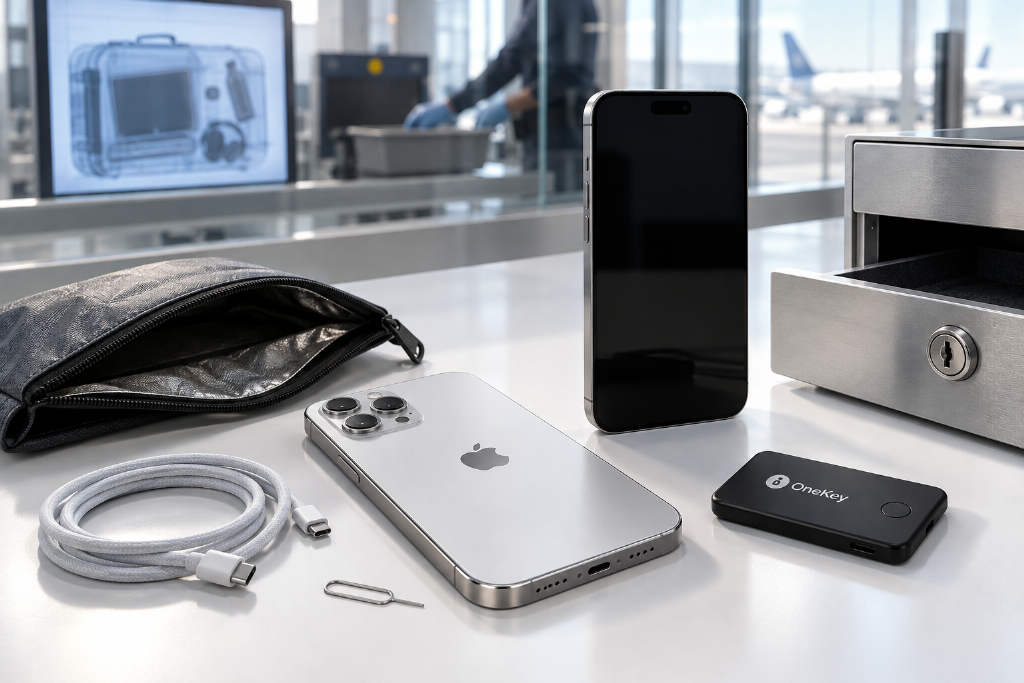
iPhone cold w2026-10-14 07:44:34Yishi says an offline iPhone should start at iPhone 17 and iOS 27 to serve as a cold walletOneKey maintainer Yishi laid out a strict baseline for anyone who wants to turn an iPhone into an offline signing device for crypto storage. His minimum standard is an iPhone 17 or newer, running iOS 27 or later, with a migration plan to newer hardware every one to two years. The article argues that taking a phone offline does not remove the risk created by physical access. Instead, the real security picture depends on hardware generation, patch level, whether the device is in BFU or AFU state, the strength of the device passcode, and how the wallet itself handles key material. The piece walks through border searches, mobile forensics vendors, USB attack surfaces, the difference between chip-off access and decryption, and the limits of Secure Enclave-based protection for wallet secrets. It also explains why storing a seed phrase in Notes or Photos is still a direct exposure, even if the phone is offline. Yishi’s broader point is that an offline phone can be one precaution, but it is not a complete custody model on its own. He closes with a practical setup: a dedicated device initialized from a trusted state, a random 12-character-or-longer alphanumeric passcode, independent offline recovery backups, minimal interfaces enabled, and a wallet whose encryption, authorization flow, and key handling can be examined in detail.80
OneKey2026-10-14 03:12:32OneKey founder says iPhones can serve as cold wallets, but only from iPhone 17 onwardOneKey founder Yishi said in a post on X that an iPhone can be used as a cold wallet, but he only recommends doing so with an iPhone 17 or newer running iOS 27 or later. He added that the device should be replaced every one to two years. Yishi said he would not use an iPhone 16 or any earlier model as a long-term signing device for important asset transactions, and that even an iPhone 17 with iOS 27 is only the minimum setup he currently considers acceptable. For long-term storage of large amounts of funds, he said he prefers a dedicated signing device with a transparent security design, ongoing maintenance, and on-device transaction verification. He also said the firmware, supply chain, and recovery process of such devices still require more review. In his view, taking a phone offline is only a precaution, while the actual effectiveness of that precaution depends on factors including hardware, patch level, BFU/AFU state, passwords, and wallet key management.90
OneKey2026-10-14 04:21:40OneKey founder says an iPhone could serve as a cold wallet, with iPhone 17 and iOS 27 as the minimum barOneKey founder Yishi outlined what he sees as the minimum security requirements for turning an iPhone into a cryptocurrency cold wallet. In his post on Oct. 14, he said keeping a device offline alone is not enough to defend against physical extraction by forensic tools. He argued that the baseline should be an iPhone 17 or newer running iOS 27 or later, with the device replaced every one to two years. Yishi said the A19 chip’s Memory Integrity Enforcement, or MIE, improves resistance to vulnerabilities. He also pointed to the security difference between BFU, or Before First Unlock after shutdown, and AFU, or After First Unlock, saying BFU is safer. Based on that, he advised users storing crypto offline to fully power down the device rather than simply disconnect it from the internet. He also warned against storing seed phrases in Notes or Photos and said users should set a strong random password of at least 12 characters. For long-term storage of large holdings, he still recommended using a separate dedicated hardware signing device first.140
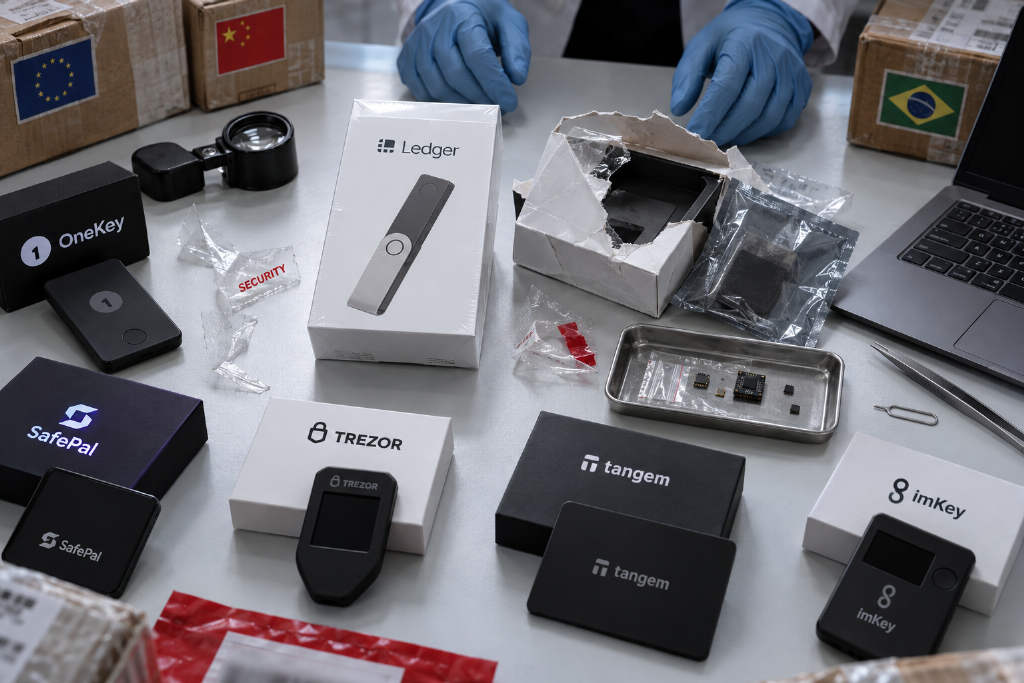
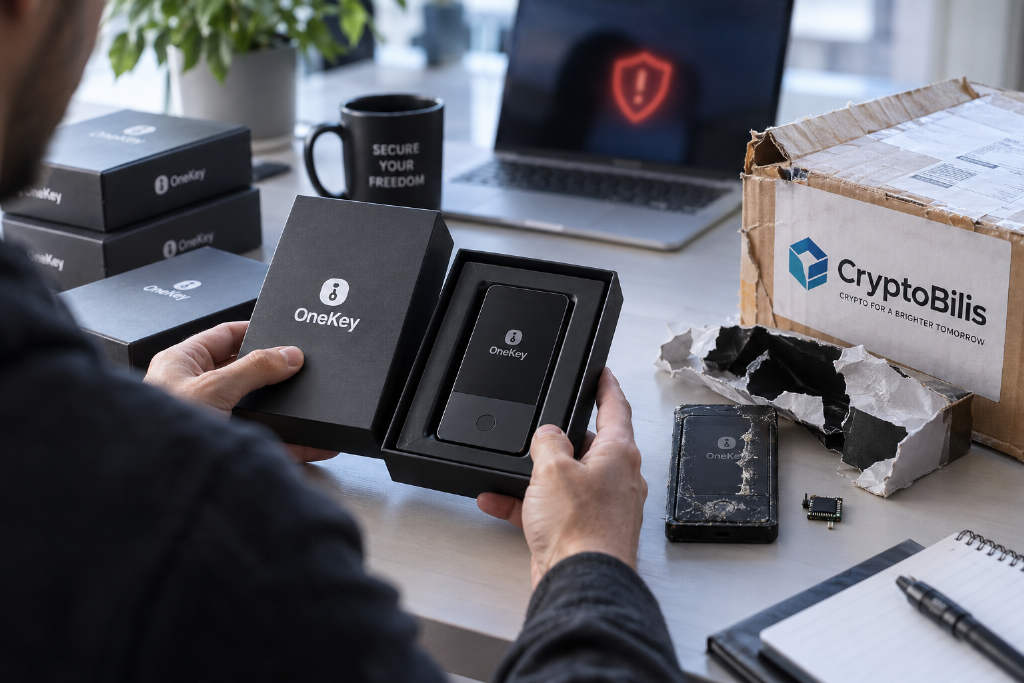
Ledger2026-10-12 09:49:12Ledger supply-chain scare widens as hardware wallet makers rush to respondLedger’s supply-chain security incident tied to third-party seller CryptoBilis has widened, with new abnormal device reports and a growing list of potentially risky distributors drawing attention across the hardware wallet market. According to the original report by Nancy for PANews, analyst Darkfost said on Oct. 11 that community discussions had identified other sellers that may carry risk, including some merchants on Lazada, and compiled a list of more than 20 potentially risky Ledger resellers. He said Ledger has not been able to confirm whether CryptoBilis was the only affected sales channel. Security researcher Johannes disclosed a case in Europe in which a user found unauthorized hardware components inside a Ledger wallet purchased from an official reseller weeks earlier. A suspected tampering case also extended beyond the Ledger Nano X to Ledger Stax, after X user @Wentrre said a teardown of the device revealed an extra board, a Nordic nRF9151 cellular communication module, and what appeared to be antenna wiring. SlowMist founder Yu Xian later shared comparison images and said the people behind the backdoor implantation were highly skilled in hardware attacks. Ledger said in a 72-hour update released early on Oct. 12 that all confirmed theft cases so far involved devices sold through CryptoBilis, while its own systems and direct-sales channels were unaffected. OneKey, SafePal, Trezor, Tangem and imKey also issued responses covering reseller reviews, device verification, replacement programs and channel controls.270
OneKey2026-10-12 05:14:34OneKey ends CryptoBilis reseller status and offers free replacements to affected buyersOneKey founder Yishi said on X that some Ledger hardware wallets bought through CryptoBilis were found to contain unauthorized hardware, leading to asset theft in certain cases. While OneKey said it has not received reports of theft involving its own users through the same channel, the company has still terminated CryptoBilis as an authorized reseller for security reasons. It also said it will stop adding new resellers effective immediately and will re-evaluate the qualifications of all existing authorized distributors. In addition, users who purchased a OneKey hardware wallet through CryptoBilis between March 1, 2026 and the date of the statement can apply for a free replacement regardless of device model or usage status, with applications open until Dec. 31, 2026. Yishi also advised users who have already used such devices to treat their original seed phrases as potentially compromised and move assets to a wallet generated with a brand-new seed phrase as soon as possible, without waiting for the replacement device to arrive.260
CZ2026-10-10 12:29:31CZ says hardware wallets and self-custody suit different use casesChangpeng Zhao, known as CZ, said in a post on X that users should pay attention to asset safety, or SAFU, and that he is not opposed to hardware wallets or self-custody. He said different wallet products are designed for different use cases, and that their security trade-offs and best practices are not the same. CZ also noted that YZi Labs has invested in hardware wallet projects including OneKey and SafePal, as well as mobile wallet products such as Trust Wallet. The remarks focused on wallet choice and security practices rather than endorsing a single setup for all users. His comments framed wallet selection as a matter of matching products to specific usage scenarios, with security considerations varying by product type.230