Kalshi
Oct 31, 2026

Kalshi and Polymarket differ on how winners are decided and when funds can leave

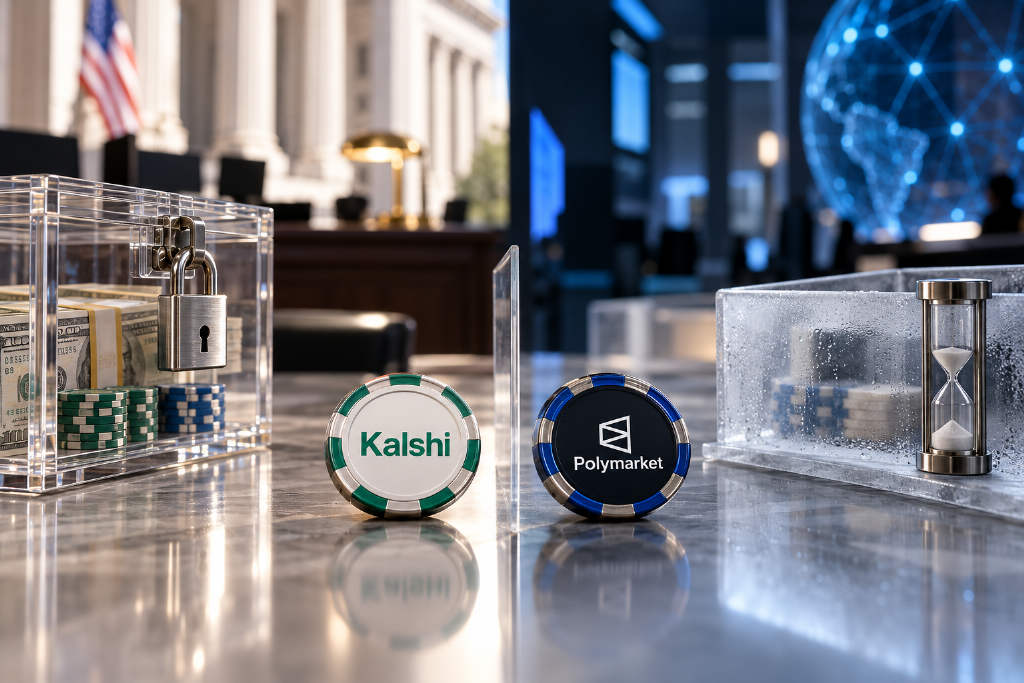
The Defiant compares Kalshi and Polymarket through a practical question for prediction-market users: what happens after a position wins, and how long it takes before money is actually outside the platform. The report says the answer depends on more than the market result itself. Exchange review, oracle disputes, and holds on deposited funds can all shape the route from a winning position to withdrawable cash. That creates different user experiences on the two venues, even when the end goal is the same. At the center of the comparison are two issues: who determines the winning outcome, and when funds are allowed to leave. The piece frames those mechanics as the key distinction between Kalshi and Polymarket rather than focusing only on the trade or the final market call.

1010
Kalshi and Polymarket differ on how winners are decided and when funds can leave
Archax
Oct 19, 2026

Archax taps Chainlink for data support on tokenized U.S. Treasury product GOVY

Archax, a regulated digital asset platform operating across the UK, EU, and U.S., has adopted Chainlink as the data layer for its tokenized U.S. Treasury product, GOVY, according to Techub, citing Finextra. The move adds Chainlink oracle support to GOVY, a product described as offering 24/7 automated rolling exposure to U.S. Treasuries. Archax said the integration is intended to improve the product’s utility. The report also said GOVY is designed around high-quality liquid asset principles. No additional rollout details, financial terms, or technical specifications were disclosed in the source brief.

1320
Archax taps Chainlink for data support on tokenized U.S. Treasury product GOVY
Polymarket
Oct 6, 2026

Polymarket Rebuilds Core Contracts With Protocol V2 and Eyes Nov. 2 Cutover for New Markets

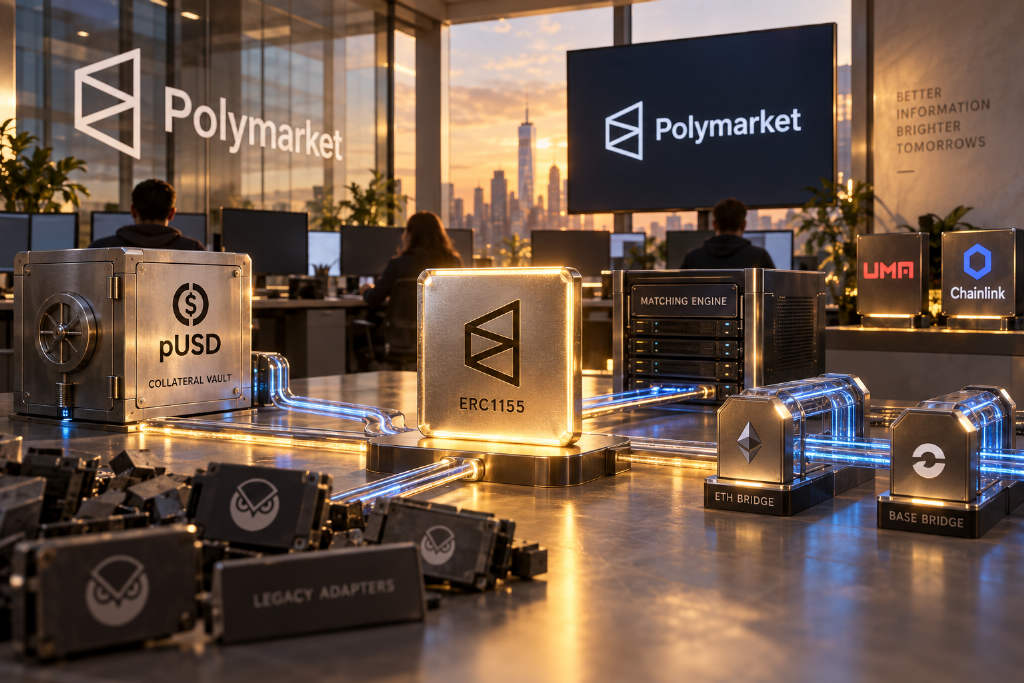
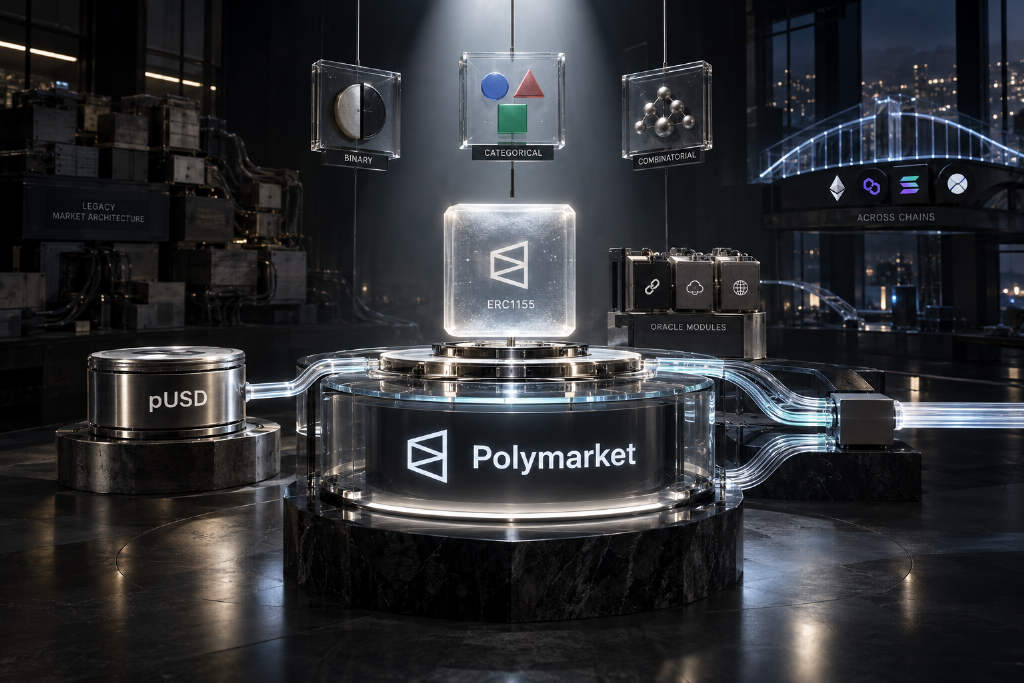
Polymarket is replacing the smart contracts that have powered its prediction markets since launch, rolling out a rebuilt system called Protocol V2. Rajath Alex, the company’s head of protocol, said on X that the redesign starts at the position-token layer and restructures how markets, collateral and settlement work across the platform. A limited set of canary markets began trading on V2 in production on Monday and will continue through Oct. 30, while new markets are tentatively scheduled to move to the new system on Nov. 2. The new architecture collapses a multi-layer setup into a single ERC-1155 position contract, one exchange, one router and pUSD as the only collateral asset. It also introduces an OracleAggregator that can connect to UMA, Chainlink and future oracle providers, while laying technical groundwork for bridging positions, collateral and resolutions to other chains when Polymarket expands beyond one network. Alex said the code was audited by Cantina, Certora, Quantstamp, Sigma Prime, Zellic and Pashov Audit Group, with formal verification by Certora. A bug bounty offers up to $5 million for critical issues. For regular app and website users, Polymarket’s migration guide says no technical migration is required apart from approval prompts, though positions held under the old framework will not be converted.

1510
Polymarket Rebuilds Core Contracts With Protocol V2 and Eyes Nov. 2 Cutover for New Markets
Polymarket
Oct 6, 2026

Polymarket launches Protocol V2 with single ERC1155 position contract replacing legacy Gnosis framework

Polymarket has rolled out Protocol V2, a full rebuild of the smart contract infrastructure behind its prediction market platform and the first such overhaul since the protocol was built in-house. Announced by Polymarket protocol lead Rajath Alex on Oct. 6 via X, the new version replaces the older Gnosis Conditional Tokens Framework from 2019 with a single ERC1155 position contract. The redesign also unifies pUSD collateral, exchange execution, and routing under one architecture. According to the announcement, the previous system required extra adapters whenever a new market type was added, including separate components for pUSD, wrapped collateral for negative-risk positions, a second exchange, and even individual UMA modules tied to each adapter. Protocol V2 removes that layered setup by embedding market type, market identity, and outcome data directly into each position ID, allowing the protocol to read that data without auxiliary query contracts. The first release supports binary, atomic negative risk, incremental negative risk, and parlay markets. Polymarket also made cross-chain bridging a native feature in V2, covering positions, collateral, and resolution transport across chains, though it has not disclosed a launch date for multichain deployment. The protocol includes a new OracleAggregator compatible with UMA and Chainlink, has undergone audits by multiple firms including Certora formal verification, and carries a bug bounty of up to $5 million for critical issues.

1390
Polymarket launches Protocol V2 with single ERC1155 position contract replacing legacy Gnosis framework
Polymarket
Oct 5, 2026

Polymarket rolls out Protocol V2 with market migration tentatively set for Nov. 2

Polymarket has introduced Polymarket Protocol V2, describing it as its next-generation smart contract system for prediction markets. The upgrade replaces a structure built on Gnosis’ 2019 conditional tokens framework, where different market types were connected through additional adapters, with a rebuilt design centered on a single ERC1155 position contract, a single collateral asset called pUSD, one exchange, and one router. Position IDs now directly encode market type, market, and outcome. The new protocol uses a modular architecture to support binary markets, atomic negative risk, incremental negative risk, and parlay markets, while expanding position operations to improve capital efficiency. For settlement, V2 connects to pluggable oracle sources through OracleAggregator, including UMA, Chainlink, and future providers. Polymarket also said the protocol includes built-in cross-chain bridging for positions, collateral, and settlement, and can be upgraded through governance. The company added that future development work will focus on scalar settlement and directional collateral refunds. Polymarket said the codebase has been audited by Cantina, Certora, Quantstamp, SigmaPrime, Zellic, and Pashov, with formal verification completed by Certora. The maximum bounty for critical vulnerabilities is $5 million. A canary market is running in production from now through Oct. 30, and new markets are tentatively scheduled to switch on Nov. 2. At the same time, the company launched Data API V2, built on its in-house on-chain indexer with V2 support, a unified response format, and cursor pagination.

1580
Polymarket rolls out Protocol V2 with market migration tentatively set for Nov. 2
Chainlink
Sep 1, 2026

Chainlink Adds 9 Integrations Across 5 Chains in Weekly Update

Chainlink recorded nine new integrations over the past week, and those additions touch five different blockchains. Techub News flagged the latest numbers from Chainlink's ecosystem update, which tracks where the protocol's infrastructure is being adopted. The integrations cover oracle services, price data, automation, and cross-chain messaging, helping cement Chainlink's role as one of the crypto sector's main data and interoperability providers. The flow of new integrations points to sustained demand from protocols and applications that are building on Chainlink, particularly in multi-chain environments. Being able to operate across chains is one of Chainlink's core strengths, and it lessens the friction developers face when they move from one ecosystem to another. Infrastructure adoption is a useful marker of traction, but it is not the same as a price call for LINK. Bitcoinist notes that any impact on the token still hinges on fee models, staking design, payment flows, and the broader market backdrop.

1950
Chainlink Adds 9 Integrations Across 5 Chains in Weekly Update
ERC-8391
Aug 24, 2026

Eric Conner drafts ERC-8391 to add asset-status interface for tokenized stocks and RWA

EthHub founder Eric Conner said he has written a new Ethereum Request for Comments proposal, ERC-8391, aimed at giving tokenized stocks and real-world assets an onchain asset-status interface. The proposal addresses a practical gap in current smart-contract design: tokenized equities can trade around the clock onchain, while the New York Stock Exchange is open only 32.5 hours per week. In that setup, contracts may struggle to tell whether a stale price reflects a normal market closure, a broken oracle feed, or a corporate event such as an acquisition during off-hours. Those situations can look identical at the byte level onchain, even though the correct contract response would differ. Conner also pointed to other pieces of information that prices alone do not convey, including trading halts, limit-up or limit-down locks, and redemption windows. Under ERC-8391, the standard would define what questions a contract can query about an asset’s status, covering market phase, halts, valuation activity, and redemption windows. Oracles would be able to feed that data into the interface, with the token responding to those queries.

1900
Eric Conner drafts ERC-8391 to add asset-status interface for tokenized stocks and RWA
Tokenized Securities
Aug 6, 2026

Hong Kong Launches Chainlink-Backed Tokenized Securities Framework

Hong Kong has introduced a tokenized securities framework with technical backing from Chainlink, a move aimed at standardizing the issuance, distribution and settlement processes for tokenized securities. Cyberport, Apex Group and licensed broker CSpro are participating, according to CoinDesk. The framework uses blockchain technology to improve standardization and transparency, with Chainlink providing oracle and cross-chain interoperability support to bridge traditional financial assets and the blockchain ecosystem.

2480
Hong Kong Launches Chainlink-Backed Tokenized Securities Framework
Total 25 items
Go topage