Michael Saylor
Jul 20, 2026

Michael Saylor Opposes BIP-110 as Bitcoin Miners Signal Just 0.86% Support Ahead of August Soft Fork Window

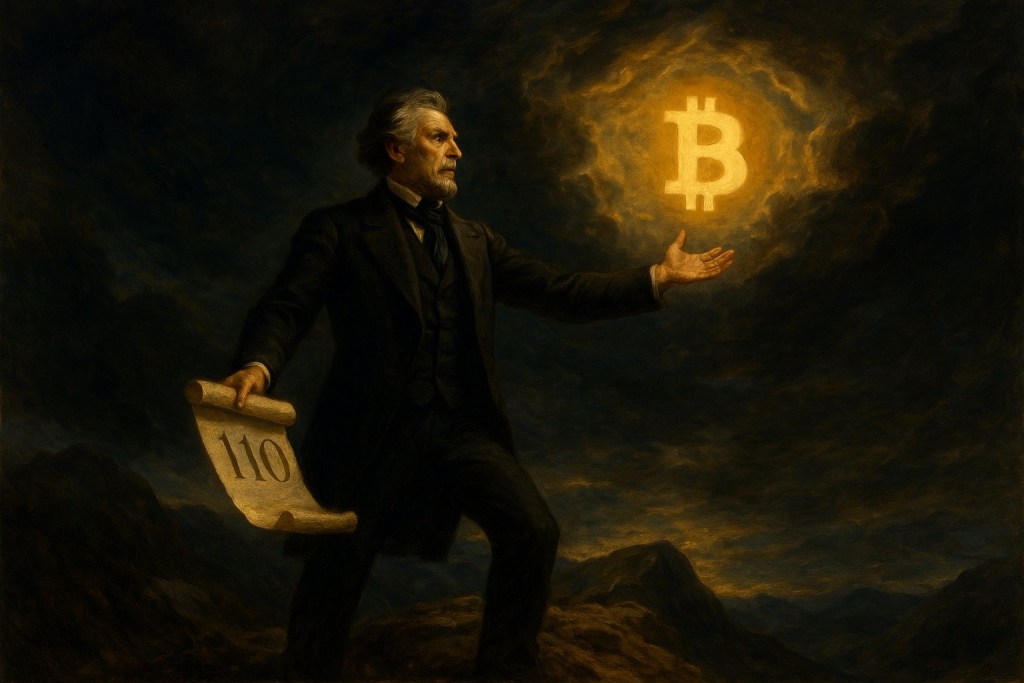
Michael Saylor, executive chairman of Strategy, has published a detailed critique of Bitcoin Improvement Proposal BIP-110, arguing that the proposal creates a larger governance problem than the spam issue it is trying to address. In a July 18 essay titled "110 Reasons Why BIP 110 Is a Bad Idea," Saylor said filtering certain data types through consensus changes would set a precedent that could later be used against privacy tools, stablecoin settlement, and other applications built on Bitcoin. BIP-110 is scheduled to enter its mandatory signaling phase around Aug. 7 and take effect on Sept. 1. As of mid-July, miner signaling support stood at 0.86%, far below the 55% threshold required to lock in the soft fork. The proposal would temporarily restrict several transaction formats used to carry non-payment data, including OP_RETURN outputs, witness items, Taproot annex data, control blocks, and some Tapscript paths. Those routes have been used by Ordinals and Runes-style inscription systems to write images and text to the blockchain. The debate has widened into a governance dispute. Saylor argues that Bitcoin’s edge comes from neutral and predictable base-layer rules, while supporters of BIP-110, including some Bitcoin Core developers, say non-payment data is consuming block space, raising full-node costs, and weakening Bitcoin’s role as electronic cash.

2350
Michael Saylor Opposes BIP-110 as Bitcoin Miners Signal Just 0.86% Support Ahead of August Soft Fork Window
Bitcoin
Jul 20, 2026

Michael Saylor posts 110 reasons against Bitcoin BIP-110 as debate over Ordinals rules intensifies

Strategy founder Michael Saylor has published a roughly 3,700-word post on X laying out 110 reasons he opposes Bitcoin Improvement Proposal BIP-110, a temporary fork proposal aimed at limiting Ordinals inscriptions and arbitrary data on the Bitcoin network. Saylor said he shares the goals of some BIP-110 supporters, including keeping validation accessible, reducing unnecessary burdens on node operators, preserving low-cost payments, and keeping Bitcoin focused on sound money rather than general-purpose data storage, but he disagrees with the proposed remedy. According to the source material, BIP-110 was proposed in December 2025 by anonymous Bitcoin developer Dathon Ohm. The proposal would impose a one-year restriction so that a single bitcoin could carry only one inscription. For activation, it needs support from 55% of Bitcoin validating nodes within the same block period. In the previous period, identified as cycle 475 covering blocks 955,584 to 957,599, only 1% of blocks voted in favor. The issue has split prominent Bitcoin figures. Ocean protocol founder Luke Dashjr is listed among supporters, while Blockstream CEO Adam Back criticized BIP-110 on X, saying it amounts to telling others what to do and runs against Bitcoin’s permissionless and censorship-resistant cypherpunk ethos. The source also cited Dune Analytics data showing Ordinals inscriptions have fallen to fewer than 10,000 per day over the past month, down from more than 400,000 per day at the August 2023 peak.

1720
Michael Saylor posts 110 reasons against Bitcoin BIP-110 as debate over Ordinals rules intensifies
DOG Mode
Jul 18, 2026

DOG Mode relaxes Bitcoin default relay policy without changing consensus rules

DOG Mode, an alternative Bitcoin client, has relaxed the default relay policy that affects Ordinals and Runes transactions, while leaving Bitcoin consensus rules unchanged. The move points in the opposite direction of BIP-110, a proposal that had sought to tighten Bitcoin rules in order to limit on-chain data. The update centers on transaction relay defaults rather than the network’s underlying consensus layer. According to Odaily, the change is framed as a policy adjustment inside an alternative client, not a rewrite of Bitcoin’s base rules. The contrast with BIP-110 highlights a split in approach over how Bitcoin software should handle data-heavy use cases on-chain.

2320
DOG Mode relaxes Bitcoin default relay policy without changing consensus rules
Bitcoin
Jul 18, 2026

BIP-110 Heads Toward Bitcoin’s August Enforcement Window With Miner Support Still Below 1%

Debate over Bitcoin proposal BIP-110 is heating up again as its August enforcement window approaches, even though support from miners remains below 1% and only 15,035 of 102,674 nodes are willing to run it. Introduced by Dathon Ohm in December 2025 and backed by Bitcoin Core developer Luke Dashjr, the proposal seeks to limit arbitrary or non-monetary data in Bitcoin transactions for one year, targeting Ordinals, Bitcoin NFTs, and other large data payloads. Supporters argue the change would reduce spam and preserve Bitcoin’s monetary use, while critics say it would introduce subjective transaction filtering, restrict future innovation, and risk splitting the chain. Opponents including Adam Back, Jameson Lopp, and Michael Saylor also argue that BIP-110 does not solve the underlying fee-market issue and could create new coordination and security problems. The proposal’s activation design has become the center of the dispute because nodes running BIP-110 would reject non-compliant blocks during the enforcement window even without broad consensus, raising the prospect of a minority chain fork in August.

2460
BIP-110 Heads Toward Bitcoin’s August Enforcement Window With Miner Support Still Below 1%
Bitcoin
Jul 17, 2026

BIP-110 Faces Thin Support but Could Still Push Bitcoin Toward a Fork in August

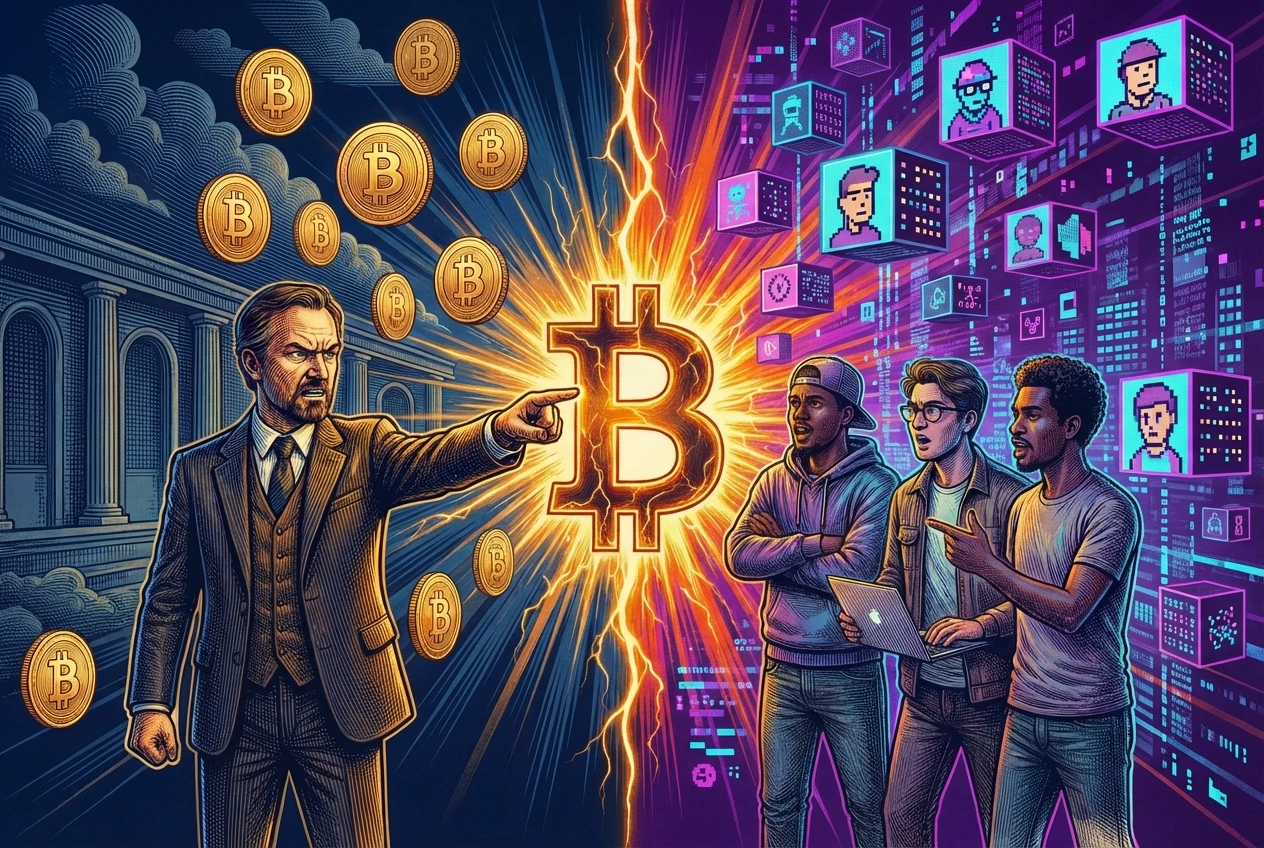
Debate around Bitcoin Improvement Proposal 110, or BIP-110, has intensified as its August enforcement window approaches. The proposal, introduced by Dathon Ohm in December 2025 and backed by Bitcoin Core developer Luke Dashjr, seeks to restrict arbitrary and non-monetary data in Bitcoin transactions for one year, with Ordinals and Bitcoin NFTs as its main targets. Supporters say the change would reduce spam and refocus Bitcoin on monetary use, but current network backing remains limited: miner support is below 1%, and only 15,035 of 102,674 nodes, or 14.64%, are willing to enforce it, well short of the 55% activation threshold. The dispute centers on BIP-110’s activation design. If it fails to reach the threshold before block height 961632, nodes running the proposal would begin rejecting non-compliant blocks during a mandatory window from 961632 to 963647, leading to forced activation at block 965664. Critics argue that this could split Bitcoin into a minority BIP-110 chain and the existing main chain. Backers led by Dashjr and Ocean frame the measure as a rollback of unwanted changes, while opponents including Adam Back, Jameson Lopp, and Michael Saylor say it would not solve spam at the root, could restrict future innovation, and may weaken Bitcoin’s neutrality and censorship resistance.

2090
BIP-110 Faces Thin Support but Could Still Push Bitcoin Toward a Fork in August
Bitcoin
Jul 15, 2026

BIP-110 deepens Bitcoin split over inscriptions, consensus, and who gets to decide

A fight over Bitcoin Improvement Proposal 110 is exposing a deeper divide across the Bitcoin ecosystem, with developers, miners, companies, and users arguing over how far the network should go in limiting non-payment data. The proposal would temporarily tighten consensus rules around several methods used to embed arbitrary data in Bitcoin transactions, including output sizes, OP_RETURN usage, witness elements, and some Taproot-related techniques tied to inscriptions. Supporters frame BIP-110 as an attempt to curb blockchain spam and refocus Bitcoin on monetary use. Critics say it would invalidate some transactions that are currently valid under existing consensus rules, opening the door to future changes that could weaken Bitcoin’s censorship resistance and predictability. Jameson Lopp, Michael Saylor, Adam Back, Luke Dashjr, and Samson Mow have all weighed in publicly. The dispute also traces back to the rise of Ordinals and BRC-20 tokens in early 2023, which increased demand for block space and pushed fees higher. According to the proposal’s dashboard, only 1% of miners have signaled support so far, with the mandatory signaling period set to begin in August.

2010
BIP-110 deepens Bitcoin split over inscriptions, consensus, and who gets to decide
McDonald's Japan
Jul 15, 2026

McDonald’s Japan Reportedly Holds 100 Bitcoin Ordinal Punks NFTs

McDonald’s Japan has reportedly entered the Bitcoin Ordinals ecosystem and is holding 100 Ordinal Punks NFTs, according to Techub, which cited community user Jack. The report says the collection was minted within the first 650 inscriptions on the Bitcoin network and was created using the open-source PunksNotDead algorithm as a tribute to CryptoPunks. Ordinal Punks is described as an early NFT project built on the Bitcoin Ordinals protocol, using inscriptions to permanently store digital art on-chain. The Ordinal Punks reportedly held by McDonald’s Japan are part of those early inscriptions, giving them historical scarcity within the Ordinals ecosystem.

2040
McDonald’s Japan Reportedly Holds 100 Bitcoin Ordinal Punks NFTs
Total 98 items
Go topage