HTX Research
Oct 23, 2026

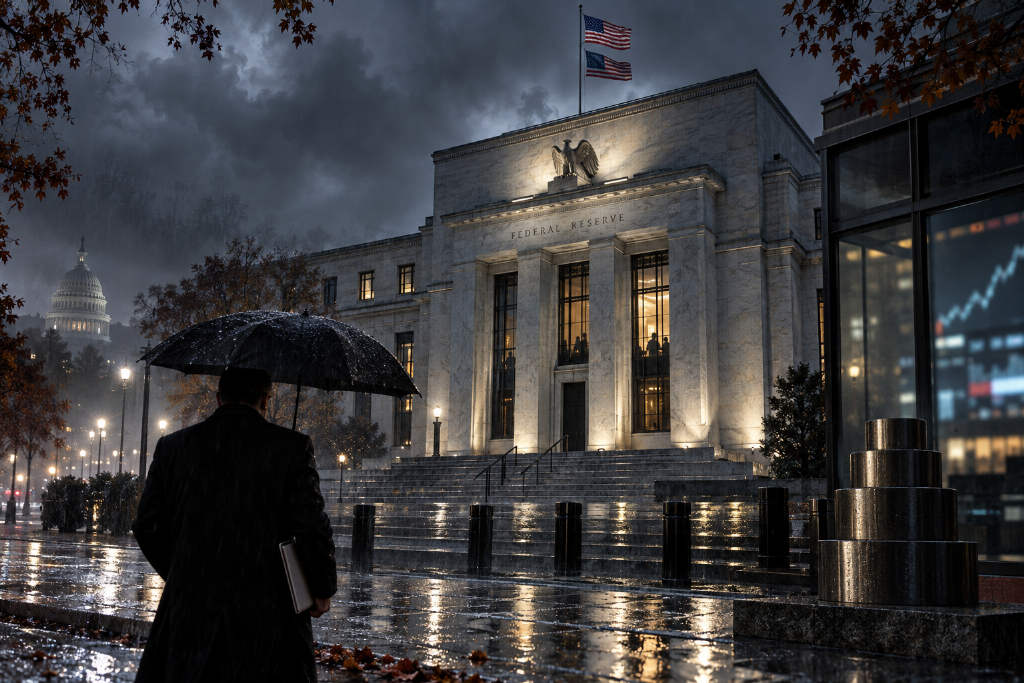
HTX Research warns of a high-volatility window for crypto as Fed, GDP and PCE data converge at month-end

HTX Research analyst Chloe said recent institutional buying has improved, but not enough to confirm a reversal in the crypto market. Based on Farside data, U.S. spot Bitcoin ETFs recorded about $1.075 billion in cumulative net inflows from Oct. 19 to Oct. 21, which she described as a constructive signal but still insufficient to ease concerns over the path of interest rates. She said traders should first watch the U.S. flash PMI reading and the University of Michigan consumer sentiment and inflation expectations data this week. Looking ahead, the bigger test comes on Oct. 29, when the Federal Reserve’s rate decision, its press conference, U.S. third-quarter GDP and September PCE data are all due the same day. Chloe added that the Bank of Japan’s Oct. 29-30 meeting and the U.S. earnings season could also affect risk appetite. In her base case, the next two weeks are more likely to bring choppy repricing and event-driven swings than a broad market rally.


840
HTX Research warns of a high-volatility window for crypto as Fed, GDP and PCE data converge at month-end
US CPI
Oct 10, 2026

September CPI report seen as key test for whether the Fed stays on hold in October

The U.S. Bureau of Labor Statistics is set to release September CPI data on Oct. 14, and the report is shaping up as a key input for the Federal Reserve’s October rate decision. Forecasts cited from Barclays and Morgan Stanley point to a faster headline inflation print, driven largely by higher gasoline prices, while core CPI is expected to cool modestly from August. Both banks project monthly core CPI at 0.24%, down from 0.29% in August. Barclays said the inflation backdrop still carries upside risk, but it expects Fed officials to leave rates unchanged in October and wait for more data, with a 25 basis point hike pushed to December. That view lines up with recent market pricing and with signals from the Fed’s September meeting minutes, which showed that most officials still expected one more hike this year but did not suggest urgency for October. Fed Governor Christopher Waller also said rate increases do not need to come at consecutive meetings. The report is also expected to shape views on core PCE, the inflation gauge watched more closely by the Fed. Barclays sees September core PCE at 0.22% month over month and about 3.0% year over year, while Morgan Stanley expects 0.23% on the month.

6960
September CPI report seen as key test for whether the Fed stays on hold in October
Federal Reserve
Oct 7, 2026

Fed minutes due tonight as markets weigh whether September hike was the start of a new tightening phase

The minutes from the Federal Reserve’s September meeting are due at 2:00 a.m. Beijing time on Thursday, with markets looking beyond the rationale for the 25-basis-point rate increase and focusing on how officials assess current financial conditions and whether more tightening may be needed. According to the report, the Chicago Fed National Financial Conditions Index shows U.S. financial conditions have continued to ease since the autumn of 2022 and still sit on the looser side of their historical range. The option-adjusted spread on the ICE BofA U.S. High Yield Bond Index also remains at a relatively low historical level. Mott Capital Management founder Michael Kramer said that if the Fed is paying close attention to those indicators, current conditions may still fall short of what would clearly qualify as restrictive policy. The report also noted that U.S. headline PCE rose 3.4% year over year in August, while core PCE increased 3.0%. With the effective federal funds rate at about 3.9%, the implied real rate is roughly 50 basis points using headline PCE and about 90 basis points using core PCE. Kramer said the minutes could help markets judge whether the September move was a one-off adjustment or the beginning of another tightening cycle.

710
Fed minutes due tonight as markets weigh whether September hike was the start of a new tightening phase
Federal Reserve
Oct 4, 2026

Fed and ECB minutes due next week as inflation concerns stay in focus

The Federal Reserve and the European Central Bank are set to release minutes from their September meetings in the coming days, with markets looking for clues on how seriously officials viewed inflation risks at the time. Both central banks raised rates last month because of concern over rising price pressures, and the Fed minutes may show that many policymakers were worried about the inflation outlook and expected at least one more rate increase before year-end. Since then, however, the data backdrop has shifted. Weak U.S. nonfarm payrolls on Friday, along with soft wage growth, suggested the labor market is not adding to existing inflation pressure. Earlier in the week, a government revision to PCE data also showed inflation this year had been slightly lower than previously estimated. Economists now see a high bar for an October rate hike. Even if the minutes remind markets of the hawkish tone officials struck in September, the latest data has strengthened the case for patience. Service-sector inflation may still keep a December move on the table, but the Fed would likely need clearer evidence that price pressures are building again before raising rates once more, according to the report cited by BlockBeats from Jin10.

1000
Fed and ECB minutes due next week as inflation concerns stay in focus
Bitcoin
Oct 3, 2026

Bitcoin Gives Back Jump to $85,500 as Soft PCE Fails to Offset Sticky Treasury Yields

Bitcoin briefly climbed to $85,500 after August PCE inflation data came in below expectations, feeding hopes that the Federal Reserve may be moving closer to rate cuts. The move did not last. A late-session sell-off in U.S. Treasuries kept yields elevated and erased the crypto market’s gains, with BTC falling back to around $83,700 in Asian morning trading and showing only a 0.4% gain over 24 hours. According to CoinDesk, LVRG Research chief analyst Dan Khus said the inflation print alone was not enough to keep Bitcoin above $85,000 while the 10-year Treasury yield remains near 5.3%. He pointed to a sustained drop in yields, rather than just another softer inflation reading, as the condition the market needs for a stronger push higher. The report also noted mixed performance across major tokens, with HYPE leading gains while Solana lagged, and highlighted that moves in Treasury yields, the Fed path, the dollar, oil, and even AI-related equity news are all shaping risk-asset pricing at the same time.

1000
Bitcoin Gives Back Jump to $85,500 as Soft PCE Fails to Offset Sticky Treasury Yields
Bitcoin
Oct 1, 2026

Bitcoin holds a local higher-low structure as US Treasury yields pull back from 24-year highs

Bitcoin traded back above $84,000 around Thursday’s Wall Street open as US Treasury yields retreated after hitting fresh multidecade highs. TradingView data cited by Cointelegraph showed BTC/USD preserving a pattern of higher lows on the hourly chart, with the pair up 0.6% on the day and $84,000 staying in focus during the first US trading session of October. In rates markets, both the US 30-year and 10-year Treasury yields set new macro highs. The 10-year yield reached 5.342%, a level last seen in April 2002, before easing to 5.251% at the time of writing. Mahmood Pradhan, former deputy director of the European department at the International Monetary Fund, told The New York Times that global markets were "very nervous" about rising public debt, while higher yields were also raising governments’ interest costs. He added that the war in the Middle East had changed the backdrop, with higher oil prices already showing up in inflation data. Cointelegraph also pointed to the August US Personal Consumption Expenditures index, which came in at 3.4% year over year, below expectations. Market reaction was muted. Benjamin Cowen said on X that yields had risen quickly once the market began worrying that the Federal Reserve was no longer taking inflation seriously. On market structure, CoinGlass data showed $84,500 and $82,900 as nearby liquidity zones, while Rekt Capital said Bitcoin may still need a "messy" retest of support near $82,500.

770
Bitcoin holds a local higher-low structure as US Treasury yields pull back from 24-year highs
Bitcoin
Oct 1, 2026

Bitcoin gives back post-PCE gains as methodology changes muddy inflation signal

Bitcoin stayed above $83,000 on Thursday after surrendering gains that followed a softer-than-expected US inflation print, with traders still unable to push the asset through resistance below $86,000. The August Personal Consumption Expenditures price index, the Federal Reserve’s preferred inflation gauge, rose 3.4% year over year, below the 3.7% consensus estimate, while core PCE increased 3.0%. But the release also included methodology changes tied to portfolio management and investment advice, computer software and accessories, and legal services, prompting The Kobeissi Letter to argue that the adjustment alone may have lowered core PCE by as much as 20 basis points. The publication also noted that July headline and core PCE were both revised down by 30 basis points. Market positioning remained mixed. CoinGlass data showed Bitcoin opened the fourth quarter near $83,550 after gaining 42.7% in Q3, its best third-quarter performance since 2017. Liquidation heatmaps showed exposure clusters on both sides of spot, including a fresh $60 million pocket near $83,000 and support around $82,500. At the same time, Glassnode said BTC-denominated futures open interest has dropped nearly 20% even as price climbed 35% from its August low, leaving open interest at its lowest level since March and potentially reducing the rally’s sensitivity to leverage-driven liquidations.

950
Bitcoin gives back post-PCE gains as methodology changes muddy inflation signal
Bitcoin
Oct 1, 2026

Bitcoin Holds Near $83,500, Ether Rebounds to $2,684 as Liquidations Hit $268 Million

Bitcoin stayed in a tight range on Oct. 1, trading between $82,900 and $85,600 over the past 24 hours and last changing hands at $83,511, up 0.11%. Ether outperformed slightly, rising 0.51% to $2,684, while both assets remained inside the volatile range formed after the previous day’s U.S. PCE release. At the same time, liquidations across the crypto derivatives market climbed to $268 million, with 76,079 traders wiped out, according to CoinGlass. The report linked the market’s current consolidation to a mix of cooling inflation and stronger labor data in the United States. Core PCE inflation for August came in at 3.0%, while consumer spending rose 0.9% month over month. September ADP employment also showed an increase of 90,000 jobs, above expectations. Even so, the data did not push Bitcoin out of its sideways pattern. Sentiment remained elevated, with the Fear and Greed Index rising to 74 from 71. Other large-cap tokens were comparatively muted, with SOL down 0.72% to $118.03 and XRP nearly flat at $1.49.

810
Bitcoin Holds Near $83,500, Ether Rebounds to $2,684 as Liquidations Hit $268 Million
Total 89 items
Go topage