Palantir2026-10-02 23:55:36Palantir and Armada team up on modular data centers for sovereign AI deploymentsPalantir Technologies said it has entered a strategic partnership with edge computing and distributed infrastructure startup Armada to bring Palantir’s Sovereign AI Operating System into Armada’s hardened modular data centers. The joint offering is aimed at defense users, allied governments, and heavily regulated industries that want tighter control over data, model weights, and the hardware running AI workloads. According to the report, the setup combines Palantir’s AIP, Ontology, Foundry, and Apollo software stack with Armada’s Galleon modular facilities, whose hardware is limited to manufacturing in the United States and allied countries. The companies also say the system can keep operating in highly isolated environments, including cases where external network connections are fully cut off, while internal power, cooling, GPU clusters, and inference pipelines remain functional. Armada’s container-like design is also pitched as a faster alternative to traditional large-scale data center builds, which the report says can take two to five years, with deployment timelines shortened to months where basic power or a microgrid is available.20
Michael Burry2026-09-29 01:32:57Michael Burry shifts AI bearish bets into puts, says the bubble may break sooner than expectedMichael Burry, the investor portrayed in The Big Short, is moving earlier on his bearish call against the AI trade, according to CNBC. In his latest investor letter, Burry said he has converted part of his direct short positions in Micron Technology, Nebius, Palantir, and the iShares Semiconductor ETF into put options, aiming to gain more leverage at a lower cost. He said current volatility gauges, including the VIX, remain low, making puts relatively cheap. Burry said part of the repositioning is meant to reduce tax drag, but the main reason is his view that the AI bubble "may, sooner or later, burst earlier." He outlined several changes: replacing his Micron short with June expiry puts next year in the $500 strike range, replacing his Nebius short with June expiry puts next year in a double-digit strike range, swapping his SOXX short for puts expiring in September 2027 with strikes slightly above $400, and rolling out and expanding his Palantir bearish position around September 2027 puts with strikes just above $100. He also cited research from Ares Management, arguing that the AI spending boom depends on continued corporate capital expenditure and AI revenue that has not yet been fully validated. Separately, Burry said he remains negative on the memory-chip cycle as Chinese storage-chip capacity keeps rising.250
Ondas2026-09-28 16:49:33Ondas tops U.S. fails-to-deliver list as investors point to short sellersOndas, a defense drone company that works with Palantir, became the most failed-to-deliver security in the United States during the latest U.S. Securities and Exchange Commission reporting window, according to Protos. The stock, traded on Nasdaq under the ticker ONDS, had 20,954,097 shares sitting undelivered in the National Securities Clearing Corporation’s Continuous Net Settlement system on the Monday after its most recent quarterly earnings, the report said. No other U.S. stock recorded more undelivered shares that day. The company has also drawn attention because of its elevated short interest, which stood at 40.9% of its float. Protos noted that this was roughly ten times the level seen a year earlier, when short interest was near 4%. At the same time, Ondas reported $83.8 million in second-quarter revenue, said that figure was more than 13 times its Q2 2025 level, and raised its full-year revenue target to above $525 million. Even with those figures, the stock is down 22% since the start of the year and has traded flat over the past 12 months after a 10x rally from penny-stock levels. The SEC has cautioned that fails to deliver do not necessarily result from short selling and are not proof of abusive or naked short selling.210
Anthropic2026-09-27 06:52:12Anthropic plans special share structure before IPO, giving seven founders 50.1% voting power on roughly 14% ownershipAnthropic is seeking shareholder approval for a pre-IPO governance structure that would give CEO Dario Amodei and six other co-founders 50.1% of the company’s voting power while they collectively hold only about 14% of the equity, according to a report from The Information cited by Reuters. The proposed special shares would carry no added economic rights and are designed to preserve founder control after the company lists and outside investors begin trading the stock. The arrangement would remain in place as long as at least three of the seven founders keep a minimum ownership threshold, though that threshold has not been disclosed. The shares would be held through an independent LLC rather than by the founders individually. Board elections would remain outside the founders’ direct control, with Anthropic’s Long-Term Benefit Trust continuing to appoint a majority of the board. The company also plans to issue a separate class of special shares to employees to break ties on certain matters. Reuters said Anthropic did not immediately respond to a request for comment. The company reportedly filed a confidential S-1 in June, and shareholder voting on the new structure is expected in the coming days.200
Palantir2026-09-25 16:43:45Palantir co-founder calls OpenAI and Anthropic-backed AI policy "extremely dangerous"A Palantir Technologies Inc. (PLTR.N) co-founder said the artificial intelligence policy being pushed by OpenAI and Anthropic is "extremely dangerous," according to a newsflash published by ChainCatcher. The source item was brief and did not provide the co-founder’s name, the policy details, or the context in which the remarks were made. No additional comments, timeline details, or related measures were included in the original dispatch. The report only states the criticism and identifies the companies involved, leaving the scope of the policy push undisclosed.230
Palantir2026-09-21 18:02:09Palantir CEO Alex Karp says frontier AI labs could face nationalizationPalantir CEO Alex Karp warned that frontier artificial intelligence labs may eventually face nationalization, according to a Techub News brief citing Crypto Briefing. Karp said such a move could shift responsibility from private operators to the government. He also said that nationalizing AI labs would change industry dynamics and expand the public sector’s influence over the field. The report did not provide additional details on timing, specific companies, or any policy proposal tied to the remark. The item was published by Techub under its hot articles category.330
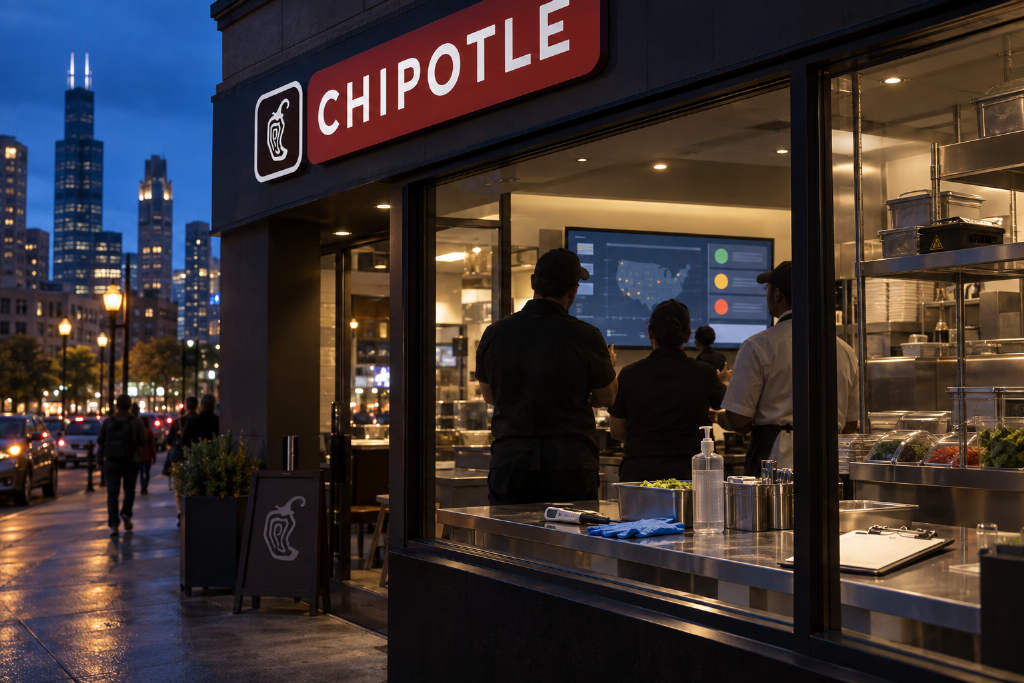
Chipotle2026-09-17 20:46:03Chipotle pilots Palantir-built food safety platform that scores restaurant riskChipotle has confirmed it is piloting a new food safety risk management platform built on Palantir Foundry, according to reporting cited by Decrypt. The system is said to combine health department inspection scores, pest sightings, and employee illness reports to generate an internal risk score for each restaurant. Laurie Schalow, Chipotle’s chief corporate affairs and food safety officer, told Wired the goal is to create a more consistent and centralized view of food safety risk across the chain, but she did not say when the platform will launch, how many stores are using it, whether any consumer data is involved, or whether customers will ever be able to see a store’s score. The partnership has drawn attention because Palantir, co-founded by Peter Thiel in 2003, received early backing in 2005 from In-Q-Tel, the CIA’s venture arm, and the agency became one of its first customers. Decrypt also noted Palantir’s broader government work, including federal contracts, a $175 million U.S. Army AI targeting deal, and work tied to Immigration and Customs Enforcement. Chipotle has not disclosed whether employee illness data in the platform can identify individuals or whether that information is anonymized.430
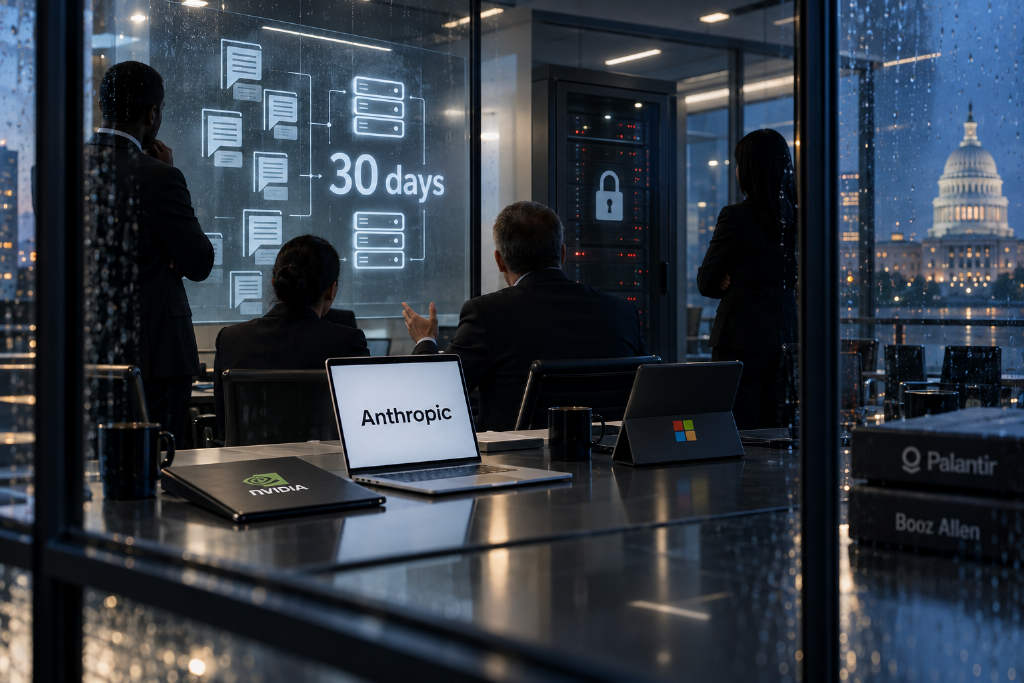
Anthropic2026-09-15 07:34:12Anthropic’s data retention policy triggers enterprise pushback against FableAnthropic is facing resistance from major enterprise customers after changing the data-handling rules for its flagship Fable model. On June 9, the company updated its support policy so that prompts and outputs for Mythos-tier models, including Fable and Mythos, would be retained for 30 days under its trust and safety framework, with some flagged conversations reportedly stored for as long as two years. The policy also overrode existing Zero Data Retention, or ZDR, arrangements for those top-end models. That move set off objections from large customers and platform partners. The report says Microsoft quickly restricted internal employee access and kept Fable out of its internal Copilot model list pending legal review. Palantir publicly challenged the shift, arguing that Anthropic had undermined an earlier irrevocable ZDR commitment, and has reportedly refused to list Fable on its platform unless that language returns. Nvidia, Booz Allen, and Northrop Grumman are also described as limiting or replacing Fable in sensitive use cases. Anthropic later introduced an Enterprise Frontier Safeguards program alongside Fable 5.1 on Sept. 1, but questions remain over its invitation-only rollout, limited model coverage, and the company’s ability to withdraw the option. The dispute has grown beyond simple storage periods and now centers on how much visibility model providers have into enterprise data and workflows.720