Two Prime
Nov 4, 2026

Two Prime Says Bitcoin L2 Yields Are Fading as VC Subsidies Wear Off

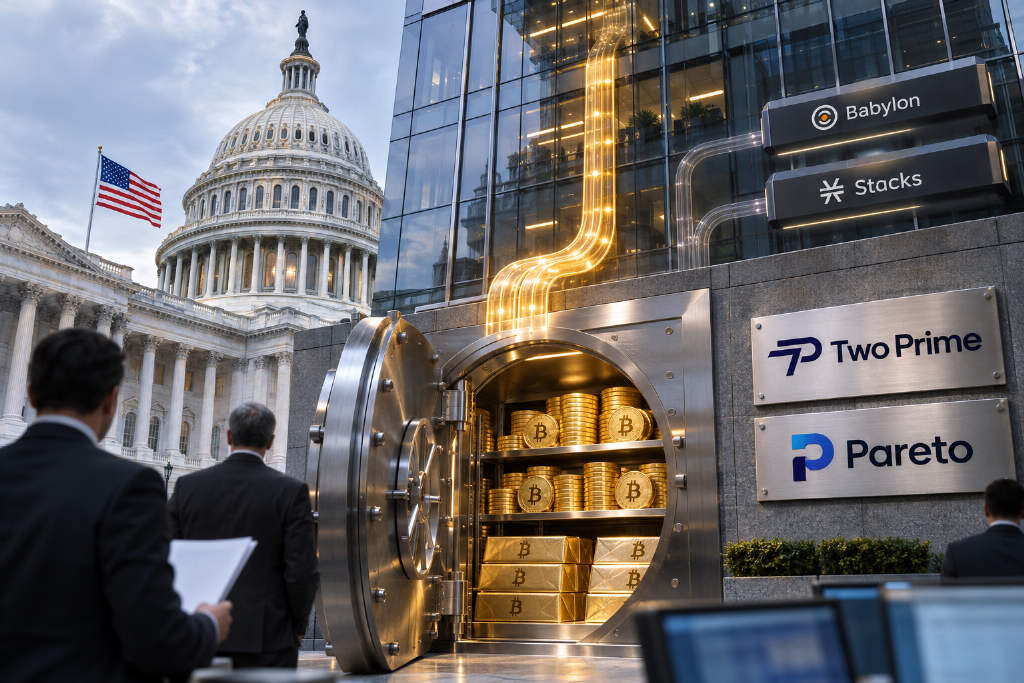
In an Unchained Premium episode, Two Prime co-founder and CEO Alexander Blume and Pareto co-founder and CEO Matteo Pandolfi discussed the bitcoin lending vault their firms built together and laid out why they believe yield opportunities on Bitcoin layer-2 networks are drying up. Blume argued that yields offered by projects such as Babylon and Stacks are not being driven by durable underlying economics, but by venture-backed subsidies, a structure he suggested cannot last indefinitely. The conversation also focused on how institutional credit can move onchain without rewriting its legal or financial foundations. Pandolfi said the core principles behind institutional lending remain intact, but the infrastructure around capital allocation, interest accrual, repayment, reporting, and redemption needs modernization. According to the episode description, Pareto is bringing that lifecycle onchain, while Two Prime gathers wrapped bitcoin onchain and lends it offchain to vetted borrowers. Unchained said Two Prime has handled about $4 billion in bitcoin-backed loans. The guests also discussed liquidity frictions in private credit, the use of the vault’s receipt token in Morpho for looping, Two Prime’s start in lending during the 2022 collapses of Celsius and FTX, and Blume’s view that the SEC’s innovation exemption leaves much of vault-related value offshore for now.

550
Two Prime Says Bitcoin L2 Yields Are Fading as VC Subsidies Wear Off
crypto lending vaults
Oct 19, 2026

Crypto lending vault deposits top $10 billion as regulators raise questions

Crypto lending vaults have grown rapidly, with deposits now exceeding $10 billion, up from $4 billion at the start of last year, according to the Financial Times. The growth points to rising demand for yield strategies tied to digital assets. These vaults operate through smart contracts on decentralized finance platforms and are typically overseen by a "curator" who functions much like an investment manager, selecting lending strategies, setting risk limits and charging fees. Reported yields usually range from 3% to 10%, while higher-risk strategies can offer 20% or more. The same structures also carry material risks. Collateral may include illiquid tokens, crypto-backed stablecoins or tokenized private credit, leaving depositors exposed if asset values fall or positions cannot be unwound. The report also notes that automated liquidations can intensify market declines, while hacks, coding flaws and pricing mechanism failures add further vulnerabilities. Major depositors currently include fintech firms, digital asset treasury companies and hedge funds. Bitcoin lender Two Prime is among the recent entrants, having launched a vault on Pareto in September targeting 1.5% to 2% annualized returns.

650
Crypto lending vault deposits top $10 billion as regulators raise questions
FalconX
Jul 15, 2026

How FALX turns FalconX prime brokerage loans into on-chain fixed-income exposure

FALX is not a standalone yield pool. It is a structured on-chain credit setup built around FalconX-originated institutional loans, a bankruptcy-remote special purpose vehicle, Pareto’s on-chain credit vault infrastructure, and M11 Credit’s role as curator and agent. Investors deposit USDC into a related vault, the capital is routed into a FalconX-managed SPV, and the underlying exposure comes from overcollateralized prime brokerage loans to institutional borrowers such as quant funds, hedge funds, market makers, and asset managers. Public disclosures cited in the source show FalconX reported a 30-day gross yield of 8.25%. After a 10% performance fee, the investor net yield is roughly 7.4%. Using about 4% as the opportunity cost for lower-risk on-chain USDC yield, the excess compensation is around 340 basis points. That spread has to absorb operational, legal, liquidation, execution, liquidity, smart contract, cross-chain, custody, and rehypothecation-related risks. The article also points to a gap between FALX’s stated scalable capacity of about $1 billion and the roughly $148 million in vault assets shown on RWA.xyz. It reviews M11 Credit’s role in the structure, revisits the 2022 Orthogonal default on Maple, and highlights a separate layer of risk created by DeFi composability as FalconX Credit Vault tokens are used as collateral in protocols such as Morpho and in Gauntlet’s levered RWA strategy.

1800
How FALX turns FalconX prime brokerage loans into on-chain fixed-income exposure