Bitcoin
12 days agoNews Editor

Five alternatives to hardware wallets for storing Bitcoin, from ETFs to multisig

Cointelegraph has outlined five alternatives to hardware wallets for storing Bitcoin and other crypto assets, arguing that recent incidents tied to Ledger and Coldcard have pushed more holders to reassess how they manage custody. The report says more than $200 million in crypto was stolen in recent months from tampered Ledger devices and from Coldcards where the generated seed was not truly random, raising questions about risks that can exist even when users buy from official sources and store seed phrases correctly. The piece also points to a rise in physical attacks on crypto holders, citing a so-called "$5 wrench attack" in France every 2.5 days this year. Against that backdrop, it reviews five storage routes: crypto ETFs, passkey-based wallets, multisignature wallets, centralized exchanges and paper wallets. Each option removes some burdens while introducing different trade-offs around custody, recovery, privacy, fees, code risk or reliance on third parties. Comments cited in the article include 21Shares co-founder Ophelia Snyder, who said exchange-traded products make sense for most people most of the time for tax, estate planning and security reasons, and PlanB, who said he had "zero regrets" about moving BTC to ETFs in 2025. The report’s core conclusion is that there is no single ideal storage method, and that users may reduce damage by spreading holdings across different addresses and custody models.

510
Five alternatives to hardware wallets for storing Bitcoin, from ETFs to multisig
NEAR
27 days agoNews Editor

NEAR says MyNearWallet will shut down on Oct. 31, urges users to migrate

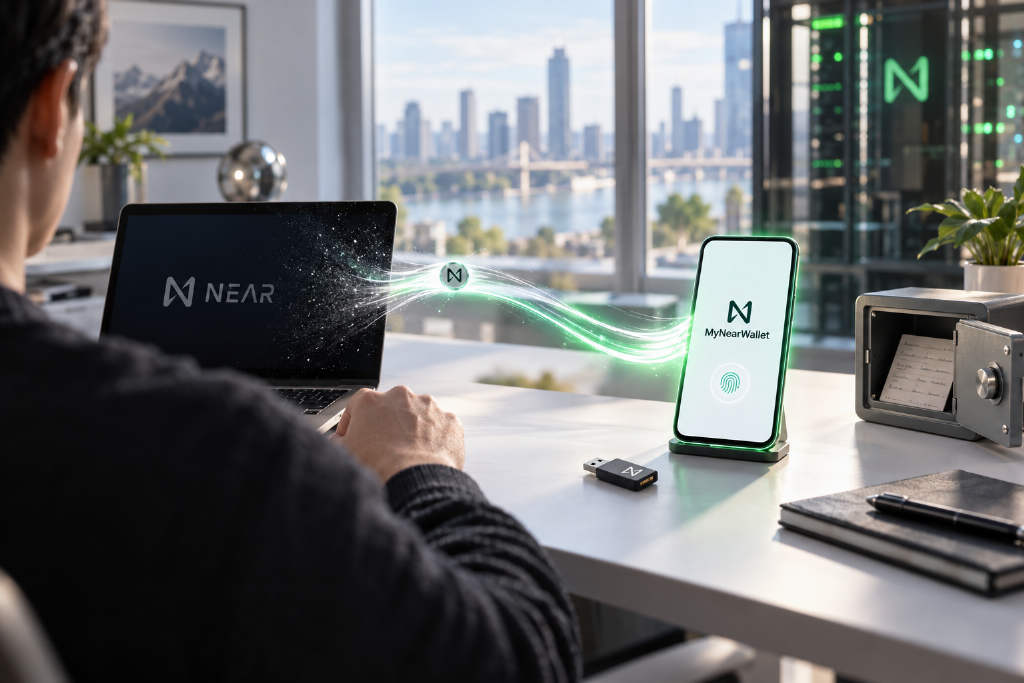
NEAR Protocol said MyNearWallet will stop operating on Oct. 31 and asked users to move their assets to a newly recommended account setup. The project said user assets remain stored on-chain, but access after the shutdown will require a new way to manage those holdings. According to NEAR, the new account supports swaps, payments and other actions across more than 30 chains, includes privacy protection by default, and can be controlled with passkeys. NEAR also released a migration guide, along with a timeline for the MyNearWallet shutdown and a FAQ. Before moving funds, the team advised users to test the process with a small amount, use the deposit entry from a connected wallet each time, and avoid sending funds twice to the same deposit address because each address is single-use. Users were also told to migrate assets one by one, wait for each transfer to complete, and keep their MyNearWallet recovery information until all balances appear in the new account. NEAR added that neither the NEAR Foundation, MyNearWallet nor support staff will ask for a mnemonic, recovery phrase or private key.

660
NEAR says MyNearWallet will shut down on Oct. 31, urges users to migrate
imToken
4 months agoNews Editor

imToken’s Sigil Adds a Verifiable Signing Guardrail for AI Agents

As AI agents evolve from answering questions to taking real-world actions, the weakest link is no longer task execution alone, but user authorization. In many current agent workflows, users approve sensitive actions with a vague chat reply such as “Yes,” without seeing the exact trading route, pool selection, slippage, protocol calls, wallet used, token approvals, or final transaction parameters. imToken addresses this gap through its newly emphasized fourth “S” in its brand framework—Sign—alongside Store, Send, and Stake. Its early proof-of-concept product, Sigil, is designed to place a security layer between AI agents and wallets so that high-risk actions can only continue after a clear, independent, and verifiable user approval. The system combines policy-based execution boundaries, structured approval cards delivered through Telegram, Passkey-based signing with biometric verification, and an execution model that binds display, signature, and final request together. Sigil also separates confirmation rendering from the agent itself through a registered module, on-chain-fixed content, sandboxed rendering, and hashed request binding. While the immediate use case is crypto transactions, the underlying model extends naturally to broader AI agent permissions, including data access, identity use, file modification, publishing, purchasing services, and automated task execution.

1000
imToken’s Sigil Adds a Verifiable Signing Guardrail for AI Agents