Phison
Oct 16, 2026

Phison CEO K.S. Pua says CXMT's 4F² memory push is a market scare, not a near-term supply shift

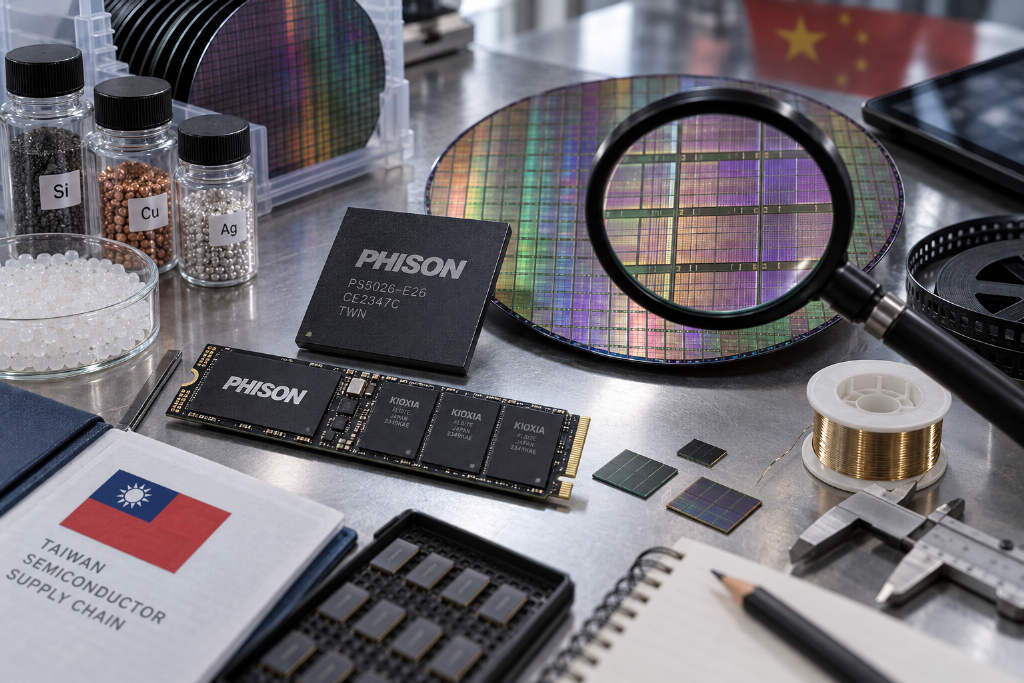
Phison Electronics CEO K.S. Pua pushed back against market anxiety after Chinese DRAM maker ChangXin Memory Technologies, or CXMT, said it had completed the design of a next-generation 4F² memory cell architecture. In comments published after an Oct. 15 interview with Economic Daily, Pua said the reaction looked more like a "market ghost story" than an immediate competitive threat. His point was simple: a newly announced technology does not translate into instant mass production. Pua said the path from design disclosure to commercial output still runs through validation, yield improvement and full-scale manufacturing, all of which take time. He argued that the current shortage in memory supply will not be resolved in the short term and said Phison is still seeing strong customer demand. According to him, the company is not worried about a lack of orders; it is more concerned about shortages in materials that could delay shipments. The report also noted prior market pressure across memory stocks after news that CXMT, described as the world’s fourth-largest DRAM producer, aims to launch DDR5 server memory using the technology by the end of 2026. Elon Musk had also weighed in earlier, saying China can scale production faster than many expect once it masters a manufacturing process, though he added memory may be different because HBM and 3D stacking remain harder to catch up on.
1260
Phison CEO K.S. Pua says CXMT's 4F² memory push is a market scare, not a near-term supply shift
Apollo Power
Oct 11, 2026

Apollo Power orders 1GWh of Tesla storage and forms AI power alliance with Gigabyte, Phison, and Shihlin Electric

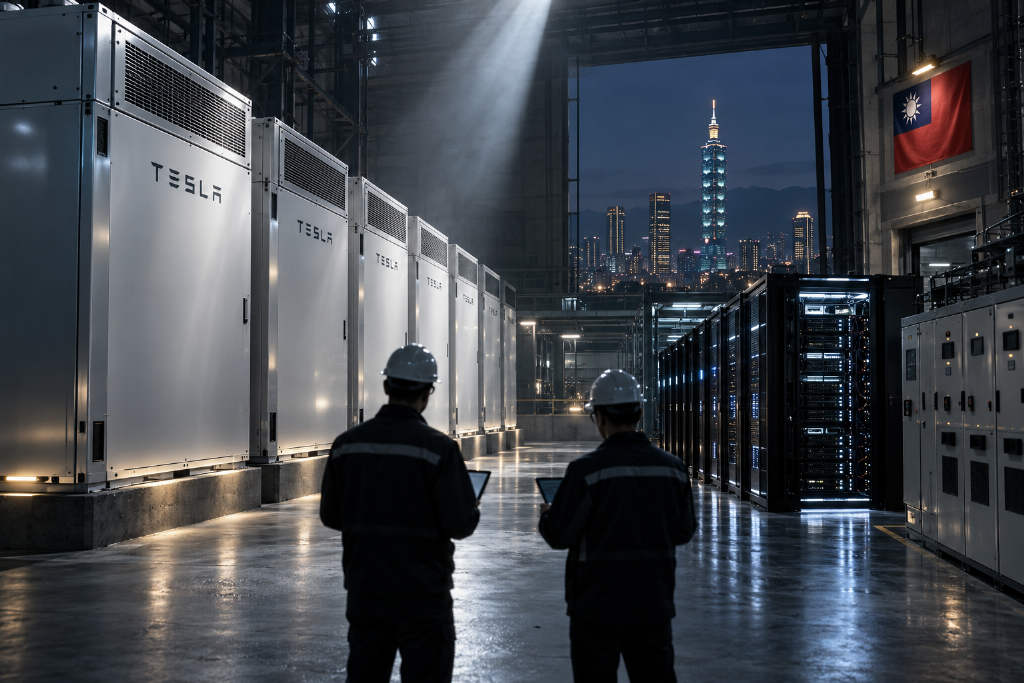
Apollo Power said it has formed an "AIDC and Enterprise Resilient Grid Cooperation" strategic alliance with Tesla Taiwan, Gigabyte Technology, Phison Electronics, and Shihlin Electric, while also placing an order for 260 Tesla Megapack 2XL units with a combined capacity of 1GWh. The company said the storage systems are aimed at future demand from AI data centers and behind-the-meter enterprise storage projects. Apollo Power outlined a division of labor across the group, covering green electricity supply, energy management systems, AI servers, liquid cooling, data storage, transformers, and power distribution equipment. It added that the transaction value was not disclosed because of a confidentiality agreement, and said deliveries are expected to begin in batches by the end of 2027, with project sites planned to enter operation in 2028. Apollo Power also said the equipment purchase itself does not count as direct revenue and that future revenue and profit contribution will depend on customer contracts and revenue recognition conditions.

1120
Apollo Power orders 1GWh of Tesla storage and forms AI power alliance with Gigabyte, Phison, and Shihlin Electric
Kioxia
Aug 27, 2026

Kioxia commits over ¥1 trillion to new NAND plant as AI storage demand lifts Phison’s supply-chain role

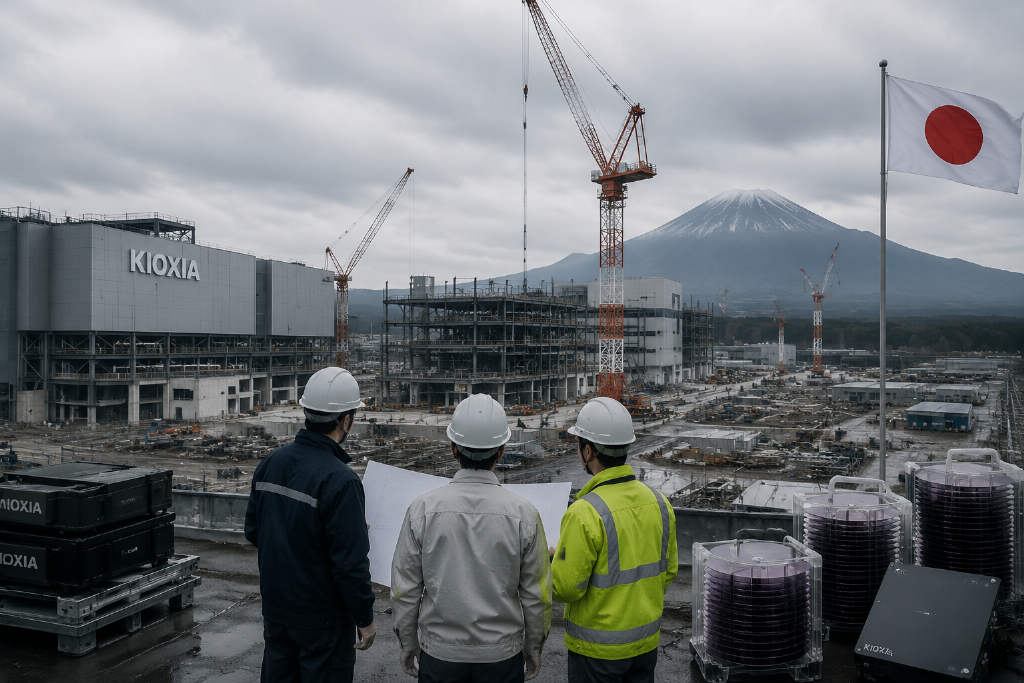
Kioxia plans to spend more than ¥1 trillion, or about $6.27 billion, on a third advanced NAND Flash wafer fab in Kitakami, Iwate Prefecture, according to a report cited by ABMedia. The expansion comes as generative AI drives stronger demand from data centers for high-capacity, high-performance enterprise SSDs. The report said the project also has support from Japan’s Ministry of Economy, Trade and Industry, fitting into Tokyo’s broader semiconductor push alongside support for Rapidus and efforts to draw TSMC to Kumamoto. ABMedia said the move has implications across the Taiwan-Japan memory supply chain, especially for Phison Electronics. The Taiwanese controller chip maker has long-standing ties with Kioxia dating back to 2001, when Toshiba, Kioxia’s predecessor, invested in the company. The two companies now work across NAND procurement, SSD module development, joint development manufacturing, and ODM work for Kioxia’s consumer and enterprise SSD brands. Phison CEO K.S. Pua has warned publicly that the NAND Flash shortage has no visible end. He said AI is reshaping demand patterns, and argued storage is harder to cut than DRAM because the amount of data a customer can process and keep directly affects revenue. He also said new memory capacity typically takes four years to bring online, and projected tighter shortages in the second half of 2026 and a wider gap in 2027.

1770
Kioxia commits over ¥1 trillion to new NAND plant as AI storage demand lifts Phison’s supply-chain role
Phison
Aug 16, 2026

Phison CEO accuses Longsys of copying technology, says AI segment now makes up 38% of revenue

Phison Electronics CEO K.S. Pua used the company’s Aug. 13 second-quarter earnings call to make two points at once: to publicly accuse Chinese memory module leader Longsys of copying technology, and to argue that investors should stop viewing Phison as only a consumer-focused module company. Pua pointed to Longsys’ recent work with UNISOC on an Edge Device general DRAM offload solution and its HLC+ SPU technology collaboration with AMD, saying he had already confronted Longsys executives earlier this year at China’s FMS event with a blunt remark: 「You are a big company and also an innovative company, so why do you only know how to copy?」 He also pushed back on claims that AMD had chosen Longsys, saying the cooperation was limited to AMD’s China team, while adding that Phison has cooperation with Intel and MediaTek that is still covered by NDA. On operations, Pua said Phison’s newly defined AI Ecosystem Solutions segment accounted for about 38% of second-quarter revenue, up about 68% quarter over quarter. He also said NAND supply, not just pricing, is the bigger problem and could remain tight for many years.

3010
Phison CEO accuses Longsys of copying technology, says AI segment now makes up 38% of revenue
Phison
Aug 14, 2026

Phison posts H1 EPS of 187.43, wins MSCI Global Standard Index inclusion

Phison Electronics, the memory controller IC and storage solutions company listed in Taiwan as 8299, reported 2026 first-half results showing EPS of TWD 187.43, with revenue, profit, and margins supported by AI infrastructure and server demand. Second-quarter consolidated revenue reached TWD 67.888 billion and net profit came in at TWD 26.219 billion, both setting quarterly records, while quarterly EPS hit TWD 118.57. For the first half, consolidated revenue totaled TWD 108.855 billion, net profit was TWD 41.391 billion, and gross margin held at 63.8%, with EPS up 2095% year over year. The board also approved a first-half cash dividend of TWD 60 per share, for a total payout of about TWD 13.27 billion, both record highs for the company. Based on first-half EPS, the payout ratio was about 32%, below its past average of roughly 55%. Management said the lower ratio reflects tight raw material supply and the need to preserve cash as Phison speeds its shift from a controller IC and module maker to a provider of Enterprise SSD and AI storage platforms. MSCI said in its latest August quarterly review that Phison will be added to the MSCI Global Standard Index, with the change set to take effect after the close on Aug. 31, 2026. The stock closed at TWD 2,280 on the prior trading day, standing above its quarterly moving average.

3220
Phison posts H1 EPS of 187.43, wins MSCI Global Standard Index inclusion
AI servers
Jul 3, 2026

Morgan Stanley Raises SIMO Target as AI Servers Reshape the NAND Cycle

Morgan Stanley’s latest report argues that the NAND market is entering a structurally different cycle, driven less by smartphones and PCs and increasingly by AI servers, enterprise SSDs, AI boot drives, and long-term cloud procurement. The bank raised Silicon Motion’s target price from $155 to $400, while also lifting targets for Longsys and Phison. However, it kept Equal Weight ratings on Longsys and Phison, signaling that not every module maker will benefit equally from the upcycle. The report forecasts global NAND moving from roughly 2% oversupply in 2025 to a 15% shortage in 2026 and a 9% shortage in 2027, with AI-related NAND demand expected to reach 609 EB in 2027, or 41% of total demand. Channel checks already show stronger pricing in data-center-linked products, especially TLC enterprise SSDs, than in consumer NAND. For SIMO, Morgan Stanley sees enterprise SSD controllers and AI boot drive modules as the key earnings drivers. The larger debate now is not simply whether SSD prices will rise, but whether AI demand can absorb future capacity additions through 2028, especially under different YMTC expansion scenarios.

1540
Morgan Stanley Raises SIMO Target as AI Servers Reshape the NAND Cycle
AI servers
Jul 3, 2026

Morgan Stanley Lifts SIMO to $400 as AI Servers Reshape the NAND Cycle

Morgan Stanley has sharply raised its price targets on key storage names, arguing that AI infrastructure is fundamentally changing the NAND demand cycle. The most aggressive move was on Silicon Motion, whose target was lifted from $155 to $400, based on 23x expected 2027 EPS and expectations that revenue will hit a record in 2026. Longsys and Phison also saw higher targets, though both remain rated Equal Weight, highlighting that the AI storage upcycle is unlikely to benefit all module vendors equally. The report’s main thesis is that AI-driven NAND demand will extend through 2027. Global NAND supply-demand is projected to remain about 2% oversupplied in 2025, then swing to a 15% shortage in 2026 and still show a 9% deficit in 2027. Total demand is estimated at 1,111 EB, 1,250 EB, and 1,484 EB for 2025-2027, versus supply of 1,128 EB, 1,058 EB, and 1,347 EB. The key driver is not a broad recovery in smartphones or PCs, but rising demand from AI servers, cloud SSD procurement, enterprise storage, and boot drives. Pricing data already reflects this divergence. Channel checks for 3Q26 show TLC enterprise SSD prices up about 30% quarter-on-quarter, server DRAM up 20%, and legacy DRAM such as DDR3/DDR4 up 30%-40%, while consumer NAND pricing remains more constrained. Morgan Stanley sees SIMO as especially well positioned through enterprise SSD controllers and AI boot drive modules, but also warns that the bullish outlook depends on successful ramp-up, customer adoption, and sustained AI server demand. Looking further out, 2028 remains the key risk window, with YMTC capacity expansion and AI demand growth determining whether shortages persist or the market swings back into oversupply.

1460
Morgan Stanley Lifts SIMO to $400 as AI Servers Reshape the NAND Cycle
Morgan Stanley
Jul 3, 2026

Morgan Stanley Lifts SIMO Target to $400 as AI Servers Reshape the NAND Cycle

Morgan Stanley’s latest report argues that the NAND market is being structurally reshaped by AI infrastructure rather than by a broad recovery in smartphones and PCs. The bank sharply raised Silicon Motion’s target price from $155 to $400, while also lifting targets for Longsys and Phison, though the latter two remain rated Equal Weight. The core thesis is that AI servers, enterprise SSDs, AI boot drives, and long-term cloud procurement contracts are creating a supply-demand gap that could persist through 2027. According to the report, the global NAND market may remain in a modest 2% surplus in 2025, but could swing to a 15% shortage in 2026 and still face a 9% deficit in 2027. Total NAND demand is projected at 1111/1250/1484 EB for 2025-2027, versus supply of 1128/1058/1347 EB. By 2027, AI-related NAND demand is expected to rise 60% year over year to 609EB, accounting for 41% of total market demand. Morgan Stanley sees Silicon Motion as especially well positioned through its enterprise SSD controller business and AI boot drive modules. It expects MonTitan enterprise SSD products to contribute 5%, 13%, and 19% of revenue in 2026, 2027, and 2028, respectively, while boot drive modules could contribute 15% and 21% in 2026 and 2027. Still, the bank warns that 2028 may become the key turning point: if YMTC capacity expands from around 310kwpm to 470kwpm while AI demand growth slows, the market could move from shortage back toward balance or oversupply.

1660
Morgan Stanley Lifts SIMO Target to $400 as AI Servers Reshape the NAND Cycle