Perplexity
Oct 22, 2026

Perplexity and NVIDIA introduce JOLT, a post-training method that cuts compute use by 6.5x

Perplexity and NVIDIA researchers have introduced JOLT, a new post-training method for language models that assigns a single model two roles at once: teacher and student. In this setup, the teacher has access to privileged information while the student does not. The main change is that the teacher is also trained, which the researchers say keeps its feedback usable during the process. According to MarkTechPost, JOLT matched the accuracy of GRPO on the MATH benchmark while using 6.5x fewer training tokens. The team also presented JOLT+, a version that adds rewards based on the student’s own outcomes. In the reported tests, JOLT+ posted the best average score across all settings. On AppWorld, JOLT+ reached a pass rate of 72.09%, compared with 62.20% for GRPO, a gap of 9.9 percentage points. The method has been validated on multiple models, including Qwen3 and DeepSeek-V2-Lite.

1100
Perplexity and NVIDIA introduce JOLT, a post-training method that cuts compute use by 6.5x
OpenAI
Oct 11, 2026

Liam Fedus says AI must move from math into the lab to become a real scientist

Liam Fedus, a ChatGPT co-creator and former OpenAI vice president who later led post-training, says mathematics gave AI an unusually favorable proving ground because results can be checked mechanically. In the physical sciences, he argues, that kind of built-in referee does not exist. Claims about superconductors, alloys, chemistry, or materials still have to survive real experiments. In a roughly 50-minute conversation on The Frontier with Mercor founder Brendan Foody, Fedus revisited the product decisions behind ChatGPT, the role of GPT-3.5 and GPT-4, the limits of reinforcement learning from human feedback, and why coding advanced quickly once models could reason over long chains and receive verifiable rewards. He also described why his new company, Periodic Labs, is building laboratories in Menlo Park instead of relying only on internet-scale data. Fedus said Periodic is combining language-model reasoning, computational physics simulation, and high-throughput lab work to generate the kind of contextual, negative, and reproducible data that materials science often lacks. He framed that effort against OpenAI’s recent release of 722 math manuscripts, arguing that formal proof systems can validate mathematics, but only experiments can settle questions in the material world.

860
Liam Fedus says AI must move from math into the lab to become a real scientist
MiniMax
Sep 14, 2026

Why Genspark’s M3-based PPT model may change how the market judges MiniMax

Genspark’s decision to train its own PPT model on top of MiniMax M3 has become the starting point for a broader reassessment of MiniMax’s position in the open-model market. On Sept. 10, Genspark released Gen-1 Slides, a model built for presentation generation, developed with Fireworks and now used as the default option in Genspark AI Slides standard mode. The article argues that this move matters because it goes beyond API switching. It shows an application company was willing to spend engineering effort and GPU budget on post-training, a much stronger signal than simply trying an open model. The piece lays out why M3 fit the task: open weights, multimodal support, long context, coding and agent capabilities, plus a model size that remained trainable for an application company. It also cites Fireworks data showing Genspark Slides consumes more than 1 trillion tokens a month, making inference cost a material business issue. In Genspark’s tests, Gen-1 Slides averaged $0.44 in model calling cost per PPT, versus $4.16 for Opus 5, while slightly improving average score and download rate. The article also links this to MiniMax H3’s open-weight release and the downstream ecosystem that followed, from ComfyUI support to H3 Max, FastH3 and H3-World. Its conclusion is that MiniMax should be judged not only by benchmarks, but by how many companies are willing to keep building, fine-tuning and shipping products on top of its models.

2160
Why Genspark’s M3-based PPT model may change how the market judges MiniMax
CREAO
Aug 31, 2026

CREAO raises fresh strategic funding to build self-improving Agent harness systems

Enterprise Agent platform CREAO has closed a new strategic funding round worth tens of millions of dollars, bringing its cumulative financing to more than $30 million. The company is now focused on self-iterating harness systems, a control layer outside the model that governs how an Agent plans tasks, calls tools, uses memory, selects models, and handles failures. CREAO said it has already put part of that automated correction loop into operation: after an Agent completes a task, the system checks the output, opens a ticket if a problem is found, and then uses AI to investigate the cause, write a fix, and verify the result. New versions are first tested on a small amount of real traffic, with automatic rollback if performance gets worse. The company had previously disclosed this system publicly. CREAO’s next step is to extend those improvements to more parts of the harness so repeated failures in the same tool or workflow can lead to broader execution changes that newly created Agents can reuse. It also plans to move some of that accumulated experience into model training through vertical post-training on open-source models, using lower-cost specialized models for common tasks and frontier models for more complex ones.

1660
CREAO raises fresh strategic funding to build self-improving Agent harness systems
Barret Zoph
Aug 28, 2026

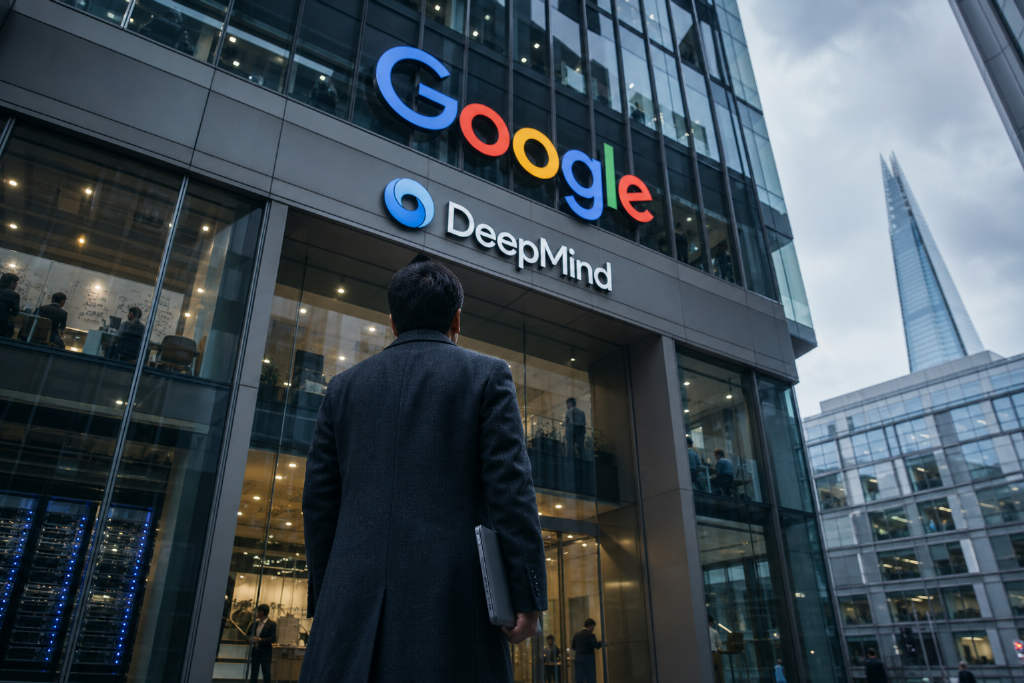
Barret Zoph Returns to Google as DeepMind Talent Churn Intensifies

Barret Zoph, now a vice president of research at Google DeepMind, has again switched between top AI labs after prior roles at Google Brain, OpenAI, and Thinking Machines Lab. The report traces his path from early work on neural architecture search with Quoc Le to Switch Transformer with William Fedus and Noam Shazeer, then to reinforcement learning post-training at OpenAI. It also recounts the dispute around his departure from Thinking Machines Lab, where former OpenAI CTO Mira Murati later told staff his employment had been terminated over issues tied to performance, behavior, and trust, while Zoph disputed that account and said he had already planned to leave. His return to Google comes during a period of heavy management and research turnover at DeepMind, including role changes for Demis Hassabis, Jeff Dean’s exit, and moves by Noam Shazeer and John Jumper. Data cited from Zeki Data shows DeepMind’s inflow-to-outflow ratio for research and senior engineering talent fell from about 12:1 in Q2 2023 to roughly 2:1 in Q3 2026, trailing Anthropic’s 22:1 and OpenAI’s 5.7:1.

1900
Barret Zoph Returns to Google as DeepMind Talent Churn Intensifies
Pangram
Aug 20, 2026

Pangram CTO says post-training and safety guardrails make LLM text easier to detect

Pangram Chief Technology Officer Bradley Emi said the recognizable writing style often associated with large language models is not a sign of weak capability. Instead, he said post-training and safety guardrails sharply narrow how these models can express themselves, making their output easier to identify. Emi added that base models, before those constraints are applied, already show much broader variety in writing. The comment points to model tuning and safety controls as key factors behind the detectable patterns seen in LLM-generated text, rather than any inherent inability to produce diverse language. The Decoder was cited as the source for the remarks.

1880
Pangram CTO says post-training and safety guardrails make LLM text easier to detect
Z.ai
Aug 19, 2026

Z.ai founder Jie Tang says bigger parameter counts no longer tell the full story of model strength

Jie Tang, founder of Z.ai and a professor at Tsinghua University, argues that asking only how many parameters a model has no longer says much about how strong it is. In his review of the evolution of scaling laws—from GPT-3 to Chinchilla and then Mixture of Experts (MoE)—he says model capability depends on more than parameter count. Training data volume, where compute is spent, and how a model is actually used all matter. Tang’s point is that the old training-first view of scaling is less useful once commercial AI systems are deployed and called billions of times a day. Under that setup, inference cost changes the optimization target. A smaller model trained for longer may make more sense than a larger one trained less efficiently. He cited Llama-2-7B and Gemma-2-9B as examples of models trained far beyond the classic Chinchilla ratio. He also said MoE makes headline parameter numbers even less informative, because total parameters and activated parameters describe different things. For reasoning-heavy workloads, Tang argued that effective depth in a single inference pass and post-training may now be more important scaling dimensions. He described GLM-5.3 as a controlled test of that idea, keeping the base model and parameter counts unchanged from GLM-5.2 while expanding long-horizon environments and reinforcement learning over a month.

2510
Z.ai founder Jie Tang says bigger parameter counts no longer tell the full story of model strength