crypto security
Oct 30, 2026

Record outflows revive calls for rate limits and time delays

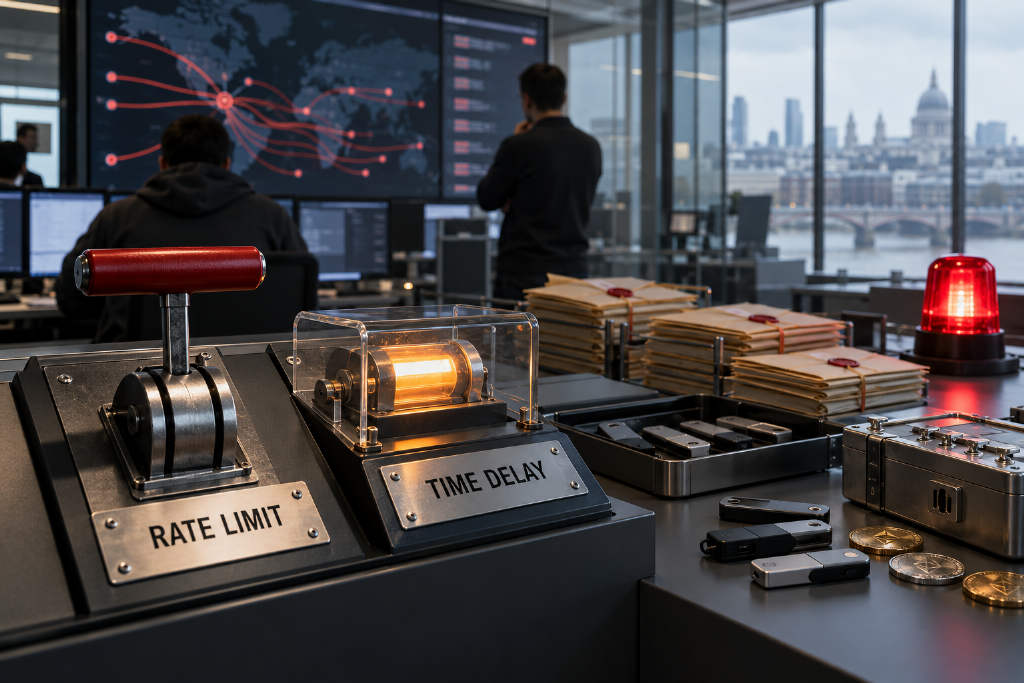
Calls for stronger protective controls resurfaced after record outflows, with industry participants again pointing to rate limits and time delays as tools that could reduce losses in future crypto thefts. Protos said this pattern is common after large-scale hacks, when debate shifts from the immediate damage to what safeguards might have slowed or contained it. One of the public comments highlighted in the report came from Arik Galansky, who wrote on October 30, 2026, that the ecosystem needs more rate limits and time delays. The report also noted that projects that have already put such controls in place used the moment to stress their value. While the source summary did not name specific projects or provide technical details, it framed the renewed discussion around practical mechanisms designed to limit how quickly funds can leave a system during an attack.
480
Record outflows revive calls for rate limits and time delays
Bitcoin mining
Oct 29, 2026

Bitcoin Still Leads as More Crypto Miners Shift Their Infrastructure to AI

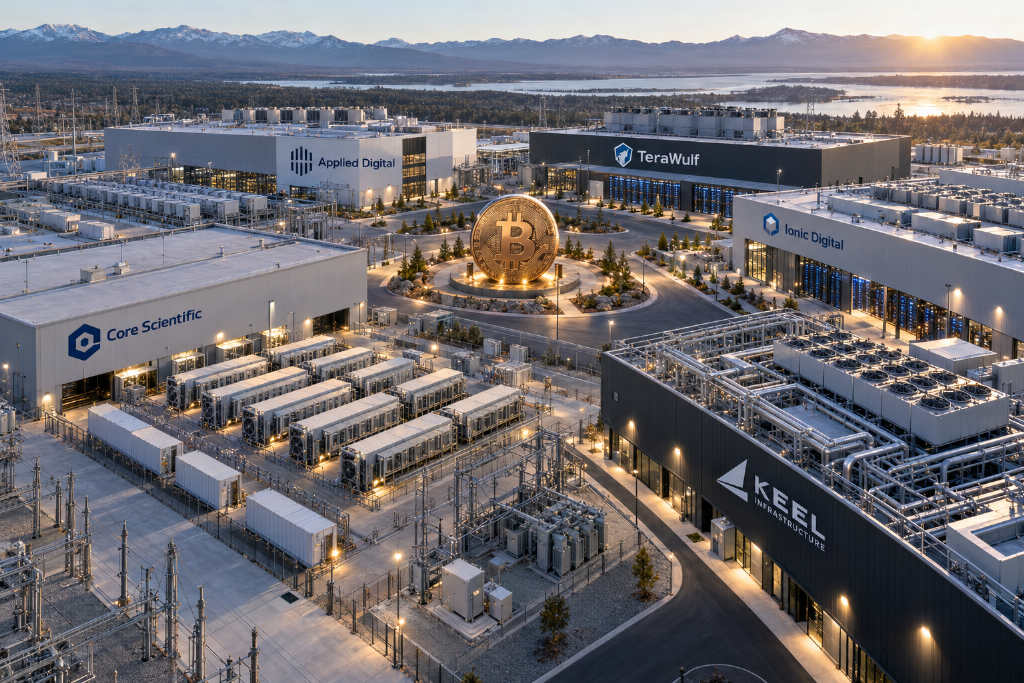
Several listed crypto mining companies have spent the past year moving away from bitcoin mining and repositioning their data centers, power contracts, and related infrastructure around artificial intelligence. According to Protos, that group includes Applied Digital, Core Scientific, TeraWulf, Ionic Digital, and Keel Infrastructure, the rebranded Bitfarms business. The filings cited in the report show a clear pattern: mining operations are being wound down, capital is being redirected to high-performance computing, and GPU-based services are being added as firms look for new revenue sources. The market picture is less decisive. Protos said that, when measured from Ionic Digital’s public listing, BTC has continued to outperform the former miners that pivoted to AI. Using the start of this year as the reference point, the AI-pivot group has only slightly outperformed miners that still derive most of their revenue from mining, and the stocks still tend to move together. The comparison is also getting harder to isolate because companies such as Iris Energy, Hut 8, Riot, and Bitdeer have also begun signing AI-related leases or GPU deals. In Protos’ framing, crypto mining is losing favor as a standalone business, while miners increasingly recast themselves as AI infrastructure providers.

530
Bitcoin Still Leads as More Crypto Miners Shift Their Infrastructure to AI
Policy Regulation
Oct 20, 2026

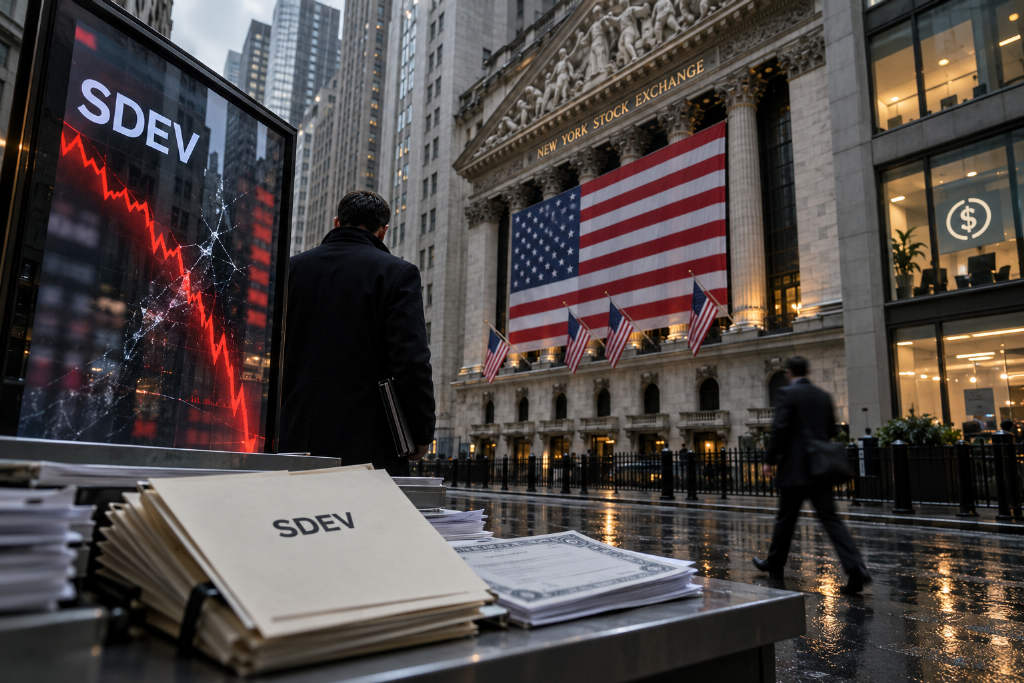
SDEV, a SKY treasury stock, fell more than 91% in two weeks as Fugazi flagged warrant dilution risk

Stablecoin Development Corporation (SDEV), a SKY treasury company listed on NYSE American, has dropped from an intraday high of $9.82 on Oct. 5 to $0.8384 by Oct. 19, a decline of about 91.5%. Based on the company’s reported 51.75 million shares outstanding, its market capitalization shrank from roughly $508 million to about $43.4 million. Protos, which has been tracking the stock, said it remains unclear why SDEV rose so quickly and then fell just as fast. The company had also told the U.S. Securities and Exchange Commission on Sept. 29 that it was not aware of any undisclosed material information that could explain the unusual trading activity. Short-selling research firm Fugazi Research pointed to dilution risk tied to 167.5 million prepaid warrants. Tether holds prepaid warrants convertible into 43.75 million shares after buying them with 35 million USDT in a January private placement. Half of those warrants became exercisable on Oct. 16, though Tether is subject to a 9.99% ownership cap. Protos said it had not seen any SEC filing showing that Tether had exercised the warrants.

1080
SDEV, a SKY treasury stock, fell more than 91% in two weeks as Fugazi flagged warrant dilution risk
Black Monday
Oct 19, 2026

Black Monday fears flare up, but market data points to a very different setup from 1987

Fears of another Black Monday spread over the weekend as traders and market commentators circulated warnings of a major sell-off, but Protos argues the comparison with 1987 does not hold up under the data. Late Sunday index futures pointed to only a mild gain, with Dow contracts up 0.1%, far from the 22.6% collapse recorded on October 19, 1987. The report says today’s market is also much closer to record highs than it was before the original crash: the Dow is within 4.5% of its all-time high and the S&P 500 is within 2% of a record. In 1987, by contrast, the Dow had already fallen about 17.5% from its August peak by the Friday close before Black Monday and had dropped more than 10% in the prior three sessions. Protos also highlights structural differences. The 1987 crash was amplified by portfolio insurance selling and the absence of modern circuit breakers. Today, a 7% drop in the S&P 500 triggers a 15-minute halt, while a 20% decline shuts US markets for the day, making a one-day 22.6% plunge mechanically impossible under current rules. On valuation and earnings, the report says the S&P 500 trades at an estimated 26 times trailing earnings versus 23.3 at the 1987 peak, while current constituents are posting much stronger earnings growth than companies did before the 1987 crash.

550
Black Monday fears flare up, but market data points to a very different setup from 1987
Bitcoin
Oct 1, 2026

Chart shows the average US worker now needs more than 12 months of pay to buy 1 BTC

A Protos chart says the average full-time private-sector worker in the US now needs more than a year of pre-tax wages to afford one bitcoin. The calculation assumes that all wages are used to buy BTC and excludes taxes and living costs. Even so, the current burden is lower than the peak reached in July 2025, when bitcoin averaged $115,101 and equaled 394 full-time working days, or 1.6 years, for the average US employee. Protos said the wage-based cost of 1 BTC has been falling since that July 2025 high. The chart uses wage averages from the US Bureau of Labor Statistics, along with pricing data from CoinMarketCap and Zorinaq.com. Its series begins on October 12, 2009, the date Protos identifies as the first sale of bitcoin for US dollars, when New Liberty Standard paid Martti Malmi $5.02 for 5,050 BTC. The historical breakdown in the chart shows how sharply the amount of labor needed to buy one bitcoin has changed over time, from less than one second in October 2009 to 2,127 hours, or 12 months, in September 2026.

840
Chart shows the average US worker now needs more than 12 months of pay to buy 1 BTC
Donald Trump
Sep 30, 2026

Trump’s AI-to-SI order triggers claims of insider trading in .si domains

US President Donald Trump’s executive order renaming Artificial Intelligence as Super Intelligence has triggered allegations that insiders may have profited from a rush into .si domain names before the announcement. According to Protos, independent journalist Adam Cochran said registrations of .si domains jumped in June and July ahead of Trump’s September 19 SI rebrand announcement, with roughly 12,000 domains registered before the move became public. Cochran said many AI- and MAGA-themed .si domains were bought for tens of thousands of dollars and later listed for millions, with Build.si offered for more than $14 million. He argued that the trading pattern did not resemble typical domain squatting in common words, but rather purchases of expensive aftermarket domains that began changing hands at roughly the same time. The report also noted that Trump’s order says the term AI is outdated and that the US government will stop acknowledging it in favor of Super Intelligence. Hours before the order, Trump met top executives from Anthropic, Meta, OpenAI, X, Nvidia, and Google at an AI summit, where they signed what the report described as a “morally binding” accord on AI safety.

840
Trump’s AI-to-SI order triggers claims of insider trading in .si domains
crypto market
Sep 25, 2026

Crypto traders turn to “dopamine shopping” as fake luxury checkouts gain traction

A niche online habit known as “dopamine shopping” is finding an audience among crypto users whose portfolios have stalled. The trend, which emerged in South Korea earlier this year, lets people browse and “buy” expensive items such as luxury watches, designer clothing, and upscale meals without spending real money. The appeal is the sensation of making a big purchase without taking the financial hit. Protos said the behavior is showing up in crypto circles after the sector’s total market capitalization fell 30% from its all-time high a year ago, leaving less room for actual luxury spending. A Singapore-based lawyer and crypto influencer mocked the idea by joking about a startup that would add real giveaways to fake shopping apps, saying a business that paired a dopamine purchase with a lottery entry for a real item could be worth “multi billions.” Examples already online include Dopamine Shop, which lists fake luxury jewelry and watches, and FoodNeverComes, a site that imitates the UberEats ordering flow. The BBC recently said FoodNeverComes has logged more than 2.7 million visitors since June 2026. This week, a commentator pushed the concept deeper into crypto culture after posting screenshots of fake storefronts that drew nearly two million views.

1790
Crypto traders turn to “dopamine shopping” as fake luxury checkouts gain traction
Donald Trump
Sep 9, 2026

Protos tracks Trump’s $2 gasoline pledge against a Labor Day average of $4.15

Protos said Labor Day 2026 became the most expensive Labor Day at the pump in US history, with gasoline averaging $4.15 a gallon nationwide. The report centers on Donald Trump’s repeated promise, made across rallies, speeches, and Truth Social posts since 2024, that gasoline would fall below $2 a gallon. Protos argues the record shows the opposite: prices stayed well above that target and, at several points, moved sharply higher. The article walks through a timeline of Trump’s statements, from his August and September 2024 campaign pledges to later claims in 2025 and 2026 that gas had either already fallen below key levels or soon would. Protos contrasts those remarks with national averages, fact-checks, and station-level data, including its note that only eight out of roughly 150,000 stations sold sub-$2 gasoline during the week of Trump’s February 24, 2026 State of the Union address. The report also links a later phase of Trump’s messaging to the war in Iran. After the US joined Israeli airstrikes on Iran, White House Press Secretary Karoline Leavitt and Energy Secretary Chris Wright said prices would fall, while Trump himself said gasoline and oil would drop once the war ended. Protos said that did not happen by Labor Day weekend, when AAA still showed a national average of $4.15 a gallon.

1500
Protos tracks Trump’s $2 gasoline pledge against a Labor Day average of $4.15
Total 21 items
Go topage