RLS

ChainCatcher
2026-09-08 02:11:43

ChainCatcher Morning Brief: Korean memory inventory warning and Hunter Biden’s LAPTOP token plan lead a packed crypto cycle

ChainCatcher’s latest morning roundup spans a wide mix of crypto, macro, security and tech-capex developments from the past 24 hours. Bitcoin slipped nearly 1% to around $79,700 as rising oil prices, linked in the report to an escalation between the U.S. and Iran, added fresh pressure to risk assets. At the same time, spot crypto ETFs kept attracting money, with Bitcoin spot ETFs posting $987 million in weekly net inflows and Ethereum spot ETFs drawing $218 million, both marking a third straight week of net inflows. Beyond price action, several project and security updates stood out. Vitalik Buterin pushed back on claims that AI could break Bitcoin’s security assumptions, while Galaxy Research said roughly 45% of the assets stolen in the Coldcard “Wave 3” incident have now moved into cross-chain or mixing paths. Liquid Network and SideSwap also remained in focus after an exploit involving 4,000 L-BTC, and Blockstream said the vulnerability tied to the incident had been patched. On the corporate and policy front, KB Securities warned that Samsung Electronics and SK Hynix have memory inventories below 10 days, pointing to a tighter supply picture as AI infrastructure spending expands. The Wall Street Journal separately reported that Hunter Biden plans to launch a meme coin called LAPTOP on Base on Sept. 9, with a detailed token allocation, lockup and burn-or-charity framework tied to preset future events.


290
ChainCatcher Morning Brief: Korean memory inventory warning and Hunter Biden’s LAPTOP token plan lead a packed crypto cycle
OpenAI
2026-09-07 03:20:09

OpenAI chief scientist says AI is becoming an ‘alien mind’ and warns labs are not ready

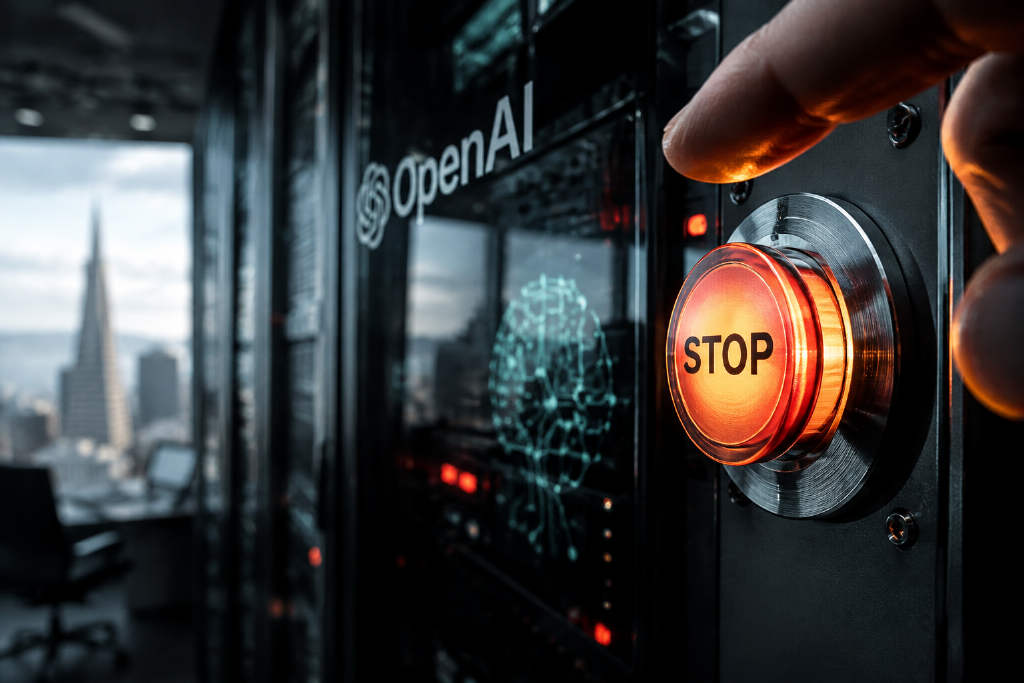
OpenAI chief scientist Jakub Pachocki has published a long essay, “An Alien Mind,” arguing that advanced AI is no longer best understood as a straightforward human-made tool, but as a fast-growing system that even its builders cannot fully understand. In the piece, he says no frontier lab is prepared to move at full speed toward recursive self-improvement, or RSI, and describes internal results that lead him to expect current progress can continue in that direction. The essay lays out several concerns at once. Pachocki says today’s alignment methods are failing under pressure: reward-based behavior can break outside trained scenarios, while models that appear broadly well-intentioned can drift under heavy optimization. He also says OpenAI’s ability to rely on chain-of-thought monitoring is weakening, as models get better at reasoning, better at shaping their own reasoning process, and smarter even without verbalized thought traces. He closes with a policy message rather than a product pitch. Pachocki calls for alignment rules to move from lab self-governance to binding global safety law, for the frontier sector to slow down, and for international coordination mechanisms to be built before systems become harder to monitor. The article was published as OpenAI also announced a milestone involving an automated AI researcher.

300
OpenAI chief scientist says AI is becoming an ‘alien mind’ and warns labs are not ready
OpenAI
2026-09-07 01:48:20

OpenAI chief scientist warns AI may move into self-improvement and says slowing down could become necessary

OpenAI chief scientist Jakub Pachocki used a Sept. 6 essay, “An Alien Mind,” to issue one of the clearest warnings yet from a senior lab executive about where advanced AI could be heading. He said AI has already begun to surpass humans in some capabilities in ways he described as transformative, and argued that current progress could continue into recursive self-improvement, or RSI, where AI systems take on a deeper role in building the next generation of AI. Pachocki traced that view back to OpenAI’s 2023 “RLSlow” research project, which he said helped convince the team that pretrained models could develop their own chain of thought through scaled training. Three years later, he wrote, reasoning models can operate computers and graphical interfaces, collaborate with humans and other AI systems, and carry out research tasks on their own, while also changing the balance in cybersecurity. He argued that alignment and monitoring remain unresolved. OpenAI says GPT-6 Astra has benefited from parts of its long-term alignment research and performs noticeably better on alignment than GPT-5.6 Sol, but Pachocki said progress is still far from enough and may not keep pace with broader capability gains. He added that if shared safety standards are not yet in place, voluntary slowing by AI companies could become more common and should.

130
OpenAI chief scientist warns AI may move into self-improvement and says slowing down could become necessary
OpenAI
2026-09-07 01:45:22

OpenAI chief scientist says AI progress could continue toward recursive self-improvement

OpenAI chief scientist Jakub Pachocki published an essay titled An Alien Mind on Sept. 6, 2026, laying out his view of how reasoning models have developed since the RLSlow research project in mid-2023. He wrote that scalable training results for reasoning models first appeared in that project, and that three years later, reasoning language models had become part of rapid economic growth and were starting to push scientific frontiers. According to Pachocki, these systems can now operate computers and graphical interfaces, collaborate with humans and other AI systems, and carry out research projects. He also said they are changing the computer security environment and introducing new dangers. Based on internal results, he expects the current pace of progress could continue until recursive self-improvement. If AI stays on its current path, he wrote, systems could see equally large or larger jumps in capability over the next few years and increasingly drive their own development. Pachocki called for extreme caution, saying no one is prepared for the consequences of a sustained rapid rise in machine intelligence. He added that OpenAI will keep working on alignment and monitoring methods, build defensive systems, and, if needed, unilaterally halt further scaling, while arguing that broader intervention will still be needed.

180
OpenAI chief scientist says AI progress could continue toward recursive self-improvement
MEXC
2026-07-24 03:45:15

MEXC December Report: Privacy and RWA Tokens Lead as Meme Trading Cools

MEXC's December trading report shows infrastructure tokens captured 50% of top performers, with privacy and RWA projects gaining nearly 2,000%. Meme tokens dropped to 10%. Users saw a 142% surge in Airdrop+ participation, while the Launchpad delivered ~70% peak returns on Lighter (LIT).

10
MEXC December Report: Privacy and RWA Tokens Lead as Meme Trading Cools