Solana
Oct 29, 2026

Machine.fun launches on Solana with public fundraising and trading support

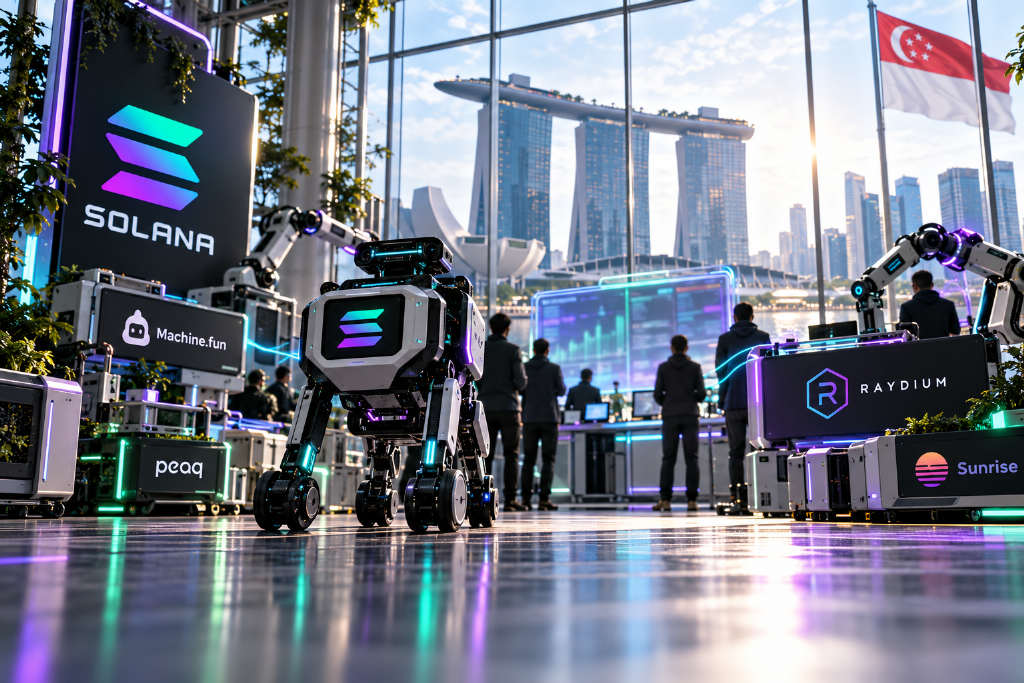
Machine.fun, a robot project launch platform under Peaq, has gone live on Solana, according to a post from Solana’s official X account, @solana. The platform has integrated Sunrise and Raydium and is designed to let users bring real-world machine devices on-chain, raise funds for them publicly, and enable trading from day one. Techub reported that the platform is built on Raydium’s LaunchLab and is backed by Codec OpenFlow and Peaq. The update points to a new route for machine-based projects to access on-chain fundraising and immediate market trading within the Solana ecosystem.

990
Machine.fun launches on Solana with public fundraising and trading support
Bitcoin
Oct 22, 2026

DeFi Tokens With Rising Holder Payouts Outperformed While Bitcoin Traded Sideways

A 59-day comparison compiled by The DeFi Edge found that DeFi tokens returning more value to holders through buybacks, burns, or direct distributions generally posted stronger price performance than Bitcoin during a period of range-bound trading. From Aug. 22 to Oct. 20, Bitcoin closed each day between $75,600 and $86,600, gaining 5.6%, while Ether fell 2.7%. Among 19 large-cap DeFi tokens with a record of distributing value to holders, 14 beat Bitcoin, and the group’s median gain reached 12.9%. The study focused on what DeFiLlama classifies as real yield to token holders rather than total protocol revenue. Tokens were included only if they belonged to core DeFi sectors, had a market capitalization above $100 million on Aug. 22, and had distributed value to holders at some point over the past year. Tokens in the group with rising holder payouts posted a median gain of 18.3%, compared with 6.9% for the rest. Raydium, Uniswap, and Aerodrome were highlighted as leading examples tied to identifiable revenue drivers, while Hyperliquid, Sky, and Aave showed that payout growth or low valuation multiples alone did not fully explain price action. The article also noted limits in the sample size and time frame, and said the framework should be treated as an observational tool rather than a predictive rule.

790
DeFi Tokens With Rising Holder Payouts Outperformed While Bitcoin Traded Sideways
Raydium
Oct 21, 2026

Raydium posts $7.99 million in Q3 net revenue as treasury assets reach $243 million

Blockworks’ report on Raydium’s third quarter of 2026 showed a sharp rise in revenue, cash flow, buybacks, and treasury assets, driven by growth in tokenized assets and a rebound in meme-token trading. Net revenue rose 264.2% quarter over quarter to $7.99 million, while operating cash flow increased 263.6% to $8.67 million. Programmatic RAY buybacks reached $5.23 million during the quarter, bringing cumulative buybacks to $204 million, equal to 32.1% of circulating supply. Treasury assets climbed 150.1% from the prior quarter to $243 million, including $72.55 million in non-RAY reserves. By business line, CLMM remained the largest contributor, LaunchLab revenue jumped after the migration of tokenized stock launch platform StonkFun, CPMM also expanded, and AMM v4 declined. Total trading volume rose to $19.99 billion, with tokenized assets generating $3.99 billion in volume and 45% of swap fees. Raydium’s share of Solana tokenized-asset spot volume also increased from 36.2% to 49.8%. The protocol also launched permissioned liquidity pools for compliant asset trading and an "Any Token Pair" mode for custom quote assets during the quarter.

900
Raydium posts $7.99 million in Q3 net revenue as treasury assets reach $243 million
Raydium
Oct 18, 2026

Raydium quarter review flags heavy reliance on StonkFun as Q4 durability comes into question

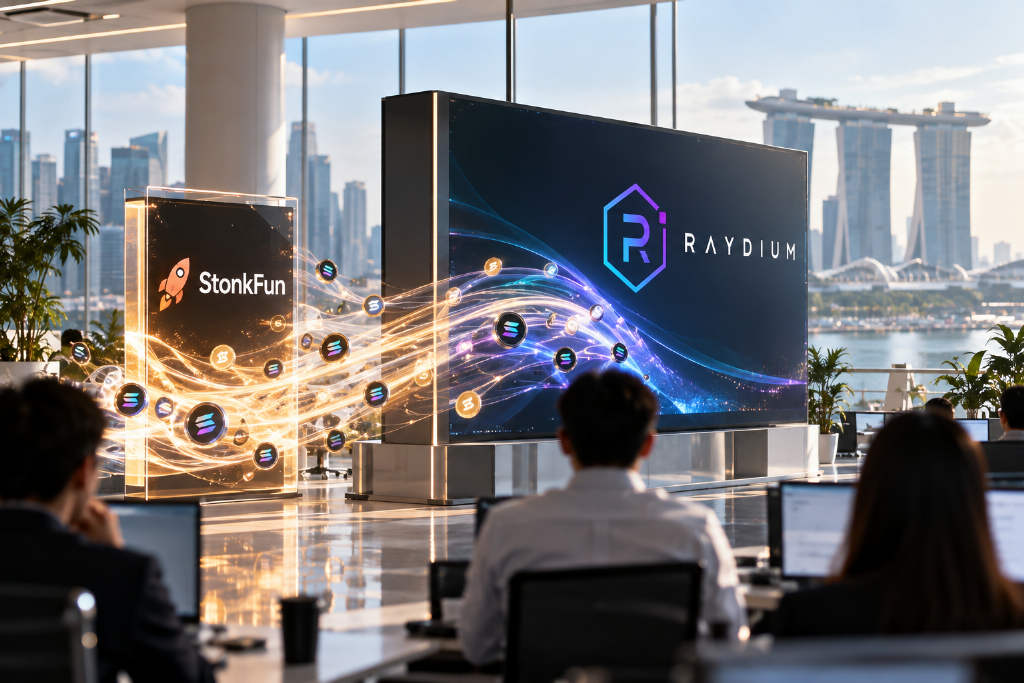
Raydium’s quarterly performance was driven heavily by StonkFun, according to PineAnalytics, which said the partner sparked a surge in activity within a single month. That burst of trading accounted for 62% of Raydium’s volume for the entire quarter, making the platform’s recent momentum look highly concentrated rather than broad-based. The data point stands out because it suggests a large share of Raydium’s fee growth came from one source over a short period. While the quarter showed strong transaction-fee expansion, the concentration also raises a clear risk heading into the fourth quarter. If a large portion of activity depends on one partner, investors and market watchers may question how durable that growth will be once the one-off boost fades. The note frames StonkFun as both the engine behind the quarter’s standout numbers and the main reason some analysts are cautious about whether the pace can continue in Q4.

1100
Raydium quarter review flags heavy reliance on StonkFun as Q4 durability comes into question
NEAR
Oct 16, 2026

NEAR connects to Solana via Sunrise, up about 14% in 24 hours

Near Protocol and Sunrise said on Oct. 15 that NEAR has been connected to Solana through Sunrise, extending NEAR liquidity to Solana wallets, decentralized exchanges Jupiter and Raydium, and trading aggregators. The cross-chain route is powered by Near Intents, with NEAR as the first supported asset in the initial phase. The partners said they plan to add more assets later and eventually integrate Near Intents directly into Sunrise. Following the announcement, NEAR traded in the $5.24 to $5.30 range and was up about 14% over the past 24 hours. Over the last 30 days, the token's price has more than doubled. Separately, Bitcoin.com News reported that Helius CEO Mert Mumtaz has joined the Near Foundation Council, where he will take part in product strategy, market execution, and ecosystem development.

1510
NEAR connects to Solana via Sunrise, up about 14% in 24 hours
StandX
Oct 15, 2026

StandX to shut down, scrap native token plan and airdrop remaining revenue in DUSD

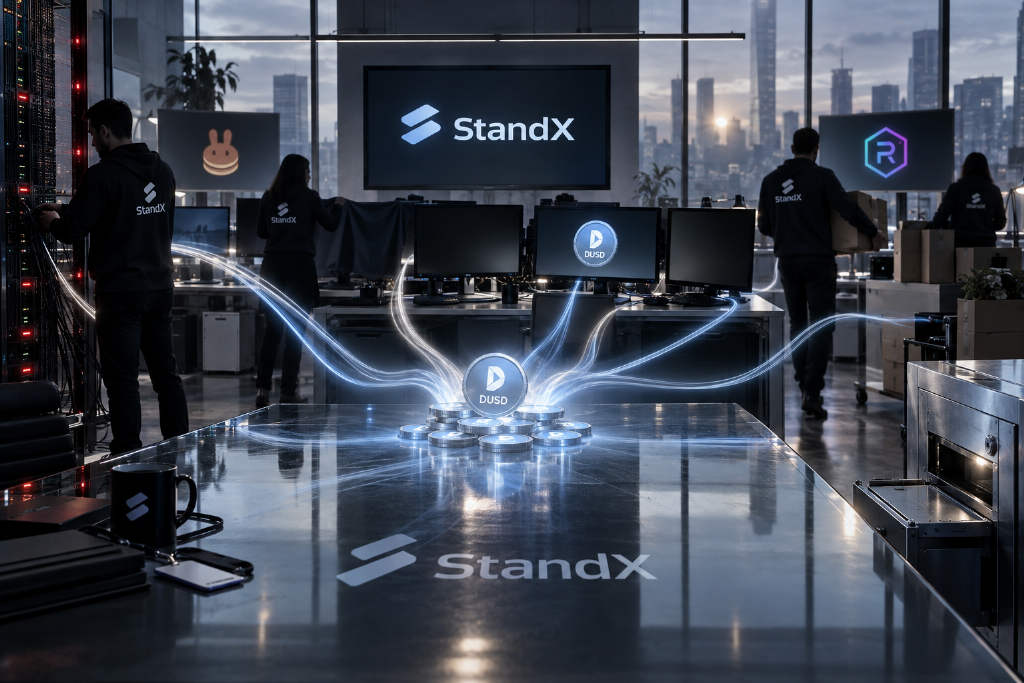
StandX, a decentralized derivatives trading platform, said it will wind down operations and abandon plans to launch a native token. Instead, the protocol will distribute all remaining platform revenue, along with additional capital injected by the team, to the community through a one-time DUSD airdrop with no lock-up or vesting restrictions. According to the project’s official announcement, the eligibility checker will open at 00:00 UTC on Oct. 26, or 08:00 Beijing time the same day. Claims will be available from 00:00 on Nov. 1 through 08:00 on Dec. 31. Any DUSD allocation not claimed on-chain before the deadline will be fully burned under preset smart contract rules. StandX also laid out a phased sunset schedule. Trading reward subsidies and Vault deposits stop on Oct. 15. On Oct. 20, perpetual trading moves to reduce-only mode, new user address registration will close, and new DUSD minting will stop. On Jan. 15, 2027, all open positions will be forcibly closed at the prevailing on-chain spot mark price. By Jan. 31, 2027, the platform will shut its official DUSD redemption and withdrawal gateway and remove all DUSD liquidity from PancakeSwap and Raydium. The project said all circulating DUSD remains fully backed and its on-chain wind-down will conclude at midnight U.S. Eastern Time on Jan. 31, 2027.

1410
StandX to shut down, scrap native token plan and airdrop remaining revenue in DUSD
token buybacks
Oct 7, 2026

Why heavy token buybacks may not actually benefit holders

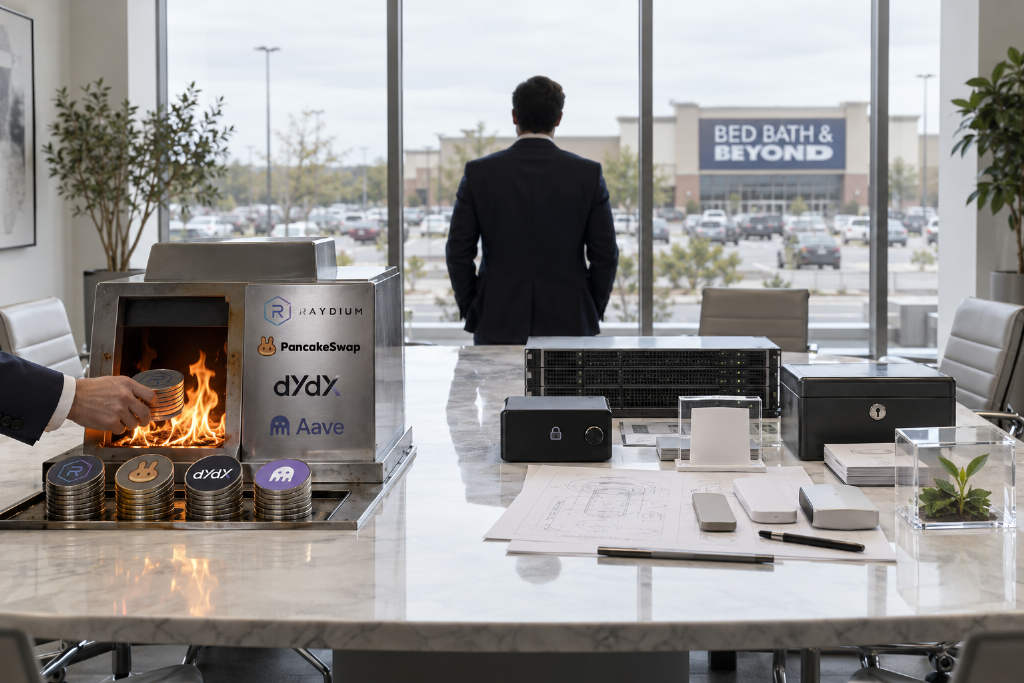
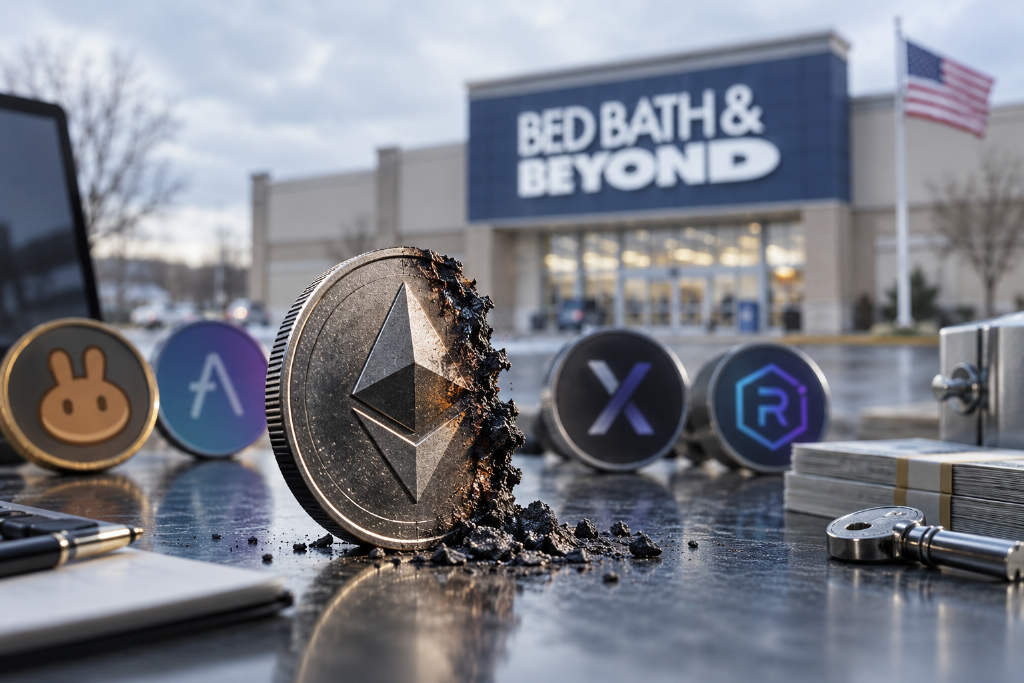
A MarsBit opinion piece by Danny argues that crypto protocols sending most of their revenue into token buybacks and burns are not automatically creating long-term value for holders. The article uses Bed Bath & Beyond’s collapse as a corporate analogy: a company can keep repurchasing equity while weakening its ability to fund operations, reinvest, and withstand stress. From there, it applies the same lens to crypto, asking whether protocols that devote 80%, 90%, or even all fee income to buybacks are sacrificing product development, security reserves, distribution, and ecosystem growth for a cleaner secondary-market narrative. The piece compares several protocols and mechanisms, including PONS, Pump.fun, Raydium, PancakeSwap, dYdX, Aave, and Aster. It argues that headline buyback ratios can be misleading because fee flows, treasury assets, foundation funds, and operating cash may sit in different entities, while bought-back tokens may be burned, held, or redistributed rather than permanently removed from circulation. It also stresses that crypto revenue is highly cyclical, making aggressive buyback commitments fragile when income drops or security incidents hit. Danny’s conclusion is not that buybacks are always bad. Instead, he argues they make sense only after a protocol has durable competitive advantages, limited reinvestment needs, and enough reserves. Otherwise, early buybacks may improve token marketing and exit liquidity more than they improve the business itself.

1180
Why heavy token buybacks may not actually benefit holders
protocol buybacks
Oct 7, 2026

Do Crypto Buybacks Really Benefit Token Holders? A Case Against Sending Most Protocol Revenue to Burns

A PANews opinion piece argues that aggressive token buyback-and-burn programs should not be treated as an automatic positive for holders. Written by danny, the article uses Bed Bath & Beyond’s bankruptcy as a starting point to show how capital spent on repurchases cannot be used for product upgrades, operations, supplier relationships, or balance-sheet resilience. The same logic, the author says, applies to crypto protocols that commit 80%, 90%, or even all revenue to buying back their own tokens. The piece compares several protocols, including PONS, Pump.fun, Raydium, PancakeSwap, dYdX, Aave, and Aster, arguing that headline buyback ratios often hide a more important question: how much cash is left for research, infrastructure, security, growth, and emergency reserves. It also stresses that fee flow is not the same as profit, and that treasury strength cannot be judged from a single buyback wallet. The article’s core argument is that buybacks only make sense after a protocol has secured durable competitive advantages, sufficient reserves, and limited reinvestment needs. In a cyclical industry where revenue can fall sharply and security incidents can produce outsized losses, committing too much revenue to repurchases may weaken long-term competitiveness while making token marketability a higher priority than business durability.

1280
Do Crypto Buybacks Really Benefit Token Holders? A Case Against Sending Most Protocol Revenue to Burns
Total 66 items
Go topage