Penguin Solutions eyes Japan launch for CXL AI memory server as alternatives to Nvidia reshape HBM demand
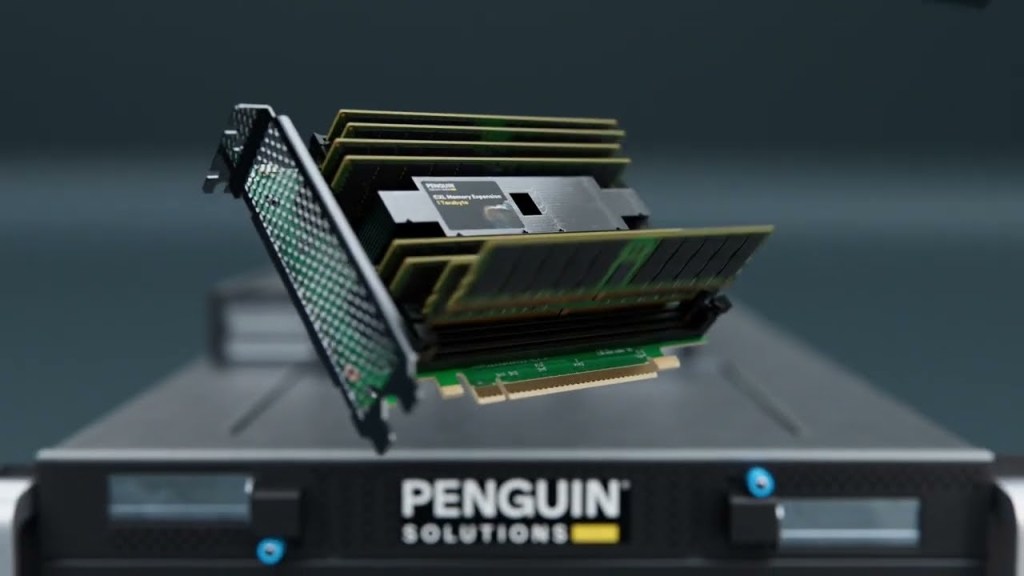
Japan’s AI industry is moving to reduce its reliance on Nvidia GPU servers, according to a Nikkei Asia report, and one of the clearest examples is Penguin Solutions’ plan to introduce its MemoryAI KV cache server in Japan in the fourth quarter of 2026. The product is designed to expand memory capacity for large language model inference by offloading KV cache from GPU-based high-bandwidth memory to external DDR5 memory through CXL, or Compute Express Link. Nikkei Asia said the system can be configured with up to 11 TB and may cut per-GB memory expansion costs to between one-third and one-seventh of a GPU expansion approach, while running 10 times faster than NVMe-based alternatives. The report also pointed to a second track in the same “de-Nvidia” shift: lower-power inference systems built around NPUs. Toyotsu Device has signed an MOU with South Korean AI startup Rebellions and is now conducting a proof of concept in Japan with local AI company Tomorrow Net using servers equipped with Rebellions NPUs. Nikkei Asia argued that these changes could affect demand for high-bandwidth memory, a market where Counterpoint data puts SK hynix at 58%, Samsung at 21%, and Micron at 21% by revenue. As AI workloads move from training toward inference, the report said, memory-optimized and lower-power architectures may emerge as a longer-term challenge to GPU-centered infrastructure.