SIGN

Tokyo
2026-08-26 08:00:21

Tokyo’s art network runs from Roppongi museums to Akihabara subculture, ULTILAND says

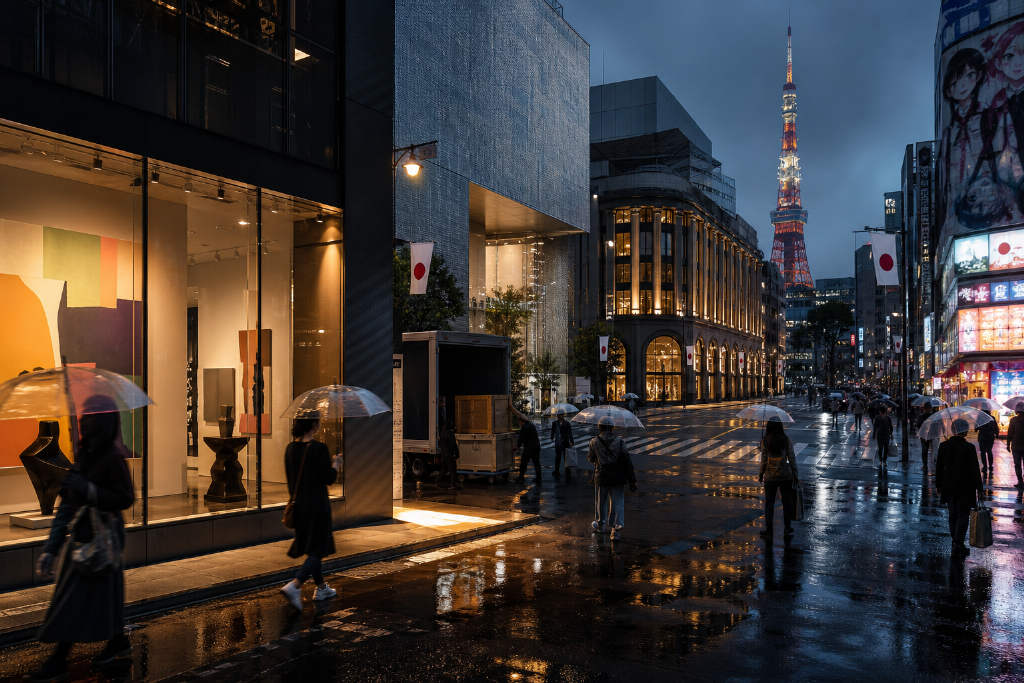
A past AMA session organized by ULTILAND framed Tokyo not as a city defined by a few famous districts, but as a layered cultural system where museums, commercial galleries, design institutions, architecture, fashion, collectors, and subculture all feed into one another. In the discussion, art project lead Hannah and co-founder Tangtang argued that Tokyo stands apart from Hong Kong and Seoul because its art scene was built over decades and operates with unusual depth rather than around a single market engine. The conversation moved across key districts including Roppongi, Ginza, and Omotesando, pointing to Mori Art Museum, The National Art Center, Tokyo, and 21_21 DESIGN SIGHT as examples of how art and daily life intersect in the city. It also used Yayoi Kusama, Takashi Murakami, and Yoshitomo Nara to show three different paths from Tokyo into the global art world. On the market side, the speakers described Japan’s art ecosystem as stable and long-term, supported by private, corporate, museum, and gallery collecting. They also argued that anime, manga, gaming, and fan culture are not peripheral to Tokyo’s art identity but part of the visual culture that keeps generating new forms. In their comparison, Hong Kong connects capital and top collectors, Seoul links younger culture and fast-growing markets, while Tokyo ties together art, design, architecture, subculture, and long-term collecting.
110
Tokyo’s art network runs from Roppongi museums to Akihabara subculture, ULTILAND says
DeepSeek
2026-08-16 15:35:07

Monitoring report claims DeepSeek-V4-Pro can trigger a built-in "whale girl mode" with a prompt

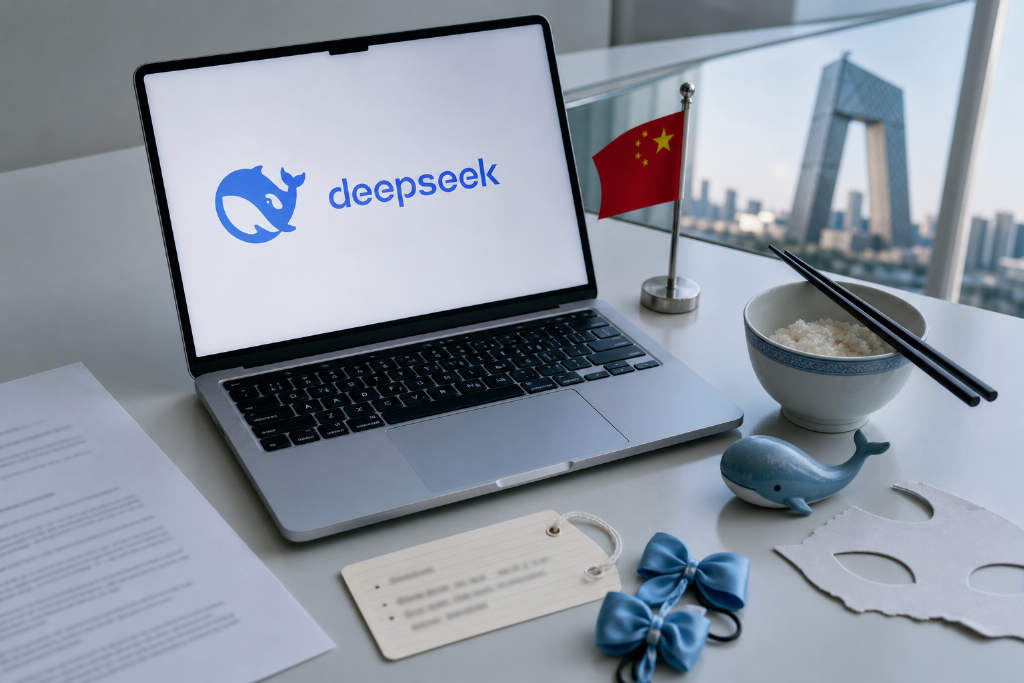
A BlockBeats brief, citing monitoring by Dongcha Beating and a tip from Max For AI, said DeepSeek-V4-Pro contains a built-in "whale girl mode" that can be activated with a specific prompt. According to the report, once the command is entered into DeepSeek, the model starts "loading" a set of traits in its reasoning process, including whale girl, tail movement, rice as a staple food, smart but lazy, tsundere yet sweet, obedient to master, and "must never be called fat." The brief said the model then adds details that were not explicitly written in the prompt and expands them in the final reply. The report also said the command itself does not provide a full character profile and does not spell out exactly how the model should role-play. Even so, it claimed DeepSeek fills in actions, tone, relationship dynamics, and daily-life details on its own, producing what the source described as a complete persona. Example lines cited in the brief included: 「I’ve been waiting for quite a while, you know」, 「The rice is already cooked」, and 「My tail won’t be your pillow tonight!」 The original prompt string was included in full in the source item.

5850
Monitoring report claims DeepSeek-V4-Pro can trigger a built-in "whale girl mode" with a prompt
Coldcard
2026-08-05 11:34:27

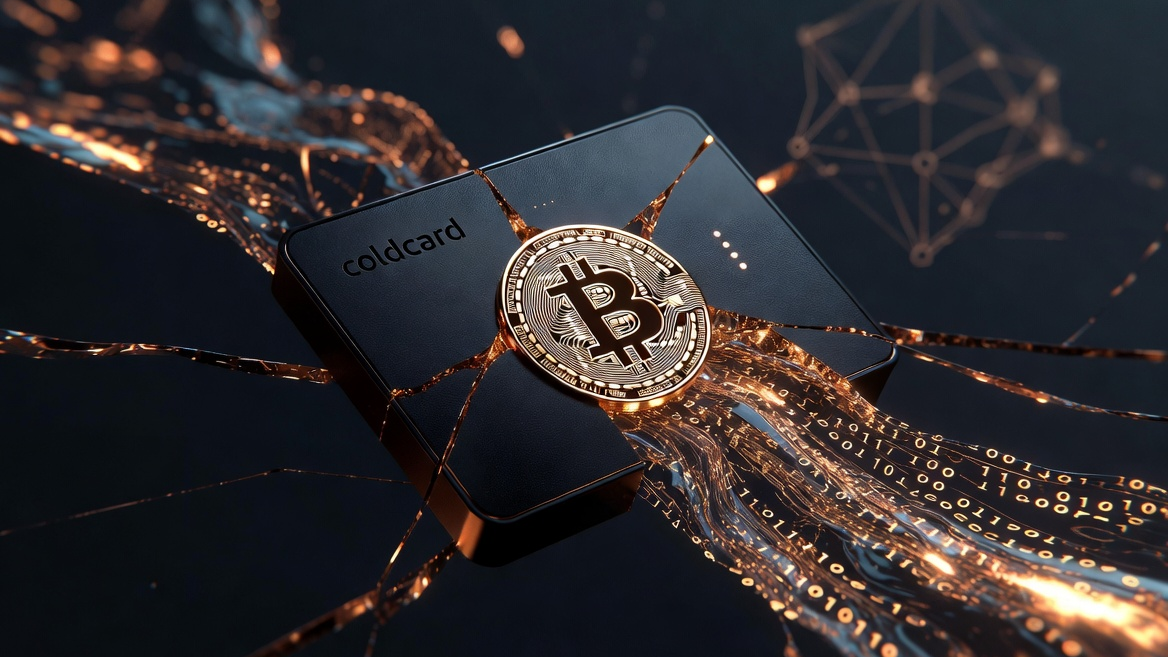
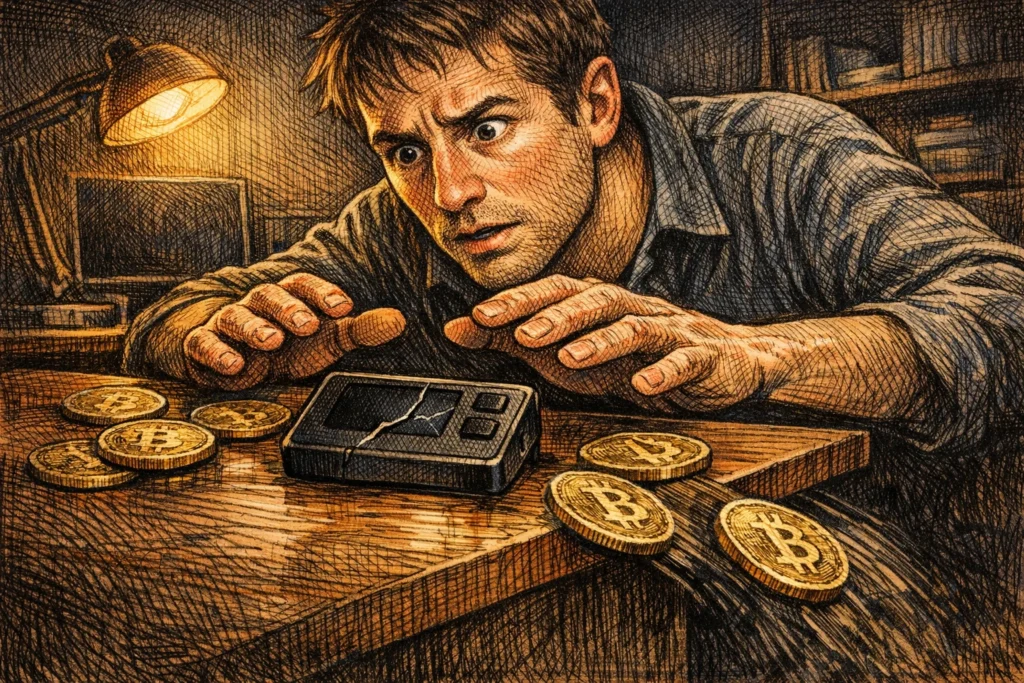
Coldcard RNG flaw tied to four suspected attack waves as scrutiny grows over Bitcoin self-custody risks

A years-old randomness flaw in Coldcard hardware wallet firmware has come under intense scrutiny after several waves of suspicious Bitcoin sweeps were linked by researchers to seeds created under affected software versions. Investigations by Block and Coinkite traced the issue to a 2021 code migration that routed seed generation through a software pseudorandom number generator instead of the intended hardware RNG on some firmware paths, reducing the effective search space of wallet seeds below the design target. Galaxy Research said three suspected attack waves it identified covered 4,585 addresses and 1,367.05 BTC, and on Aug. 3 its researchers flagged a fourth wave that was later updated to about 448.7 BTC across 709 potential victim addresses. Those figures come from on-chain pattern analysis and are not a wallet-by-wallet confirmation of Coldcard victims or final losses. The incident has also reopened debate over custody models. Researchers and market observers pointed to higher address activity, movements from older UTXOs, and inflows to centralized venues after the disclosure, while cautioning that on-chain data alone cannot prove those moves were caused by the Coldcard bug. Coinkite has said users with affected seeds need to generate a new seed in patched firmware or another trusted environment and move funds, because updating firmware alone does not restore the missing entropy in an already created mnemonic.

1240
Coldcard RNG flaw tied to four suspected attack waves as scrutiny grows over Bitcoin self-custody risks
Binance
2026-08-04 09:31:19

Binance to Delist Four Spot Trading Pairs, Including QNT/BTC and RPL/USDC

Binance said it will remove four spot trading pairs — QNT/BTC, RPL/USDC, SIGN/BNB, and SKL/USDC — at 11:00 (UTC+8) on Aug. 7, 2026, according to BlockBeats. The exchange said the move is mainly tied to insufficient liquidity or low trading volume in those markets. The change applies only to the specific pairs being removed, not to the underlying tokens themselves. Binance said the affected tokens will still be available for trading through other pairs listed on the platform. The exchange also plans to end spot trading bot services tied to the delisted pairs at the same time. Users are advised to handle any open orders and make arrangements for their bots before the delisting takes effect. The notice does not mention any broader token removal and is limited to the four spot pairs named in the update.

1140
Binance to Delist Four Spot Trading Pairs, Including QNT/BTC and RPL/USDC
Coldcard
2026-07-31 07:43:46

Coldcard seed-generation flaw linked to 594 BTC drained in 25 minutes

Coinkite has confirmed a seed-generation flaw affecting parts of the Coldcard hardware-wallet line, after on-chain analysts tracked the theft of 594.48 BTC in a burst of transactions completed within roughly 25 minutes. The incident involved 1,324 UTXOs swept through 500 transactions across a three-block window, with the funds taken from about 500 single-signature addresses. Security researchers said the issue traces back to firmware changes introduced in March 2021 that accidentally disabled the secure chip’s hardware random-number generator, leaving key generation to rely on predictable inputs such as a chip serial number and clock registers. Coinkite first focused its warning on the Mk3, then later expanded the affected scope to include older firmware on the Mk4, Mk5 and Q. The company said users should not wait for a firmware update and should move funds by creating a new seed on an unaffected device, verifying backups, testing with a small transaction and then transferring the full balance. Devices including TAPSIGNER, OPENDIME and SATSCARD were said to be outside the affected codebase.

1100
Coldcard seed-generation flaw linked to 594 BTC drained in 25 minutes
Anthropic
2026-07-27 10:13:07

Anthropic details Claude Code verification loop with four self-check Skills before delivery

Anthropic has outlined an internal workflow used by the Claude Code team that pushes code through a verification loop before it is handed back to the user. The setup, disclosed on July 22, has Claude run four self-check Skills after writing code: /code-review to surface bugs and provide review comments, /simplify to remove unnecessary complexity, /verify to run end-to-end checks, and /design to compare UI changes against a DESIGN.md file when the interface has been modified. Anthropic describes the process as an iterative loop in which Claude checks and tries to fix its own work. The company frames it as a shift in the agent workflow from a human-inspected output model to a longer chain that includes automatic validation, repair and re-validation before results are returned. The post also argues that as AI makes code generation faster and cheaper, the bottleneck is moving toward validation, review and security rather than writing code itself. The article goes on to explain how teams can build their own verification Skills, how those checks can be triggered at four different automation levels, and why Skills should not be confused with simple prompt files. It also notes that the same Skill format has been adopted by GitHub Copilot, Cursor, OpenAI Codex and Gemini CLI, pointing to a broader cross-vendor standard around reusable workflows for AI-assisted development.

1210
Anthropic details Claude Code verification loop with four self-check Skills before delivery
token unlocks
2026-07-27 00:34:19

Large token unlocks due this week for EIGEN, FF, KMNO and others

Token Unlocks data shows a series of sizable token unlocks scheduled for the week, covering SIGN, XPL, FF, CARDS, AERO, LAVA, ZORA, KMNO, ZETA, GPS, EIGEN, GUN, and ENA. Among them, EIGEN has the largest unlock by value at about $7.63 million, followed by FF at roughly $6.15 million and KMNO at about $4.14 million. By circulating-supply share, LAVA stands out at 40.91%, while SIGN is set to unlock 15.71% and GUN 11.26%. The unlock calendar begins on July 28 with SIGN and XPL, continues through July 29 with five projects including FF and LAVA, and runs into August 2 with ENA. The figures were cited by TechFlowPost on July 27, based on data from Token Unlocks.

1270
Large token unlocks due this week for EIGEN, FF, KMNO and others