Google DeepMind
Oct 15, 2026

Google SynthID makes TIME's 2025 Best Inventions list

Techub News reported that Google DeepMind said in a post on X that Google SynthID has been named to TIME's 2025 Best Inventions list. The company described SynthID as an AI content watermarking and detection technology developed by Google DeepMind. The update was presented as a company announcement, with no additional details in the source about the selection criteria, product rollout, or commercial plans. The reported facts are limited to the TIME recognition and the product's stated function in watermarking and detecting AI-generated content.

990
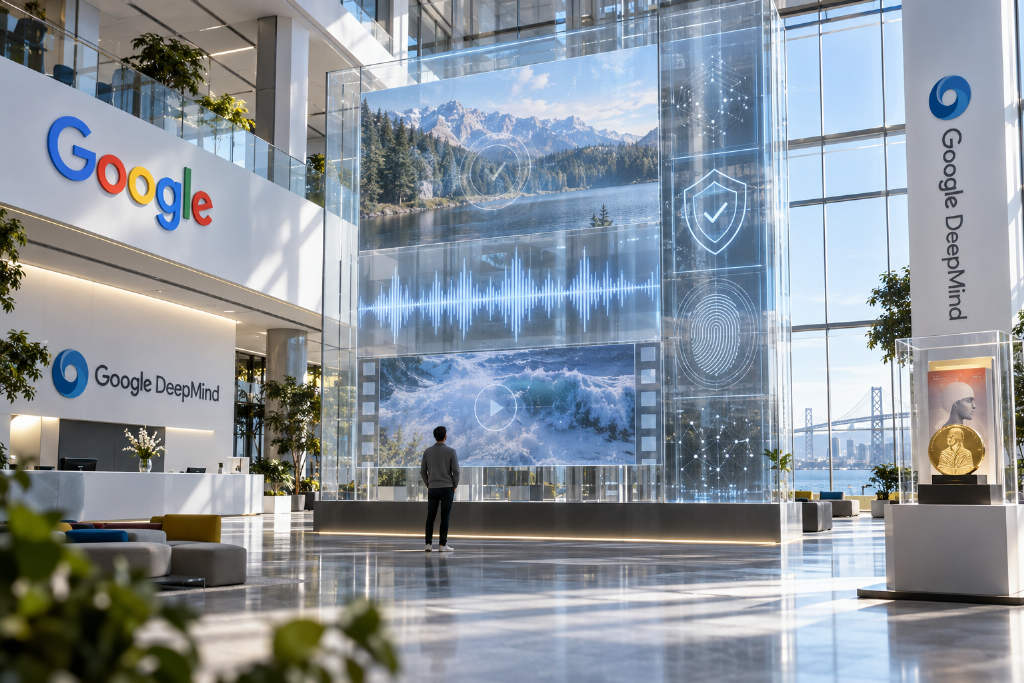
Google SynthID makes TIME's 2025 Best Inventions list
Google
Oct 8, 2026

Google opens SynthID Detector globally, adding support for ChatGPT image watermark checks

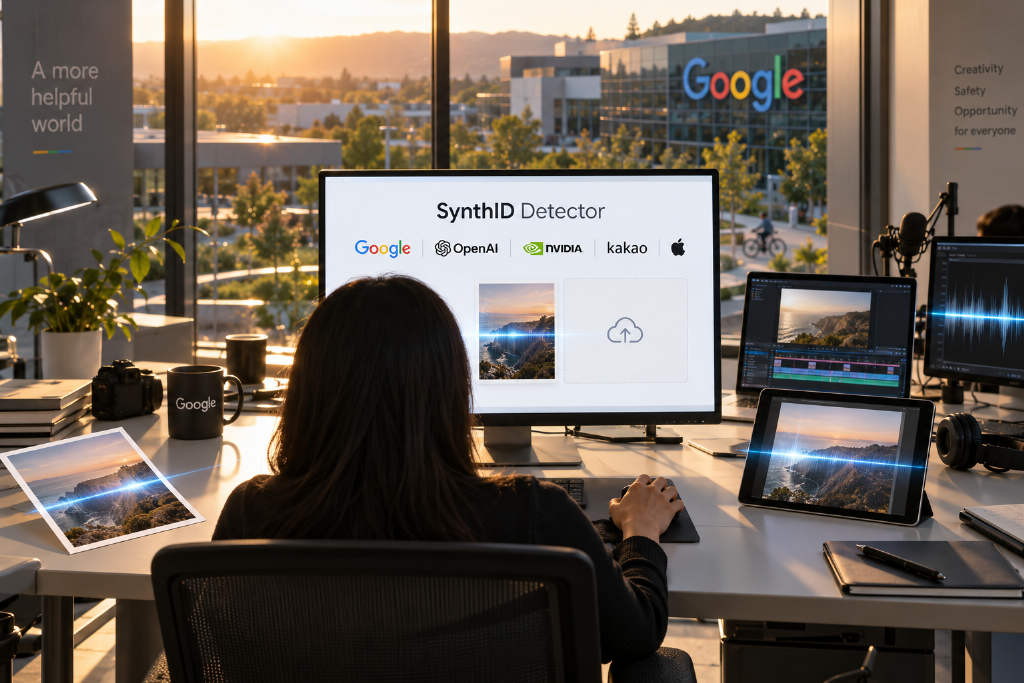
Google has opened SynthID Detector to users worldwide, allowing people to upload images, video, or audio files to check whether they contain invisible watermarks embedded during AI generation. The tool had previously been tested mainly with media professionals. The updated detector no longer stops at Google-made content. It now supports SynthID watermark detection for material from OpenAI, Nvidia, and Kakao, with Apple set to join as well. That is a notable change from the earlier version, which could only identify Google’s own watermarks. Under that setup, even if an image generated by ChatGPT carried a SynthID mark, Google’s detector would not flag it. Google also makes clear that the tool has limits. It can only identify supported SynthID watermarks rather than all AI-generated content. A file that returns no watermark result should not be treated as proof that it was made by a human. The website requires login access, and each user gets roughly 10 detection attempts per day. The detector is available at synthid.com.

1020
Google opens SynthID Detector globally, adding support for ChatGPT image watermark checks
Google
Oct 8, 2026

Google opens SynthID Detector to the public for checking AI-generated content from OpenAI and others

Google DeepMind said on Oct. 7 that SynthID Detector, its tool for checking AI-generated media, is now available to all users through a standalone website. The service lets people upload images, videos, or audio files to see whether they were created with AI tools from Google or partner companies including OpenAI, NVIDIA, and South Korea’s Kakao. Apple is also set to join soon. According to an official blog post by Pushmeet Kohli, vice president of science and strategic initiatives at Google DeepMind, SynthID was introduced in 2023 to embed invisible digital watermarks into AI-generated images, video, and audio. Google said more than 180 billion images and videos have already been marked with SynthID, along with audio whose total duration equals 240,000 years. The company added that verification features built into Google Search, the Gemini app, and Chrome now handle more than 1 million queries a day. The detector is not a general-purpose AI checker. Google said it can only identify content generated by participating companies’ tools when that content carries a SynthID watermark. If media was made by other models or heavily modified, the result may show no detection. MacRumors also reported that users must sign in to use the site and noted the tool cannot tell whether content was fully generated by AI or merely edited with AI.

1050
Google opens SynthID Detector to the public for checking AI-generated content from OpenAI and others
Google
Oct 7, 2026

Google opens SynthID detector to the public, says more than 180 billion items carry its watermark

Google has opened public access to its SynthID AI watermark detection tool, allowing anyone to check whether an image, video, or audio file was generated by Google AI or by partner systems tied to the SynthID framework. Google said the partner list includes companies such as OpenAI and NVIDIA. The release gives broader access to a tool that had previously been limited, but its scope remains narrow: it can only identify media that contains a SynthID watermark, rather than all AI-generated content. Google also disclosed the scale of adoption for the watermarking system, saying that more than 180 billion images and videos have already been marked with SynthID. That figure points to wide deployment across supported media, though the company did not say that the detector can recognize every form of synthetic media on the market. The report was cited by The Decoder.

990
Google opens SynthID detector to the public, says more than 180 billion items carry its watermark
Google
Oct 7, 2026

Google expands SynthID detector and launches a dedicated site for watermark checks

Google has upgraded SynthID, its watermark detection tool for AI-generated media, and opened a dedicated website to users worldwide. The updated detector can identify SynthID watermarks embedded in content produced by Google’s Gemini models and can also detect similar watermarks from partner systems, with ChatGPT cited as one example. SynthID works by inserting invisible signals into AI-generated images, video pixels, and audio waveforms. Google said Gemini alone has already applied SynthID to more than 180 billion images and videos, along with audio totaling 240,000 years. Previously, users outside testing programs generally had to ask Gemini whether content contained a watermark, a process Google described as cumbersome and not always clear in its results. With the launch of SynthID.com, users can now upload content directly for detection. Google said the change is meant to simplify provenance checks and authenticity verification for AI-generated material. The development was reported by Ars Technica AI.

900
Google expands SynthID detector and launches a dedicated site for watermark checks
Google Research
Sep 28, 2026

Google Research unveils AI co-director framework for coherent videos up to 10 minutes

Google Research has introduced an agent framework called AI Co-Director, aimed at addressing identity drift and cascading errors in long-form video generation. The suite includes four components — Co-Director, CANVAS, A²RD, and VQQA — that can stitch short clips into multi-minute story videos while also supporting voice and soundtrack generation. According to the information cited from MarkTechPost, Co-Director scored an average of 81.4 on the GenAD-Bench benchmark and received a human rating of 3.96 out of 5. CANVAS improved background continuity, character consistency, and prop consistency by 21.6%, 9.6%, and 7.6%, respectively. A²RD improved consistency by as much as 30% across videos ranging from 1 to 10 minutes, while boosting narrative coherence by 20%. The system is built on top of Gemini and Veo, but Google Research said the design is model-agnostic and can work with other generators. Outputs also inherit the base model’s SynthID watermarking technology.

1120
Google Research unveils AI co-director framework for coherent videos up to 10 minutes
Google
Sep 26, 2026

Google opens free 1080p AI video generation to all Google accounts in Vids

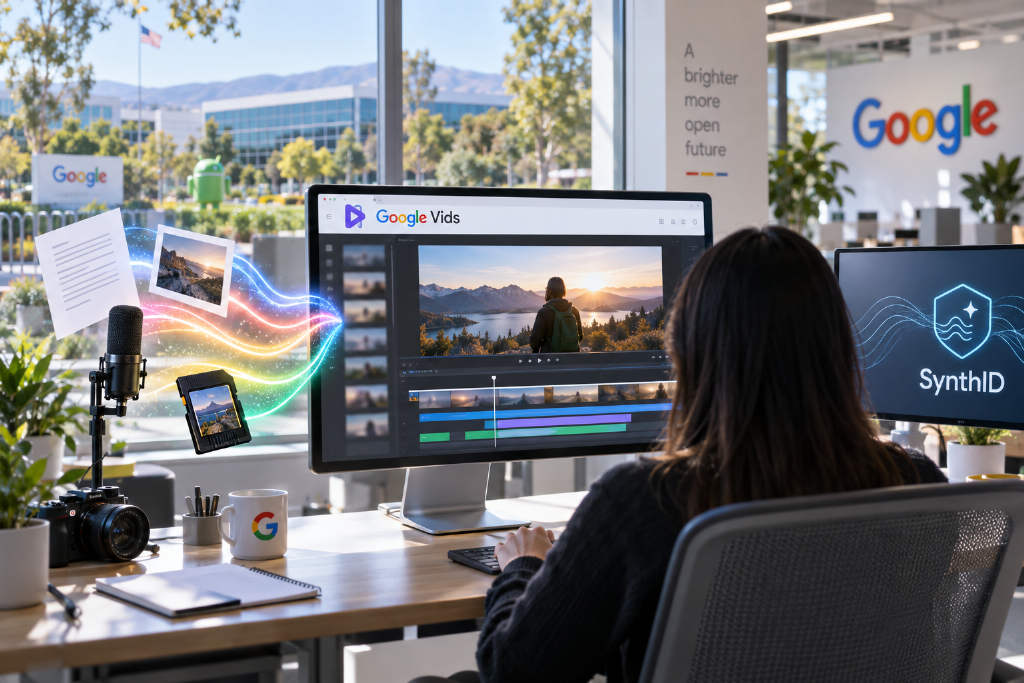
Google has opened one of its AI video tools to a much wider audience. The company said on Sept. 23 that anyone with a Google account can now generate full HD video for free inside Google Vids, its browser-based video editor. The feature runs on Gemini Omni 1.1 Flash and can turn text prompts, photos, audio, or existing clips into new footage. Decrypt reported that the workflow was easy to use in testing, though the outlet said it only managed to generate 720p videos in both landscape and portrait formats. Google also added editing controls including scene extension, exact scene duration settings, and the ability to upscale older low-resolution AI clips to 1080p. Each generated video includes Google DeepMind’s SynthID watermark embedded in the frames, and users can check whether a clip was AI-made with the separate SynthID Detector tool. Decrypt said a short video took less than 30 seconds to generate in its test. Google said free generation limits vary by account type. Personal accounts get a standard allowance, while paid AI plans and Workspace Business and Enterprise subscriptions receive larger generation pools and admin controls. The rollout comes as OpenAI’s last remaining Sora 2 developer API went offline the same day, and after Google cut Veo 3.1 Lite API pricing to $0.05 per second.

1050
Google opens free 1080p AI video generation to all Google accounts in Vids
Google
Sep 26, 2026

Google opens free 1080p AI video generation in Vids to all Google account users

Google said on Sept. 23 that any user with a Google account can now generate 1080p HD videos for free inside Google Vids, its browser-based video editor, through vids.new. The feature runs on the Gemini Omni 1.1 Flash model and can turn text prompts, photos, audio, or existing clips into new videos. Google also added editing controls that had often been tied to paid tools, including scene extension that keeps lighting, characters, and settings consistent, precise clip-length controls for matching scripts or voiceovers, and the ability to upgrade older low-resolution AI clips to 1080p without regenerating them. Each generated clip carries Google DeepMind’s invisible SynthID watermark, which cannot be seen by the human eye but can be detected by machines through SynthID Detector. Free usage limits vary by account type: personal Google accounts get a standard allowance, paid AI plans unlock more, and Workspace Business and Enterprise subscribers receive a larger generation pool along with team management controls. Google said Gemini Omni first launched in May 2026 as a paid feature for Google AI Plus, Pro, and Ultra subscribers, while free access had previously been limited to YouTube Shorts and YouTube Create.

1210
Google opens free 1080p AI video generation in Vids to all Google account users
Total 12 items
Go topage