OnCoin
Nov 1, 2026

OnCoin pitches an all-in-one crypto content platform combining market data, livestreams and communities

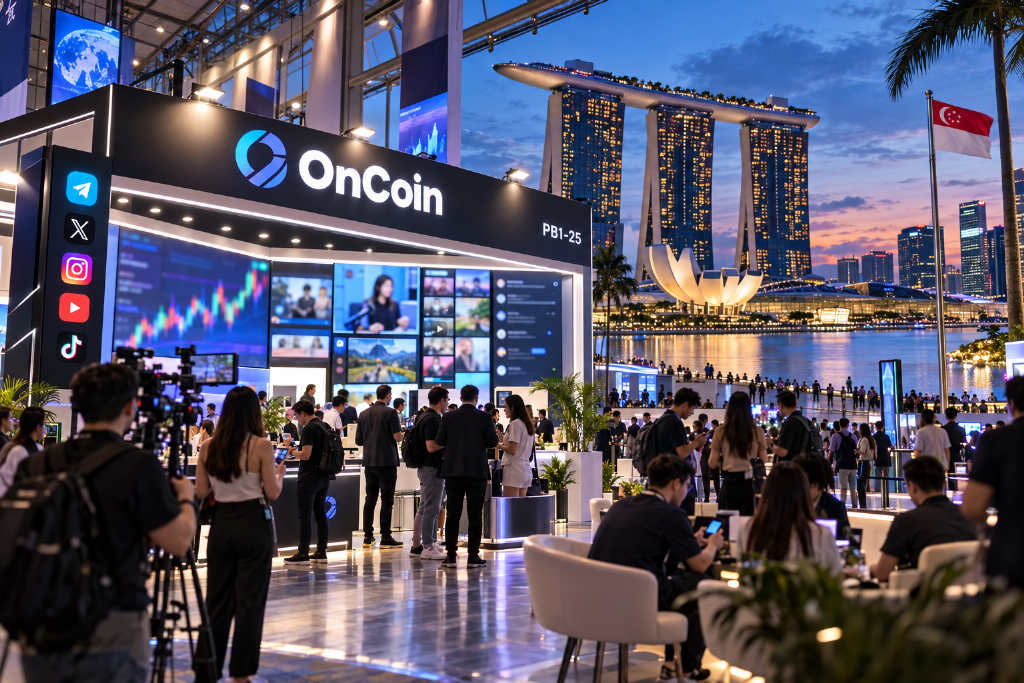
OnCoin is positioning itself as a content ecosystem for crypto users who currently move across separate apps and interfaces to track prices, follow commentary and join discussions. According to Foresight News, the platform brings together market pages, news discovery, articles, short videos, livestreams and community forums in one product, with crypto as the main focus and additional coverage extending to stocks, gaming and sports. The company says its platform has connected a global network of more than 100,000 creators and has more than 300,000 active users. Its official community presence spans Telegram, X, Instagram, YouTube and TikTok, while the platform itself also supports multilingual content operations. On the Chinese side, examples cited in the report include "oncoin Academy" for spot trading education and "OnCoin Breaking News" for real-time global updates. Foresight News said OnCoin is also opening creator onboarding and signing, offering support that includes track positioning, scriptwriting and editing assistance, livestream training and account operation guidance. The platform says creators can earn through on-site tasks and prize pools before moving into commercial partnerships. OnCoin does not provide trading, wallets, custody, investment management or financial advice, and it says comments made by hosts should not be treated as investment advice. The company is also set to attend TOKEN2049 in Singapore on Oct. 7-8, where it will have booth PB1-25 at Marina Bay Sands.

680
OnCoin pitches an all-in-one crypto content platform combining market data, livestreams and communities
PANews
Oct 30, 2026

PANews essay examines why crypto professionals keep flying to conferences

PANews published an opinion essay by Yuki (Liu Yuqing) that looks at the culture of conference-hopping in crypto and fintech. Drawing on her experience attending Bitcoin Asia, Token2049, Money20/20, FinTech Week and Consensus, as well as hosting three side events, she asks a simple question: why do people keep showing up? The piece does not offer a single answer. Instead, it maps out several motives described by people she met along the way. For some, conferences are still work: exhibiting, meeting clients, talking to investors and trying to close partnerships. For others, the point is simply to be present, let people know where they are, reconnect with friends, or gather teams that usually work remotely across time zones. In that setting, the main stage often matters less than hotel lobbies, dinners and side events. Yuki also argues that conferences remain places where information gaps circulate, even if the old hunt for easy “wealth codes” has cooled. Her broader takeaway is that global competition has become flatter, with more Chinese companies appearing on the same stage as firms from the US, Europe, Southeast Asia, the Middle East, Latin America and Africa. Still, she writes, what has flattened is the competitive arena, not social class. The article closes without a firm conclusion, framing the entire discussion as personal observation rather than investment or business advice.

930
PANews essay examines why crypto professionals keep flying to conferences
Gate
Oct 29, 2026

Gate launches Gate Money at TOKEN2049 as exchange competition shifts beyond trading

Competition among crypto exchanges is moving beyond trading metrics and toward broader day-to-day financial services for users, according to a report cited by ChainCatcher from Cointelegraph. During TOKEN2049, Gate introduced Gate Money, a one-stop financial services app positioned around that shift. Gate founder and CEO Dr. Han said the product is designed to bridge traditional investing and everyday spending. The app combines a user’s same-name bank account, fiat balances, crypto assets, and traditional financial holdings such as stocks and gold within a single account system. It also works with Gate Card, which supports Apple Pay and Google Pay, as well as a Visa co-branded card, giving users a way to spend assets directly. Gate Money also includes multiple fiat deposit and withdrawal options, onchain transfers, instant swaps, and wealth management products offering up to 3.6% annualized yield. Gate said compliance and transparency remain central to its expansion, adding that it has obtained compliance qualifications in Malta, Dubai, Australia, and the United States. The platform’s total reserves stand at $8.688 billion, with a total reserve ratio of 118.49%.

860
Gate launches Gate Money at TOKEN2049 as exchange competition shifts beyond trading
PayFi.Fun
Oct 28, 2026

PayFi.Fun outlines BTC-focused infrastructure built on ICP with multi-chain integration

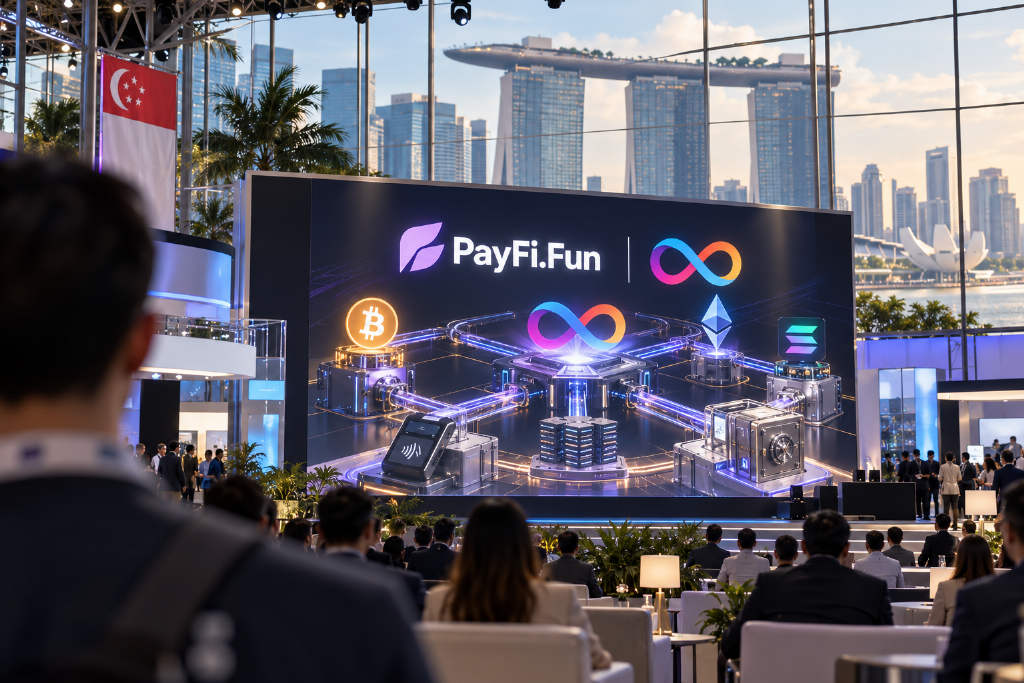
PayFi.Fun presents itself as a full-stack, aggregated infrastructure platform for the Bitcoin ecosystem, with native integration across BTC, ETH, Solana and the Internet Computer Protocol, or ICP. According to the project description, development began in December 2022 on ICP’s technical base, after ICP completed native Bitcoin integration through Chain Key and Threshold ECDSA. The platform says its canister smart contracts can work with Bitcoin without relying on bridges or third-party custodians, and cites Threshold Schnorr as part of the later technical stack. The project states that its public beta went live on Aug. 1, 2025, with three claimed technical milestones: speed below one second, fees below $0.01, and container smart contracts. It also lists five core functions, including one-click token issuance, one-click mapping, liquidity management, a decentralized exchange and a decentralized wallet. A full launch is scheduled for Aug. 1, 2026, with planned ecosystem rollouts spanning a multi-chain identity wallet, crypto social products, crypto conferences, cross-border e-commerce, cross-border payments, blockchain gaming and prediction markets. PayFi.Fun also says it attended TOKEN2049 in Singapore in October 2026, where it introduced the project’s vision and core functions to attendees interested in the Bitcoin ecosystem.

1010
PayFi.Fun outlines BTC-focused infrastructure built on ICP with multi-chain integration
ChainFeeds
Oct 27, 2026

ChainFeeds roundup tracks KBW, TOKEN2049, CZ remarks, StandX backlash and Metric’s DEX model

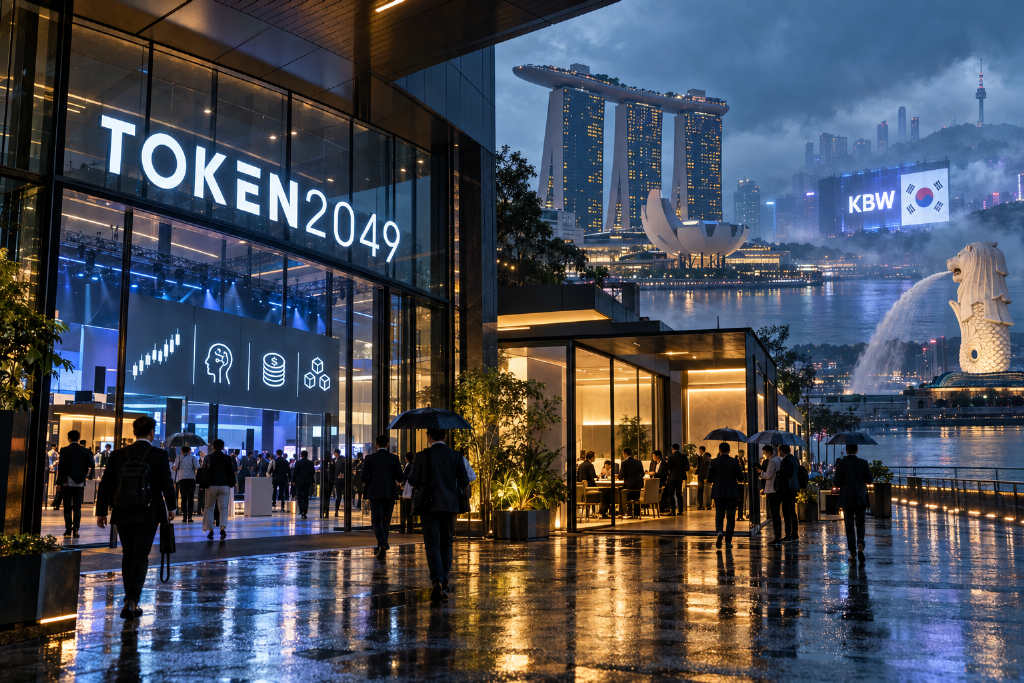
ChainFeeds’ Oct. 27 research roundup pulled together five separate threads shaping the crypto market: how the attendee mix at Korea Blockchain Week and TOKEN2049 has shifted toward banks, asset managers and policy players; why the industry still lacks a clear line between legitimate market making and manipulation; what Binance founder Changpeng Zhao said about Japan, stablecoins, token-based fundraising and real-world asset tokenization; how StandX’s newly opened airdrop checker triggered a sharp reversal in community sentiment; and why DEX project Metric is drawing attention despite having only about $17.3 million in total value locked. The report says KBW’s main venue was not meaningfully smaller than last year, but the crowd changed. Financial institutions, policy groups and asset-management service providers accounted for 115 of 290 speakers, while stablecoins and payment rails became a central topic in institutional rooms even though they represented only a small share of side events. In Singapore, TOKEN2049’s new invitation-only institutional gathering brought together roughly 250 executives from traditional finance and digital assets. The roundup also highlights user complaints over StandX allocations, including cases where high-fee traders and deposit-only users said they received little or nothing. On the market structure side, Tiger Research argued that crypto still lacks a formal framework to define lawful market making. Separately, Metric’s active-pool design was presented as one attempt to reduce loss-versus-rebalancing, with the platform reportedly handling $150 million to $200 million in daily volume.

1160
ChainFeeds roundup tracks KBW, TOKEN2049, CZ remarks, StandX backlash and Metric’s DEX model
SC Ventures
Oct 26, 2026

SC Ventures outlines its digital asset strategy and says TradFi-Crypto convergence is the next step

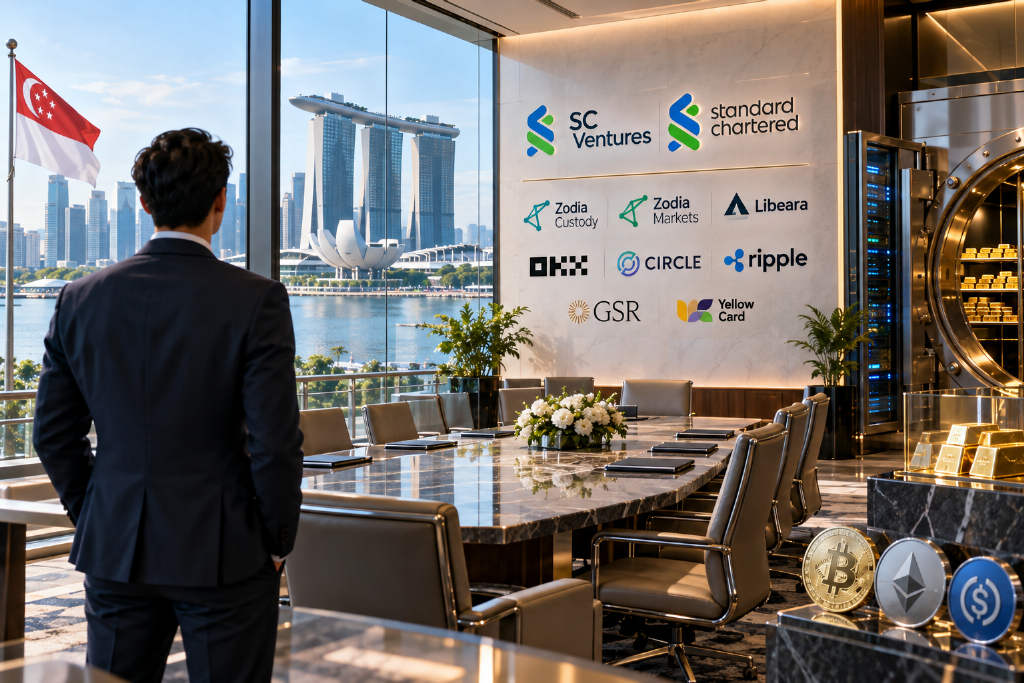
SC Ventures, the innovation, fintech and investment arm of Standard Chartered, is building its digital asset strategy around what it calls the "bank of the future," according to Harald Eltvedt, an operations team member who spoke with ChainCatcher during TOKEN2049 in Singapore. Eltvedt said the group began with digital banking and digital transformation before moving deeper into digital assets, a shift that led to products such as Zodia Custody, Zodia Markets and the tokenization platform Libeara, along with investments in firms including GSR, OKX and Yellow Card. He said SC Ventures usually invests at earlier stages such as seed, Series A and Series B, but will also back later-stage companies when it has strong conviction in the business and the problem being solved. On DeFi and Web3, he said transparency and clarity are non-negotiable for a bank-backed investor, especially around compliance access and understanding who is behind transactions. Eltvedt also discussed Hong Kong stablecoin plans tied to Anchorpoint, a company formed by Standard Chartered Bank (Hong Kong), Animoca and HKT. On AI, he said the sector will produce bubbles, but argued that the more interesting development is the rise of agentic systems that can handle trading, settlement and wealth management tasks under defined permissions and controls.

760
SC Ventures outlines its digital asset strategy and says TradFi-Crypto convergence is the next step
IOSG Ventures
Oct 26, 2026

IOSG says KBW and TOKEN2049 felt cooler on the surface, but institutions, stablecoins and AI drew the real attention

IOSG Ventures said its on-the-ground read from KBW in Seoul and TOKEN2049 in Singapore points to a market that has not lost activity so much as shifted where that activity happens. The main halls looked less crowded in spirit, with fewer sponsors and fewer early-stage token projects, but side events, private meetings and institutional sessions carried much of the real business. In Seoul, the firm saw a conference increasingly shaped by financial institutions, with 115 of 290 speakers coming from finance, policy and asset-management services, while debate around a won stablecoin centered on who will be allowed to issue it and whether banks must hold 51% of the issuer. In Singapore, IOSG said the conversation had moved past whether institutions should enter crypto and toward which chain, custodian and settlement layer they should use, as TOKEN2049 added an invitation-only institutional track and MAS advanced stablecoin operating rules under the Payment Services Act. Across both cities, AI agents dominated panels and side events, yet speakers stopped short of claiming meaningful live transaction volume. IOSG also argued that capital is rotating away from narrative-driven bets and toward revenue-linked businesses, including perpetual DEXs, prediction markets, stablecoin infrastructure and AI products with paying users.

720
IOSG says KBW and TOKEN2049 felt cooler on the surface, but institutions, stablecoins and AI drew the real attention
IOSG Ventures
Oct 25, 2026

IOSG says crypto narratives are fading as capital shifts to trading, stablecoins and revenue-generating products

IOSG Ventures said observations from Korea Blockchain Week in Seoul and TOKEN2049 in Singapore point to the same change: crypto has not lost momentum, but attention has moved away from exhibition halls and token hype toward side events, closed-door meetings, institutional infrastructure and products with actual revenue. In Seoul, the firm said the crowd had changed rather than shrunk, with more banks, securities firms and asset managers taking the stage while discussions around Korean won stablecoins, exchange stakes and licensing intensified behind the scenes. In Singapore, IOSG said the event had hit venue capacity, while the second day was increasingly shaped by institutional conversations around custody, tokenization, liquidity and settlement rails. Across both cities, AI agents drew the most attention, yet speakers largely described future use cases rather than meaningful current transaction volume. IOSG argued that capital is now moving along four lines: crypto-native money into Perp DEXs and prediction markets, compliant capital into fintech and stablecoin rails, altcoin flows into AI products with real revenue, and speculative traffic into trading gateways that can monetize meme-driven demand. The firm said the common thread is simple: narrative-driven money is fading, while revenue-driven money is moving in.

810
IOSG says crypto narratives are fading as capital shifts to trading, stablecoins and revenue-generating products
Total 217 items
Go topage