TTS

x402
2026-09-03 06:28:00

x402 tops roughly 155.6 million transactions since launch, but the case for durable agent demand is still being tested

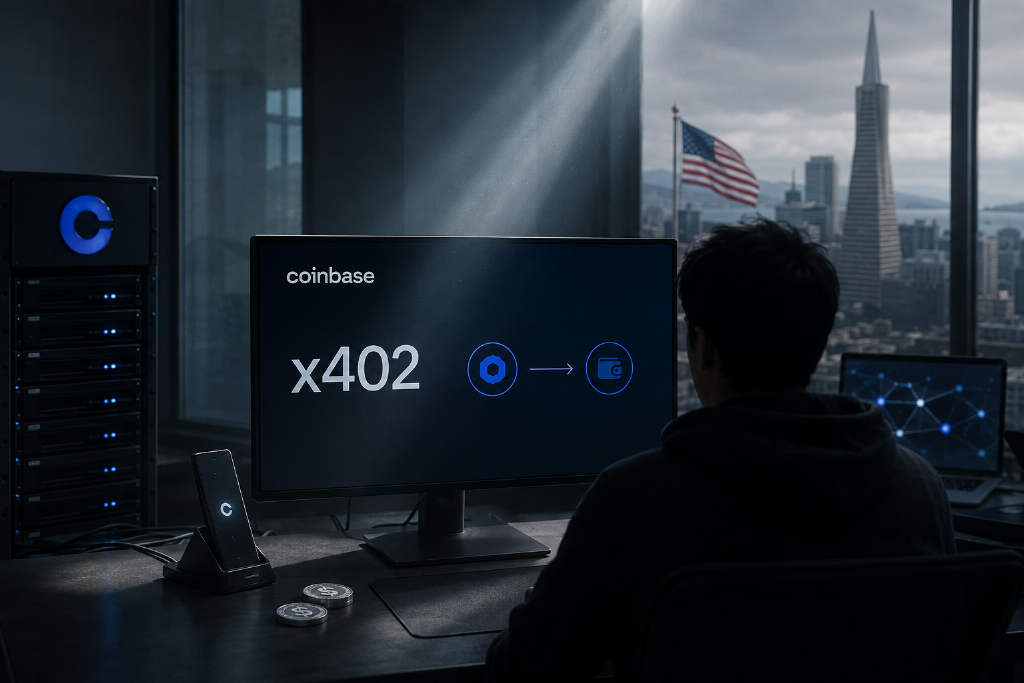
PANews reviewed adoption data for x402, the protocol launched by Coinbase Developer Platform on May 6, 2025 to revive HTTP 402 Payment Required as a native payment flow for software. The article says x402 has moved beyond the demo stage, with several visible usage signals across different datasets: Chainalysis said cumulative x402 transactions on Base had passed 100 million as of June 2026; Agent Economy’s cross-chain tracker showed about 155.6 million transactions and roughly $40.97 million in settled stablecoin volume around July 10, 2026 UTC; and x402scan, viewed on July 11, 2026, showed about 16.24 million indexed transactions, around 837,500 USDC in total amount, about 67,000 unique buyers and roughly 39,600 unique sellers within its visible range. The report argues those figures show x402 is no longer just a protocol experiment, but they do not prove that agentic payments have reached mature, large-scale commercial adoption. A meaningful share of early activity may have come from campaigns such as PING, developer testing, stress tests, bot activity or one-off experiments rather than persistent enterprise workflows. The article says the more important signal is the transaction shape x402 enables: software can see a price inside an HTTP request, pay, and receive access to an API, dataset, model call or tool result without a human checkout flow. It also points to real-world categories already forming around APIs, data endpoints, infrastructure gateways, wallets, SDKs and incentive-driven experiments, while warning that spending policy, audit trails, refunds, dispute handling and human approval remain unresolved parts of the stack.

220
x402 tops roughly 155.6 million transactions since launch, but the case for durable agent demand is still being tested
Gradium AI
2026-09-01 03:42:34

Gradium AI Rolls Out New Default TTS Model With 81.0% Pass Rate on Hard Cases

Gradium AI has released a new text-to-speech model and made it the default for its API and Studio, according to Techub News. The announcement, first reported by MarkTechPost, reveals that the model achieved an 81.0% human-rated pass rate on a hard-case test set made up of 500 sentences across five languages. That result places it ahead of Cartesia Sonic 3.6, which posted 75.1%, and ElevenLabs v3 Conversational, which came in at 65.4%. In the Coval benchmark, the median time to first audio generation is 216 milliseconds, which the company says is 170 milliseconds faster than the alternative model it replaces. The new model has been live and set as default since August 31, 2026, meaning existing users do not need to migrate or make any changes. Gradium AI has also open-sourced the full 500-sentence evaluation dataset on Hugging Face, so that the test data is publicly available. The update covers both the API and the Studio platform, making the model the standard choice for new requests.

60
Gradium AI Rolls Out New Default TTS Model With 81.0% Pass Rate on Hard Cases
MiniMax
2026-08-10 09:52:26

MiniMax H3 Opens Weights and Overtakes Seedance 2.0 on Key Video Benchmarks

MiniMax released the weights for its omni-modal video model H3 on August 3, posting them on Hugging Face. The model can generate 2K, 24fps video with stereo audio, and it moved ahead of ByteDance’s Seedance 2.0 in the Artificial Analysis text-to-video ranking while taking first place in video editing. Pricing also came in lower: a 5-second clip costs about $0.70 for H3’s 2K output versus roughly $1.22 for Seedance 2.0’s 720p output. Community tests also showed the model running offline on consumer GPUs with 12GB of VRAM. The open-weight release, however, stops at 768p; 2K output still depends on a non-open API-side upsampling module, and the Community License carries regional and usage limits.

410
MiniMax H3 Opens Weights and Overtakes Seedance 2.0 on Key Video Benchmarks