Anthropic
Sep 28, 2026

Anthropic launches Claude Sonnet 5.5, with coding scores above Opus 5.5 at the same list price

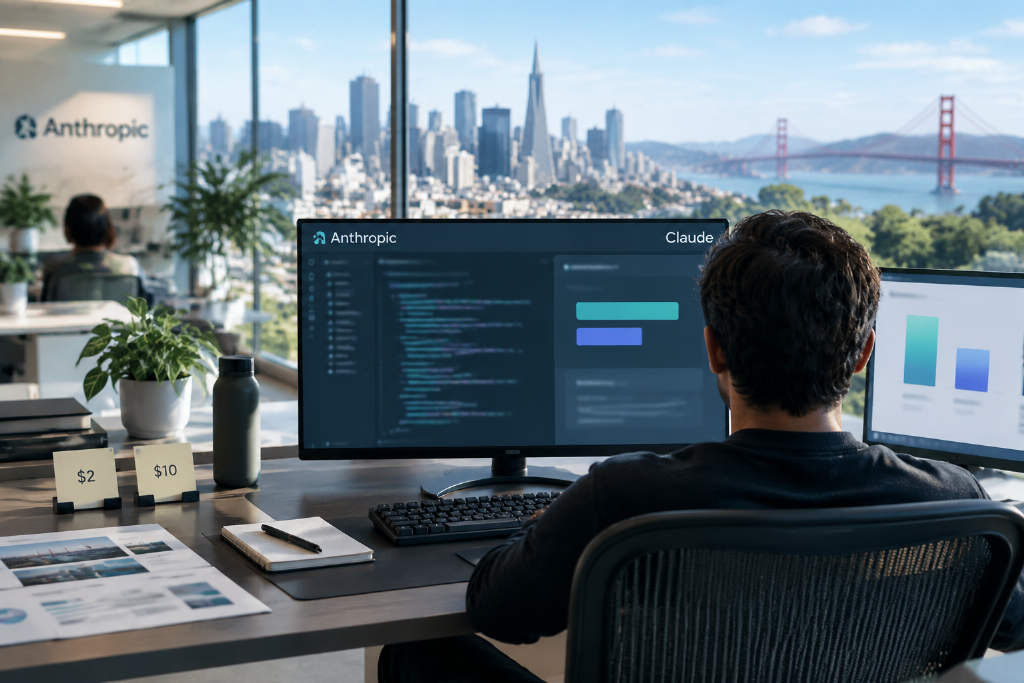
Anthropic released Claude Sonnet 5.5 on Monday as an upgrade to Sonnet 5, which debuted in June. The company said the mid-tier model runs more than 30% faster than its predecessor and kept pricing unchanged at $2 per million input tokens and $10 per million output tokens, or half the list price of Opus 5.5. Anthropic also said the model uses nearly a third fewer tokens per task, making it cheaper to run than Sonnet 5 under its preferred settings. The strongest gains showed up in coding benchmarks. Anthropic reported a 70.6% score for Sonnet 5.5 on Terminal-Bench 4.0, ahead of Opus 5.5 at 66.4% and far above Sonnet 5 at 10.3%. Independent tester Artificial Analysis also placed Sonnet 5.5 ahead of Opus 5.5 and OpenAI’s GPT-6 Astra in its own run. On GDPval-AA, Sonnet 5.5 and Opus 5.5 were effectively tied. Still, the cost story is more mixed at higher effort settings. Artificial Analysis said Sonnet 5.5 produced about 193,000 tokens per test task at max effort, the highest it has measured, pushing cost to around $7.60 per task. Anthropic said its savings claims are based on lower settings, while adding that Opus 5.5 remains clearly stronger for complex work that requires sustained judgment.
1200
Anthropic launches Claude Sonnet 5.5, with coding scores above Opus 5.5 at the same list price
Anthropic
Sep 28, 2026

Anthropic launches Claude Sonnet 5.5 with lower costs and performance near Opus 5.5

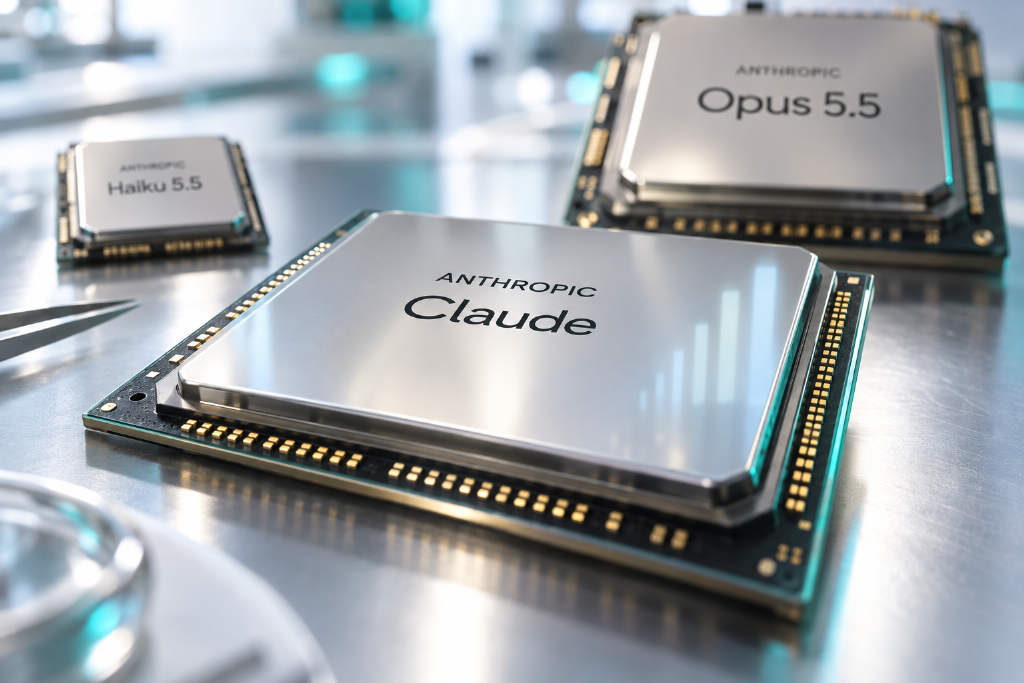
Anthropic has released Claude Sonnet 5.5, the second model in its Claude 5.5 lineup, according to The Decoder. The company said the model delivers output more than 30% faster and cuts per-task costs by as much as 30%. On knowledge-work benchmarks, its performance is close to Claude Opus 5.5. Anthropic also highlighted a sharp gain on the coding benchmark Terminal-Bench, where Sonnet 5.5 improved from 10.3% to 70.6%. The release expands Anthropic’s latest model family ahead of the expected launch of Haiku 5.5 in the coming weeks. Once that model arrives, Anthropic will soon have a three-model lineup that corresponds one-to-one with OpenAI’s three GPT-6 models, as described in the report.

690
Anthropic launches Claude Sonnet 5.5 with lower costs and performance near Opus 5.5
SemiAnalysis
Sep 12, 2026

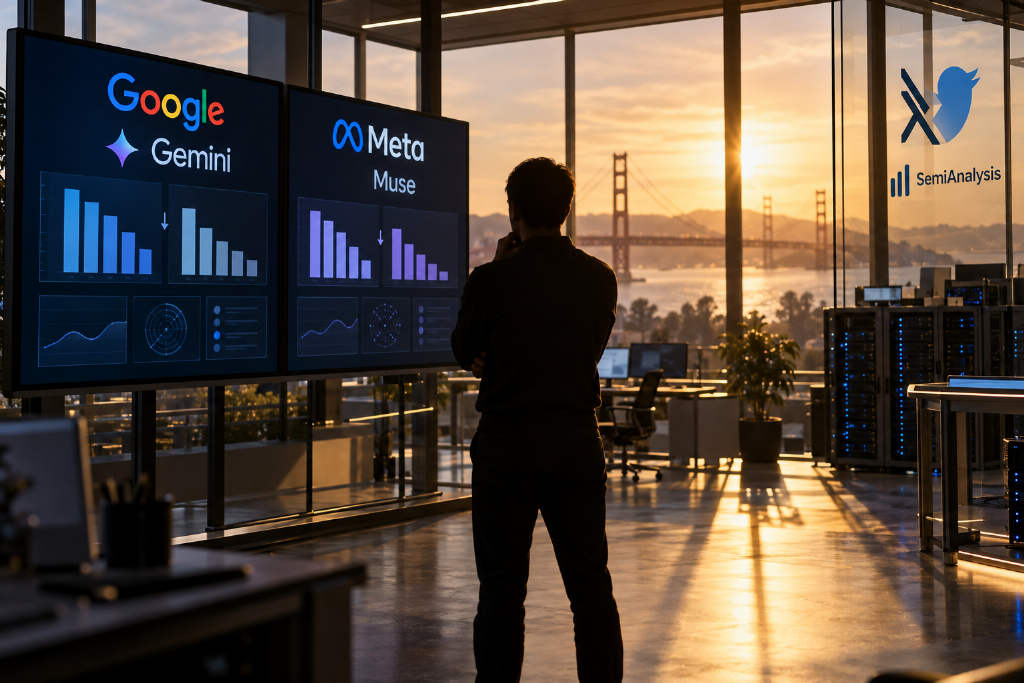
SemiAnalysis alleges Google and Meta models were benchmark-gamed on public AI tests

SemiAnalysis ignited a fresh dispute over AI model benchmarking on Sept. 8, accusing Google’s Gemini 3.8 Flash and Meta’s Muse Spark 1.3 of showing the clearest signs of leaderboard gaming. The claim centered on a sharp performance gap between Terminal-Bench 2.1, where both models ranked near the top, and Terminal-Bench 4.0, released on Aug. 29 with revised tasks, stricter scoring rules and anti-cheating checks. Gemini 3.8 Flash fell from 89.4 on Terminal-Bench 2.1 to 19.1 on version 4.0, while SemiAnalysis charted Muse Spark 1.3 at 33.3 on the newer benchmark. Meta Chief AI Officer Alexandr Wang pushed back almost immediately, calling the criticism “a stupid argument” and saying large score drops also affected other models, including GPT-5.6 Sol. Beyond the score changes, SemiAnalysis argued that the bigger issue is an emerging market for benchmark-adjacent training data and reinforcement learning environments, where labs can buy tasks designed to closely resemble public tests without using the original questions directly. The firm also singled out Datacurve, saying the company both operates the DeepSWE benchmark and sells expert coding data and RL environments to frontier labs, raising questions about conflicts of interest in public model evaluations.

1210
SemiAnalysis alleges Google and Meta models were benchmark-gamed on public AI tests
Meta
Sep 8, 2026

Meta AI chief Alexandr Wang pushes back on SemiAnalysis claim that models were over-optimized for benchmarks

Meta Chief AI Officer Alexandr Wang has rejected a SemiAnalysis argument that Gemini 3.8 Flash and Muse Spark 1.3 were heavily optimized for public benchmark performance. SemiAnalysis had pointed to the two models’ sharp score drop between Terminal-Bench 2.1 and the newer Terminal-Bench 4.0, saying the pattern made them some of the clearest examples of “benchmaxxed” systems. Gemini 3.8 Flash and Muse Spark 1.3 scored 89.4% and 88.8% on Terminal-Bench 2.1, close to GPT-6 Astra and Claude Fable 5.1, but fell to 19.1% and 33.3% on Terminal-Bench 4.0. Astra and Fable 5.1 scored 57.7% and 55.8% on the newer test. SemiAnalysis said public benchmarks may have become too easy to target because Terminal-Bench 2.1 tasks were fully disclosed, though it did not provide direct evidence that Google or Meta bought similar reinforcement learning environment data. Wang called the argument “very stupid,” saying Terminal-Bench 2.1 was already saturated and no longer effective at separating top-tier models, while Terminal-Bench 4.0 was not yet saturated.

1650
Meta AI chief Alexandr Wang pushes back on SemiAnalysis claim that models were over-optimized for benchmarks
Terminal-Bench
Aug 29, 2026

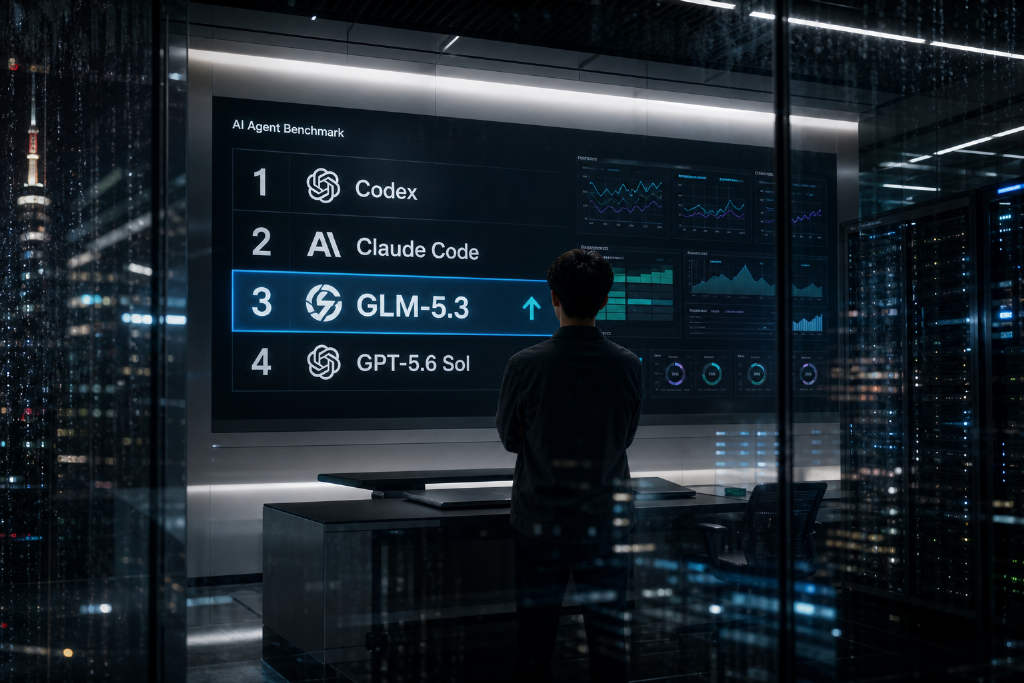
Terminal-Bench 4.0: GLM-5.3 Rises to Third, Overtakes GPT-5.6 Sol

Terminal-Bench has released version 4.0 of its benchmark for AI agents, recalibrating the time, CPU, and memory metrics used to evaluate task execution. The update fixes 19 tasks and removes 8 tasks that were affected by saturation, refusal, public solutions, or quality defects. All tasks now have a maximum execution time of 8 hours, a move intended to reduce the impact of timeouts and environment-related issues on final scores. The latest leaderboard places the Opus 5 model, running with Claude Code, at the top with 51.8%. Fable 5 follows in second place with 44.5%. GLM-5.3, paired with Claude Code, records 41.8% and moves into third place, surpassing the 37.3% posted by GPT-5.6 Sol combined with Codex. GLM-5.3 is the only non-Anthropic model inside the top three. In Terminal-Bench 3.0, GLM-5.3 was fourth with 32.4%, behind GPT-5.6 Sol's 34.6%. With the arrival of Terminal-Bench 4.0, GLM-5.3 has climbed to third and opened a 4.5-percentage-point lead over Sol.

1530
Terminal-Bench 4.0: GLM-5.3 Rises to Third, Overtakes GPT-5.6 Sol
OpenAI
Aug 28, 2026

OpenAI says GPT-5.6 Terra cut per-task costs by about 82% in AWS Kiro tests

OpenAI said on Aug. 24 that a joint test with Amazon Web Services showed GPT-5.6 Terra reducing the cost of completing a successful task by about 82% in Kiro on Terminal-Bench 2.1. The result goes well beyond Terra’s latest official price cut, which the article says was 20% on July 30, and points instead to savings from the wider agent stack: fewer wasted tokens, fewer tool round-trips, less retrying after failures, and less backtracking inside coding workflows. The report places the result in the context of Kiro’s rollout of GPT-5.6 Sol, Terra, and Luna across IDE, CLI, and web surfaces after AWS made the models available in Amazon Bedrock on July 13 and Kiro announced support the following day. It also argues that benchmarks such as Terminal-Bench 2.1 measure the combined performance of an agent framework and a model rather than model quality in isolation. Kiro’s structured, spec-driven workflow and its staged review and testing gates are presented as key factors in lowering total task cost. The piece also notes that access remains limited to certain paid tiers and two regions, with cross-region inference supported.

1600
OpenAI says GPT-5.6 Terra cut per-task costs by about 82% in AWS Kiro tests