‹ BackUS ban

US ban

World Liberty
2026-08-24 14:03:26

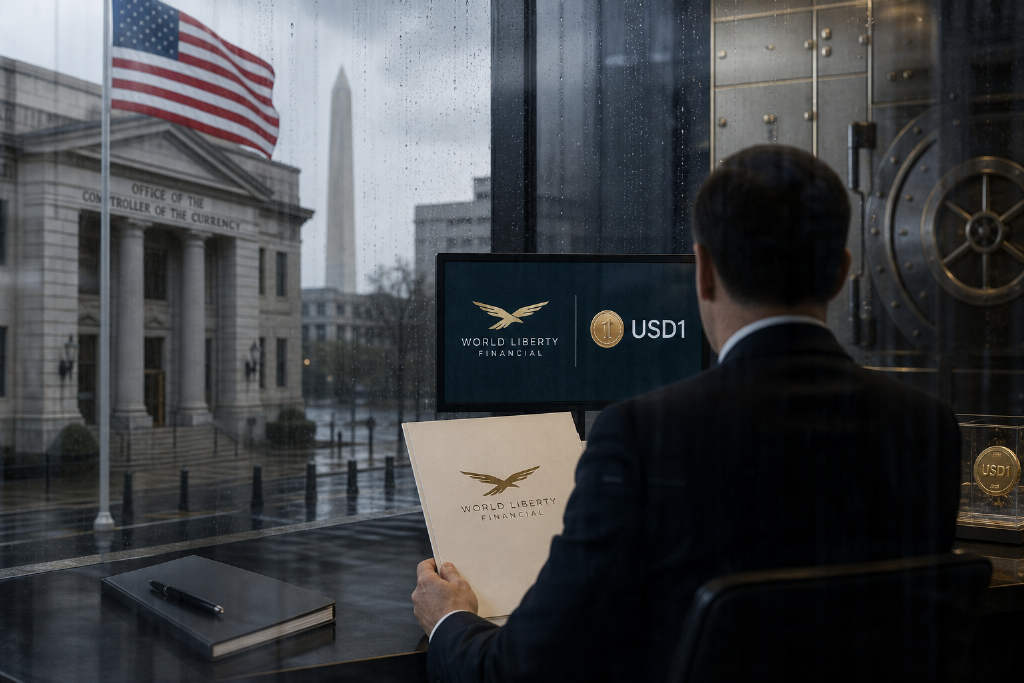
World Liberty Financial wins preliminary OCC approval for a national trust bank charter

World Liberty Financial, a crypto venture backed by the Trump family, has received preliminary conditional approval from the Office of the Comptroller of the Currency for a national trust bank charter, according to Bloomberg. The company plans to establish World Liberty Trust Company. If it secures final approval, the entity would be able to issue and redeem the USD1 stablecoin directly, manage the token’s reserve assets, and provide digital asset custody services. The proposed trust company would not operate as a traditional commercial bank, meaning it would not be allowed to take FDIC-insured deposits or make conventional loans. Bloomberg also noted that the application comes as US regulators have sped up reviews of new bank charters. OCC data shows that 22 bank charter applications were approved during the first 19 months of Trump’s second term, more than the total approved over the previous five years, with several approvals involving fintech and digital asset companies.

1010
World Liberty Financial wins preliminary OCC approval for a national trust bank charter
AI debt risk
2026-08-09 09:25:57

CICC says AI debt risk remains contained as major cloud firms shift toward external funding

A research note from China International Capital Corporation, or CICC, argues that debt linked to the US artificial intelligence buildout remains manageable even as major cloud providers ramp up borrowing to finance heavier capital spending. Using Hyman Minsky’s financial instability hypothesis, the report examines whether Microsoft, Google, Meta, Amazon and Oracle are moving from self-funded expansion toward debt structures that rely more heavily on outside financing. CICC says the five cloud companies have accelerated bond issuance, with combined issuance in the first half of 2026 reaching about $170 billion, or 1.5 times the full-year total for 2025. Capital expenditure has also climbed to 97.4% of operating cash flow across the group. Even so, the firms still show solid debt-servicing capacity. Cash-flow interest coverage ratios remain above 1 for all five, while debt service ratios are below 1, indicating that operating cash flow can still cover both principal and interest. Microsoft, Google, Meta and Amazon continue to rank well versus the broader market, while Oracle looks weaker. The report says the main change is not excessive debt size but a migration in financing structure. Google and Amazon are showing early signs of moving from hedge finance toward speculative finance, while Oracle appears more financially fragile because of negative free cash flow and negative net cash. At the macro level, CICC says low leverage in the US household and corporate sectors, strong bank capital, and the bond-market-led nature of AI funding all reduce the odds that current AI debt will turn into a broader systemic crisis.

1790
CICC says AI debt risk remains contained as major cloud firms shift toward external funding
US Treasury
2026-08-03 04:04:50

Strategists say US Treasury may use euros in yen-buying plan to avoid optics of dollar selling

Strategists said the US Treasury may fund a yen-buying plan with euros instead of dollars, a structure they said could help avoid the appearance of weakening the US currency and calling Washington’s strong-dollar policy into question. The view followed comments from two people familiar with the matter, who said the Federal Reserve Bank of New York last Friday asked at least two major US banks to check yen-euro exchange rates. David Forrester, a senior strategist at Credit Agricole CIB in Singapore, said the United States likely does not want markets to see it selling dollars. He added that Washington maintains a strong-dollar policy and would not want to be seen seeking competitive advantage through a weaker domestic currency, which he said would run against the Group of 20 consensus on foreign-exchange policy. Jason Wong, a currency strategist at BNZ in Wellington, said direct dollar sales by the Treasury would look bad from an image standpoint, making euro funding a more acceptable route. He added that the economic effect would ultimately be similar because funds would at some stage need to be reallocated back into euros, which could still imply eventual dollar selling, only in a less transparent way.

1660
Strategists say US Treasury may use euros in yen-buying plan to avoid optics of dollar selling
US banks
2026-07-24 09:10:15

Major US Banks Eye Lawsuit Against OCC Over Crypto Trust Charter Rules

The Bank Policy Institute (BPI), representing JPMorgan, Goldman Sachs, Citigroup and 37 other top lenders, is considering suing the OCC over eased crypto trust charter rules. Banks warn the move blurs lines between regulated banks and lightly supervised fintechs, risking financial stability.

170
Major US Banks Eye Lawsuit Against OCC Over Crypto Trust Charter Rules