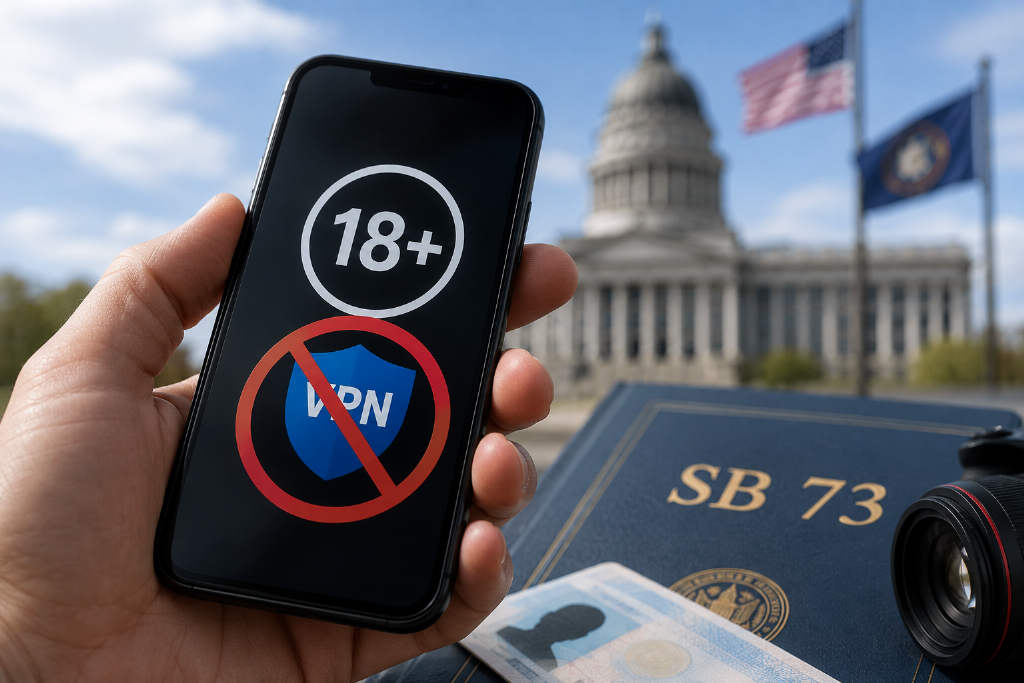
Utah2026-09-03 22:16:04Utah becomes first U.S. state to require age checks even for VPN-masked visitorsUtah has become the first U.S. state to directly target VPN use in age-verification enforcement, expanding compliance duties for websites that host adult material. Under SB 73, commercial sites that knowingly publish or distribute material harmful to minors must verify the age of Utah visitors when that material makes up more than one-third of their content, even if those users hide their location with VPNs or proxy servers. The law also bars operators from helping users get around the checks, including by offering instructions on how to use VPNs or bypass geoblocks. The measure gives Utah’s Division of Consumer Protection authority to issue administrative fines of up to $2,500 per violation, while courts can impose civil penalties of the same amount and grant other remedies. At the same time, verification providers are barred from retaining identifying data after access is granted. Privacy firm Nym said the law raises a speech issue because it restricts what covered websites can say about privacy tools. The company argued on X that courts have not yet resolved whether such a restriction conflicts with the First Amendment. The Utah law comes as regulators in Brazil, the U.K., and France have also moved to limit VPN-based workarounds tied to platform bans and age-control systems.570
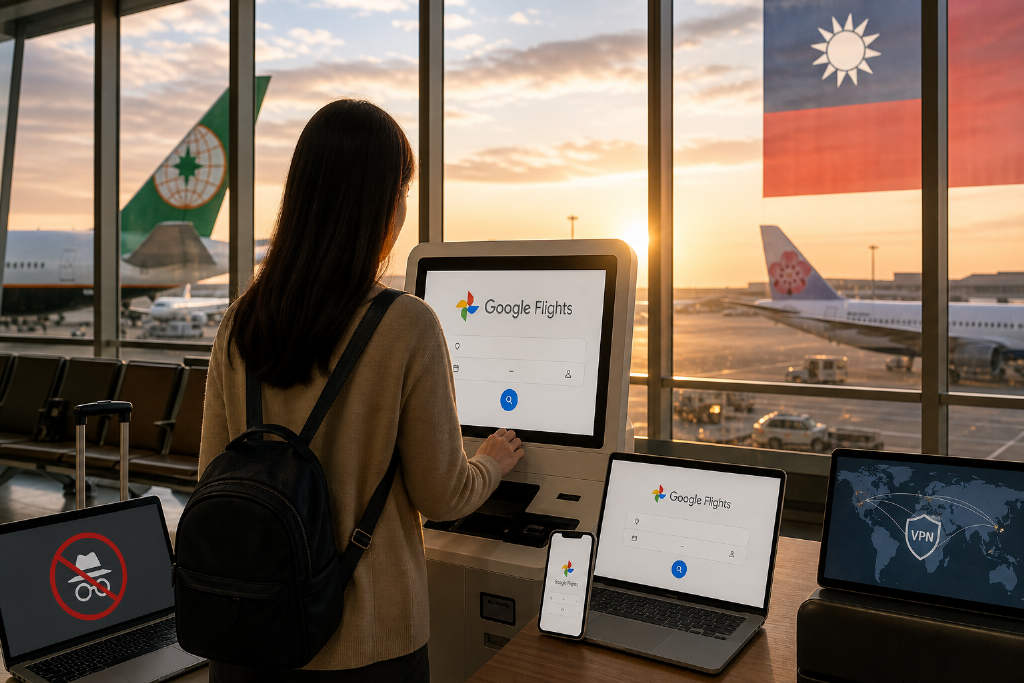
Flight Deals2026-08-27 02:25:16Flight deal expert Brian N says incognito mode won’t cut fares, but language settings mightABMedia reported that flight deal expert Brian N recently appeared on the YouTube channel "Shiqi 77" to break down how travelers can improve their odds of finding cheaper airfares. His main point was blunt: the widely repeated claim that browsing in incognito mode leads to lower ticket prices does not hold up in practice. Instead, he said travelers should focus on how booking systems work and make better use of fare comparison tools. Brian N highlighted three advanced functions on Google Flights that he sees as especially useful today. The service can now show prices from airline websites and online travel agencies on one page, let users compare as many as five departure points and five destination options, and even generate travel suggestions from plain-language prompts tied to budget and trip style. For long-haul routes involving European, U.S., and Latin American carriers such as Norwegian Air and LATAM, he said language switching on airline websites may reveal price gaps. He also suggested using parallel browser windows, VPN-based region and language changes, and local-currency checks at checkout. For Taiwan carriers including China Airlines and EVA Air, he said such gaps are less common, adding that travel fairs, off-season travel in March and November, and buying tickets one by one before choosing seats can be more practical ways to save.520
OpenAI2026-08-25 18:59:35OpenAI bans Russian influence accounts that used ChatGPT to produce pro-Kremlin contentOpenAI said it identified and banned a cluster of accounts tied to a covert Russian influence operation that used ChatGPT to generate social media posts. According to the company, the operation accessed the platform through Russian VPN services, promoted a fabricated entity called the "International Burke Institute," and produced German-language Telegram content critical of the European Union and the German government. OpenAI said the campaign has had limited reach so far, but warned that the infrastructure behind it could be scaled up in the future. The report was cited by Techub News, referencing The Decoder. The disclosure adds to OpenAI’s public reporting on how its tools are being used in coordinated influence efforts and how those campaigns attempt to distribute political messaging across online platforms.1030
VPN2026-07-23 04:55:14Best VPNs for 2026 Ranked by Speed, Privacy, and Streaming PerformanceCryptoComLearn’s 2026 VPN ranking names ExpressVPN as the top overall pick, with CyberGhost, NordVPN, Surfshark, ProtonVPN, and Private Internet Access also highlighted across speed, privacy, server reach, and crypto payment support.930
Telegram2026-07-23 01:30:14Telegram Blocks 7.46M Channels This Year as Russia Weighs Possible April 1 BanTelegram has blocked more than 7.463 million channels and groups since Jan. 1, while Russian regulators keep pressure on the platform and reports point to a possible April 1 block.570
CJEU2026-07-22 03:11:00EU court says VPNs are lawful tools and bypassing geo-blocks does not by itself create copyright liabilityThe Court of Justice of the European Union ruled in Case C-788/24 that VPNs are lawful technical tools and that the mere fact users can bypass geo-blocking does not make publishers liable for copyright infringement. The dispute stemmed from an online academic edition of Anne Frank diary manuscripts made available by Dutch and Belgian institutions, which hosted the material in Belgium and blocked Dutch IP addresses because copyright status differs across countries. While the manuscripts have entered the public domain in Belgium and roughly 60 other jurisdictions, parts of the content remain protected in the Netherlands until 2037. A Swiss foundation, Anne Frank Fonds, argued that geo-blocking was ineffective because Dutch users could easily use a VPN to appear to be in Belgium. The EU court rejected that argument, saying measures that can be circumvented are not automatically ineffective if the publisher used state-of-the-art geo-blocking. The ruling also said VPN providers and similar services do not bear joint liability for users who evade access restrictions. The decision is being viewed as a major legal win for the VPN industry in Europe and a practical standard for handling the tension between borderless internet access and territorial copyright rules.1950
Russia2026-07-09 02:30:13Russia Tightens Internet Controls as VPN Providers Refuse State Blacklist IntegrationRussian regulators are escalating pressure on VPN services to connect to a state blacklist system, but many providers have refused, with some moving operations abroad as the Runet control battle intensifies.510
Russia2026-07-09 02:28:17Russia's VPN Crackdown: Multiple Providers Defy Censorship Orders, Avast ExitsRoskomnadzor demands VPN providers join the state censorship system; seven out of ten refuse, with Avast Secureline leaving Russia. The standoff highlights the battle over internet sovereignty and privacy for crypto users.610