Anthropic
Nov 5, 2026

Anthropic IPO remains on file, but valuation cuts and losses deepen Wall Street concerns

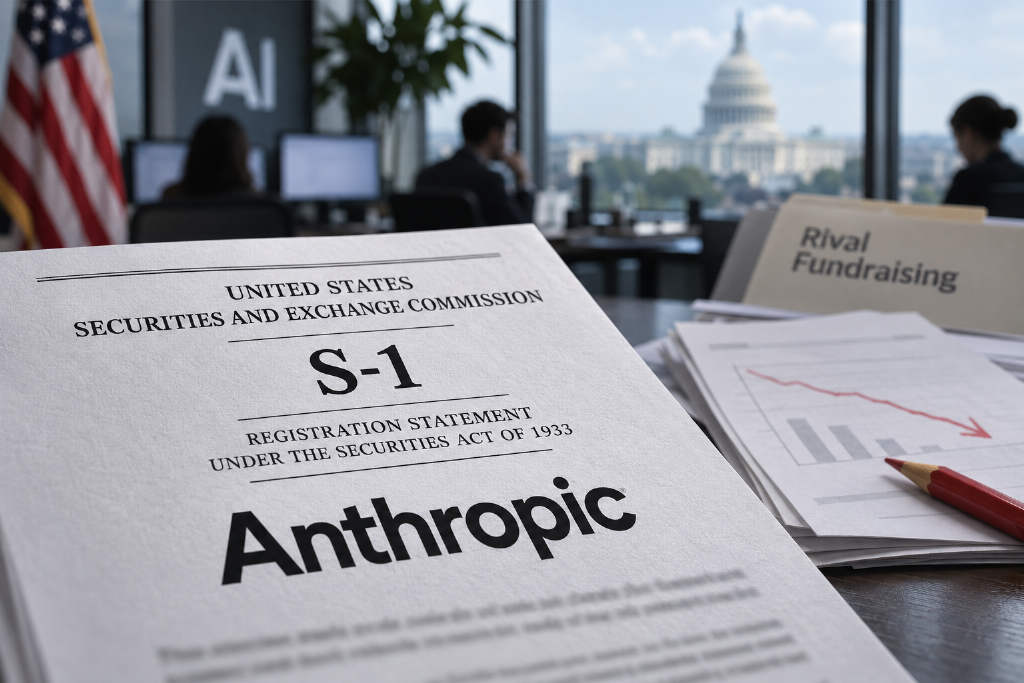
Rumors that Anthropic had canceled its initial public offering were quickly contradicted by public filings, with the company’s S-1 and amended S-1/A still visible in the U.S. Securities and Exchange Commission database. The company had filed a confidential draft on June 1, submitted five amendments between July and October, made its S-1 public on Oct. 26, and updated it again on Nov. 2. A separate IPO-related subdomain also appeared online, suggesting the listing process was still active. The debate has shifted from whether the IPO was withdrawn to whether investors still want it at the proposed scale. The report points to a series of departures from the Claude Code team, including Anthony Morris on Oct. 23, Thariq Shihipar on Oct. 24, and Cat Wu on Oct. 30, all arriving between the S-1 filing and the expected roadshow week of Nov. 9. It also highlights pressure from Anthropic’s financials: third-quarter revenue of $16.96 billion, quarter-over-quarter growth slowing to 47% from 144% in Q2, about $600 million in price cuts and discounts, and a swing from $974 million in profit in Q2 to a GAAP operating loss of $567 million in Q3. Another major issue is the company’s disclosed purchase and lease commitments, which the report says total $895.4 billion, including $447.5 billion due by the end of 2030 and $69.8 billion due within 12 months. The same report says banks have lowered the IPO valuation range to $1.4 trillion to $1.5 trillion from a previously cited $2 trillion private-market level. It also says OpenAI’s latest fundraising target and valuation were reduced, adding to signs of strain across the AI capital cycle.
800
Anthropic IPO remains on file, but valuation cuts and losses deepen Wall Street concerns
AI chips
Nov 4, 2026

AI chip startup Tenspresso said to be in funding talks at a possible $500 million valuation

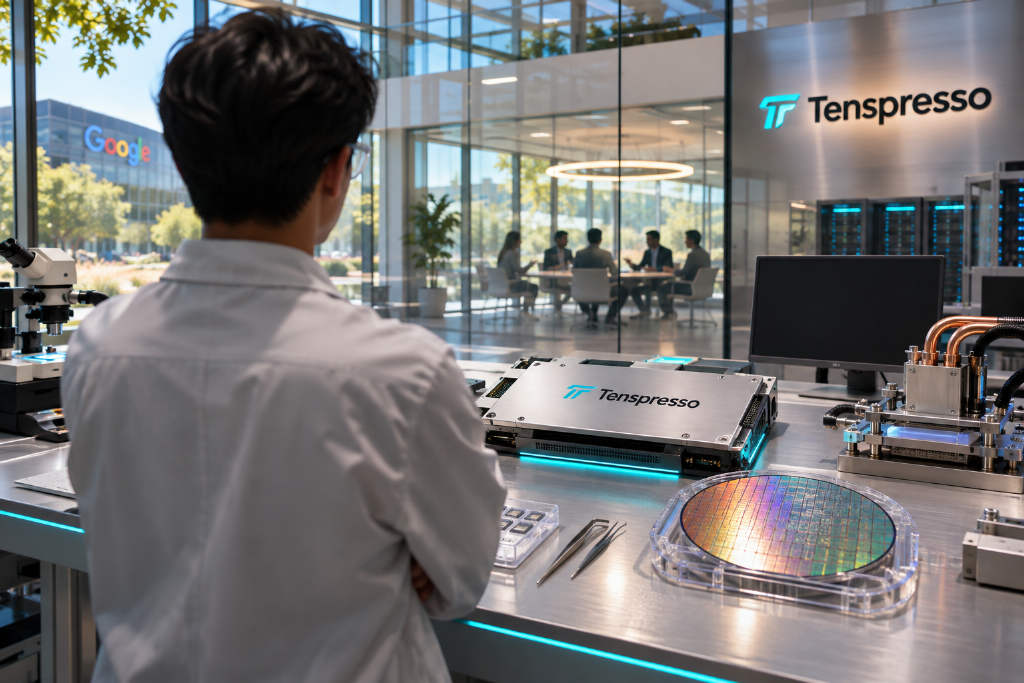
Techub News, citing Bloomberg, reported that AI chip startup Tenspresso is in funding talks that could value the company at $500 million. The company was founded just three months ago, according to the report. Bloomberg also said Tenspresso was started by a former Google AI chip engineer. The financing discussions and the potential valuation were the only deal details disclosed in the brief report, with no information provided on investors, round size, or timing. The update points to early investor interest in a very young semiconductor startup centered on AI chips, though the talks were described as ongoing and no transaction was confirmed.

660
AI chip startup Tenspresso said to be in funding talks at a possible $500 million valuation
A-shares
Nov 4, 2026

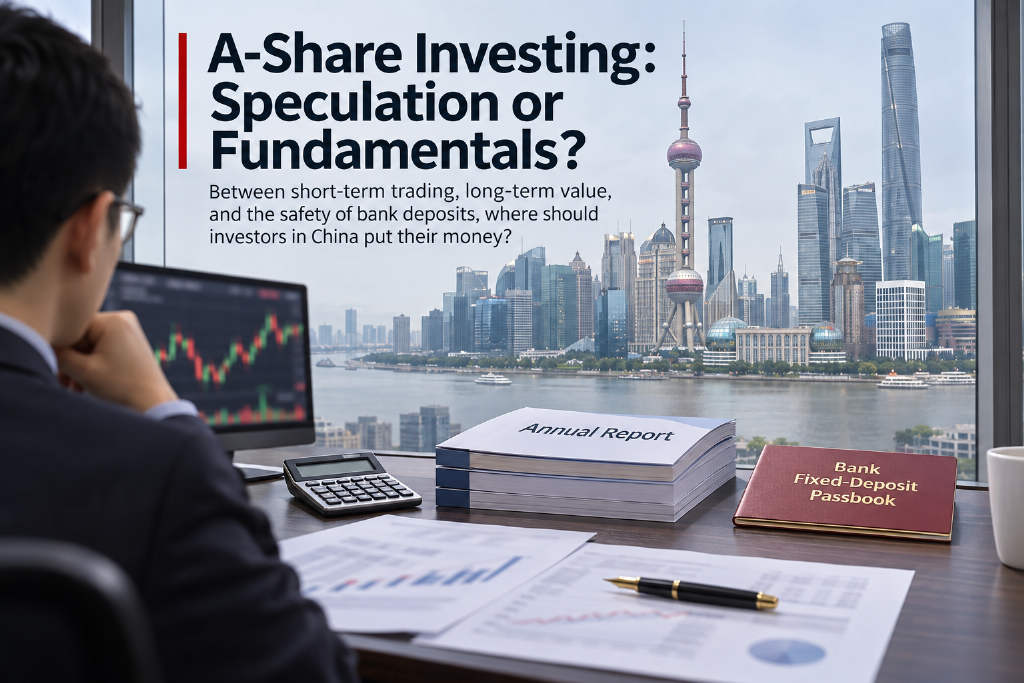
A-share market turmoil does not change the core of investment decisions, Foresight argues

Foresight published a market commentary arguing that the recent debate over an A-share market “crisis” should not distract investors from the basic work of judging whether a stock is worth owning in the first place. The article says many public discussions have focused on macro signals such as margin financing data, GDP trends, policy documents, or informal market rumors, but those lines of analysis do not replace a direct assessment of business quality and valuation. Using some high-profile STAR Market stocks as an example, the author says that, based on annualized revenue at the time of an earlier comparison with Nvidia’s financials, certain companies would have needed 100 years or even several hundred years of revenue to justify their market value. The piece stresses that this calculation referred to revenue rather than the stricter standard of free cash flow. The article lays out three standards for judging an investment target: corporate culture, business model, and a reasonable price. If any of those points cannot be understood clearly, the author says investors should not buy. It also argues that if investors do not understand either popular technology names or older cash-generating companies, keeping money in bank deposits and earning interest is still preferable to making blind bets. The conclusion is straightforward: whether a crisis happens or not should not alter those principles.

480
A-share market turmoil does not change the core of investment decisions, Foresight argues
Revolut
Nov 4, 2026

Revolut completes share sale at $115 billion valuation

UK fintech company Revolut has completed a new share sale that values the company at $115 billion, according to ChainCatcher. The latest valuation marks a 53% increase from the $75 billion level reported in November 2025 and is more than double the company’s $45 billion valuation in 2024. The transaction was led by Glade Brook Capital Partners, Coatue, Durable Capital Partners, T. Rowe Price Associates, and Baillie Gifford. Both existing and new investors took part in the round. Revolut has not disclosed the total size of the transaction or the number of shares sold. Employees were also given an opportunity to sell shares as part of the deal. The report did not provide additional details on pricing, allocation, or the structure of the secondary sale.

490
Revolut completes share sale at $115 billion valuation
Fal
Nov 3, 2026

Fal raises $1.3 billion at a $16 billion valuation

AI inference startup Fal has completed a $1.3 billion funding round, reaching a valuation of $16 billion, according to a Techub News brief citing Bloomberg. The round was led by existing investor Bessemer Venture Partners, with participation from Nvidia, Sound Ventures and T. Rowe Price Group. Fal focuses on hosting image, video and audio models for creators and developers. The company’s valuation has doubled from the level seen in its April financing round, when Sequoia Capital led a $350 million raise. The latest deal marks a sharp step-up in Fal’s pricing within a matter of months, based on the figures disclosed in the report.

760
Fal raises $1.3 billion at a $16 billion valuation
Apple
Nov 3, 2026

Moffett says Apple’s 36x valuation leaves little room for error

Craig Moffett, founding partner and senior analyst at MoffettNathanson, said Apple’s current 36x forward price-to-earnings multiple leaves the company with almost no room for error. He said Apple’s growth narrative is being tested by slower services growth, rising memory costs, and iPhone supply constraints. Moffett also said the attention around a new foldable device does not address Apple’s bigger ecosystem and growth issues. The remarks were reported by Bloomberg.

460
Moffett says Apple’s 36x valuation leaves little room for error
Anthropic
Nov 2, 2026

Anthropic IPO valuation seen at $1.5 trillion to $1.6 trillion, below earlier rumor

According to ChainCatcher, citing people familiar with the matter, institutional investors have told Anthropic that the company’s valuation in its planned initial public offering later this month should be around $1.5 trillion to $1.6 trillion. That range is below an earlier market rumor that had placed the company’s valuation at close to $2 trillion. The report did not provide additional details on the investors involved or the structure of the planned IPO, but it framed the latest valuation view as a lower level than previously circulated expectations.

430
Anthropic IPO valuation seen at $1.5 trillion to $1.6 trillion, below earlier rumor
economic crisis
Nov 2, 2026

Why Economic Crises May Matter Less Than Business Quality in Investment Decisions

A market analysis published by Foresight argues that major investment decisions should not hinge on predicting macroeconomic downturns or financial crises. The author says that after reading works related to Warren Buffett, Charlie Munger, and especially Duan Yongping’s Q&A collection, he has gradually reduced his focus on macro calls and crisis forecasts. In his view, the core of investing lies elsewhere: corporate culture, business model, and price. The article lays out that a strong company should reward shareholders through buybacks or cash dividends, treat employees well, and operate with integrity. A sound business model should have a wide moat, sufficient cash flow, and a healthy balance sheet with low leverage. A good price, the author writes, means a company’s market value should be below the discounted sum of its future free cash flows. From that framework, the piece argues that both selling before a crisis and buying during one still depend on the same question: whether the asset is trading above or below intrinsic value. It also says that companies that collapse in a crisis usually already had weak cash generation and excessive debt, issues investors should have examined before buying. The article cites Buffett, Munger, and Duan Yongping to support the view that business fundamentals, not crisis prediction, drive sound investment choices.

400
Why Economic Crises May Matter Less Than Business Quality in Investment Decisions
Total 342 items
Go topage