Ether.fi
Nov 2, 2026

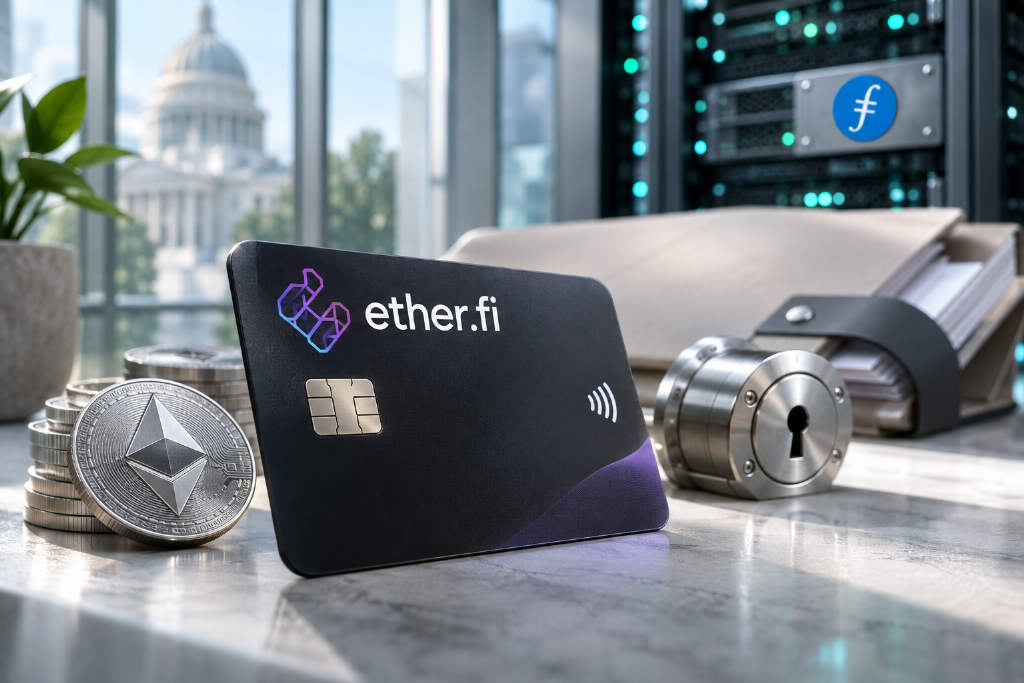
Ether.fi overview lays out different risk profiles across staking, vaults, borrowing and Cash

The Defiant published a short explainer on Ether.fi, outlining how the protocol’s product set exposes users to different kinds of risk rather than treating every offering as interchangeable. The piece says staking tokens, shares in managed vaults, and loans backed by collateral each come with distinct exposure profiles, though it does not provide deeper product-level metrics or a full breakdown of mechanics in the available text. It also highlights Ether.fi Cash as a separate access point tied to card functionality. That feature is not universally available: access is subject to identity verification and geographic screening, according to the article. The summary does not specify which jurisdictions are supported or restricted. In addition, the page notes that The Defiant’s articles are stored on Filecoin. The item was published on Nov. 2, 2026, and appeared under the outlet’s hot-articles category.

800
Ether.fi overview lays out different risk profiles across staking, vaults, borrowing and Cash
Origami
Oct 31, 2026

Origami Says DNS Is Back Online, but Vault Activity Is Still Paused

Origami said its DNS service has been restored and that funds in its vaults were not affected. Even so, vault operations have not fully resumed. A contract readout cited in The Defiant shows that deposits and withdrawals remain paused for the protocol’s hOHM vault. The update points to a split between infrastructure recovery and product functionality: the domain-side issue appears resolved, while at least one vault is still not processing user flows. The report did not include additional technical details on the cause of the disruption or a timeline for reopening vault activity. For now, the key points are limited but clear. Origami says user funds were unaffected, DNS has been restored, and the hOHM vault still has deposits and withdrawals paused at the contract level.

730
Origami Says DNS Is Back Online, but Vault Activity Is Still Paused
DeFi
Oct 31, 2026

From Morpho to Aave, the timing of loss recognition decides who pays for DeFi vault bad debt

Foresight highlighted a short market view arguing that bad debt itself is not the main issue in DeFi lending protocols. What matters more is when that loss is formally recognized, because the timing determines which party ultimately absorbs the hit. The comment frames Morpho and Aave within the same discussion and points to loss-allocation mechanics rather than the mere existence of bad debt. In that view, identical bad debt can lead to different outcomes for vault participants depending on the protocol’s recognition sequence and accounting point. The focus is on who ends up paying once losses move from being latent to being booked.

940
From Morpho to Aave, the timing of loss recognition decides who pays for DeFi vault bad debt
DeFi
Oct 22, 2026

Firelight plans AI crash tests for DeFi vaults

Firelight is looking to use AI to run crash tests on DeFi vaults in an effort to spot what it described as "the next accident." The item, cited by Foresight from a post on X, offers only a brief outline of the idea and does not include details on scope, timing, or the specific vaults involved. What is clear from the source is the intended use case: applying AI to stress-test DeFi insurance assumptions by probing for potential failure points before an incident occurs. No additional figures, product specifications, or rollout plans were provided in the source material.

850
Firelight plans AI crash tests for DeFi vaults
Crypto Lending
Oct 19, 2026

Crypto lending vault deposits top $10 billion as collateral and regulatory risks draw scrutiny

Crypto lending vaults have grown from a niche DeFi product into a market with more than $10 billion in deposits, according to a Financial Times report cited by BlockTempo. The figure was about $4 billion at the start of 2025, meaning the sector has expanded by more than twofold in less than a year. The inflows are said to come from fintech firms, digital asset treasury companies and hedge funds seeking yield instead of leaving tokens idle in wallets. These vaults run on DeFi smart contracts and are typically managed by curators, who choose lending strategies, set risk limits and take a fee from interest income. Returns generally range from 3% to 10%, while higher-risk products can offer 20% or more. But the report says depositors often have limited visibility into who ultimately borrows the funds, what collateral is posted and how liquidations would work in a downturn. The article also points to risks tied to illiquid tokens, crypto-backed stablecoins and tokenized private credit used as collateral, alongside smart contract flaws, pricing errors and hacks. On the regulatory side, the U.S. Securities and Exchange Commission and European policymakers are both examining whether existing rules could apply to these products, potentially bringing KYC, AML, registration and disclosure obligations into the picture.

1700
Crypto lending vault deposits top $10 billion as collateral and regulatory risks draw scrutiny
Total 23 items
Go topage