Visa
Nov 5, 2026

Visa sets up six global capability centers in Singapore, with stablecoins and digital currency in focus

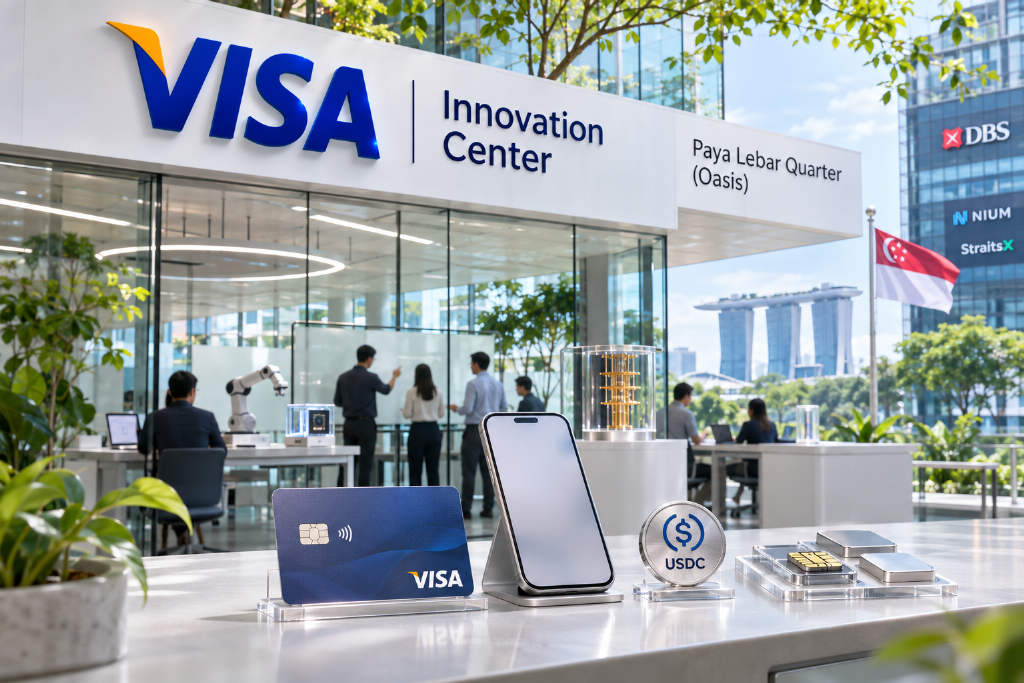
Visa has announced six global capability centers at its new Solutions Centre in Paya Lebar, Singapore, according to Tech in Asia. The company said the site will bring together more than 1,500 professionals and concentrate on a broad set of areas tied to payments and financial technology. Those areas include AI and agentic commerce, digital currencies, stablecoins, programmable payments, wallets, alternative payment methods, cybersecurity, and quantum computing. Visa also said it plans to expand roles across research, engineering, and innovation. Its listed partners for the initiative include DBS Bank, Nium, and StraitsX. Singapore’s Economic Development Board said the investment will create high-value jobs for Singaporeans. The announcement also comes as Visa points to its existing work in digital assets. The company said it has already launched USDC settlement in the United States and added that stablecoins can support faster cross-border payments as well as programmable money.

630
Visa sets up six global capability centers in Singapore, with stablecoins and digital currency in focus
OUSD
Nov 4, 2026

OUSD fee terms show $0.01 cap per payment as Open Standard pushes reserve yield to partners

Open Standard has disclosed partner-facing terms for Open USD, or OUSD, showing a fee model built around an extremely low cap and a revenue-sharing structure tied to reserve income. According to an internal partner document cited in the report, OUSD charges a 0.1 basis point management fee on payments, but caps the charge at $0.01 per transaction, with the fee paid to governance company Open Standard. That means a $1 million cross-border payment that would otherwise cost $10 under the headline rate would still be charged only $0.01. The document also says nearly all reserve income is shared with partners that drive adoption, while the issuer keeps only the management fee. OUSD is issued by Bridge, with reserves held at BlackRock, Lead Bank and BNY Mellon, and reserve attestations published monthly. The report adds that OUSD went live on Sept. 30 and has more than 200 listed financial institution, fintech and enterprise partners. Open Standard also set up an annual equity earn-in pool, with a $50 million threshold for participation and a 5% ownership cap for any single partner.

1020
OUSD fee terms show $0.01 cap per payment as Open Standard pushes reserve yield to partners
OpenUSD
Nov 4, 2026

OpenUSD sets fee structure and partner economics as Visa releases integration guides

OpenUSD, the stablecoin initiative backed by Stripe, Visa, Mastercard, Coinbase and Shopify, has outlined how its governance body Open Standard plans to charge partners and distribute reserve income, according to CoinDesk. The documents say Open Standard will levy a 0.1 basis point management fee based on payment volume, capped at $0.01 per transaction. Payments of $1,000 or more hit that ceiling, while smaller transactions are charged at 0.1 basis point of value. The structure differs from USDT and USDC, whose issuers retain reserve interest; under the OpenUSD model, reserve yield is distributed to partners after the management fee is deducted. The materials also describe an equity participation mechanism tied to OUSD holdings and fund flows. Partners must hold at least $50 million to join the equity pool, and any single partner is limited to a maximum 5% stake. Visa has also published more than 100 pages of technical implementation and user guidance for partners integrating OUSD through the Visa stablecoin platform.

1160
OpenUSD sets fee structure and partner economics as Visa releases integration guides
OpenUSD
Nov 3, 2026

OpenUSD sets payment fee model and equity incentive pool for partners

OpenUSD, or OUSD, has formalized a fee structure and partner incentive framework through its governance body, Open Standard. According to internal documents cited in the report, the stablecoin will charge a 0.1 basis point management fee on payment volume, equal to 0.001%, with a maximum fee of $0.01 per transaction. Payments of $1,000 or more will hit that cap, while smaller transactions will be charged at the stated rate. The management fee will be paid to Open Standard. The report also says OUSD plans to distribute reserve income to partners after deducting the management fee, a structure presented in contrast to USDT and USDC, where reserve asset interest is retained by the issuers. In addition, Open Standard will offer equity incentives tied to the amount of OUSD that partners hold and circulate. Partners will receive a share of an annual equity incentive pool each month based on holdings and transaction flow. Eligibility requires at least $50 million in holdings or scale, and any single partner will be capped at a 5% ownership stake. OUSD was launched with participation from Stripe, Visa, Mastercard, Coinbase, and Shopify, with the stated aim of lowering cross-border settlement costs and reducing fiat conversion needs to near zero.

860
OpenUSD sets payment fee model and equity incentive pool for partners
Stripe
Nov 3, 2026

Stripe Tries to Build a Payment Network Outside Visa, but User Adoption Is in Question

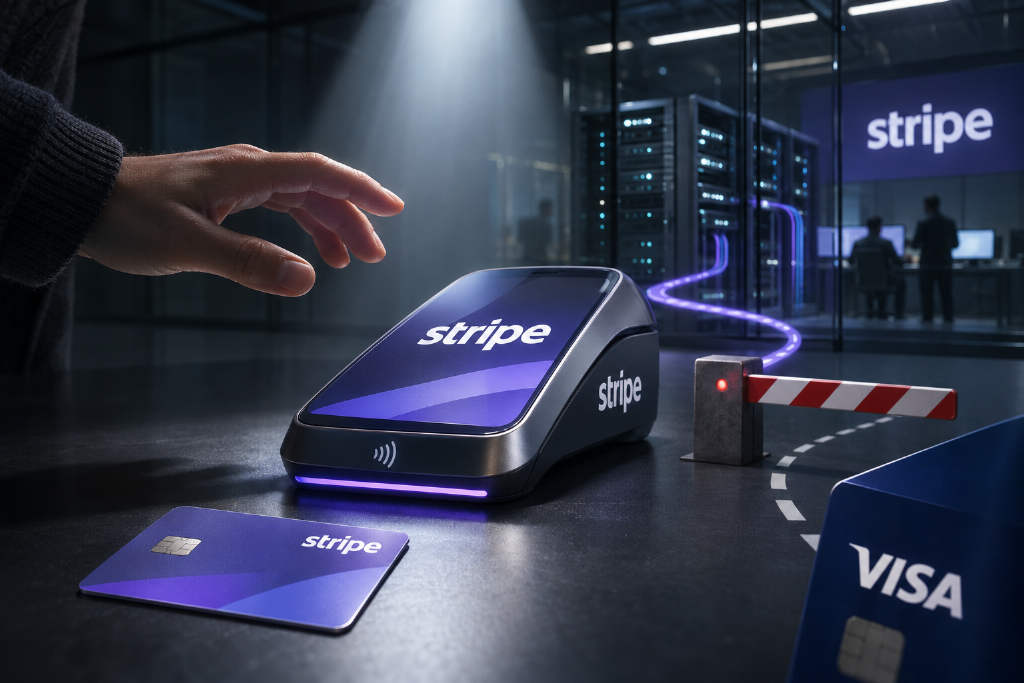
Stripe is trying to sidestep Visa and build a new payment network of its own, according to the source material. The idea points to a direct challenge to the existing card-payment structure, with proxy payments at the center of the discussion. Still, the effort may face a basic obstacle: users may not be willing to support it. Based on the limited information available, the issue is not only whether Stripe can construct an alternative network, but whether that model can gain real traction with end users. The current source does not provide further operational details, timelines, or adoption data, but it frames the debate around a simple tension: building around Visa is one thing, getting users to follow is another.

480
Stripe Tries to Build a Payment Network Outside Visa, but User Adoption Is in Question
India
Nov 2, 2026

India central bank and FIU review offshore crypto payment cards

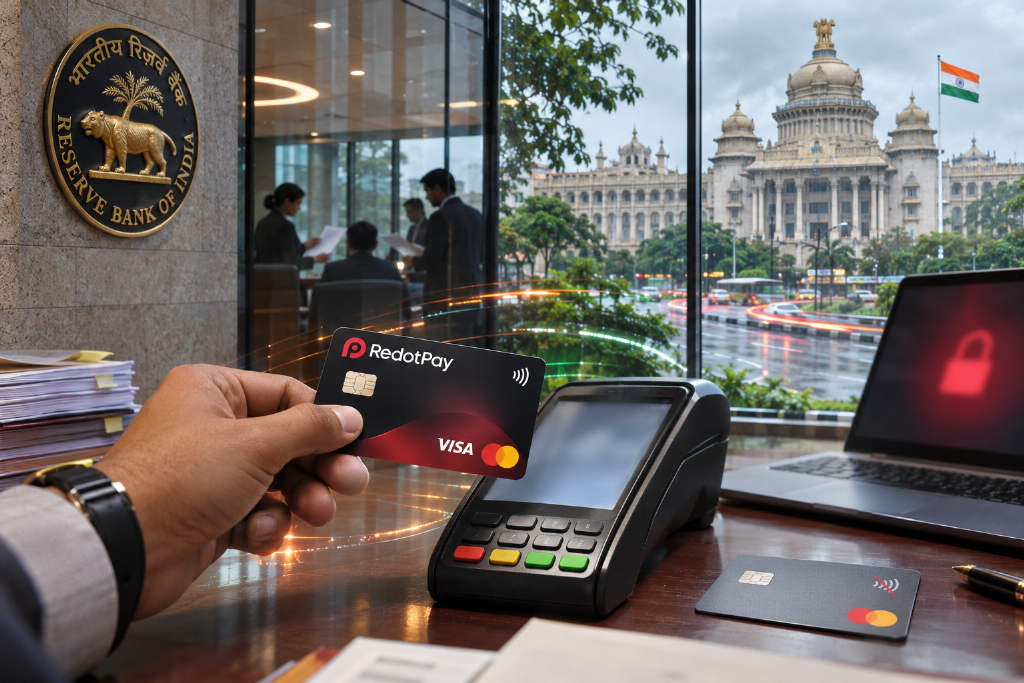
India’s central bank and the Financial Intelligence Unit are reviewing offshore crypto payment cards that let users convert cryptocurrency into rupees for spending through Visa and Mastercard networks, according to a Techub News brief citing Crypto.news. The products under review include cards linked to RedotPay and similar services. Some users in India said they have recently run into card suspensions or have been unable to access related websites. The review trail was linked to Digital South Trust, a blockchain research group based in Bengaluru. The group said it had obtained a RedotPay virtual card and completed a domestic transaction in India. The report also said RedotPay is still preparing for a potential U.S. IPO. Visa, Mastercard, and the Reserve Bank of India did not respond to requests for comment, according to the source material.

820
India central bank and FIU review offshore crypto payment cards
Gate Card
Nov 2, 2026

Gate Card launches limited-time spending campaign with 11% cashback voucher reward

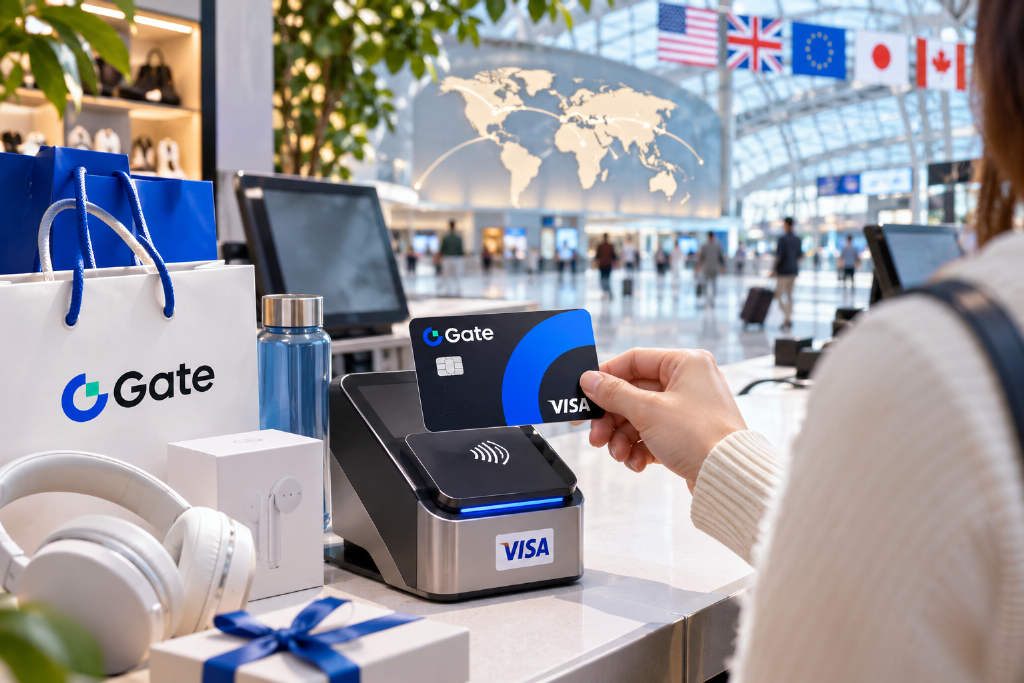
Gate Card has rolled out a limited-time spending rewards campaign that runs until 08:00 UTC+8 on Dec. 1, according to an official announcement cited by Odaily. The promotion is open to both new and existing users, with different transaction-count requirements for each group. New users must apply for and activate a Gate Card for the first time, then complete at least three eligible purchases. Existing users must complete at least five eligible purchases. In both cases, cumulative spending must reach 100 USDT to qualify for a chance to receive an 11 USDT cash voucher, equivalent to an 11% reward on that threshold. The total prize pool is 100,000 USDT and will be distributed on a first-come, first-served basis. Gate has also previously said it partnered with Visa to expand its crypto-linked card service to more than 40 markets worldwide. Visa’s payment network spans more than 200 countries and regions and includes over 175 million merchant acceptance points. Gate Card also supports Apple Pay and Google Pay, offers a six-tier T0-T5 cashback system with up to 8% cashback on eligible spending, capped at 150 USDT per transaction and 400 USDT per month, and recently upgraded its auto top-up function across multiple account types.

740
Gate Card launches limited-time spending campaign with 11% cashback voucher reward
Total 349 items
Go topage