Google
Oct 17, 2026

Google says Willow quantum chip cut Magic States error rate by about 40x

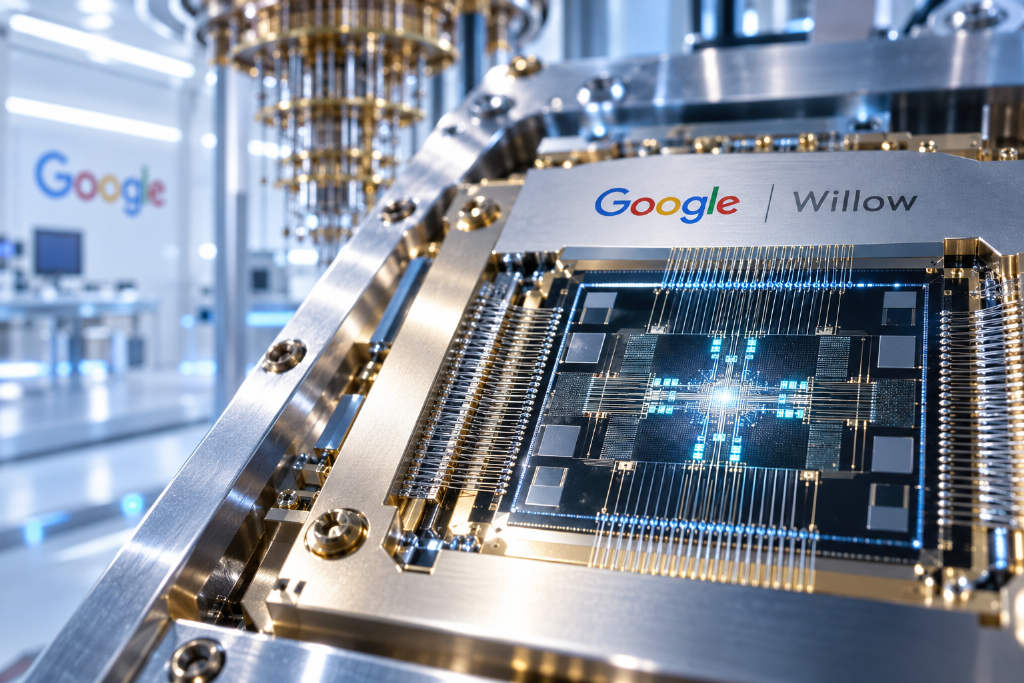
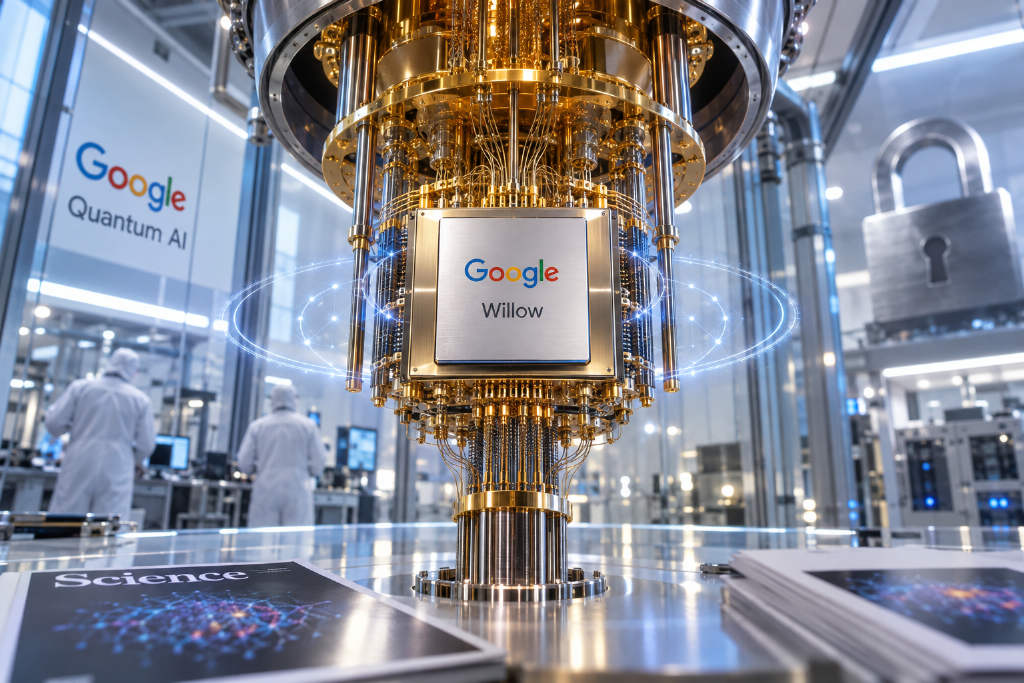
Google said its Willow quantum chip reduced the error rate in preparing Magic States by about 40x using a method called "Cultivation," according to a report cited by ChainCatcher. The study was published this week in Science and points to a possible reduction in the hardware overhead needed for large-scale quantum computing. It also renewed attention on a long-discussed question in crypto: whether future quantum machines could threaten the cryptography used by Bitcoin wallets. Magic States are a key resource for certain quantum operations, but generating them is hardware-intensive. In Google’s experiment, the state fidelity reached about 99.99%, while only around 8% of attempts passed screening. Researchers said the next steps still include scaling the experiment and solving real-time operation and error-correction issues. The report added that this result does not mean quantum computers can already break Bitcoin. Google’s earlier cost estimate for such an attack had already assumed efficient Magic States preparation, so the new result should not be read as a fresh 40x reduction in the cost of cracking Bitcoin wallets.
810
Google says Willow quantum chip cut Magic States error rate by about 40x
Google
Oct 16, 2026

Google says Willow quantum chip cut magic-state error rates by about 40x in lab test

Google Quantum AI said on Oct. 15 U.S. time that it had experimentally demonstrated "magic state cultivation" on its Willow quantum chip for the first time, a result the company described as a step toward easing one of quantum computing’s most expensive bottlenecks. According to Google’s official blog, the related paper was published the same day in Science. In the experiment, Google said the cultivated magic states showed error rates about 40x lower than uncultivated ones, while the logical fidelity of the T state reached 99.99%. The team also demonstrated moving the state from a distance-3 color code to a distance-5 surface code. Still, Google said practical use will require larger-scale demonstrations and that major technical challenges remain. Decrypt reported that the experiment used at most 54 of Willow’s 105 qubits, with roughly 8% of attempts passing all checks. It also said the result is still about one million times away from the cleanliness needed to factor RSA-2048, meaning crypto wallets do not face immediate risk from this work.

850
Google says Willow quantum chip cut magic-state error rates by about 40x in lab test
Google
Oct 16, 2026

Google says Willow cut magic-state errors by 40x, reaching 99.99% fidelity

Google Quantum AI said its Willow processor has demonstrated a technique called magic state cultivation, reducing the error rate of magic states by about 40x and producing T states with 99.99% logical fidelity, according to a paper published in Science. The result targets one of quantum computing’s most stubborn cost barriers: generating the high-quality magic states required for complex, commercially useful quantum programs. Google said prior academic estimates suggested magic-state production could consume as much as 95% of a quantum computer’s total resources. By shifting from the older “magic state distillation” approach to a more selective cultivation process, the company argues that the physical overhead for useful quantum machines could fall sharply. In the experiment, only about 8% of attempts passed all checks, meaning more than 90% of initial candidates were discarded to keep only the cleanest states. The work also feeds into long-term estimates around cryptography. The report cited earlier projections from researcher Craig Gidney that breaking RSA-2048 may require fewer than 1 million noisy physical qubits, down from a 2019 estimate of 20 million. A separate white paper from Google Quantum AI, Ethereum Foundation researcher Justin Drake, and Stanford cryptographer Dan Boneh estimated that breaking Bitcoin’s elliptic curve cryptography could require fewer than 500,000 physical qubits. Even so, the paper says the error rate needed to factor RSA-2048 remains far below what Willow has reached, and no crypto wallet is at immediate risk.

880
Google says Willow cut magic-state errors by 40x, reaching 99.99% fidelity
Google
Oct 15, 2026

Google says Willow cut quantum magic-state errors by 40x

Google said Willow reduced quantum "magic state" errors by a factor of 40, according to a report from The Defiant. The result, described as a Science publication, reached about 99.99% state fidelity. The report said the finding validates a technique that had already been assumed in quantum resource estimates. The article also noted that its content is stored on Filecoin. Aside from those points, no additional technical details, timeline context, or researcher comments were included in the source material provided. The update was published on Oct. 15, 2026, and was categorized under technology trends. Because the source text was brief, the report mainly centered on three disclosed facts: the 40-fold reduction in magic-state errors on Willow, the roughly 99.99% state fidelity figure, and the claim that the result supports a technique already used in quantum resource estimates.

950
Google says Willow cut quantum magic-state errors by 40x
Google
Oct 15, 2026

Google says Willow chip test cut quantum magic-state errors by about 40x

Google says it has moved one of quantum computing’s most discussed ideas out of theory and onto working hardware. In a paper published Thursday in Science, the company’s Quantum AI team reported that a technique called magic state cultivation reduced errors by about 40 times on its Willow processor and produced T-states with a record logical fidelity of 99.99%. The result matters because fault-tolerant quantum computing depends not only on standard error correction, but also on the ability to generate high-quality “magic states” for harder operations that cannot be protected the same way. Google said producing those states has historically been so expensive that some estimates put the cost at as much as 95% of a machine’s total capacity. The new cultivation approach aims to lower that burden by filtering and growing usable states inside a small chip region instead of relying on large qubit factories. The announcement also feeds into the long-running discussion around quantum threats to modern cryptography. The article links cultivation to Craig Gidney’s 2025 estimate that RSA-2048 could be broken with fewer than 1 million noisy qubits, down from 20 million in 2019, and cites a March Quantum AI whitepaper co-authored with Ethereum Foundation researcher Justin Drake and Stanford cryptographer Dan Boneh that put the cost of breaking Bitcoin’s elliptic curve cryptography at under 500,000 physical qubits. Even so, Google said nobody is draining wallets with this experiment: the test used at most 54 of Willow’s 105 qubits, and factoring RSA-2048 would still require magic states roughly 1 million times cleaner than what the company has now demonstrated.

1030
Google says Willow chip test cut quantum magic-state errors by about 40x
Google
Oct 15, 2026

Google Quantum AI says new technique cut magic-state errors about 40x on Willow

Google Quantum AI said in a paper published in Science that its "magic state cultivation" technique reduced errors by about 40 times on the Willow processor and produced T states with 99.99% logical fidelity. Magic states are single-use resources required to run useful quantum programs, and Google cited estimates showing that producing them can consume as much as 95% of a quantum computer’s total capacity, leaving limited room for actual computation. The standard method before this was magic-state distillation, proposed in 2004 by physicists Sergei Bravyi and Alexei Kitaev, which relies on large qubit factories dedicated to that task. Google researchers proposed a lower-cost cultivation route in 2024, describing it as more like a filter: rough magic states are injected into a small region of the chip, subjected to a sequence of checks, defective attempts are discarded, and the successful ones are gradually amplified. In the reported experiment, only about 8% of attempts passed all checks. The work used as many as 54 of Willow’s 105 qubits. The paper also said that factoring an RSA-2048 key would require magic states with an error rate of roughly one in ten billion, about a million times cleaner than the result achieved in this experiment.

1070
Google Quantum AI says new technique cut magic-state errors about 40x on Willow
Google
Oct 15, 2026

Google says Willow chip advance cuts quantum error rate by about 40x

Google Quantum AI said in a paper published in Science that its "magic state cultivation" technique reduced the error rate by about 40 times on the company’s Willow processor, while reaching 99.99% fidelity for the resulting magic states. Magic states are single-use resources needed to run practical quantum programs, and earlier estimates had suggested that preparing them could account for as much as 95% of a quantum computer’s total compute capacity. Google said the work turns one of quantum computing’s most promising theoretical methods into something that can be used on chip in practice. According to the Techub summary, citing Decrypt, the advance is also one of the key pieces behind Google’s 2025 projection that the number of noisy qubits required to break RSA-2048 encryption could fall below one million. The report added that lower construction costs for quantum computers could speed up applications in drug design and new materials research, while also carrying implications for the cryptography used to secure bank logins and Bitcoin wallets.

930
Google says Willow chip advance cuts quantum error rate by about 40x
Google
Aug 22, 2026

Google’s Willow quantum chip posts benchmark gain, while practical machines remain years away

Google released its 105-qubit Willow quantum chip in December 2024, according to Techub News, reporting that the processor completed a random circuit sampling benchmark in five minutes. The same task would take Frontier, a traditional supercomputer, 10^25 years to finish. The report also said Willow made progress in quantum error correction, becoming the first to keep logical error rates below threshold at both surface code distances 5 and 7. In February 2025, Google CEO Sundar Pichai said practical quantum computers were still five to 10 years away. The development carries potential implications for crypto because a mature fault-tolerant quantum computer could theoretically break current cryptographic systems such as RSA and elliptic curve encryption. The report added that Willow does not currently have that capability.

1710
Google’s Willow quantum chip posts benchmark gain, while practical machines remain years away
Total 9 items
Go topage