XRP
Oct 26, 2026

XRPL payment volume jumps 2633.3% in 24 hours but stays below 30-day average

XRP Ledger data showed a sharp rise in network payment activity over the past 24 hours, with payment volume climbing 2633.3% to about 137.7 million XRP. Even with that spike, the figure remained below the 30-day average of roughly 496 million XRP, pointing to activity that was still under the recent norm. On the market side, XRP was trading at about $1.2879. The token remained below several key moving averages, while its relative strength index, or RSI, stayed under 50. The report also noted that the historical peak in payment volume was around 7 billion XRP. The figures were cited by U.Today and carried by Techub News.

440
XRPL payment volume jumps 2633.3% in 24 hours but stays below 30-day average
XRPL
Oct 25, 2026

XRPL fixCleanup3_4_0 vote resets, pushing earliest activation window to Nov. 4

The XRP Ledger’s maintenance amendment, fixCleanup3_4_0, has restarted its activation clock after losing validator majority during its first countdown period. The amendment regained majority backing on Oct. 21, moving its earliest possible activation window to Nov. 4, provided support remains in place through the full required period. A snapshot taken at 07:09 UTC on Oct. 24 showed that 32 of 35 trusted validators were backing the proposal, equal to a 91.43% support rate. The new majority-support timestamp was recorded at 14:46:22 UTC on Oct. 21. The amendment had first entered the process on Oct. 9, but the clock reset after support fell below the threshold on Oct. 21 before the network could complete the required two consecutive weeks. Under XRPL rules, an amendment must maintain support from more than 80% of trusted validators for two straight weeks before it can activate. If support drops below that level at any point, the timing process starts over. The fixCleanup3_4_0 package covers technical fixes tied to vaults, lending, AMM, permissioned trading, trust lines, and NFTs.

750
XRPL fixCleanup3_4_0 vote resets, pushing earliest activation window to Nov. 4
Franklin Templeton
Oct 24, 2026

Franklin Templeton’s sgBENJI Adds About $150 Million on XRPL, With All Tokens Sent to One Wallet

Franklin Templeton’s tokenized money market fund on the XRP Ledger, sgBENJI, expanded by roughly 144 million shares this week, a move tied to about $150 million in new subscriptions recorded on-chain. XRP Ledger data shows two transfers into the same receiving wallet on Oct. 22 at 10:58 a.m. and 12:13 p.m. Taiwan time, and CoinDesk reported the activity on Oct. 24. According to the token description attached to the issuer account, each sgBENJI token represents one share of the Franklin OnChain U.S. Dollar Short-Term Money Market Fund. On-chain records also show that the issuer account created two subscription receipt tokens on the afternoon of Oct. 21, each marked as a $75 million cash subscription and carrying a transaction reference code. The issuer then sent about 72.18 million sgBENJI twice to the same wallet, bringing the total transferred amount to about 144 million shares, consistent with the combined $150 million subscription value at roughly $1.039 per share. The receiving wallet previously held about 48.33 million shares and, as of Oct. 24, held about 193 million shares, matching the full circulating supply of sgBENJI on XRPL. Account settings show the wallet shares the same eight signer addresses as the issuer account, with both requiring any two signers to approve transactions. The blockchain record does not identify the wallet owner or the investor behind the subscriptions.

590
Franklin Templeton’s sgBENJI Adds About $150 Million on XRPL, With All Tokens Sent to One Wallet
XRP Ledger
Oct 22, 2026

XRP Ledger bug fix delayed to Nov. 4 after validator support briefly fell below threshold

A bug fix on the XRP Ledger has been pushed back to Nov. 4 after validator support briefly dropped below the network’s approval threshold, resetting the required 14-day activation clock less than two days before the change was set to go live. The amendment, known as fixCleanup3_4_0, had been scheduled for activation at 09:34 UTC on Oct. 23, but support fell to 26 of the network’s 35 default trusted validators at a checkpoint on Wednesday, according to XRPL Dashboard. By 14:46 UTC, support had recovered to 29, enough to restart the countdown. XRPLWin now shows the new activation time as 14:46 UTC on Nov. 4. Support has since climbed to 31 of 35 validators, above the 29 needed to maintain the threshold. The patch addresses a token-creation loophole and changes how vault and lending code calculates whether a loan is late or in default. Still, the broader lending system tied to that code has not yet won enough validator backing to begin its own activation process, and it remained offline as of Thursday.

830
XRP Ledger bug fix delayed to Nov. 4 after validator support briefly fell below threshold
XRP Ledger
Oct 21, 2026

David Schwartz says XRPL slowdown exposed protocol and monitoring weaknesses

XRP Ledger recently suffered a technical issue that slowed transaction processing, prompting public comments from Ripple’s former chief technology officer and XRPL co-creator David Schwartz. He said ledger closures were running much slower than usual, a pattern that could point either to a targeted attack on the network or to a latent bug in the code being triggered. Schwartz said the incident reduced the system’s technical safety margin, but he pushed back on claims that the blockchain has a single point of failure. He said XRPL remains fully decentralized and that the shutdown or overload of major hub nodes would not disrupt the network as a whole. The episode also exposed weaknesses in XRPL’s monitoring setup under peak load. According to Schwartz, his own node was hit by a surge in requests that caused its local RPC connection to hang, which led to the loss of key diagnostic data. Engineers and community operators are now manually reviewing retained logs in an effort to fully remove the flaw. The report was cited by Techub and attributed to U.Today.

780
David Schwartz says XRPL slowdown exposed protocol and monitoring weaknesses
XRP Ledger
Oct 18, 2026

New scam wave hits XRP Ledger as bank-related integrations give fraudsters fresh bait

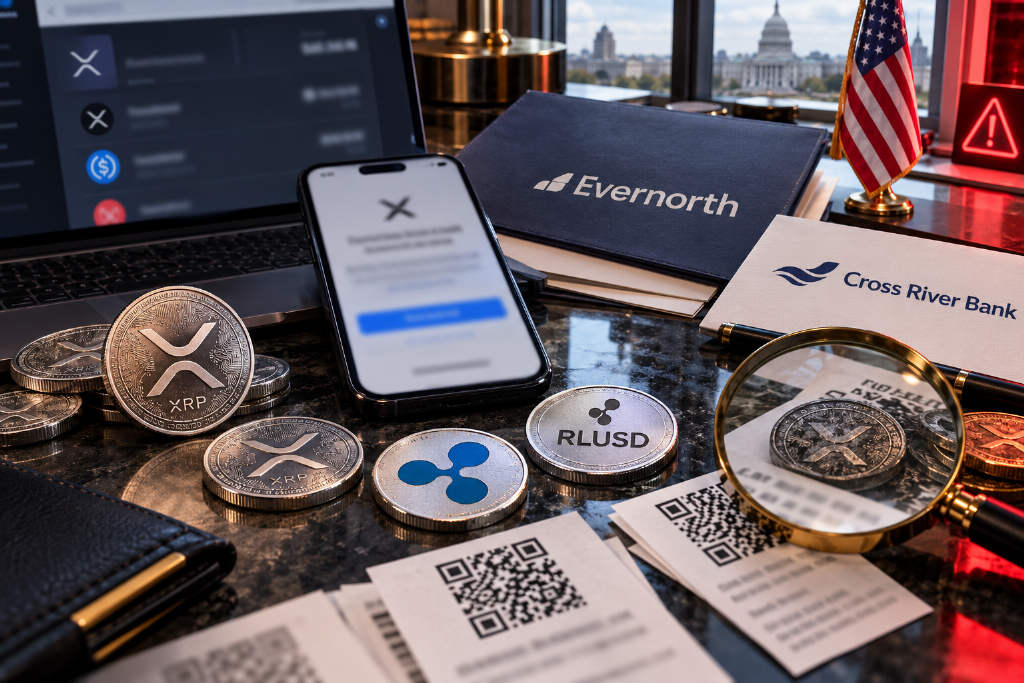
Developments around the XRP Ledger, including deeper ties to banking use cases, the rollout of the RLUSD stablecoin and treasury-related activity tied to Evernorth, are being used by scammers to build new fraud campaigns. According to Techub News, attackers are increasingly hijacking the names of well-known financial institutions and turning legitimate corporate headlines into tools for stealing user assets. XRPL Foundation contributor @Vet_X0 warned this week that scammers are generating polished vanity addresses and issuing fake tokens designed to resemble brands named in recent announcements. The tactic reflects a shift away from hunting for code flaws and toward social engineering. The report said real news events are serving as the hook, including Cross River Bank testing RLUSD and an Evernorth fund deploying 473 million XRP through major exchanges. Once a brand announces an XRPL-related move, scam infrastructure can create lookalike wallet addresses and fake tokens within seconds, then direct users to phishing sites that ask them to verify wallets or swap real XRP for supposed new bank-linked tokens. The report cited U.Today.

1010
New scam wave hits XRP Ledger as bank-related integrations give fraudsters fresh bait
Ripple
Oct 16, 2026

Ripple’s $2.45 billion deal streak points to a broader institutional stablecoin push

Ripple’s three headline acquisitions in 2025 — Hidden Road for $1.25 billion, Rail for $200 million, and GTreasury for $1 billion — add up to $2.45 billion in disclosed consideration. Taken together with earlier deals for Metaco and Standard Custody, the company has been assembling a much wider institutional stack around payments, custody, treasury operations, credit, settlement, and its dollar stablecoin RLUSD. The logic becomes clearer when the deals are mapped onto the lifecycle of money. Rail sits at the on-ramp and off-ramp layer, connecting fiat accounts, collections, conversions, and payouts. Hidden Road brings prime brokerage, collateral, clearing, and financing. GTreasury places Ripple inside the enterprise systems where companies monitor cash, approve payments, manage FX exposure, and decide how funds are allocated. That matters because stablecoin usage at scale depends on far more than token issuance: institutions also need account structures, operational controls, compliance processes, banking connectivity, and systems that fit existing workflows. This report traces Ripple’s path from its original cross-border payments thesis around XRP and XRPL to its current attempt to build a broader institutional financial infrastructure. It also separates Ripple the company, XRP the asset, XRPL the network, and RLUSD the stablecoin — a distinction the original analysis argues is essential when evaluating adoption, revenue, and long-term value capture.


910
Ripple’s $2.45 billion deal streak points to a broader institutional stablecoin push
Total 226 items
Go topage