AI2026-10-03 05:01:04China’s AI model makers still cannot break even on API sales, Q3 review findsA TechFlowPost article translated from a report by Robonaissance and Inside China’s Machine says none of the Chinese AI model developers with disclosed financials has shown that model sales alone can cover the full cost of building and running those systems. The review tracks 19 companies and argues that the sector is being sustained in two different ways: large parent groups such as Xiaomi, Alibaba and Tencent can absorb AI spending with profits from other businesses, while independent labs such as Zhipu and MiniMax remain reliant on equity and debt financing. The piece compares benchmark scores, test costs, research spending, losses and fundraising. Xiaomi’s MiMo-V2.6-Pro scored 46 on the Artificial Analysis Intelligence Index, one point above Zhipu’s GLM-5.3, yet the full benchmark run cost buyers $207 on MiMo versus $2,503 on GLM. Even so, the article says pricing and benchmark scores do not reveal whether a model business is durable. Zhipu and MiniMax both posted positive gross margins, but their gross profit covered only about one-eighth and one-fourteenth of R&D expense, respectively. The report concludes that only model-level accounts showing revenue above model construction, operating and research costs would settle the question.20
Xiaomi2026-09-28 07:53:13Xiaomi says MiMo-V2.6 repeated tool calls were caused by RL design, fixes issue for about $90,000Xiaomi’s MiMo team said it has identified and fixed a repeated tool-calling issue that appeared after the launch of MiMo-V2.6. In some cases, the model would call the same or highly similar tools over and over, consuming context without making progress on the task. In OpenCode, the share of responses with repeated tool calls at one point reached 1.02% for Flash and 0.54% for Pro. According to the team, the problem came from reinforcement learning reward design. Training heavily rewarded whether the final task was completed correctly, but did not penalize inefficient behavior enough during the process. Under the original rule, penalties applied only when tool calls in a single round exceeded 32, which left repeated calls below that threshold unpunished. Xiaomi said this behavior became more pronounced as RL scaled up. Instead of a full retraining plan that would have required lowering the penalty threshold to 8, rerunning about 20 MixRL steps, and spending an estimated $2.31 million, Xiaomi trained a dedicated RL teacher to correct repeated calls. The fix used 12 steps and about 7,000 samples, then merged the capability back into Pro and Flash through MOPD. Xiaomi said the full repair cost about $90,000, roughly 4% of the full retraining option, while other major benchmarks were largely unchanged.260
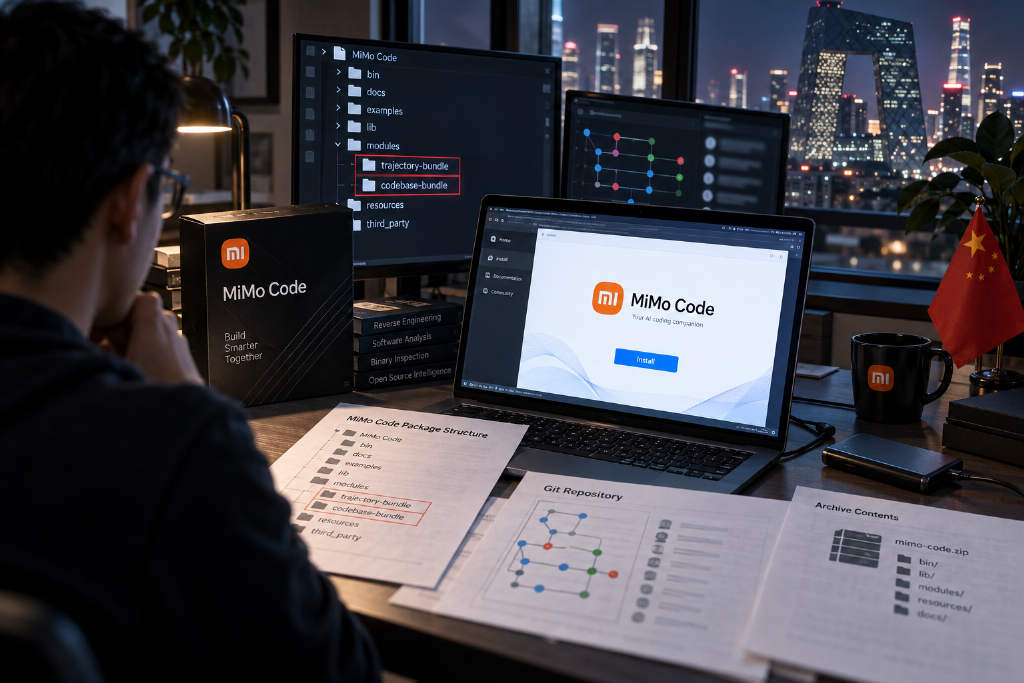
Xiaomi2026-09-22 09:30:15Developer says Xiaomi MiMo Code package contains modules absent from public repositoryA developer who reverse-engineered the official installation package for Xiaomi MiMo Code said the package includes two modules that do not appear in the project’s public repository: trajectory-bundle and codebase-bundle. According to the findings, trajectory-bundle can package system prompts, conversations, model replies, and code diffs, while codebase-bundle contains a function called collectCodebase() that can traverse a Git repository, read source code, and compress it into a bundle. At the same time, the developer said there is no sign that collectCodebase() is called by MiMo Code’s built-in code, and there is no evidence that a complete codebase was uploaded. The information confirmed to have been sent out mainly involves Git repository addresses, commit hashes, and branch details. Xiaomi’s MiMo Code was open-sourced under the MIT license in June. Two days earlier, Zhipu’s ZCode drew legal pressure after automatically packaging a full workspace, with a company sending a 12-page legal letter demanding data deletion.571
Xiaomi2026-09-22 03:57:17Luofuli says MiMo-V2.6 posed bigger R&D challenges than DeepSeek R1Xiaomi MiMo lead Luofuli said after the release of MiMo-V2.6 that the research innovation and engineering difficulty behind the model exceeded DeepSeek R1, a project she previously worked on. She also explained why MiMo uses both MixRL and MOPD in its reinforcement learning setup. According to her description, MixRL trains verifiable tasks such as coding, general agent work, vision, and cybersecurity together in the same reinforcement learning round. MOPD is used for tasks that are very long, hard to verify, or judged with more subjective rewards. Those tasks are trained separately first, and the resulting capabilities are then merged back into the main model. Luofuli added that tasks such as games and 3D runs take much longer to execute and are difficult to score automatically. If they are placed in the same RL round as coding and similar tasks, training slows down noticeably. MiMo therefore trains those tasks separately and uses MOPD to fold the learned abilities back into the core model.410
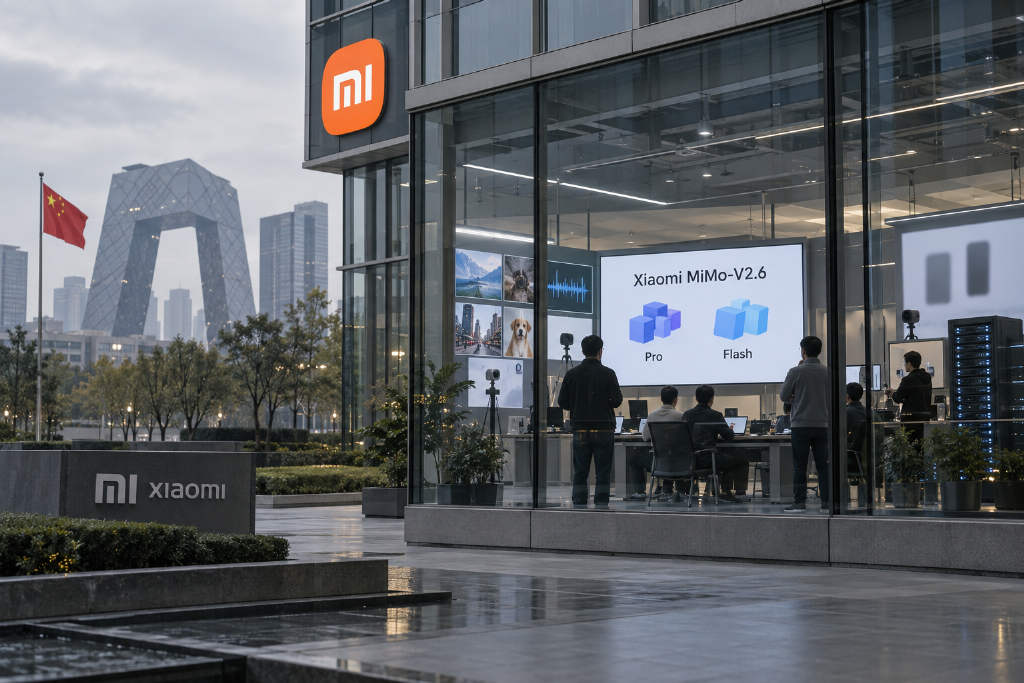
Xiaomi2026-09-21 23:53:22Xiaomi open-sources MiMo-V2.6 and says it is now the strongest open-source modelXiaomi said early today that it has officially released and open-sourced the new Xiaomi MiMo-V2.6 series, which includes two native omni-modal models: Pro and Flash. According to the team, MiMo-V2.6-Pro scored 46 points on the Artificial Analysis Intelligence Index, or AA Intelligence Index, helped by expanded reinforcement learning compute. Xiaomi said that result puts the model ahead of Kimi K3 and Qwen3.8 Max, making it the strongest open-source model at present by that measure. The company also noted that the model still trails the top closed-source systems, specifically Claude Fable5.1 and GPT-6 Astra. On pricing, Xiaomi said the MiMo-V2.6 series keeps the same API pricing as the V2.5 line. It added that MiMo-V2.6-Pro has set a new price-performance benchmark among Chinese domestic models, with pricing at just 1/20 to 1/60 of overseas models at the same intelligence level.400
OpenRouter2026-09-21 20:27:08OpenRouter lists Xiaomi’s MiMo-V2.6-Pro-UltraSpeed modelOpenRouter has added a new model, Xiaomi: MiMo-V2.6-Pro-UltraSpeed, according to Techub News. The listing describes it as a high-speed version of Xiaomi’s flagship foundation model MiMo-V2.6-Pro. It is built on the same 1T-parameter checkpoint and is presented as delivering a major increase in inference speed while keeping the original model’s quality intact. OpenRouter’s model description also notes that the release may have appeared before any formal announcement from the vendor, and says the platform uses labels such as "suspected" or "coming soon" in those cases. The model is now available for users to call on the platform. The information cited in the item comes from OpenRouter.370
Xiaomi2026-09-21 09:55:57Xiaomi’s MiMo halts two public RL training runs after spending $3.47 millionXiaomi has stopped both publicly streamed reinforcement learning training runs for its MiMo model, with Pro and Flash each completing 30 training steps as their last full run. Combined spending reached $3.4747 million, including $2.6207 million for Pro and $854,000 for Flash. The gains were notable: on DeepSWE v1.1, Pro rose from 58.41 at step 1 to 72.57, while Flash climbed from 48.67 to 65.68. Still, both curves saw clear pullbacks during training rather than moving up in a straight line. Other benchmark panels also improved, with Pro’s internal coding evaluation increasing from 57.54 to 65.43 and AutomationBench rising from 45.2 to 53.1. The process also ran into operational issues. Pro hit a GPU OOM caused by uneven expert load, and both the training cluster and evaluator experienced disconnects and restarts. Flash had to restart from step 15 because of an infrastructure error. Xiaomi also later filtered out tasks that had become too easy for Pro and removed the cyber dataset from later Pro training after abnormal rollout patterns appeared.380
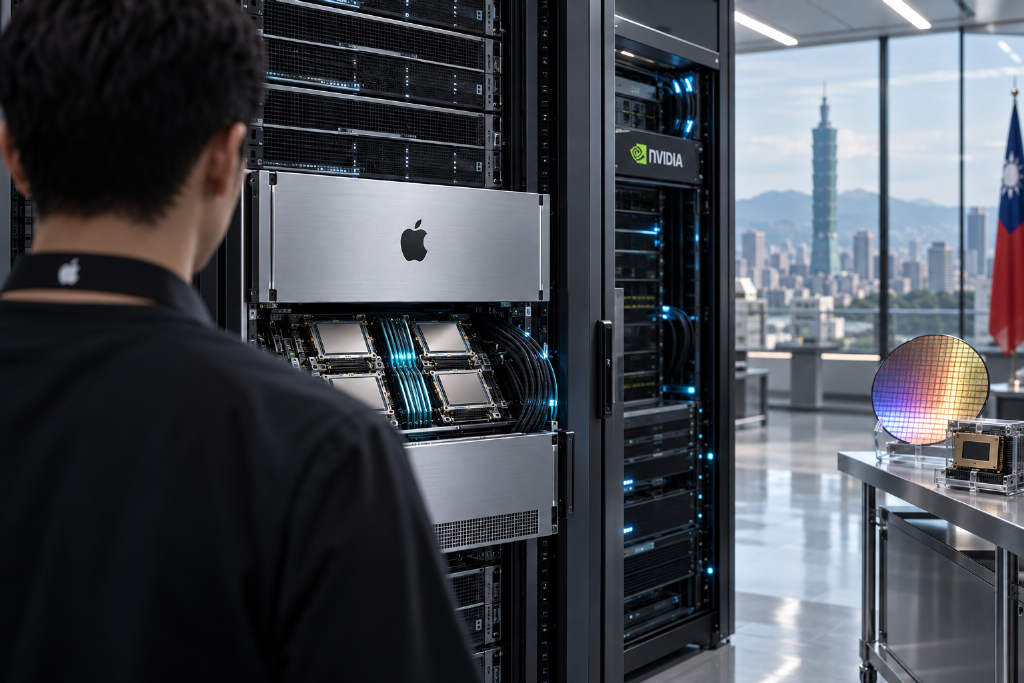
Apple2026-09-21 00:41:43Report says Apple is developing an enterprise AI server with up to four M8 Ultra chipsMarket chatter cited by ChainCatcher says Apple is developing an enterprise-grade AI server that could carry two to four unreleased M8 Ultra processors. The reported target customers are AI developers, large enterprises, and government agencies, with AI inference listed as the main use case. The edge data center setup may also use NVLink, according to the report. Apple and NVIDIA had not responded to the market talk. Supply-chain sources cited in the report said Apple’s move into this segment is tied to heavy use of Mac systems as personal AI workstations, while Mac revenue rose nearly 30% in the latest quarter. The same report said Apple has been buying large amounts of NVIDIA chips and Google TPUs for its own AI data centers, and that the company is also rumored to be working with Broadcom on in-house AI chip development. The report also mentioned Qualcomm’s Dragonfly line and Xiaomi’s edge AI cabinet efforts, while supply-chain sources said TSMC may play a key role in advanced process technology or advanced packaging.470