Polymarket
Oct 21, 2026

Haseeb Qureshi rejects report accusing Polymarket founder of misusing company funds

Polymarket early investor Haseeb Qureshi has pushed back against a recent report alleging that founder Shayne Coplan was caught misusing company funds, calling the story a complete smear. In a public post, Qureshi said Coplan took no salary in the company’s early days and was operating the startup out of his apartment at age 21 while struggling to keep it running. He added that his fund issued Polymarket’s first term sheet and that he had even offered Coplan a personal loan. Qureshi said the expenses disclosed by Coplan, when annualized, were roughly equivalent to the yearly pay of a software engineer. He said the spending included travel costs and did not involve personal trips. According to Qureshi, the bookkeeping and repayment process was initiated by Coplan himself, and the money was later repaid to the company in full before being converted into regular salary. Qureshi said the matter was an accounting issue rather than an integrity issue, and added that he remains fully confident in Coplan as an investor.

450
Haseeb Qureshi rejects report accusing Polymarket founder of misusing company funds
Stablecoins
Oct 12, 2026

FASB proposal could let qualifying stablecoins count as cash equivalents

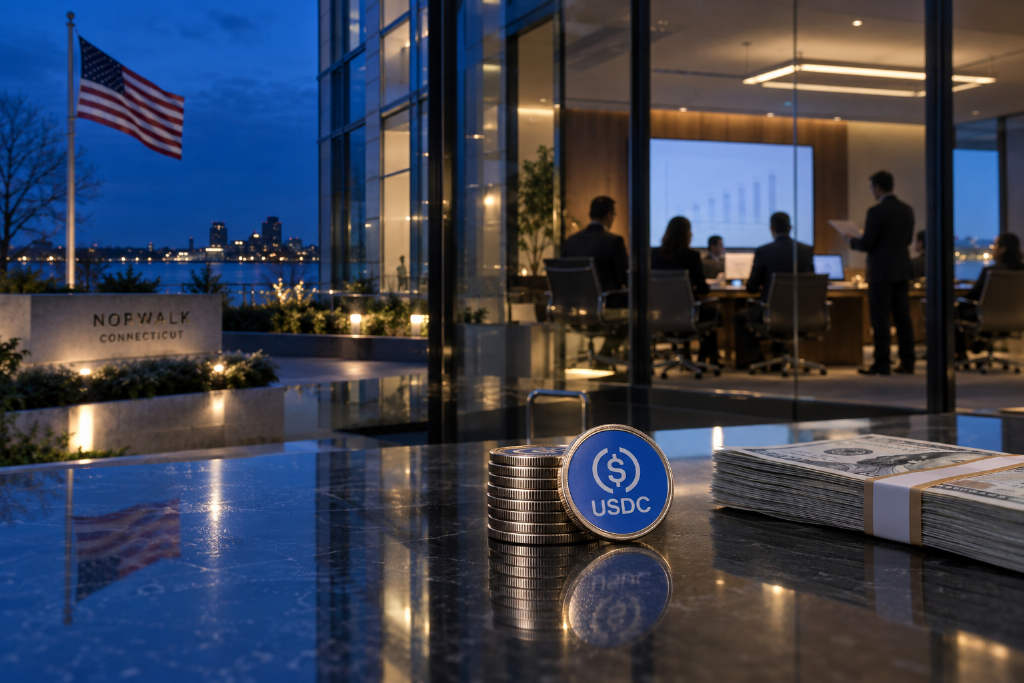
A report from blockchain project Tempo says the U.S. Financial Accounting Standards Board, or FASB, is considering changes to stablecoin accounting that could allow certain tokens to be classified as cash equivalents on corporate balance sheets. The proposed treatment would lower an accounting hurdle that has limited corporate use of stablecoins, because under current practice, even fully dollar-backed tokens may not be included in reported cash reserves. That can affect liquidity ratios and loan covenant calculations. The proposal would allow companies to use stablecoins for payments and settlement, but only if they hold a direct redemption right against the issuer. That distinction matters: USDC purchased through an exchange may not automatically qualify for cash-equivalent treatment. Tempo’s report notes that Coinbase classified USDC and other payment stablecoins as cash equivalents in its 2025 annual report, citing a redemption arrangement with Circle. Public comments on the FASB proposal are open through Nov. 19, after which the board will review feedback and decide on final accounting changes and an effective date. The proposal comes as the dollar stablecoin market has grown past $300 billion, according to the report cited by Cointelegraph.

880
FASB proposal could let qualifying stablecoins count as cash equivalents
Tempo
Oct 12, 2026

Tempo says proposed FASB stablecoin accounting changes could lower barriers for corporate use

Blockchain project Tempo said in a new report that the U.S. Financial Accounting Standards Board, or FASB, is considering changes to stablecoin accounting rules that could let qualifying tokens be treated as cash equivalents on corporate balance sheets. According to the report, that shift could reduce accounting friction for companies that want to use stablecoins. Tempo said current accounting practice can prevent stablecoins from being counted as reported cash reserves even when they are fully backed by U.S. dollars. That, in turn, can affect liquidity ratios and loan covenants. Under the proposed approach, companies would be allowed to use stablecoins for payments and settlement, but only if they hold a direct redemption right against the issuer. The report added that USDC bought through an exchange may not automatically meet the standard for cash-equivalent treatment. It also pointed to Coinbase, which classified USDC and other payment stablecoins as cash equivalents in its 2025 annual report based on a redemption arrangement with Circle. Public comments on the FASB proposal will remain open through Nov. 19, after which the board will review feedback and decide on final accounting changes and an effective date. Tempo noted that the U.S. dollar stablecoin market has already grown past $300 billion.

980
Tempo says proposed FASB stablecoin accounting changes could lower barriers for corporate use
AI
Oct 2, 2026

Mercor says AI now outperforms CPAs on structured accounting tasks

Research cited by Techub News says current AI models have moved ahead of certified public accountants, or CPAs, in both speed and accuracy on structured accounting work. The finding marks a sharp change from 18 months ago, when AI still lagged well behind human professionals on the same type of tasks. Even so, the study does not suggest full autonomy. In the more demanding APEX benchmark, no model was able to complete every task on its own. The research also says AI still cannot independently handle the closing process without human oversight. The report was attributed to The Decoder.

970
Mercor says AI now outperforms CPAs on structured accounting tasks
mining rigs
Aug 25, 2026

U.S. 100% bonus depreciation creates a different cost-recovery path for mining rigs

FinTax examined how the same ASIC mining machine can produce two very different cost-recovery schedules under accounting rules and U.S. federal tax law. Under financial reporting, listed miners commonly capitalize self-mining equipment as property, plant and equipment and depreciate it over an estimated useful life that may now be as short as two to three years for many models. Under the U.S. tax code, though, qualifying property may be eligible for a full first-year writeoff. The article says H.R.1 became Public Law 119-21 on July 4, 2025, and Section 70301 amended IRC §168(k) to permanently restore the 100% additional first-year depreciation deduction, commonly known as bonus depreciation. IRS Notice 2026-11 later said the rule generally applies to qualified property acquired and placed in service after Jan. 19, 2025. FinTax stressed that this does not mean every mining machine can be deducted in full in the year of purchase. The outcome still depends on tax classification, timing of acquisition, when the asset is placed in service, and whether the taxpayer elects out or uses the transitional 40% option available under IRC §168(k)(10) for the first tax year beginning on or after Jan. 19, 2025. The piece also compared the U.S. approach with Ethiopia and Kazakhstan, where mining equipment generally follows local asset classes and statutory depreciation rules, producing a different tax-accounting profile.

1890
U.S. 100% bonus depreciation creates a different cost-recovery path for mining rigs