Bank of Korea
Nov 2, 2026

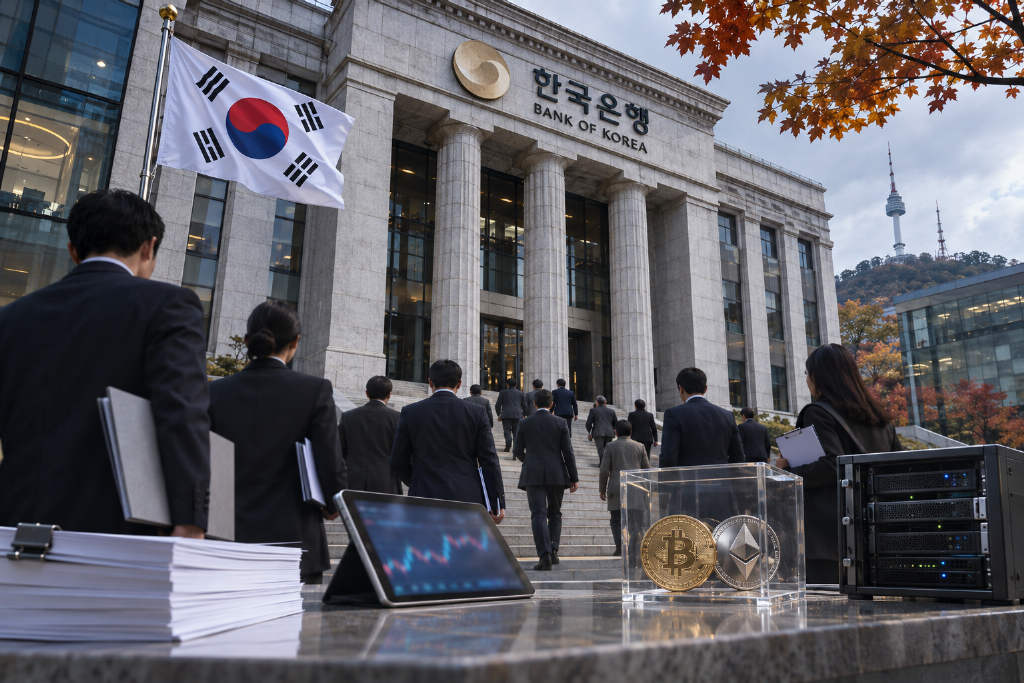
Bank of Korea launches first crypto exposure survey covering 31 banks and brokerages

The Bank of Korea has begun its first broad review of how domestic financial institutions are exposed to the virtual asset market, sending questionnaires to 18 banks and 13 securities firms, for a total of 31 institutions. Responses are due this Wednesday. The survey asks for detailed information on staffing, budgets, business lines, reasons for entering the market, and the amount invested in crypto companies at home and abroad. It also includes scenario-based questions on what would happen if the country’s largest crypto exchange halted operations after a major hack, how institutions would be affected by a sharp price drop followed by weak trading activity, and how losses at another financial institution could spread through the system. The move comes as Korean financial groups continue stablecoin-related pilots and partnerships, while the Financial Services Commission tightens cybersecurity rules after finding deficiencies at 130 of 555 financial companies it inspected.
830
Bank of Korea launches first crypto exposure survey covering 31 banks and brokerages
South Korea
Oct 21, 2026

Korean retail investors lost $4.8 billion on single-stock leveraged ETPs in less than three months

Retail investors in South Korea lost a combined 6.31 trillion won, or about $4.8 billion, trading single-stock leveraged exchange-traded products, according to data the Financial Supervisory Service submitted to an opposition lawmaker. The figures cover the period from May 27 to Aug. 14 and include both realized losses and unrealized losses on open positions across retail accounts at 10 Korean brokerages. Of the total, 2.32 trillion won was realized losses, while 3.99 trillion won was unrealized paper losses. By age group, investors in their 40s posted the largest losses in absolute terms, with 165,200 accounts showing combined paper losses of 2.05 trillion won. Investors in their 50s recorded total losses of 1.87 trillion won across 158,000 accounts, and those in their 30s lost 1.09 trillion won across 117,300 accounts. On a per-account basis, older investors were hit harder, with investors aged 70 and above losing about 29.94 million won per account on average.

790
Korean retail investors lost $4.8 billion on single-stock leveraged ETPs in less than three months
Hong Kong
Oct 7, 2026

Hong Kong says HKEX is studying blockchain and AI to streamline a shift to T+1 settlement

Hong Kong Acting Secretary for Financial Services and the Treasury Christopher Hui said in a written reply to the Legislative Council that Hong Kong Exchanges and Clearing (HKEX) is studying the use of blockchain and artificial intelligence to improve post-trade matching, clearing and settlement. The work is tied to a planned move in Hong Kong’s cash equities market from a T+2 settlement cycle to T+1. Hui said HKEX aims to publish consultation conclusions and set out implementation arrangements and a timetable within this year. The T+1 model is expected to be introduced as early as the fourth quarter of 2027. He also said HKEX will leave enough preparation time for the market and study tools that can simplify processing, with support for system upgrades aimed in particular at small and medium-sized brokers. The government will also ask HKEX and the Investor and Financial Education Council to step up public education for retail investors so they understand how T+1 settlement could affect fund transfers and margin top-up requirements, according to a Hong Kong government press release cited by Techub.

860
Hong Kong says HKEX is studying blockchain and AI to streamline a shift to T+1 settlement
South Korea
Oct 7, 2026

South Korea discloses losses in single-stock leveraged ETFs at KRW 2.3 trillion

South Korean financial regulators have disclosed aggregate investor losses in single-stock leveraged exchange-traded products for the first time, putting estimated losses at KRW 2.3 trillion, or about $1.7 billion, between May 27 and Aug. 14 after the products were introduced in May. The figures cover data compiled from 10 major Korean brokerages, meaning they do not represent total losses across all investors in the country. Regulators began tightening rules in July after initially encouraging the launch of such products in the domestic market in May. Measures rolled out since then include a temporary ban on listing new related products, higher minimum cash margin requirements for investors, and mandatory training before trading. The shift shows that South Korea’s regulatory stance moved from promotion to restriction in less than two months as concerns around high-leverage single-stock products grew.

780
South Korea discloses losses in single-stock leveraged ETFs at KRW 2.3 trillion
Goldman Sachs
Sep 10, 2026

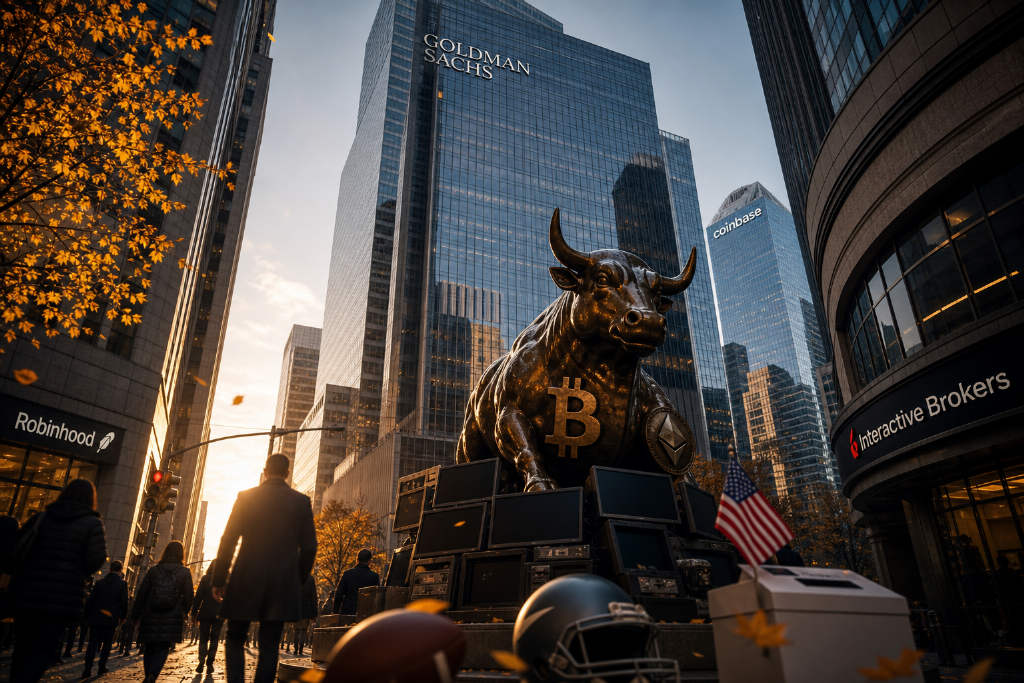
Goldman Sachs Raises Forecasts for Brokerages and Crypto Stocks After 34% Q3 Crypto Market Cap Gain

Goldman Sachs said a 34% rise in crypto market capitalization so far in the third quarter has led it to lift revenue forecasts, earnings estimates, and price targets across its Americas brokerage and crypto coverage. In a Sept. 8 industry report, the bank raised average third-quarter revenue expectations for its covered group by 10%, increased median 2026 EPS by 1%, and moved the median target P/E multiple to 32.5x from 29.5x. Median total return potential now stands at +3%. The report said trading volumes remain below the prior quarter, with industry average volume down 8% quarter-on-quarter for Q3 to date, even after a 16% rebound in August. Still, Goldman argued that higher crypto valuations are lifting custodial, staking, stablecoin, and digital asset-related revenue, giving companies with more diversified business models a buffer against weak trading activity. The bank also updated company-level assumptions for COIN, BTGO, CRCL, ETOR, GEMI, and GLXY, while raising several target prices and keeping its broader tone measured because volumes remain soft and regulatory risk is still present.

1040
Goldman Sachs Raises Forecasts for Brokerages and Crypto Stocks After 34% Q3 Crypto Market Cap Gain
South Korea
Aug 30, 2026

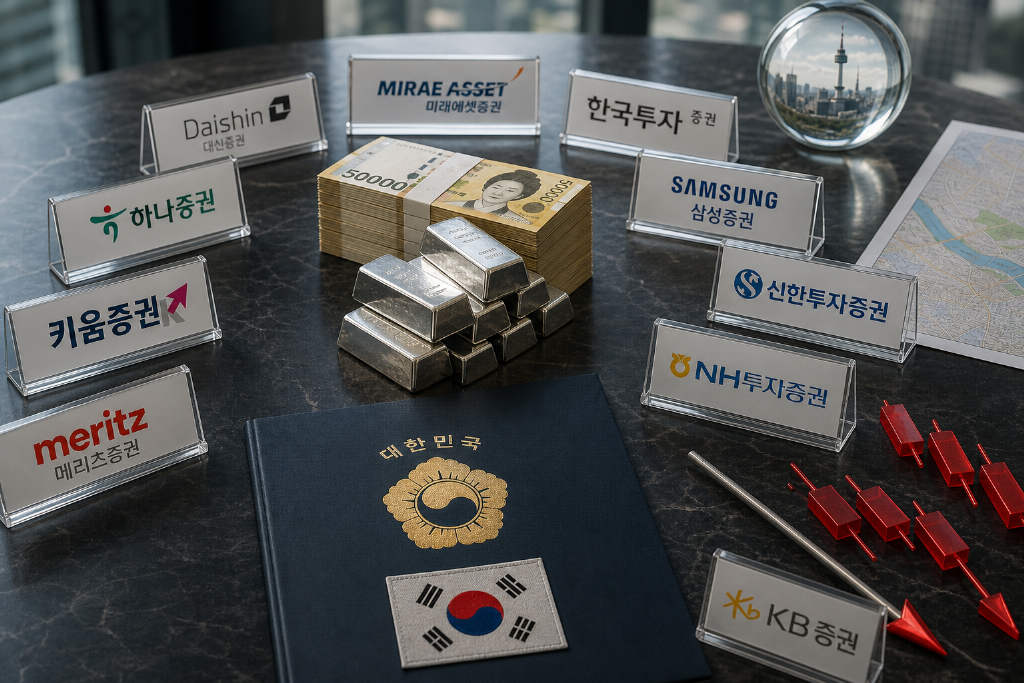
South Korea's Top 10 Brokerages Post Record Q2 Profit, Shares Stay Weak

South Korea's 10 largest brokerages posted a record profit of almost 6 trillion won (about $4.356 billion) for the second quarter, but their shares have shown persistent weakness. Combined consolidated net profit for Mirae Asset, Korea Investment, Samsung, KB, NH, Shinhan, Meritz, Kiwoom, Hana and Daishin came to 5.9362 trillion won (around $4.310 billion), up 37% from the previous quarter and 141% from a year earlier, according to the Korean financial investment industry on the 29th. Despite the strong earnings, the market has not rewarded the sector. The Korea Exchange securities industry index closed at 9,804.97 on May 9, hitting its intra-year high, and then retreated sharply. In June the index dropped to the 6,400-7,400 range; in July it slipped to the 4,700-6,400 range; this month it has been moving between 5,000 and 5,500. The second-quarter numbers set a record, with both sequential and annual growth, but the share prices of these brokers have remained under pressure. The gap shows earnings strength has not translated into stock market gains.

1350
South Korea's Top 10 Brokerages Post Record Q2 Profit, Shares Stay Weak
Taiwan FSC
Aug 26, 2026

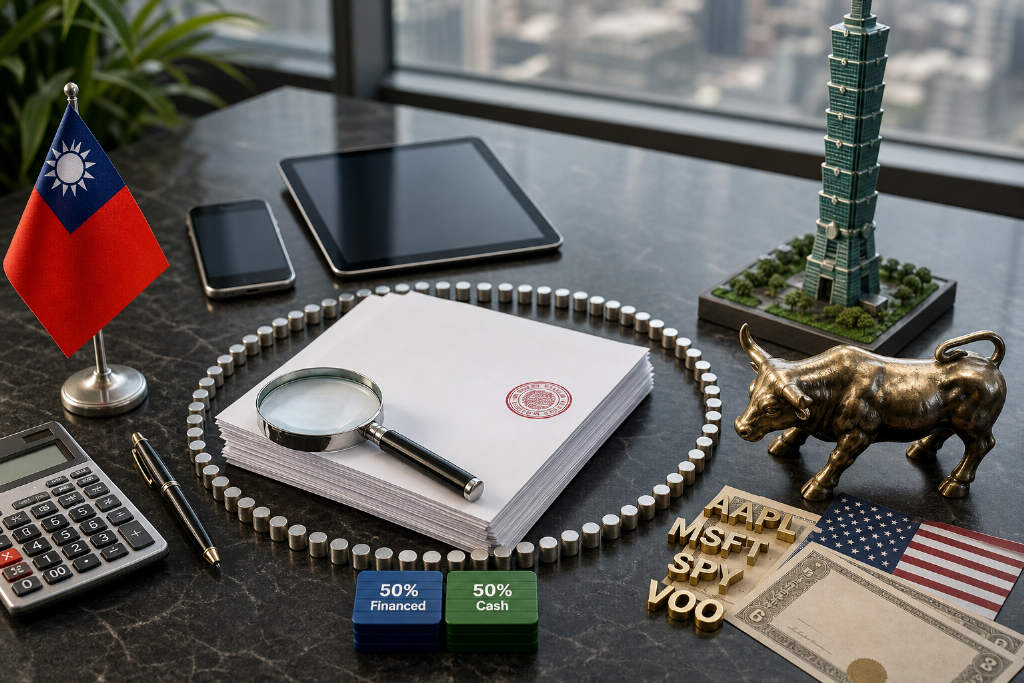
Taiwan approves margin financing for U.S. stocks via sub-brokerage, with about 930 eligible names and a 2027 Q2 rollout

Taiwan’s Financial Supervisory Commission has approved margin financing for U.S. stocks through the island’s sub-brokerage channel, opening the door for roughly 930 securities, including about 630 stocks and 300 U.S.-listed exchange-traded funds. The program sets a 50% financing cap and requires an account-wide maintenance ratio of 160%, with implementation expected as early as the second quarter of 2027. The framework is tighter than Taiwan’s domestic stock margin rules. Using NT$1 million in capital as an example cited in the report, an investor could build a NT$2.5 million position under Taiwan stock rules, but only NT$2 million under the new U.S. stock regime. Officials cited two main reasons for the stricter design: U.S. equities do not have daily price limits, and Taiwan and U.S. trading hours do not overlap, raising the risk that margin calls or forced liquidations could occur overnight for Taiwan-based investors. Hong Kong stocks and foreign bonds were left out. Data from the Taiwan Securities Association showed that trading in foreign securities through sub-brokerage reached NT$11.3 trillion in the first seven months of the year, up 109% year over year, with nearly 73% of that flow going to the U.S. market.

2020
Taiwan approves margin financing for U.S. stocks via sub-brokerage, with about 930 eligible names and a 2027 Q2 rollout
Goldman Sachs
Aug 25, 2026

Goldman Sachs Sees Room in Broker and Crypto Stocks, With Prediction Markets as a Key Fall Catalyst

Goldman Sachs is keeping a cautiously constructive view on brokerage and crypto-linked equities after the second-quarter earnings season, arguing that the main support for the group is not a confirmed rebound in crypto trading but a mix of seasonal recovery in traditional brokerage activity and continued expansion in prediction markets. Since the first company in the group reported on July 21, shares in Goldman’s covered names have risen 3% on average, about 1 percentage point ahead of the S&P 500, while sector earnings beat consensus by 8% and revenue came in 2% above expectations, though expenses were also 5% higher. The bank said summer retail trading has cooled, with U.S. retail equity volumes down about 15% in July and 14% in August month over month. Still, after adjusting for account growth, volume per account in the second quarter of 2026 remained about 8% below the 2021 peak, suggesting the current cycle may not have topped out. Goldman also pointed to prediction markets as a growing revenue driver, with annualized volume up about 1,160% from January 2024 to July 2026 and a possible pickup from September as U.S. sports calendars recover and the midterm election approaches. Crypto remains the more tentative part of the thesis. Sector trading volume fell 30% in July and another 21% so far in August, extending the decline to roughly 10 months. Goldman said the recent 21% rise in total crypto market capitalization in the week before the report improves the odds of a recovery, but only a sustained market-cap rebound that feeds through to spot and derivatives volumes would mark a true turning point. Goldman’s preferred names are FIGR, HOOD and IBKR, while COIN is framed as the higher-beta way to express a crypto recovery.

1780
Goldman Sachs Sees Room in Broker and Crypto Stocks, With Prediction Markets as a Key Fall Catalyst
Total 15 items
Go topage