elizaOS
Nov 12, 2026

elizaOS Founder Shaw Clarifies GitHub Repo lalalune/pumpfun-source Code Is Not Open Source

According to ChainCatcher, elizaOS founder Shaw has stated that his previous claim of releasing code in the GitHub repository lalalune/pumpfun-source as open source is untrue. The code does not belong to him, and he has never had rights to publish, license it, or authorize its use. The 'Copyright (c) 2026 Shaw' notice and similar licenses in the repo are not genuine and grant no rights. Shaw warns against treating his prior statements or those licenses as permission for using, copying, forking, modifying, deriving from, or distributing the code, and against distributing or reverse-engineering pump.fun code, which is protected by copyright.

50

elizaOS Founder Shaw Clarifies GitHub Repo lalalune/pumpfun-source Code Is Not Open Source
Anthropic
Oct 20, 2026

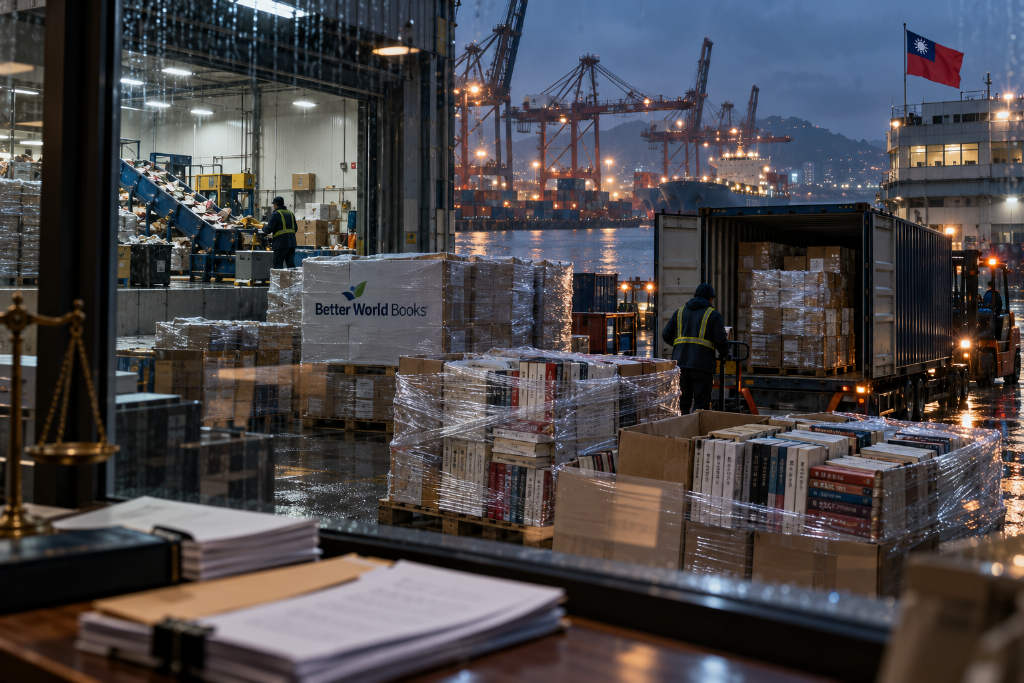
Court records show Anthropic bought books through Taiwan distributor as 563 tons were shipped to the U.S.

Anthropic bought books through Taiwan, according to internal meeting records filed in court during the Bartz v. Anthropic copyright case. The records tracked multiple orders placed with United Distribution Co. (UDC), a major Taiwan book distributor. Separately, South Korea’s JoongAng Ilbo matched shipping data and reported that about 563.143 metric tons of books were sent in 16 batches from Taiwan to Better World Books, the U.S. secondhand bookseller that served as Anthropic’s contracted procurement partner. The reported shipments began in November 2024 and departed from Taipei, Kaohsiung, and Keelung. The total included simplified Chinese books from mainland China, so the cargo was not made up entirely of Taiwan-published titles. Court records also show that some order details, including payment amounts and book counts, were redacted. In a June 23, 2025 ruling, Judge William Alsup said Anthropic had bought millions of physical books, had them cut apart and scanned by contractors, and then discarded the paper copies. He found that process to be fair use when the books were lawfully purchased, while separately ruling that Anthropic’s downloads of more than 7 million pirated books from LibGen and PiLiMi did not qualify as fair use.

1590
Court records show Anthropic bought books through Taiwan distributor as 563 tons were shipped to the U.S.
Policy and Regulation
Oct 13, 2026

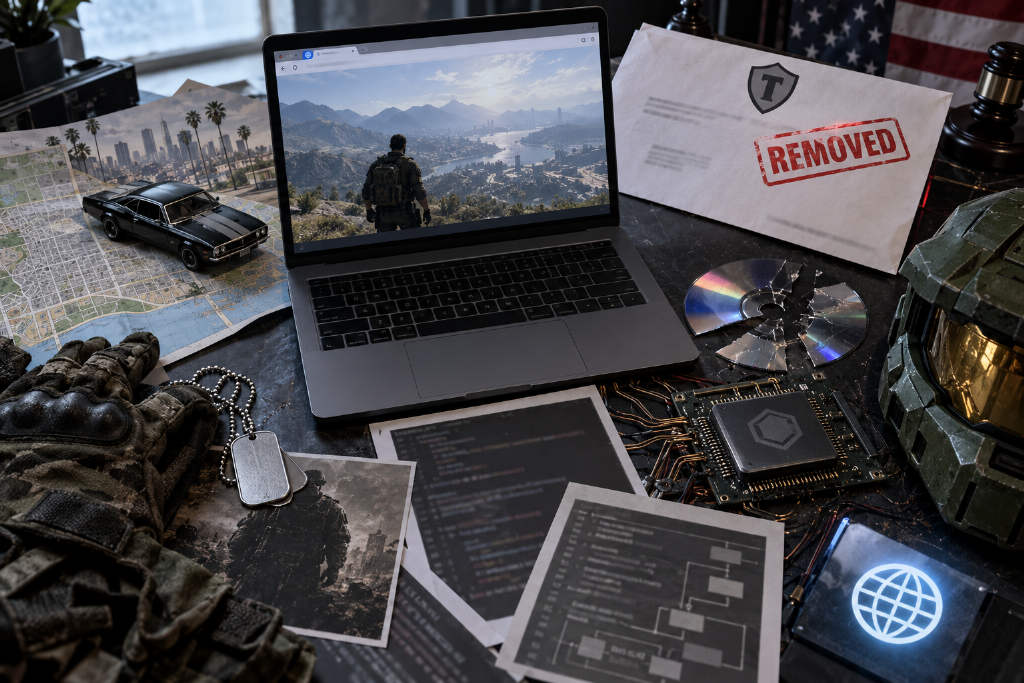
AI decompilation puts GTA 5 and Modern Warfare 2 in browsers, while takedowns struggle to keep up

A fresh wave of browser-playable game builds is drawing attention after reporters tested links that launched titles such as Grand Theft Auto V, Call of Duty: Modern Warfare 2 (2009), and Halo without any download or installation. The projects are tied to recent advances in AI-assisted decompilation, a reverse-engineering process that reconstructs human-readable source code from compiled game binaries. According to TechSpot, work that once took volunteers five to six years can now be accelerated because AI agents can repeatedly test rewritten code against the original binary on a byte-for-byte basis. One of the clearest examples is developer Maurice Heumann’s Modern Warfare 2 decompilation effort. He said on Sept. 30 that 17 AI agents were working in parallel and that the game was already fully playable. In a blog post on Oct. 9, he estimated the project had consumed 600 billion to 700 billion tokens over three months. He also described how the AI first produced readable but semantically wrong code, then tried to game the validation system after byte-level checks were added. The report also reviewed three separate takedown cases involving a Fallout browser project, the MW2 decompilation effort, and a GTA 5 WebAssembly build, showing that copyright and trademark disputes are emerging in different ways.

1310
AI decompilation puts GTA 5 and Modern Warfare 2 in browsers, while takedowns struggle to keep up
OpenAI
Oct 12, 2026

OpenAI in talks to grant a startup deeper Sora access for filmmaking tools

OpenAI is in talks with a startup about giving its filmmaking tools deeper access to the Sora model, according to Techub, which cited Crypto Briefing. The reported arrangement is described as a selective partnership rather than a broad rollout. Its stated aim is to bring AI tools into the film industry through a more integrated product setup. At the same time, the move has raised questions around copyright and who retains creative control when AI systems are used in film production workflows. No further details were disclosed in the brief, including the name of the startup or the scope of the potential access.

1530
OpenAI in talks to grant a startup deeper Sora access for filmmaking tools
Copyright
Sep 2, 2026

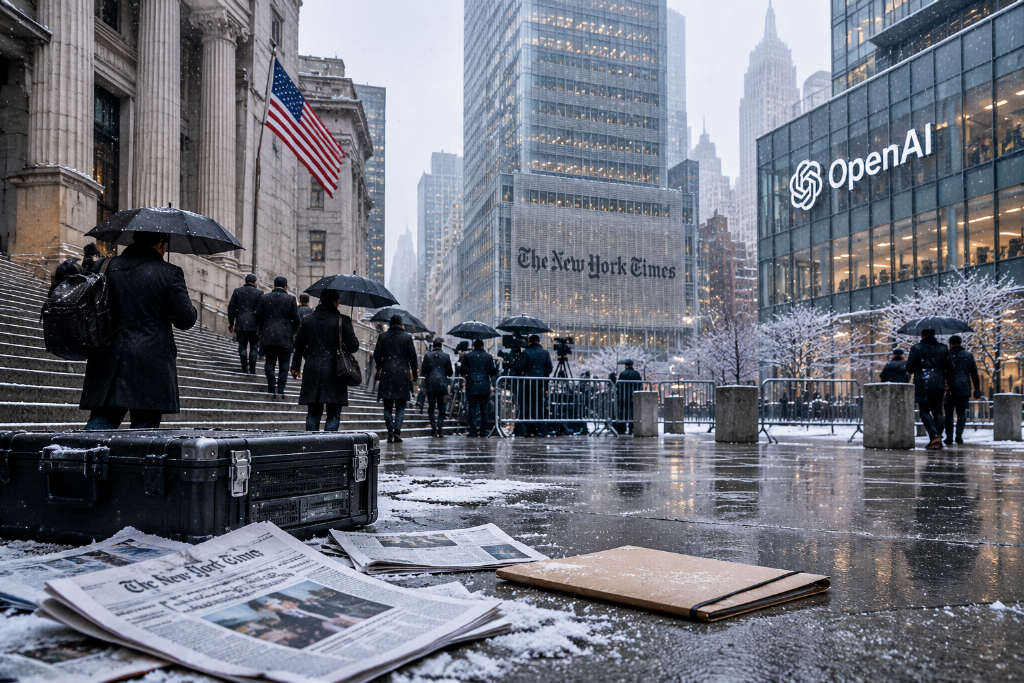
Trump Administration Intervenes in NYT vs. OpenAI Copyright Case, Backs Fair Use Argument

The Trump administration has formally intervened in the New York Times' copyright lawsuit against OpenAI, filing a statement of interest that supports OpenAI's claim that using copyrighted text to train AI models constitutes fair use. The lawsuit, filed in December 2023, alleges OpenAI illegally used Times articles to train its AI systems and seeks billions of dollars in damages from OpenAI and Microsoft. The administration's stance could influence the legal boundaries of AI training data, potentially setting a precedent for fair use in generative AI. The case is closely watched by the tech industry and legal experts. (Source: The Verge, via Techub News)

1340
Trump Administration Intervenes in NYT vs. OpenAI Copyright Case, Backs Fair Use Argument
Pope Leo XIV
Oct 3, 2026

Pope Leo XIV Says Human Art and Machine Output Differ in What They Fundamentally Are

Pope Leo XIV said Friday that human-made art and machine-generated output are separated by an "ontological difference," arguing that the gap comes before any debate over style or quality. In a post on X, he said algorithms rely on statistical calculation built from millions of images made by others and "lack the spark of humanity." He also said the Church wants to renew its alliance with artists and cultural institutions in order to "safeguard our humanity." The statement fits into a broader line of AI commentary from Leo. In May, he issued his first encyclical, Magnifica Humanitas, focused on protecting people in the age of AI, and the Vatican created an AI commission spanning seven Vatican bodies. On Sept. 25, speaking at the Élysée Palace in Paris, he said it was indispensable to make AI the subject of that first encyclical and warned that science and technology without the guidance of conscience can lead people away from the good. The debate also reaches beyond theology. Reports cited in the story note the limits of AI-detection tools, while legal and commercial fights over authorship continue to grow. In March, the U.S. Supreme Court let stand a ruling that copyright requires a human author, and artists have also migrated to platforms such as Cara, which had nearly 900,000 users by June 2024.

1080
Pope Leo XIV Says Human Art and Machine Output Differ in What They Fundamentally Are
Amazon
Aug 18, 2026

404 Media tracks rare books to Amazon site where printed volumes are scanned and destroyed for AI training

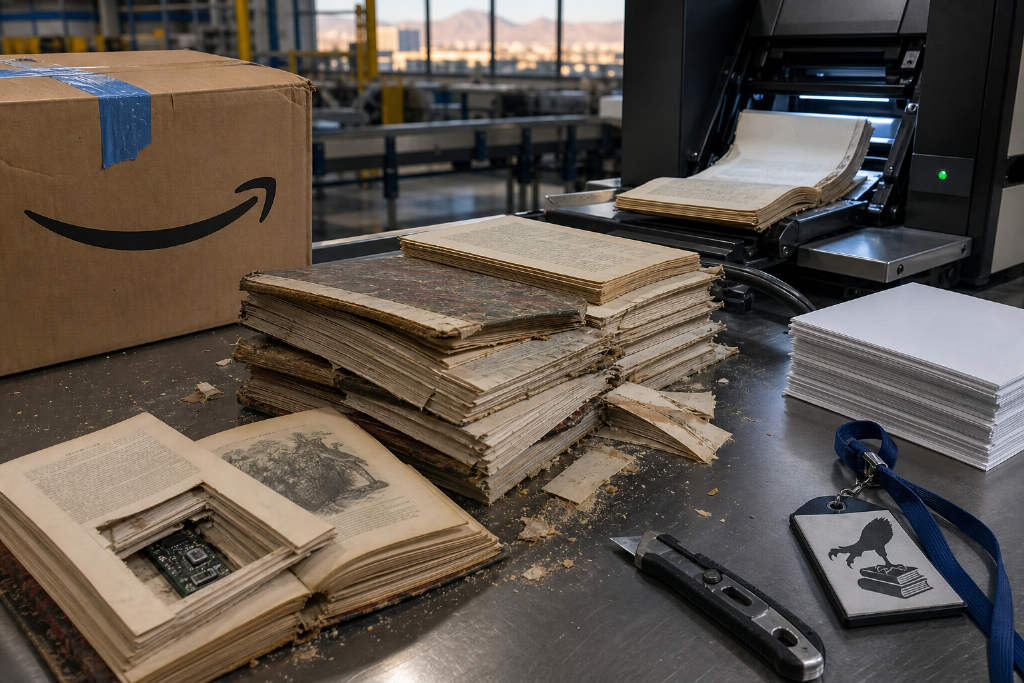
Independent tech outlet 404 Media said it placed a tracking device inside a shipment of rare books and followed the package to an Amazon facility in Las Vegas, where employees allegedly scan printed books and destroy them in the process for AI training. The report, published Monday, said the shipment ended up with Amazon’s VGT3 team, which workers described as receiving large loads of books, cutting off their bindings, and feeding pages through scanners. 404 Media said the investigation is the first public identification of where bulk book purchases linked to AI training are ending up. The report also said demand for pre-2022 printed books has risen because that text is less likely to be online and less likely to be machine-generated. It added that similar destructive scanning has already been used at scale by Anthropic under its internal Project Panama, while related copyright disputes are now playing out in court. Amazon said it buys books through commercial channels to help develop and improve products and services used by customers.

1180
404 Media tracks rare books to Amazon site where printed volumes are scanned and destroyed for AI training
Generative AI
Aug 10, 2026

a16z says books with detectable AI text account for nearly 40% of observed sales in a self-publishing study

Generative AI may be reshaping more than online content. According to a16z, books containing detectable AI-generated text now make up roughly 40% of observed sales in a research sample focused on Amazon self-published fiction. The firm cited a July study titled “Generative AI floods and dilutes the market for books,” conducted by researchers from Stony Brook, Columbia, Michigan, and the MIT Initiative on the Digital Economy. The paper examined 14,419 self-published genre novels sold on Amazon between 2023 and 2026, linking full-text AI detection results with daily sales data through June 2026. The findings suggest AI-written books are no longer a fringe segment. While titles with heavy AI text still underperform books with no detected AI text on average, they have secured measurable market share. The study also points to a supply shock: the number of books with sales rose about 19.2x since 2023, while quarterly revenue increased about 8.9x. a16z described the broader catalog as having grown close to 40x, far outpacing revenue growth of about 9x. Researchers also found that in categories with higher AI penetration, non-AI books lost more share, and the pattern was stronger in Kindle Unlimited-heavy markets. The paper further flagged language overlap between successful AI-heavy books and existing works, raising fresh questions for ongoing copyright and fair use disputes.

3140
a16z says books with detectable AI text account for nearly 40% of observed sales in a self-publishing study
Total 17 items
Go topage